
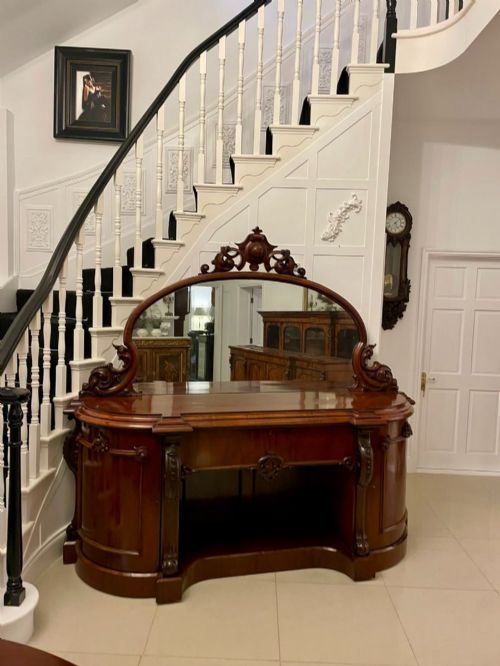
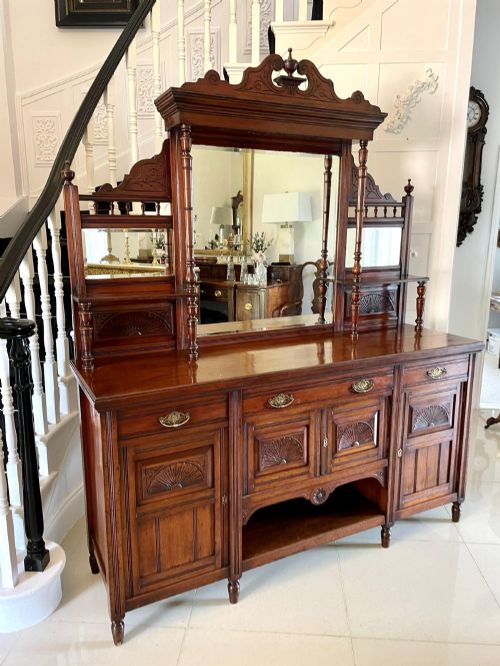
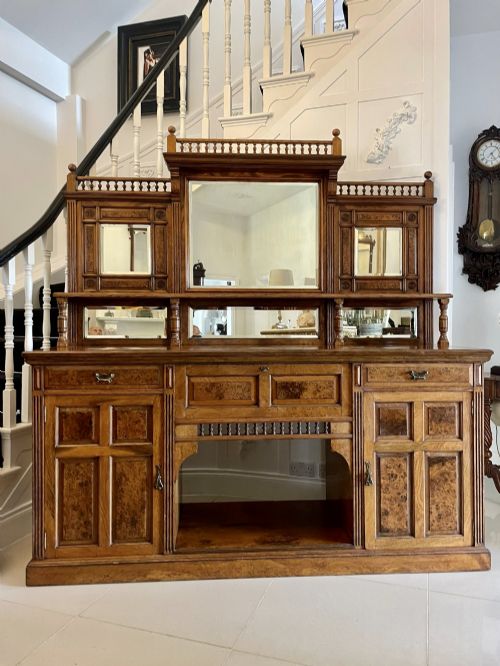
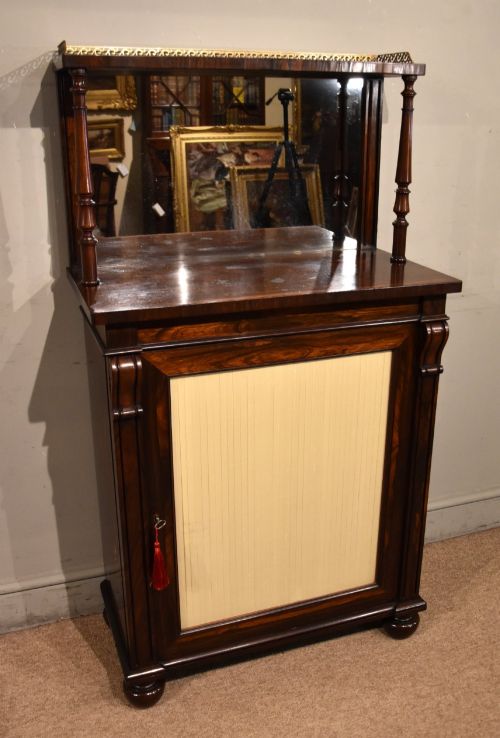
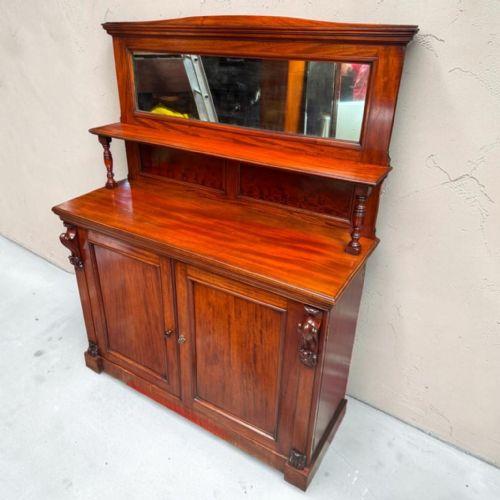
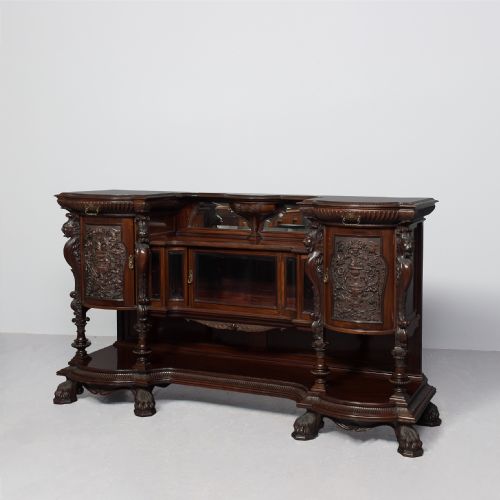
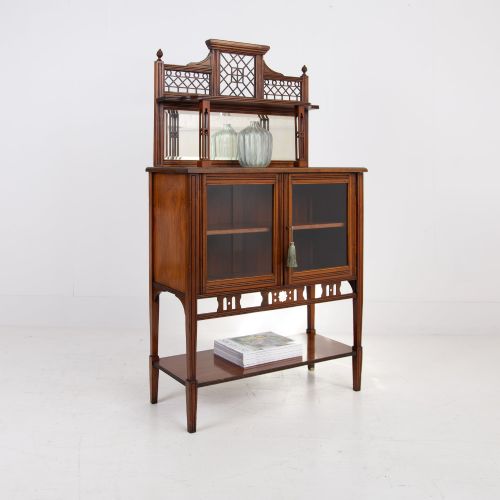
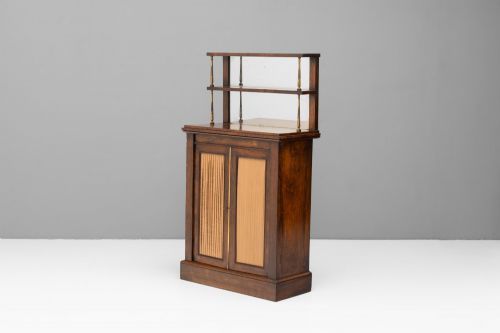

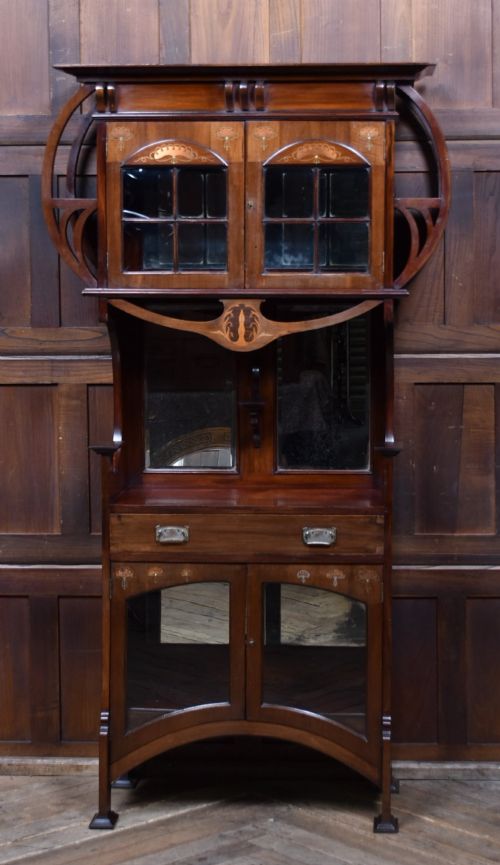


Antique Mirror Back Chiffonier
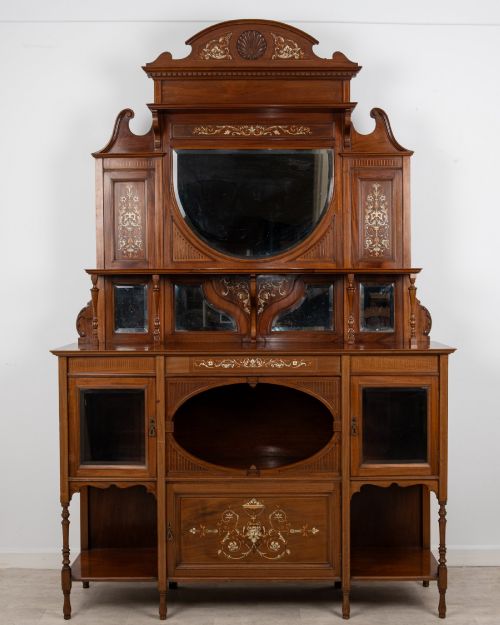
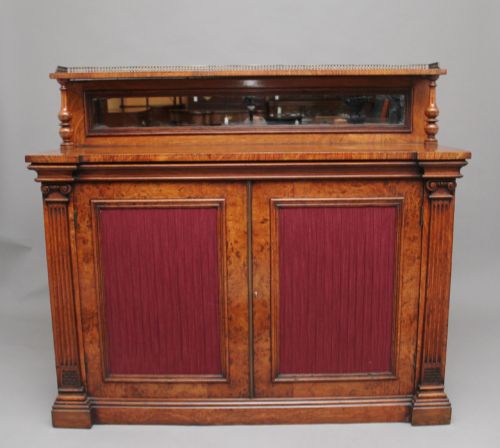
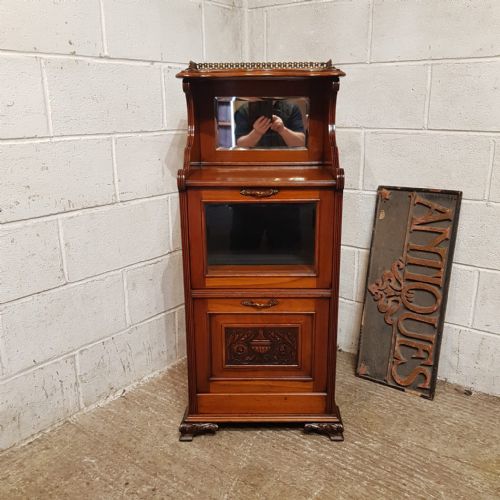
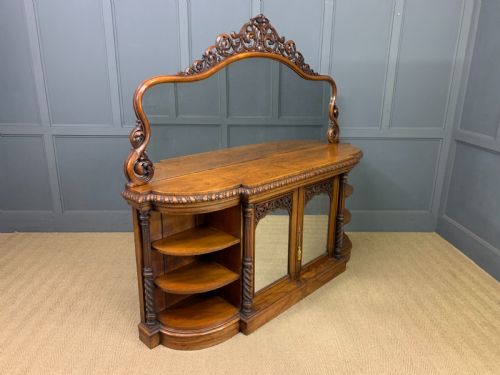
An antique mirror back chiffonier brings architectural presence and reflective depth to a room through timber and glass.
Antique Mirror Back Chiffonier
An antique mirror back chiffonier is a low sideboard featuring an integrated mirror superstructure, commonly found in Victorian and nineteenth-century forms.
The pieces emerge from Regency, Victorian, and Edwardian periods, crossing into sideboard and credenza classifications.
Makers utilised rich timbers such as mahogany, rosewood, walnut, and oak to construct these foundational dining and parlour cabinets.
Materials and Construction
Cabinet makers utilised solid and veneered mahogany, rosewood, walnut, and pollard oak, often accented with marquetry and inlay.
Reflective surfaces combine silvered mirror glass with brass hardware, glass doors, and occasional fabric linings.
Listings feature mahogany, rosewood, walnut, and oak pieces spanning Regency, Victorian, Aesthetic Movement, and Edwardian periods.
Standard and Execution
The calibre of a piece rests on the selection of figured timber veneers and the depth of carved ornamentation across the framework.
Proportion, glass clarity, and the precision of inlaid details distinguish standard cabinet work from exhibition quality pieces.
Holland and Sons·Gillows
The Antique Mirror Back Chiffonier Glossary
- Chiffonier
- A low sideboard or cabinet, typically fitted with cupboards below and sometimes shelving or a mirror above. It evolved during the nineteenth century to serve dining rooms and parlours.
- Mirror back
- An upright mirror frame attached to the rear of a sideboard or cabinet. It reflects light and displays objects placed on the surface below.
- Marquetry
- Decorative patterns formed by inserting pieces of contrasting wood into a veneer. Craftsmen use this technique to create intricate floral or geometric surface designs.
- Breakfront
- A cabinet design where the central section projects forward from the flanking wings. This architectural arrangement creates depth and shadow across the front elevation.
Antique Mirror Back Chiffonier: Frequently Asked Questions
What is an antique mirror back chiffonier?
An antique mirror back chiffonier is a low cabinet featuring closed storage below and an integrated mirror superstructure above. These pieces combine sideboard functionality with display utility.
Originating primarily in the nineteenth century, they utilise timbers such as mahogany, rosewood, and walnut to anchor dining rooms and reception spaces.
How were these cabinets used historically?
Historically, these cabinets served to store china, silver, and dining accessories in domestic interiors. The surface held serving dishes or decorative ornaments.
The attached mirror reflected candlelight and natural illumination while visually expanding the surrounding room during the Victorian and Edwardian eras.
How do I identify a Victorian chiffonier?
Victorian chiffoniers are typically identified by dense mahogany, walnut, or burr veneers paired with heavy carved details. They frequently incorporate mirrored backs and enclosed cupboard storage.
Construction methods from this period involve solid timber framing combined with hand-cut dovetails on internal drawers.
Where should I place a mirror back cabinet?
Place the cabinet against a solid wall in a dining room, hallway, or living space where it receives adequate natural light to activate the mirror. Ensure the floor is level to prevent distortion of the doors.
Allow sufficient clearance in front of the piece for opening cupboard doors and drawers comfortably.