


Inlaid Walnut Buffet
An inlaid walnut buffet brings rich timber tones and precise marquetry into a room, offering practical surface space alongside enclosed storage.
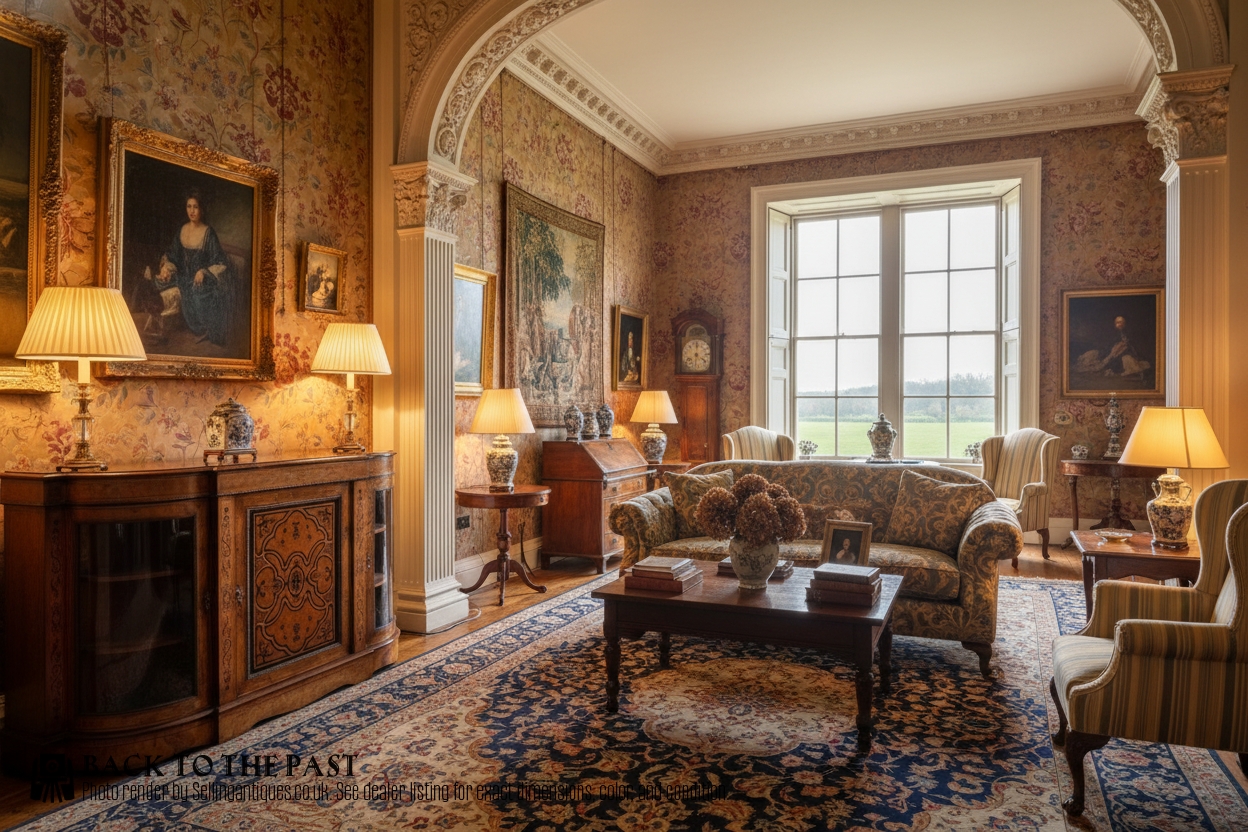
Inlaid Walnut Buffet
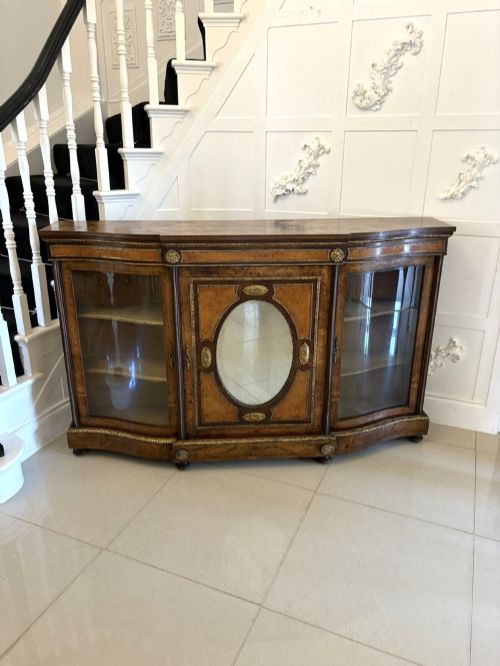
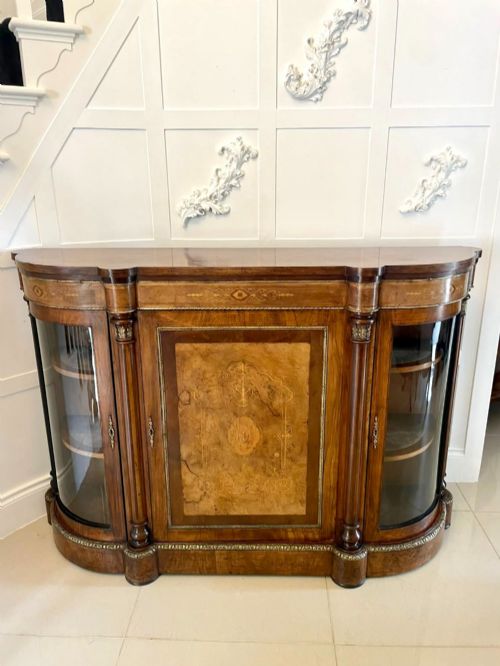
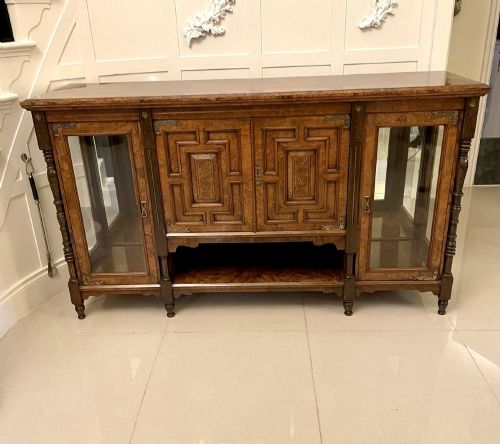
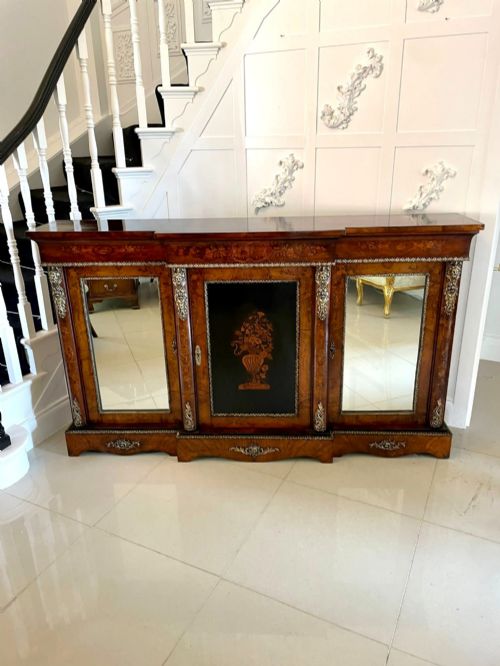
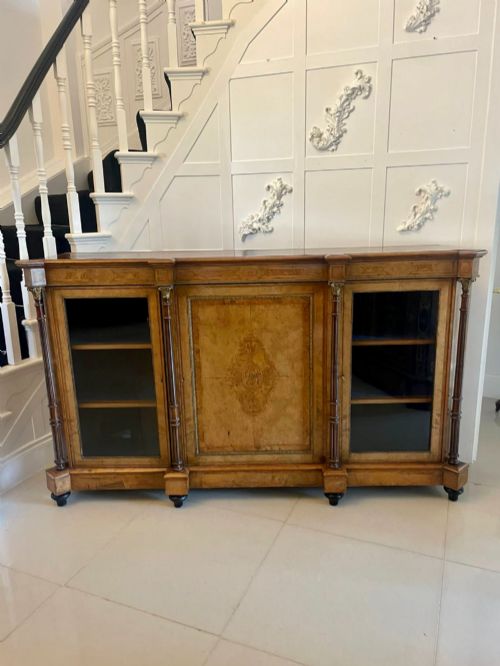
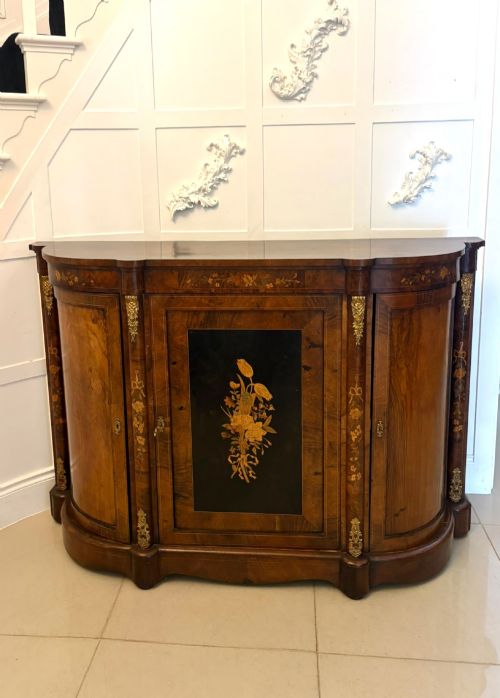
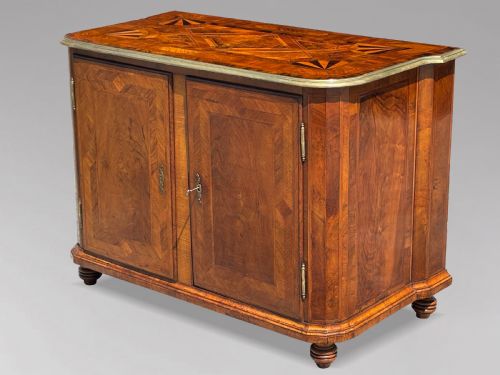
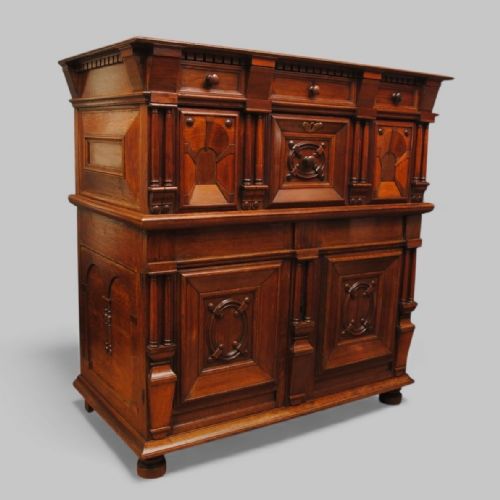
An inlaid walnut buffet combines rich timber surfaces with decorative marquetry patterns, serving as a functional storage cabinet and a decorative focal point in a room. Buyers searching for an inlaid walnut buffet frequently encounter related forms such as credenzas, sideboards, and side cabinets dating from the Victorian era back to the eighteenth century.
The pieces available span nineteenth-century English and French workshops, utilising figured burr walnut alongside contrasting woods and stone. Credenzas and sideboards with floral marquetry and glazed doors dominate the selection, showing the domestic appetite for formal display furniture during the Victorian period.
Distinctions in craftsmanship
The caliber of an inlaid walnut buffet rests upon the depth of the timber figuring and the precision of the marquetry cut. Finer examples display tight, symmetrical burr walnut veneers paired with crisp, well-defined boxwood inlay that remains flush with the surrounding wood.
Secondary detailing separates standard production from exhibition pieces, including the weight and chasing of ormolu mounts, the clarity of glass panels, and the integration of porcelain plaques or mirrored backs. Structural integrity in the doors and plinths ensures that drawers and cupboards operate smoothly despite seasonal timber movement.
Inlaid Walnut Buffet Retail Price Guide 2026
Typical asking prices for inlaid walnut buffet among the pieces listed under this phrase on Sellingantiques today, from the lower quarter to the upper quarter. They describe what is for sale here now, not the wider market.
Listings feature walnut credenzas and sideboards predominantly from the nineteenth century, alongside eighteenth-century Maltese examples and twentieth-century French marble-top cupboards.
Gillow
The Inlaid Walnut Buffet Glossary
- Burr walnut
- A highly figured timber harvested from walnut tree growths, prized for its swirling grain patterns. Cabinetmakers sliced it into thin veneers to cover large cupboard and credenza surfaces.
- Marquetry
- The art of creating decorative pictures and patterns using thin pieces of wood veneer. Craftsmen inlaid contrasting materials like boxwood and fruitwood into a walnut ground.
- Ormolu
- Gilt-bronze decorative mounts applied to furniture corners, feet, and friezes. This technique added metallic contrast to dark walnut and marble surfaces.
- Credenza
- A low cabinet designed for storage and display, frequently featuring glazed central doors flanked by curved side cupboards. It forms a primary category within walnut sideboards.
- Amboyna
- An exotic timber with a mottled, golden-brown grain. It appears alongside walnut as a contrasting inlay or banding material on Victorian pieces.
Inlaid Walnut Buffet: Frequently Asked Questions
How do I care for walnut furniture?
Keep walnut pieces away from direct heat sources and strong sunlight to prevent the timber veneers from drying and cracking over time. Regular dusting with a soft, dry cloth preserves the polished finish without requiring heavy chemical polishes.
Apply a microcrystalline wax sparingly once or twice a year if the wood appears dry, buffing it gently to maintain the natural sheen of the burr walnut.
How can I date a walnut cabinet?
Examine the construction methods visible inside the drawers and cabinet backs, noting the type of secondary timbers and hand-cut joinery. Victorian pieces often combine machine-sawn components with hand-applied marquetry and cast ormolu mounts.
Compare the overall style, such as French Louis XVI revival or mid-Victorian proportions, with documented design books and regional cabinetmaking characteristics from the period.
Where should I place a large credenza?
Position the piece against a substantial wall in a dining room, hallway, or living space where its length and mirrored back can be fully appreciated. Ensure adequate clearance for opening side cabinet doors without obstructing room pathways.
Avoid placing heavy marble-topped credenzas on uneven flooring to prevent stress on the frame joints and ensure the doors hang true.