


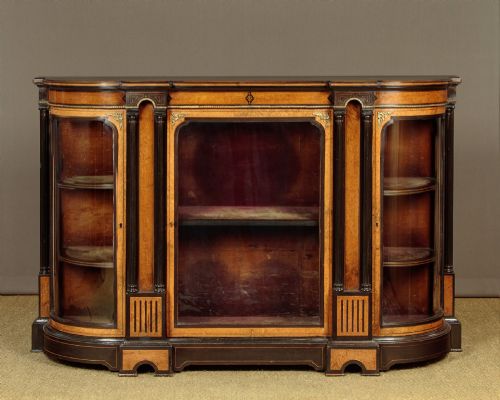
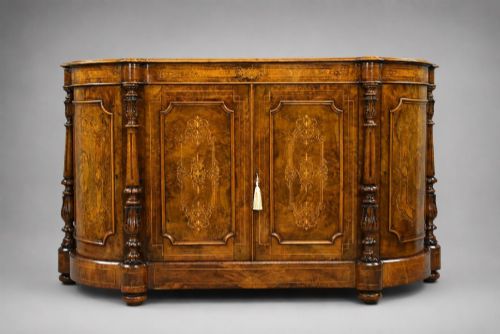
Marquetry Walnut Sideboard
These marquetry walnut sideboards combine rich timber figures with intricate floral inlay, offering both functional storage and striking nineteenth-century presence.
Understanding the Marquetry Walnut Sideboard
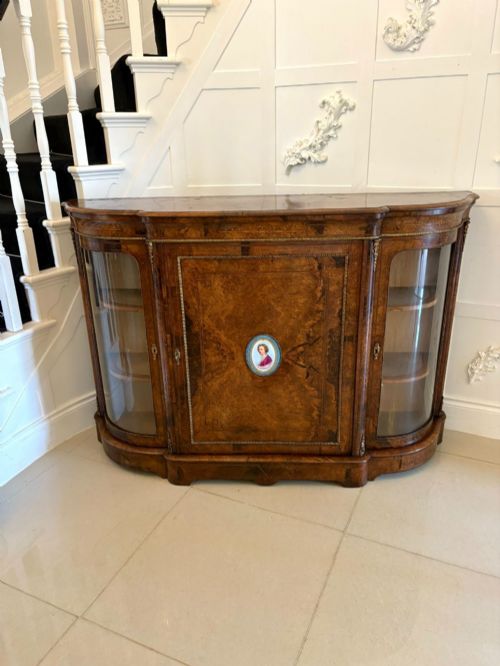
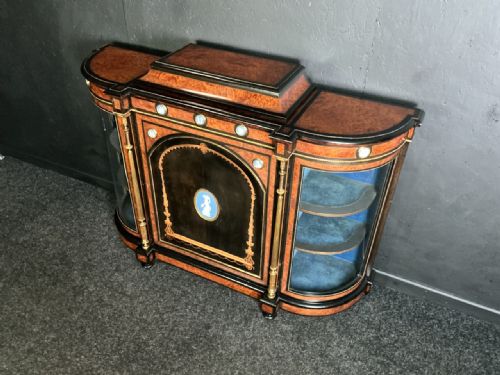
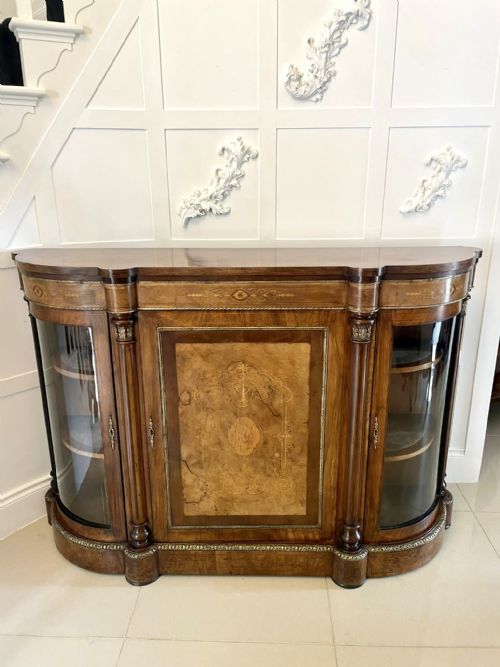
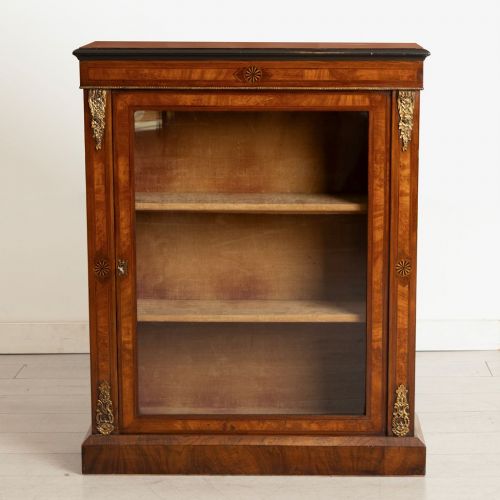
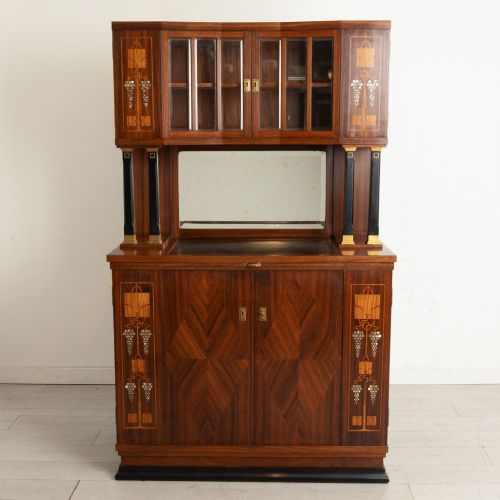
A marquetry walnut sideboard is a sophisticated form of antique cabinetry designed for display and storage, appearing predominantly in Victorian iterations from the mid-nineteenth century onward. These pieces encompass credenzas, commodes, and mirror-back sideboards that anchor a room with rich brown tones and decorative surfaces.
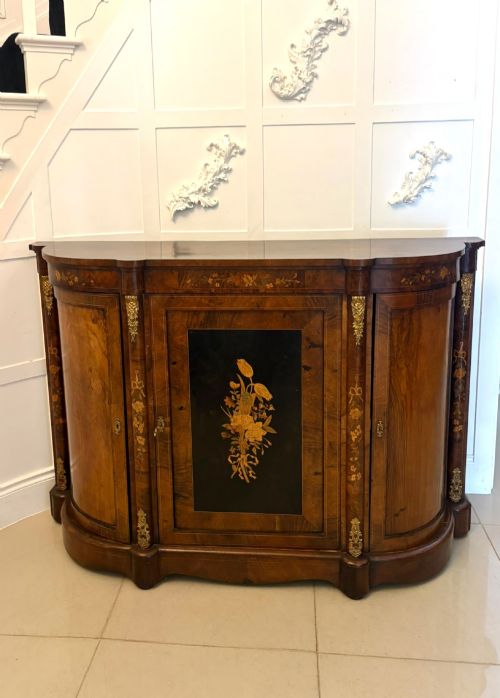
The most common examples encountered on this page date from the Victorian era around eighteen-eighty, often featuring burr walnut veneers combined with floral marquetry. Makers of the period drew on Louis XVI Revival and Aesthetic Movement influences to shape these grand reception room cabinets.
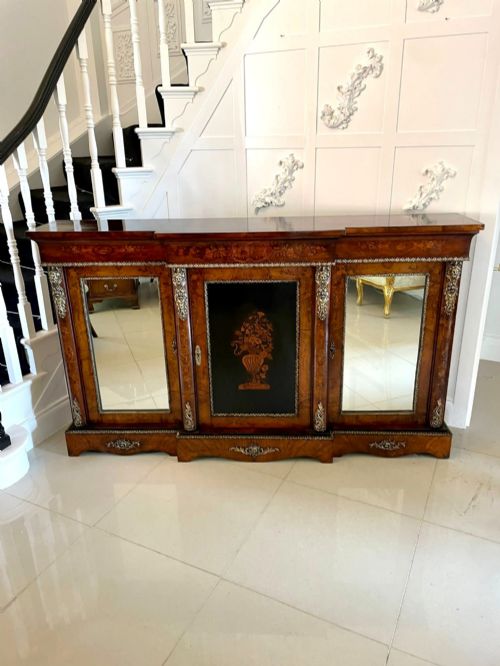
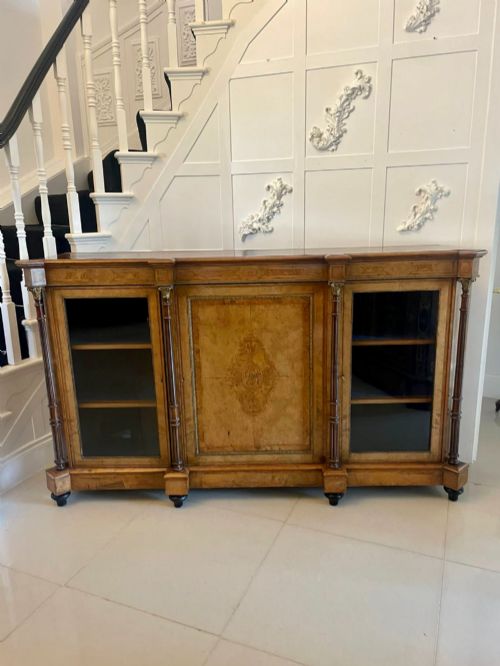
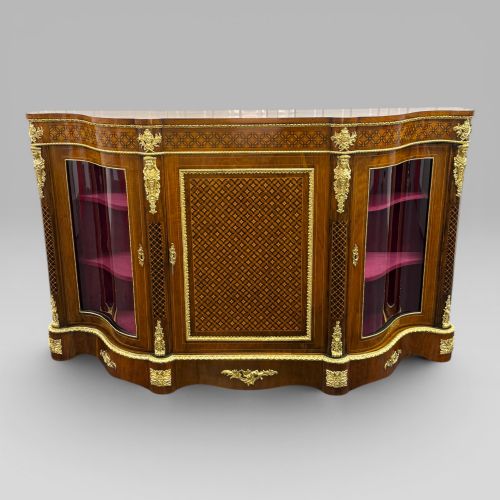
Form follows function across several related formats, including serpentine fronted cabinets and glazed credenzas flanked by doors. Each variation serves the collector seeking substantial timber furniture with elaborate decorative detail.
Materials and Construction
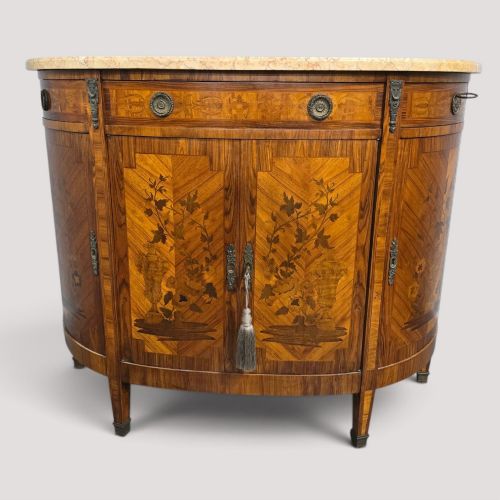
Construction relies upon a core timber carcase faced with figured walnut and burr walnut veneers selected for their swirling grain patterns. Cabinetmakers then applied contrasting wood veneers to form delicate floral marquetry patterns across the doors and panels.
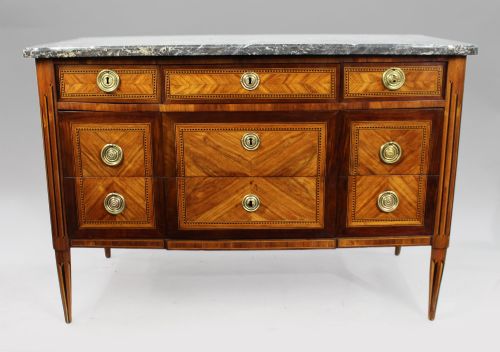
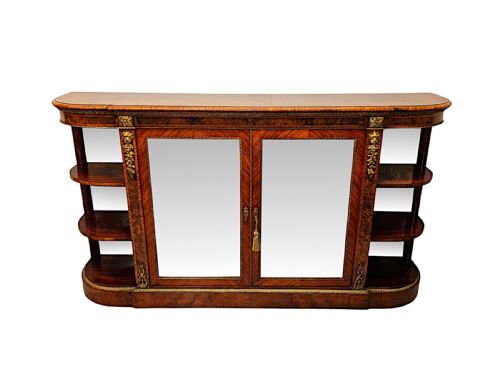
Mounts of ormolu and brass provide structural edge protection and decorative emphasis, while inset marble tops appear on commodes and side cabinets. Selected pieces incorporate ebonised wood details alongside porcelain plaques and glass panels to complete the composition.
Retail Price Guide 2026
Typical UK retail prices for marquetry walnut sideboard, calculated from the Sellingantiques database of over a million retail prices indexed since 2003. This retail price guide relies exclusively on Sellingantiques data; no external sources or auction records are used, so the figures do not describe the wider market.
Materials recorded across the inventory include burr walnut, ormolu, marble, porcelain, and ebonised wood.
Distinctions in Quality
Quality rests upon the selection of the burr walnut veneer and the precision of the floral marquetry inlay. Superior examples display tightly figured grain and complex, multi-toned botanical motifs that remain flush with the surrounding timber.
Finer pieces incorporate heavy cast ormolu mounts and architectural elements such as mirror backs and serpentine fronts. Maker attribution also elevates certain items, particularly those bearing the mark of established London cabinetmakers.
Edwards and Roberts of London·James Plunckett Art Furniture
The Marquetry Walnut Sideboard Glossary
- Marquetry
- Decorative veneer work forming pictures or patterns by assembling small pieces of different coloured woods. This technique requires exceptional precision from the cabinetmaker.
- Burr Walnut
- Timber taken from a tree growth or knot, yielding highly figured and swirling grain patterns. It is prized for luxurious furniture facings.
- Ormolu
- Gilded bronze mounts applied to furniture for decoration and edge protection. These metallic elements enhance the visual richness of nineteenth-century pieces.
- Credenza
- A sideboard or cabinet, frequently featuring glass doors and curved ends, popular in Victorian drawing rooms. It serves as both a display surface and storage unit.
- Ebonised Wood
- Timber treated to imitate ebony through staining or painting. This dark finish provides sharp contrast against lighter walnut veneers.
Frequently Asked Questions
What is a marquetry walnut sideboard?
A marquetry walnut sideboard is an elaborate nineteenth-century storage cabinet featuring patterned wood veneer inlays and rich walnut surfaces. These pieces were built primarily during the Victorian era for formal reception rooms.
They combine practical shelving and display space with artistic botanical designs rendered in contrasting timbers.
How do I identify a Victorian piece?
Victorian examples typically display characteristic burr walnut figuring, floral marquetry, and often gilt bronze or ormolu mounts. The construction methods and revival styles of the period help distinguish them from later reproductions.
Examine the secondary timbers inside the cabinet and the style of the brass hardware for period indicators.
Where should I place a credenza?
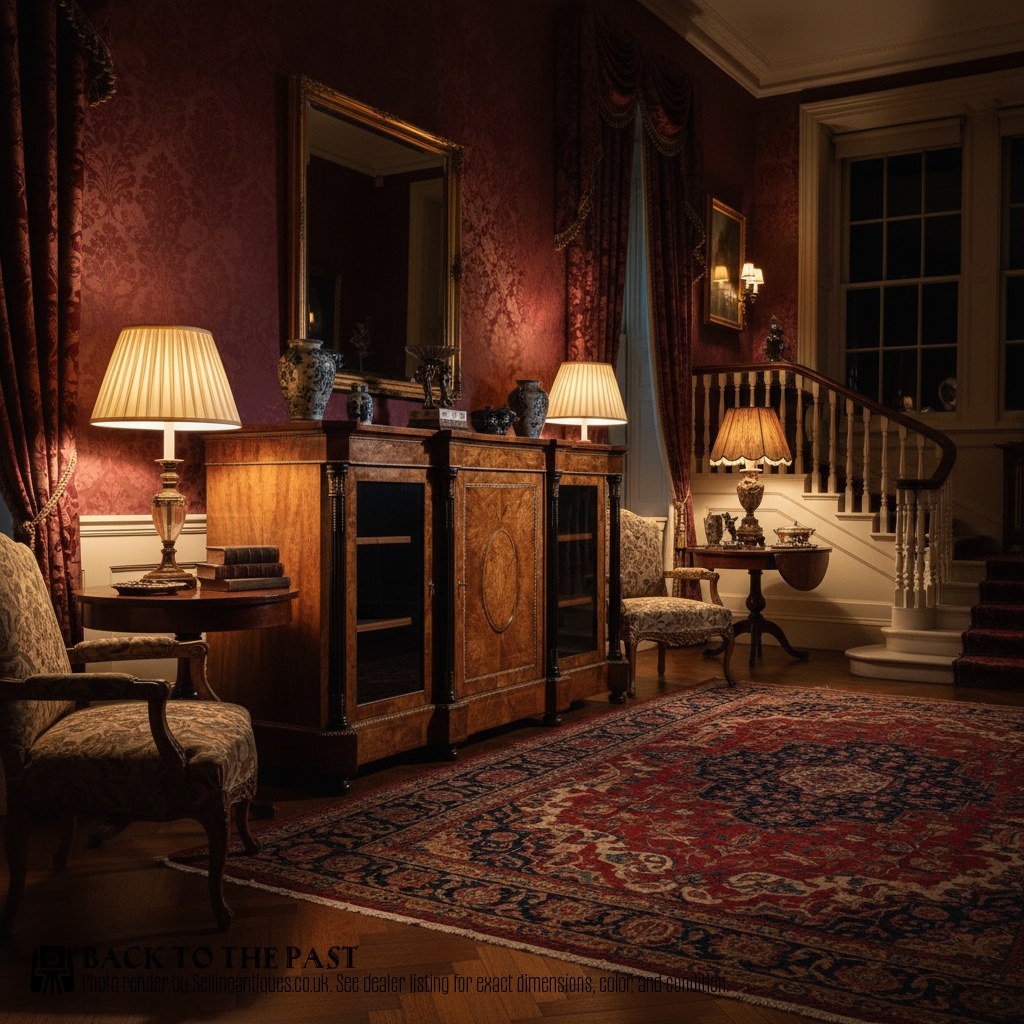
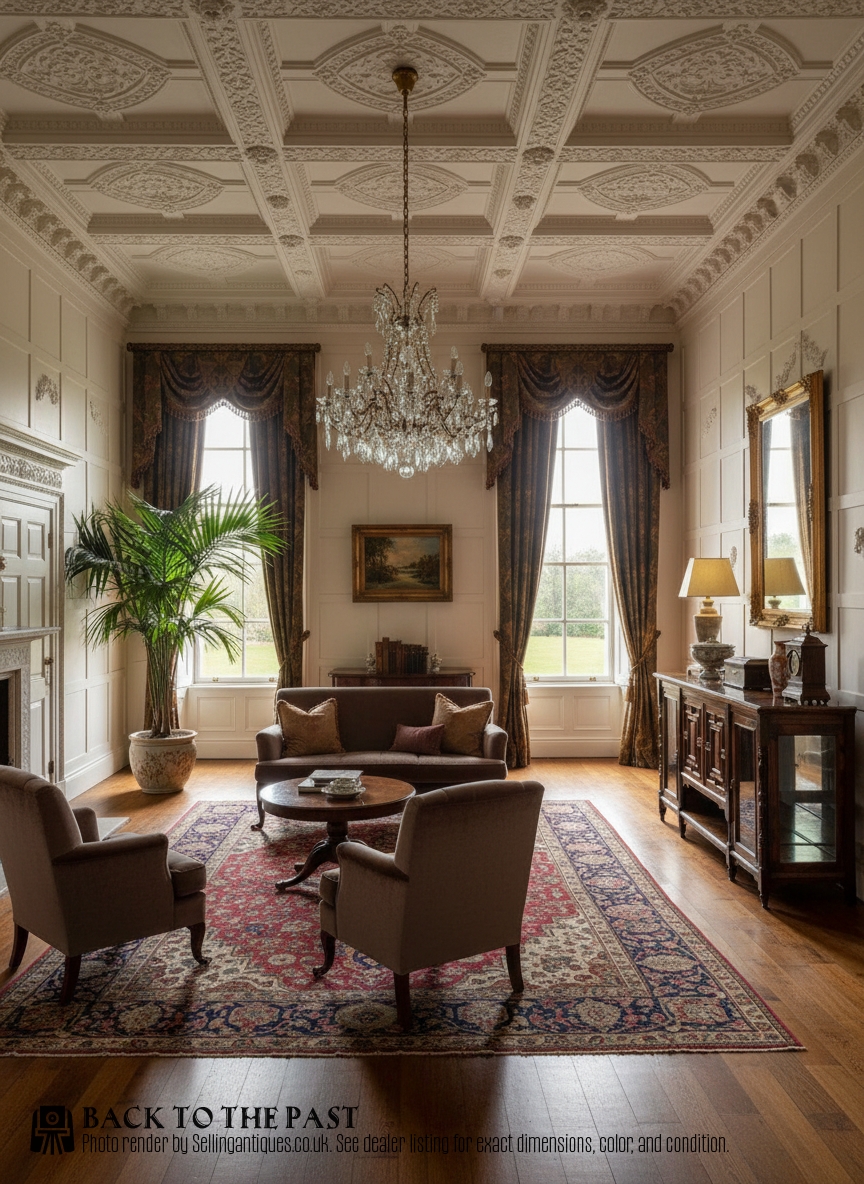
A credenza suits dining rooms, living spaces, or wide hallways where its low profile and decorative front can be appreciated. The flat top surface allows for lamps, ceramics, or decorative objects.
Keep these cabinets away from direct sunlight and strong heat sources to protect the delicate walnut veneer and inlay.