
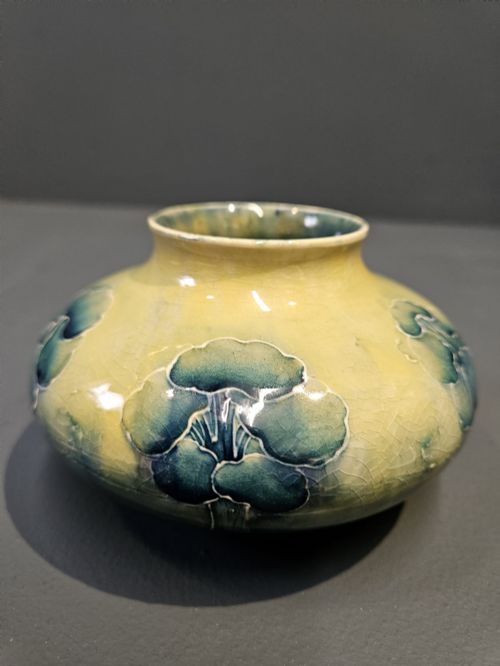


Tube Lined Pottery
Tube lined pottery brings tactile relief and rich colour to interiors through raised clay outlines applied before glazing.
Tube Lined Pottery
Tube lined pottery comprises decorative earthenware and stoneware pieces featuring raised outlines that contain vibrant glazes. Collectors searching for tube lined pottery encounter distinct forms ranging from slender Edwardian vases to substantial Art Deco bowls.
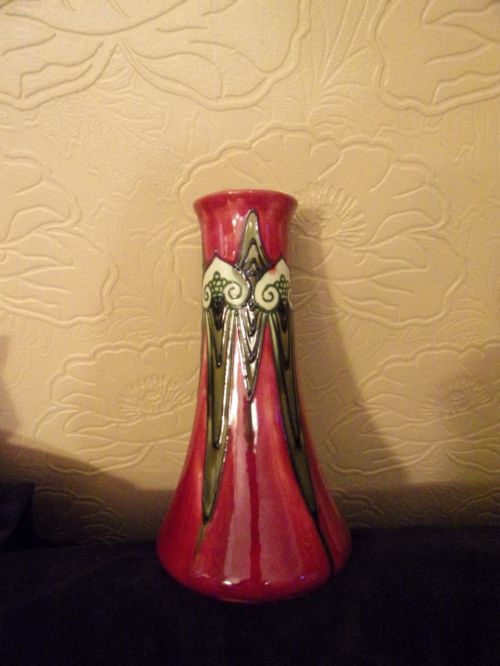
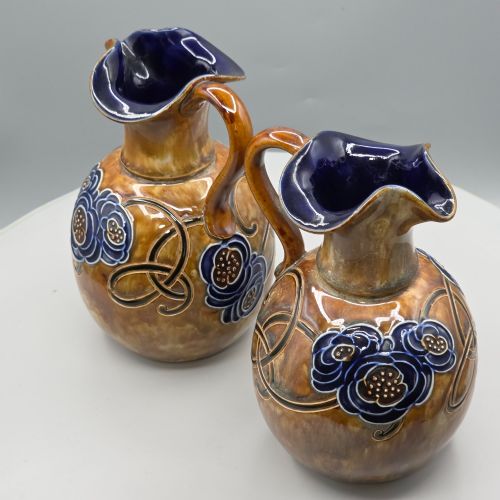
The objects available span several decades of British ceramic production, notably showcasing Arts and Crafts, Art Nouveau, Secessionist, and Art Deco styles. Vases, jugs, and tea services dominate the selection, offering rich patterns executed by notable designers and potteries.
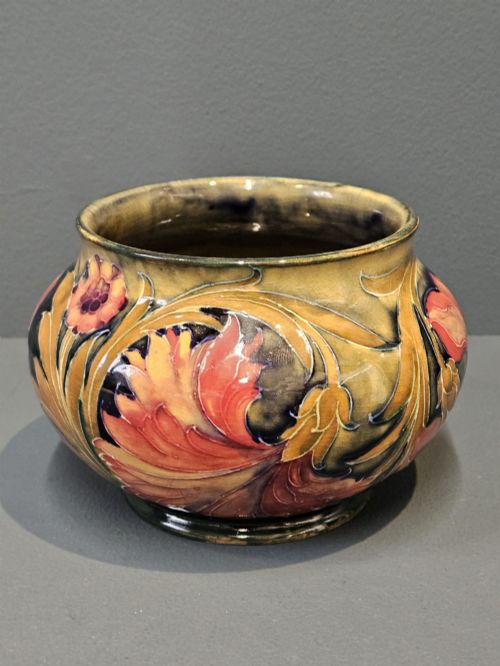
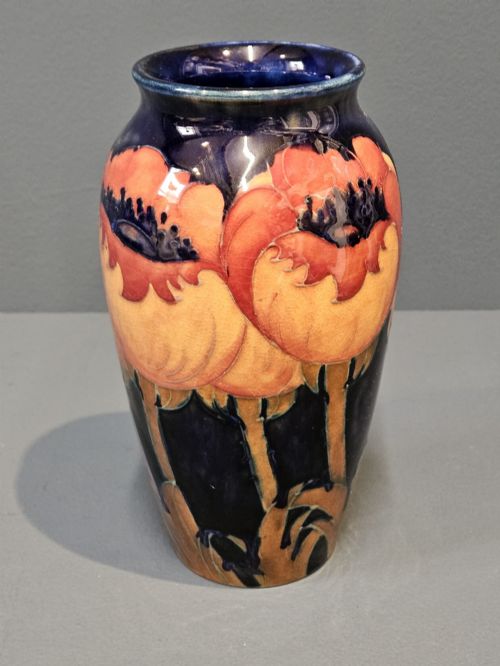
Vessels from this grouping frequently display organic motifs such as poppies and Hazeldene landscapes, alongside geometric trellis designs. These pieces reflect shifts in aesthetic movements from the turn of the twentieth century into the nineteen-thirties.
How they were made
Potters construct these vessels using earthenware and stoneware bodies shaped into vases, jugs, and bowls. Artisans apply liquid clay or slip through a fine tube onto the unfired ceramic surface to create the raised linear design.
Coloured glazes are carefully painted within the compartmentalised clay ridges before the piece undergoes firing. This technique fuses the ceramic glaze with the body, producing the characteristic glossy finish and textured contours.
Moorcroft pieces originally made for Liberty's allow modern collectors to own department store history from nineteen ten.
What varies in quality
The precision and delicacy of the raised clay line dictate much of the visual success of the piece, separating accomplished studio work from standard production. Sharper definition in the trailing enhances the graphic impact of floral and geometric motifs.
Depth and variation in the glaze colours separate standard examples from masterworks, particularly where flowing ceramic glazes pool within the compartmentalised sections. The ambition of the form and the clarity of factory or designer stamps further distinguish superior pieces.
Minton Secessionist·Royal Doulton·Moorcroft·Macintyre·Charlotte Rhead·Bursley Ware·J R Mally Co
The Tube Lined Pottery Glossary
- Tube lining
- A ceramic decoration technique where liquid clay is squeezed through a bulb or tube onto a pot to form raised outlines for enclosing glazes.
- Earthenware
- A porous ceramic body fired at lower temperatures that requires a vitreous glaze to hold liquids and achieve a smooth finish.
- Secessionist
- An early twentieth century stylistic movement favouring stylized natural motifs and bold forms, well represented in British art pottery.
- Glaze
- A glassy coating fused to ceramic surfaces through firing, providing colour, texture, and impermeability to the underlying earthenware or stoneware.
- Slip
- Liquid clay used in pottery for casting, decorating, or joining parts together before the firing process.
Tube Lined Pottery: Frequently Asked Questions
How do I clean tube lined pottery?
Dust these ceramic pieces gently with a soft dry cloth to protect the raised clay outlines and glazed surfaces.
Avoid immersing them in water, particularly older earthenware, as moisture can penetrate through tiny hairline cracks in the glaze.
Can I use these vases for fresh flowers?
Many of these vessels are glazed earthenware designed to hold water, but older pieces benefit from careful handling to prevent interior staining.
Using a small glass insert protects the historic ceramic body from prolonged exposure to moisture.
What periods do these pieces date from?
The selection spans from the late nineteenth century through the Edwardian era and into the nineteen-thirties.
Stylistic shifts from organic Art Nouveau to geometric Art Deco help date individual pieces alongside factory marks.
How are different design styles identified?
Arts and Crafts and Art Nouveau pieces often feature flowing plant forms and hand-drawn lines from the nineteen-hundreds.
Later nineteen-thirties examples by designers like Charlotte Rhead introduce repeating geometric patterns and bolder repeating motifs.