

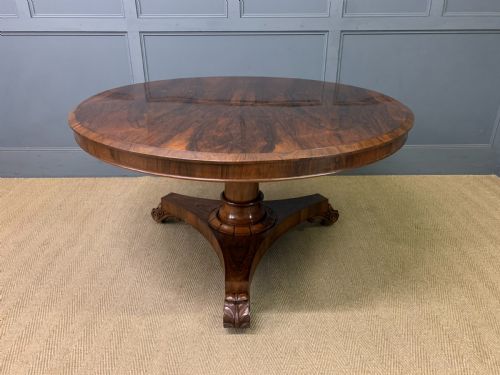
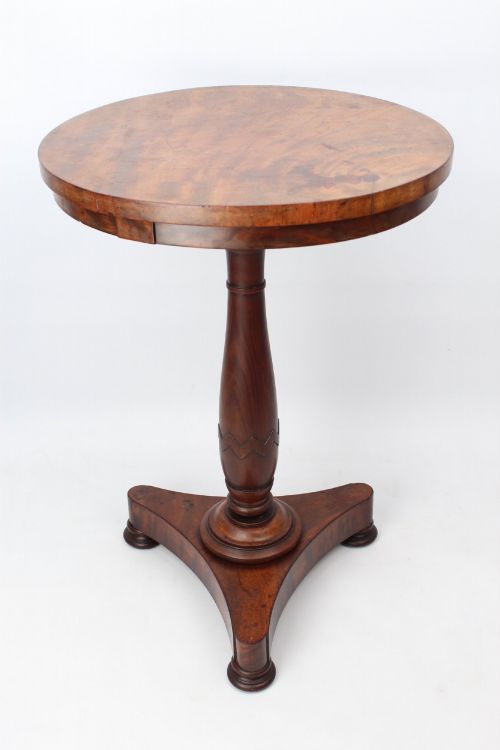
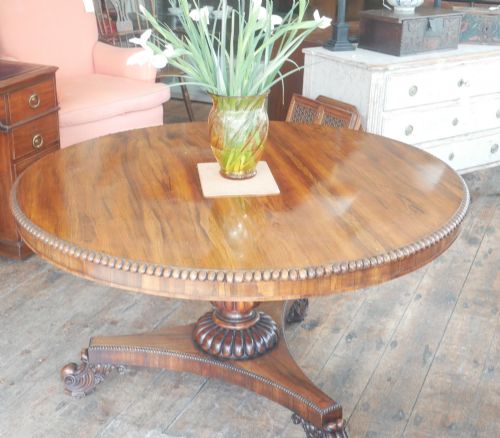
Triform Pedestal Table
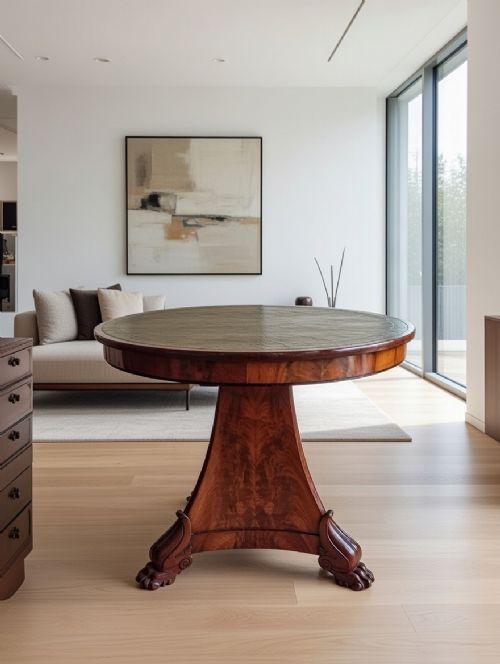
A triform pedestal table brings architectural solidity to a room, resting on a three-sided base that grounds mahogany, rosewood, and marble.
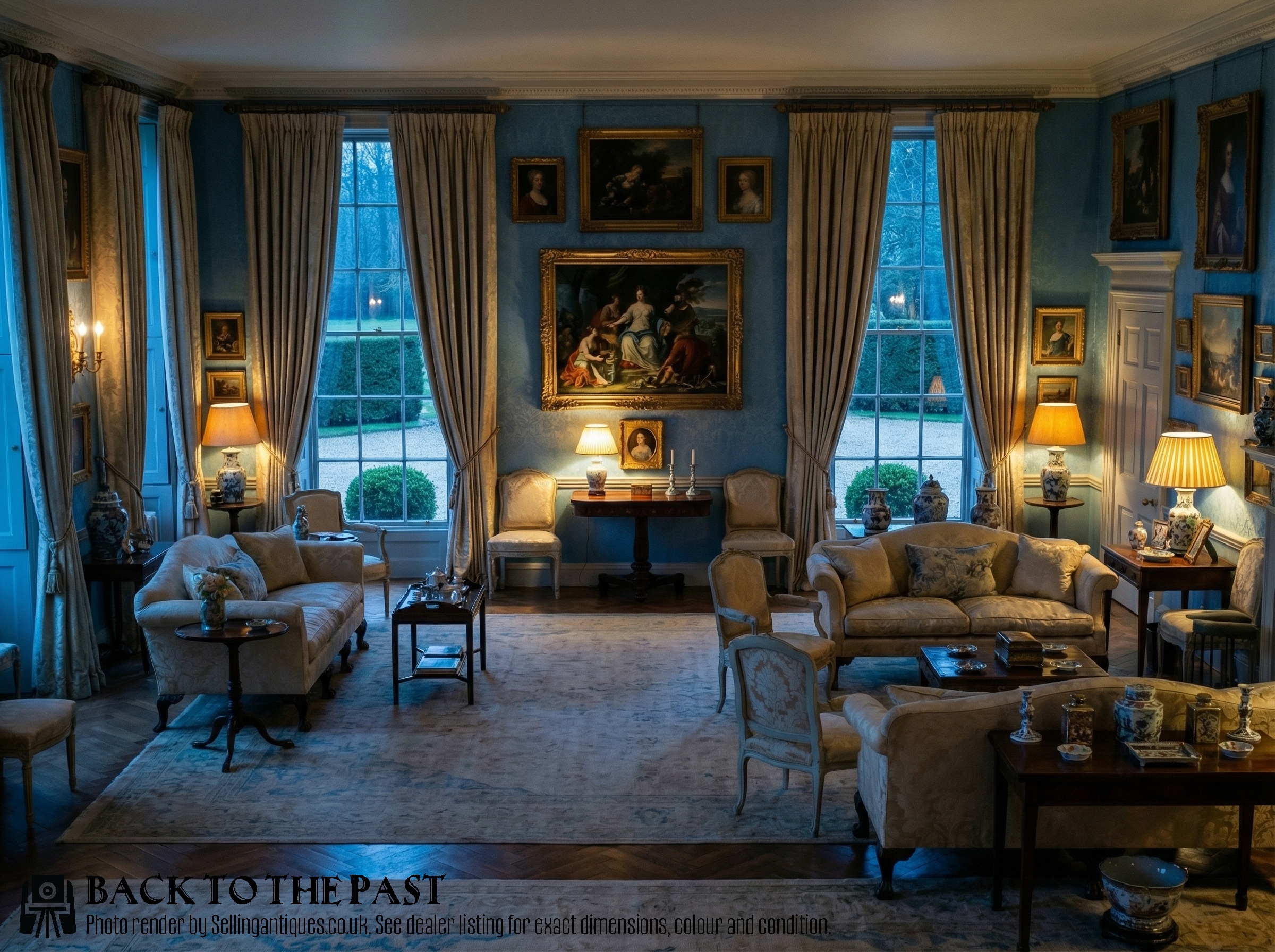
Triform Pedestal Table
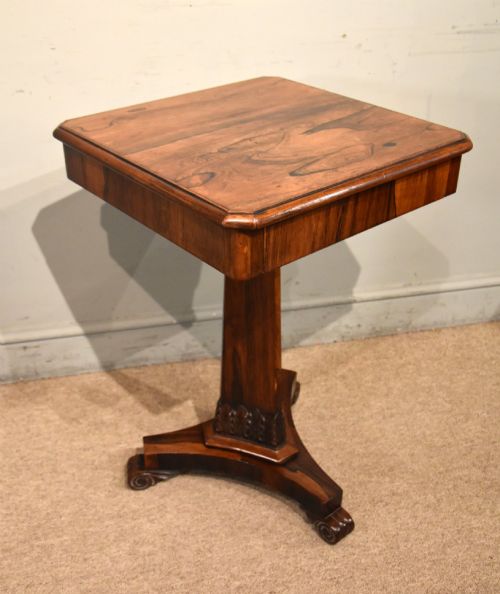
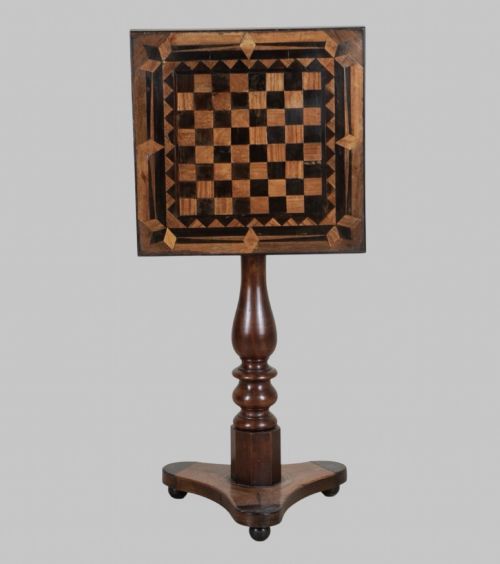
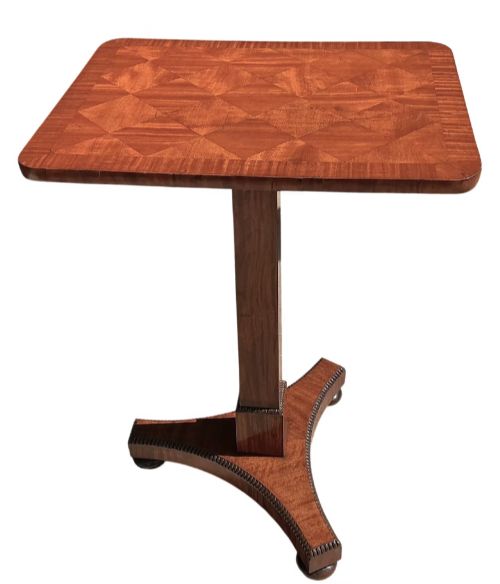
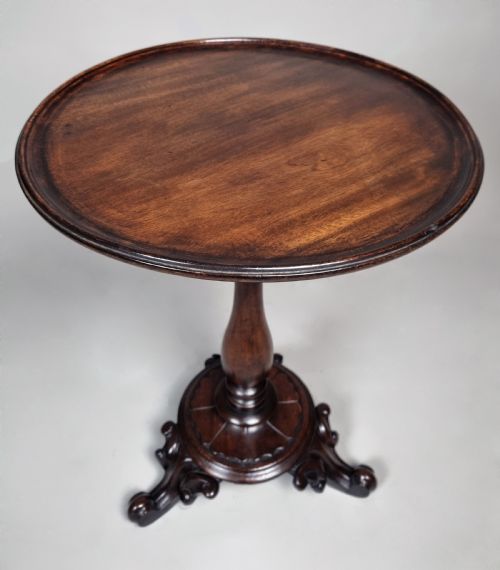
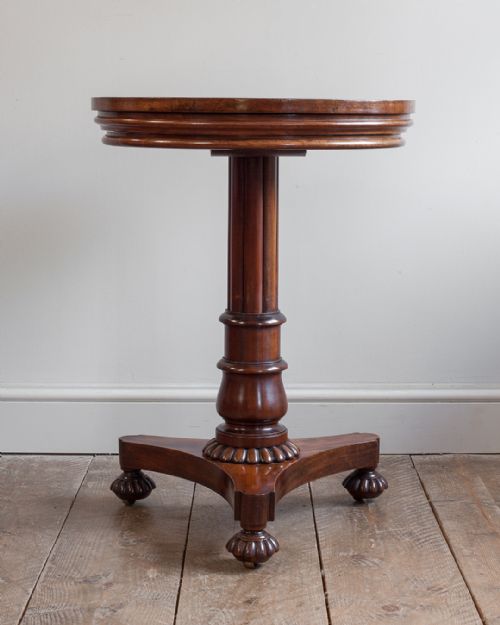
A triform pedestal table stands upon a three-sided base, balancing weight against a central pillar. These pieces appear across the Georgian, Regency, William IV, and Victorian periods, taking forms such as breakfast tables, games tables, wine tables, and gueridons.
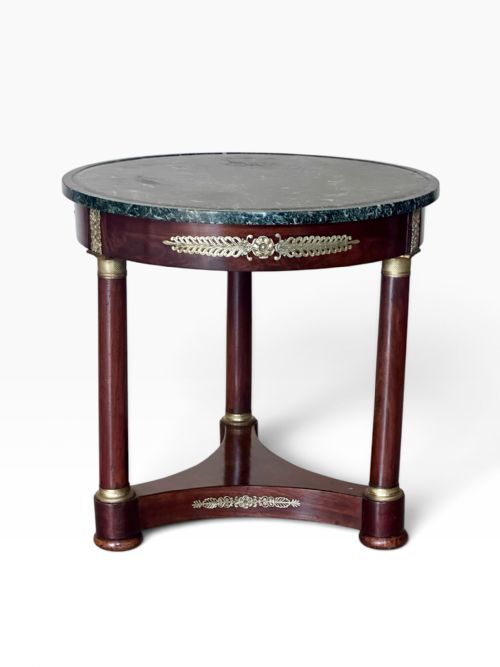
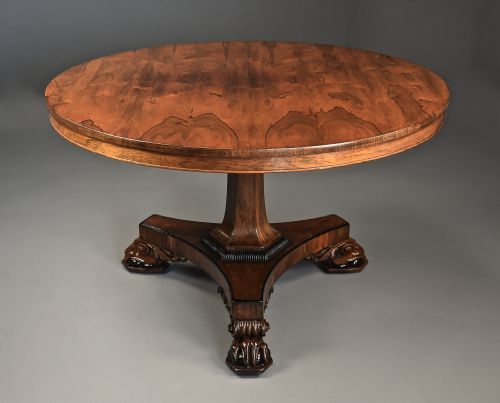
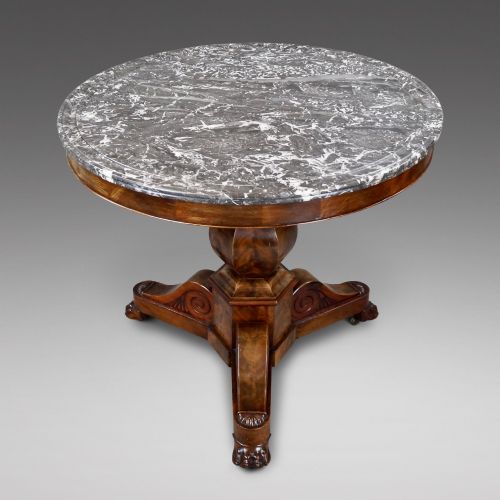
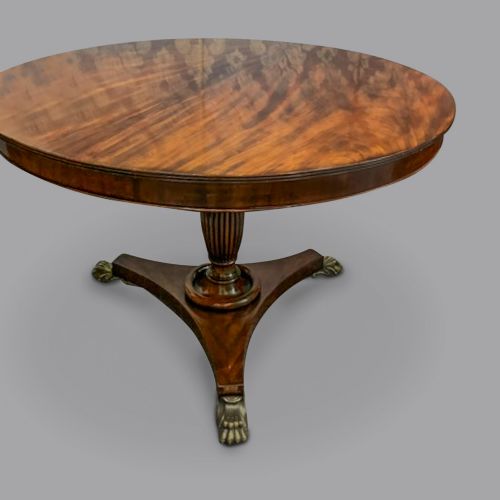
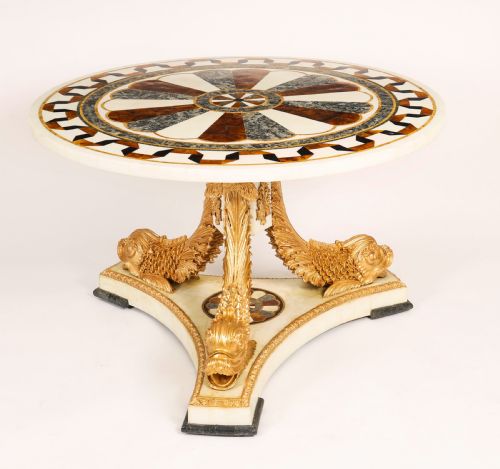
The rosewood breakfast table with a circular top and a triform base represents a mainstay of this inventory, frequently dating from the William IV era. Alongside these, French Empire and nineteenth-century gueridons deploy marble or flame mahogany tops above substantial three-sided supports.
Makers and workshops of the Regency and William IV periods utilised this architectural format for centre tables, occasional pieces, and library tables. The three-way symmetry provides stability while offering a distinct profile compared to four-legged furniture.
Materials and Construction
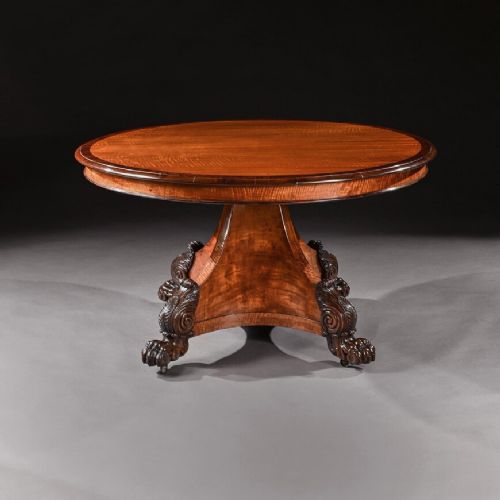
Cabinetmakers constructed these tables primarily in solid mahogany and rosewood, often applying flame mahogany veneers or satinwood details to enhance the visual grain. Rich timber selections were turned or carved into the central pillar and the three arms of the pedestal base.
Surface treatments frequently incorporate inset leather for games and writing tables, or polished marble slabs fitted directly into the circular wooden frames of gueridons. Giltwood, boxwood inlay, and parcel gilding appear as secondary decorative elements on Regency and Neo-classical examples.
Triform Pedestal Table Retail Price Guide 2026
Typical asking prices for triform pedestal table among the pieces listed under this phrase on Sellingantiques today, from the lower quarter to the upper quarter. They describe what is for sale here now, not the wider market.
The listings span mahogany, rosewood, and burr elm, paired with white or specimen marble tops.
Evaluating Quality
The caliber of a triform pedestal table rests upon the density of the timber and the crispness of the carving on the central pillar and feet. Heavier rosewood and figured mahogany denote superior selection by the original cabinetmaker.
Proportion dictates success in these designs, where the spread of the triform base must properly anchor the weight of the top. Superior examples display harmonious scaling between the central column and the platform or paw feet beneath.
Peters of Genoa·Walker-Lancaster
The Triform Pedestal Table Glossary
- Triform base
- A three-sided pedestal support that diverges from a central column to rest on three feet.
- Gueridon
- A small French round table supported by a single central pillar, often featuring a marble top.
- Tilt-top mechanism
- A hinge system allowing the table surface to fold vertically when not in use.
- Parcel gilt
- Woodwork decorated with partial applications of gold leaf to highlight carved details.
Triform Pedestal Table: Frequently Asked Questions
What rooms suit a triform pedestal table?
These pieces function effectively as centre tables in hallways or as breakfast and occasional tables in principal reception rooms. Their central pillar design allows seating or movement around the perimeter without interfering legs.
Circular tops work well positioned beneath a central ceiling rose or chandelier, establishing a focal point for the space.
How do I identify a William IV table?
William IV examples typically feature heavy rosewood or mahogany construction, robust pillar supports, and scrolling or paw feet on the triform base. Carved lotus motifs and concealed castors are common.
These pieces generally date between eighteen-thirty and eighteen-forty, sitting visually between the Regency and early Victorian periods.
Were marble tops original to gueridons?
Many nineteenth-century French gueridons incorporated inset white or coloured marble slabs designed to handle liquids and daily use without sustaining surface damage. These stone tops sat within a recessed wooden rim.
Inspect the underside of the marble and the rebate in the timber to understand how the top integrates with the frame.
Can a tilt-top table be used daily?
The tipping mechanism allows the table to store flat against a wall when floor space is required, following nineteenth-century domestic habits. The brass catch and block assembly secure the top when horizontal.
Routine daily use as a dining or lamp table places no undue strain on the mechanism if the locking catch remains sound.