


Tribal Lattice Rug
When choosing a tribal lattice rug, buyers seek geometric clarity and enduring village craftsmanship from nineteenth and early twentieth century weavers.
Tribal Lattice Rug
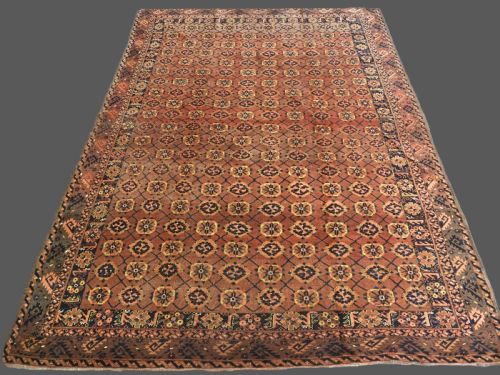
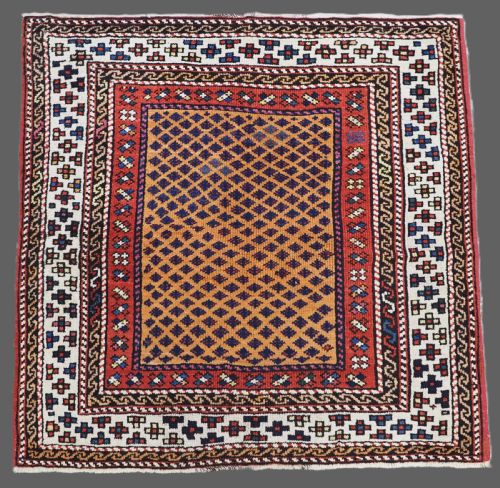
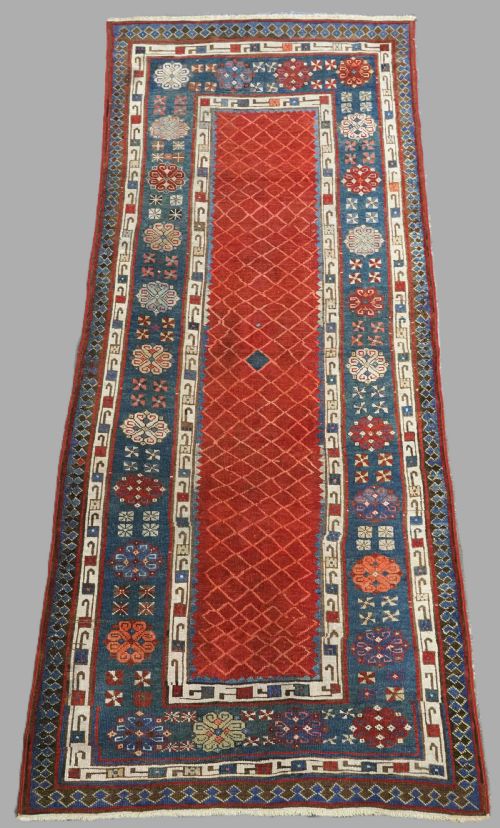
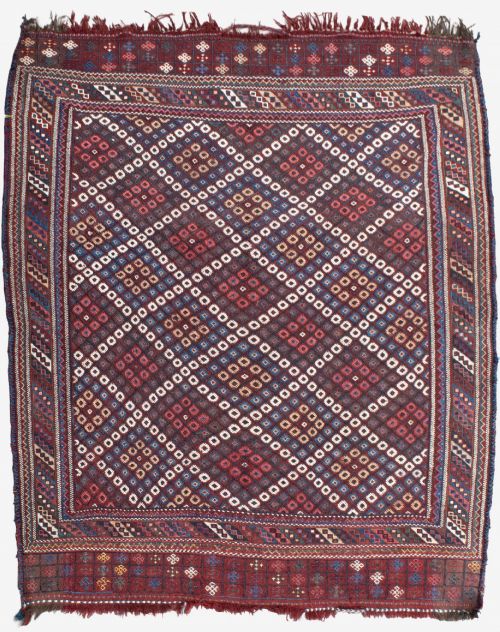
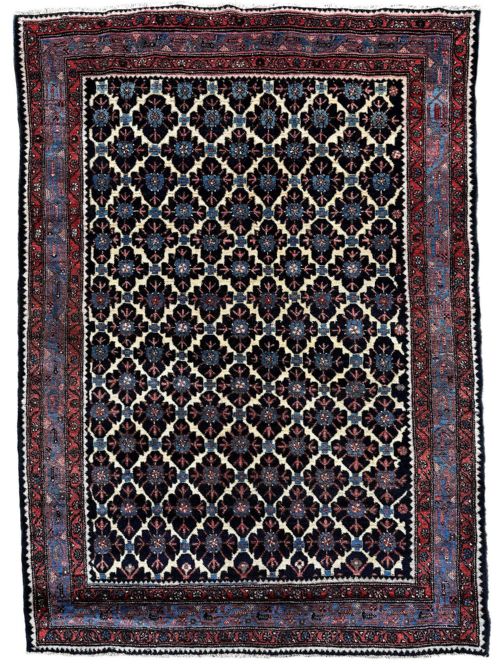
A tribal lattice rug presents a structured grid or repeating diamond framework across the field, often enclosing floral or geometric motifs. These pieces originate from village and nomadic workshops across the Caucasus, Persia, Anatolia and Central Asia, dating from the mid-nineteenth century to the early twentieth century.
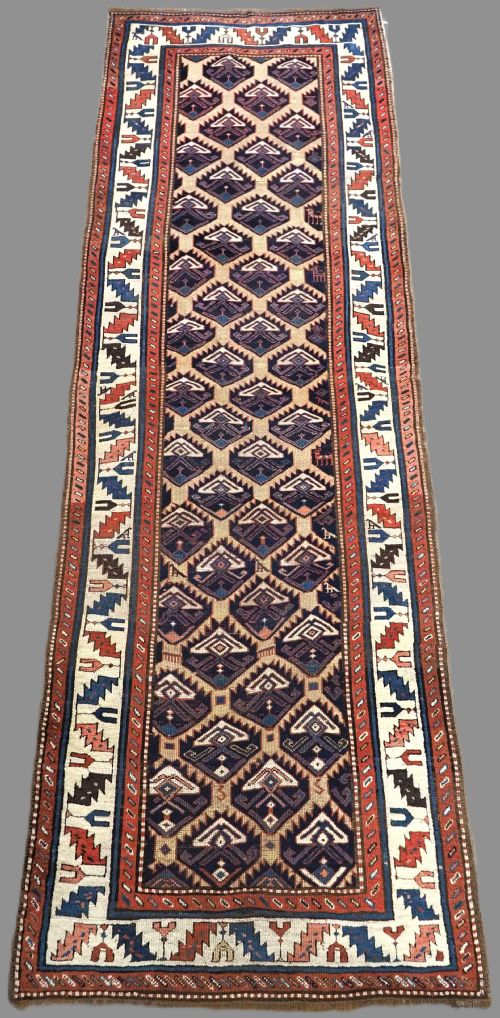
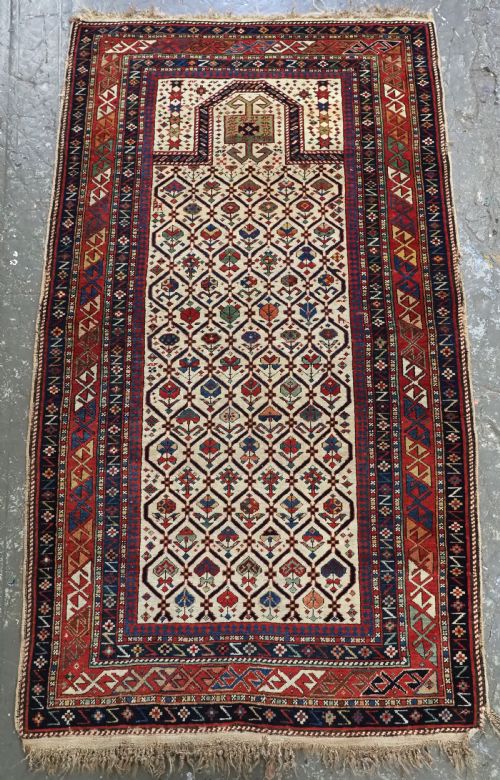
The format varies from square formats and small village rugs to elongated hallway runners and prayer rugs. Examples frequently showcase regional traditions associated with Caucasian, Turkmen, Kurdish and Baluch weaving groups.
Makers laid out these grid patterns by memory, resulting in charming irregularities within the symmetry. The tribal lattice rug remains a practical floor covering that anchors a room with historic character and tactile depth.
Materials and Construction
Weavers relied on hand-spun wool for the pile, providing resilience and a soft lustre that matures gracefully with age. Cotton foundations supplied stability for the geometric grid, while natural dyes yielded deep tones of indigo, madder red and ivory.
Nomadic and village textile production incorporated techniques such as soumak flatweaving and pile knotting. Artisans sourced local plants and minerals to colour the fleece, creating rich hues that interact uniquely across the lattice framework.
Some Baluch rugs hide a tiny asymmetric motif tucked away in the border, placed by the weaver to ward off the evil eye.
Assessing Quality and Execution
Quality rests in the crispness of the lattice geometry and the saturation of the natural dyes. Superior examples maintain balance within the repeat pattern while displaying subtle variations that confirm human execution rather than mechanical precision.
The handling of the wool fleece and the preservation of original borders and ends dictate the grade of a piece. Finer knot density and harmonious colour palettes distinguish the finest village and nomadic works from standard production.
The Tribal Lattice Rug Glossary
- Lattice
- A symmetrical network of intersecting lines forming diamond or grid compartments across the field of a rug. This design structures the empty space and organises secondary motifs.
- Soumak
- A flatweave technique where supplementary pattern threads wrap over the warp threads in a herringbone effect. It adds structural weight and distinct texture without a cut pile.
- Prayer Rug
- A small format featuring a mihrab or arch design at one end, traditionally pointed toward Mecca during worship. These pieces often incorporate detailed floral lattices.
- Natural Dyes
- Colorants extracted from plants, insects and minerals before synthetic alternatives dominated the market. They produce complex, ageing patinas that chemically bond with wool.
- Runner
- An elongated narrow format designed for hallways, corridors or bedside placement. These formats frequently employ repeating lattice or diamond designs to draw the eye along the length.
Tribal Lattice Rug: Frequently Asked Questions
Where were these rugs made?
Weavers produced these textiles across nomadic and village communities in the Caucasus, Persia, Anatolia and Central Asia. Specific regional groups such as the Qashqai, Yomut, Shirvan and Baluch contributed distinct tribal aesthetics.
Production took place within domestic environments where families sheared sheep, spun wool by hand and tied knots on upright vertical looms.
Can I place these rugs in high traffic areas?
Wool pile combined with a sturdy cotton or wool foundation provides robust durability suitable for moderate domestic foot traffic. Regular rotation distributes wear evenly across the surface of the textile.
Placing a breathable, high-grade underlay beneath the rug prevents slipping and reduces friction between the floorboards and the historic foundation.
How do I identify the age of a piece?
Dating relies on analyzing the palette of natural dyes, the specific structural knotting techniques and regional design motifs. Gradual wear patterns and hand-spun wool characteristics provide physical evidence of nineteenth or early twentieth century origin.
Comparing structural details against documented tribal archives helps narrow the production period to specific decades within the Victorian and Edwardian eras.