



Tribal Bag Face Panel
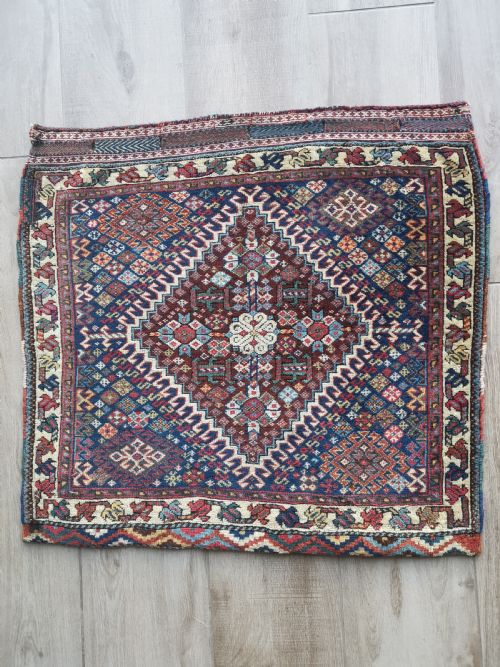
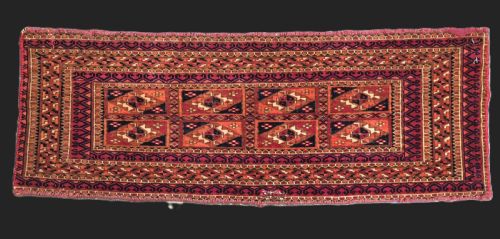
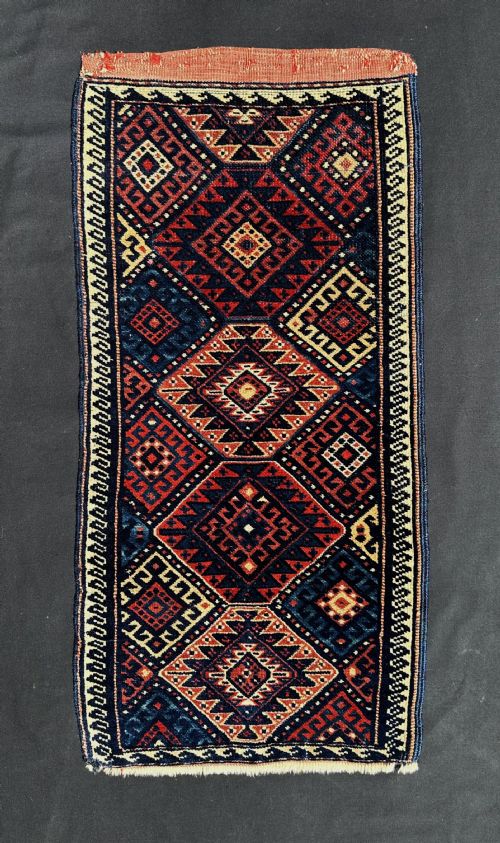
A tribal bag face panel preserves the vibrant weaving traditions of nomadic and village makers through intricate geometric motifs.
Tribal Bag Face Panel
A tribal bag face panel represents the front of a nomadic storage container, such as a torba, chuval, or mafrash, which was originally used inside a tent or during migration. These textiles display distinct tribal patterns associated with groups including the Tekke Turkmen, Yomut, Ersari, Shahsavan, and Qashqai.
Most examples found on this page date from the nineteenth century, spanning from the eighteen-fifties through to the nineteen-twenties. They originate from regions across Central Asia, the Caucasus, and Persia.
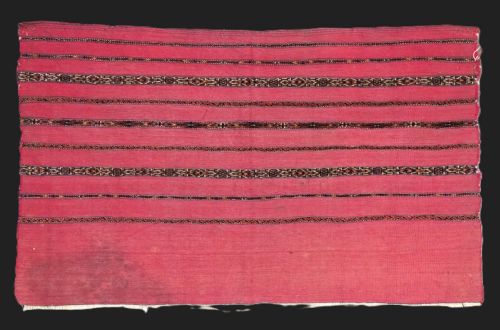
Makers cut away the utilitarian plain-weave backs over time, leaving only the decorative front panel for display and collection.
Materials and construction
Weavers relied primarily on hand-spun wool for the pile and foundation, often supplemented with cotton for white highlights and occasional touches of silk for contrast. Natural and vegetable dyes provided a rich palette of deep crimson, madder red, indigo, and earth tones.
Construction techniques vary from dense wool pile knotted onto warp and weft foundations to flatwoven sumac work that creates crisp, embroidered-looking geometric designs.
Listings feature nineteenth-century Turkmen, Shahsavan, and Qashqai bag faces woven with hand-spun wool and natural dyes.
Distinctions in quality
Quality rests in the precision of the drawing, the crispness of the tribal guls or medallions, and the depth achieved through natural dye use. Finer knotting density and balanced proportions elevate certain panels above standard utility pieces.
Condition and completeness also govern worth, as intact early examples with original finishes demonstrate superior preservation compared to heavily restored fragments.
Tekke Turkmen·Yomut Turkmen·Ersari Turkmen·Shahsavan·Qashqai
The Tribal Bag Face Panel Glossary
- Torba
- A small, wide storage bag traditionally used in Turkmen tents for holding domestic items. These pieces feature horizontal formats and detailed primary guls.
- Chuval
- A large tent bag utilised by nomads for bedding and clothing storage. The face panels display repeated primary medallion designs.
- Gul
- A primary medallion or octagonal motif repeated across Turkmen and Central Asian tribal weaving. Each tribal group utilised distinct gul variations to signal identity.
- Sumac
- A supplementary warp-wrap flatweaving technique that produces a durable, textured surface with clear graphic lines. This method frequently appears in Shahsavan work.
- Mafrash
- A rectangular storage bale or box-bag used during tribal migrations. Surviving faces show banded flatweave or pile designs.
Tribal Bag Face Panel: Frequently Asked Questions
What were tribal bag face panels used for?
Nomadic families utilised these bags inside tents for storing household possessions, bedding, and provisions during seasonal migrations. The decorated faces formed the visible fronts of functional containers.
Over decades, the plain backs wore out or were removed, leaving collectors with the decorative panels we preserve today.
How do you tell different tribal designs apart?
Weavers applied specific repeating motifs known as guls, along with distinct colour palettes and border structures, to identify their tribal lineage. For example, Tekke and Yomut pieces use precise octagonal guls, while Shahsavan panels often display bird and dragon motifs.
Examining the structure, knotting style, and secondary colours helps confirm the specific regional origin.
How should I display a bag face panel?
Many collectors mount these flat textiles securely on linen-backed frames or hang them directly onto walls using non-damaging display methods. Keeping them away from direct sunlight protects the natural dyes from fading.
Gentle vacuuming with a mesh screen safeguards the old wool pile from dust accumulation.
When were these textile panels made?
The pieces available here date predominantly from the nineteenth century, with examples spanning from the eighteen-fifties to the early twentieth century. Nineteenth-century weaving traditions relied on hand-spun materials and traditional dye recipes.
Earlier examples from the mid-nineteenth century often display greater chromatic depth through the use of high-grade madder and indigo.