



Vintage Turkmen Textile Art
These vintage turkmen textile art pieces bring rich nomadic heritage into modern interiors through bold tribal motifs and deep madder red tones.
Vintage Turkmen Textile Art
Vintage turkmen textile art comprises tribal weaving and embroidery produced across the Central Asian steppes by groups such as the Yomut, Tekke, and Ersari tribes. These artefacts range from utilitarian storage bags and camel trappings to ceremonial coats and wall hangings dating from the nineteenth century.
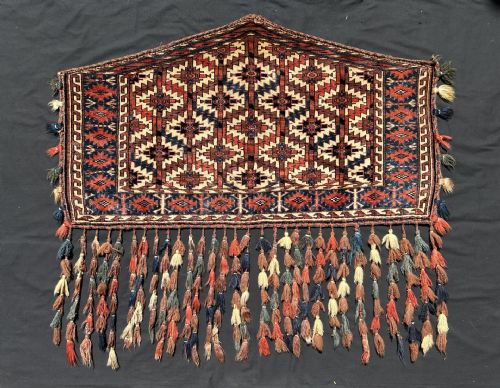
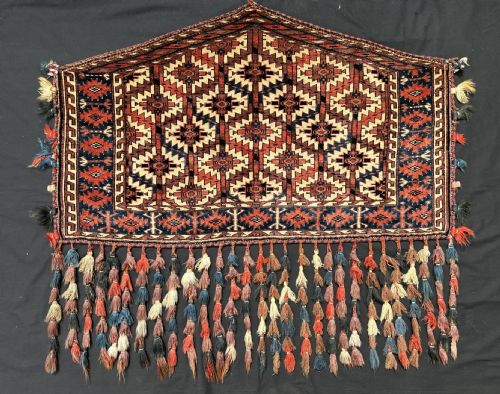
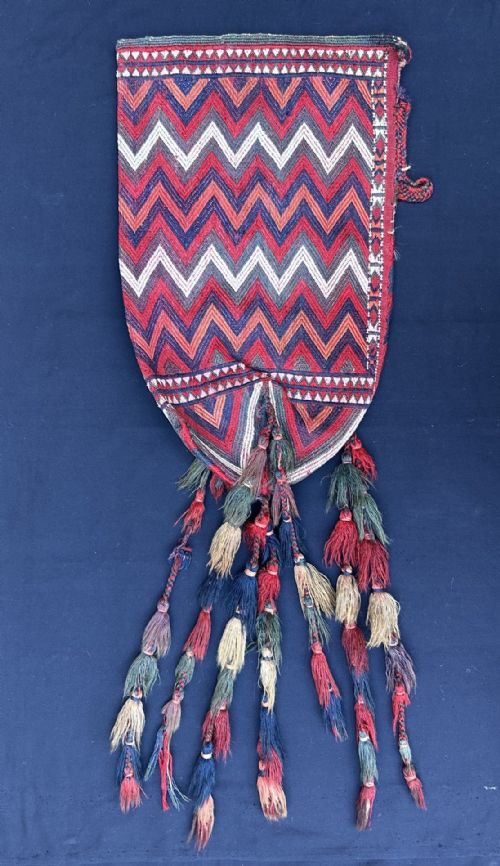
Buyers on this page encounter functional household items reimagined as striking decorative focal points. Pieces such as asmalyks, torbas, and chuvals dominate the selection, showcasing traditional geometric patterns and tribal partitioning.
The objects reflect the nomadic lifestyle of nineteenth century Turkmen weavers, utilising durable wool structures designed for mobility and daily camp use. Each item carries distinct tribal markers that identify its origin within the Trans-Caspian region.
What varies in quality
Quality rests upon the fineness of the weave, the clarity and complexity of the tribal guls, and the integrity of the natural dye palette. Tightly packed knots and balanced proportions separate utilitarian camp pieces from finer tribal commissions.
The condition of the wool pile, the presence of original plain weave backs, and the survival of delicate silk embroidery details dictate the overall standing of an individual textile.
Several bags retain their original plain weave wool backs, offering a hidden glimpse of unadorned camp utility behind the grand geometric façades.
The Vintage Turkmen Textile Art Glossary
- Asmalyk
- A pentagonal trapping traditionally hung on the flanks of a camel during Turkmen wedding processions. These decorative pieces display elaborate geometric field designs.
- Chuval
- A large rectangular storage bag used within the yurt for bedding and household possessions. They feature prominent rows of primary guls.
- Torba
- A smaller wall-hanging bag utilised for storing personal items and utensils inside the nomadic tent. These domestic objects display distinct tribal border patterns.
- Gul
- A primary medallion motif repeated across Turkmen carpets and trappings to identify specific tribal groups. Each design element carries generational significance.
- Chyrpy
- A heavily embroidered ladies ceremonial coat worn by Turkmen women, featuring silk stitching over a dark cotton or silk ground.
Vintage Turkmen Textile Art: Frequently Asked Questions
How were these bags used originally?
Nomadic families utilised these textiles for storage, transport, and ceremonial display inside portable dwellings.
Larger bags held blankets and clothing, while smaller torbas kept personal items organised off the damp ground.
What tribes made these textiles?
Weavers from the Yomut, Tekke, and Ersari tribes produced the majority of these pieces across the Central Asian steppes.
Each group utilised distinct colour palettes, wool qualities, and geometric gul motifs to signal their lineage.
How do I hang these on walls?
Mounting requires a supportive sleeve or specialised textile display clips that distribute weight evenly across the wool foundation.
Avoid direct piercing with nails or pins to prevent tearing the fragile antique fibres over time.
How do I clean antique textiles?
Gentle surface dusting with a soft brush and low-suction vacuuming through a mesh screen preserves the wool pile.
Professional textile conservators should handle any wet cleaning to prevent dye migration and shrinkage.
Are these pieces made with natural dyes?
Nineteenth century Turkmen weavers relied on plant and insect extracts, such as madder root, to produce deep reds and browns.
These natural colours mellow gracefully with age, showing subtle abrash variations across the woven surface.