


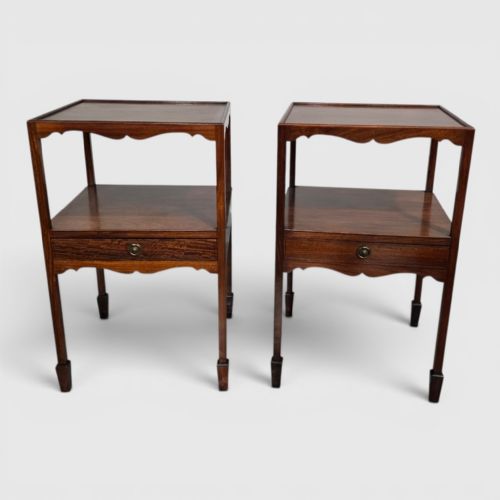
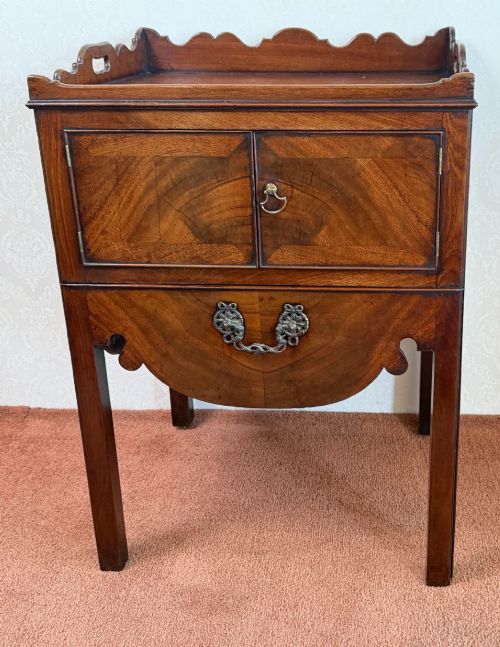
Tray Top Bedside Cabinet
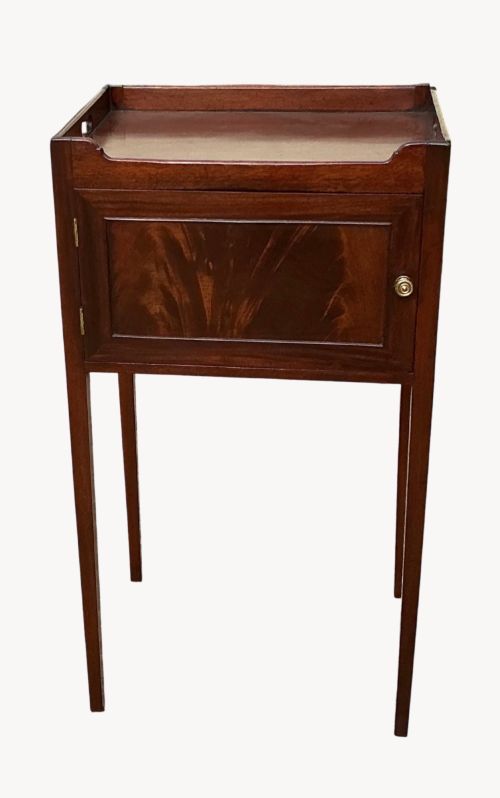
A tray top bedside cabinet brings practical elegance to the bedroom, offering a raised gallery surface alongside concealed storage.
Tray Top Bedside Cabinet
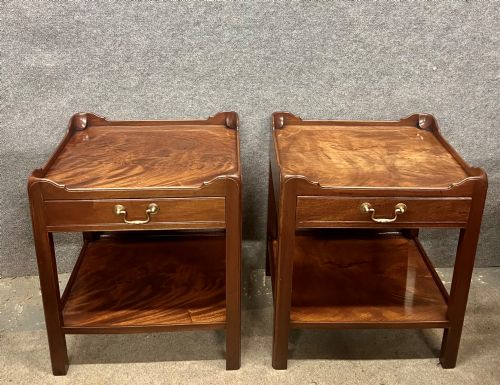
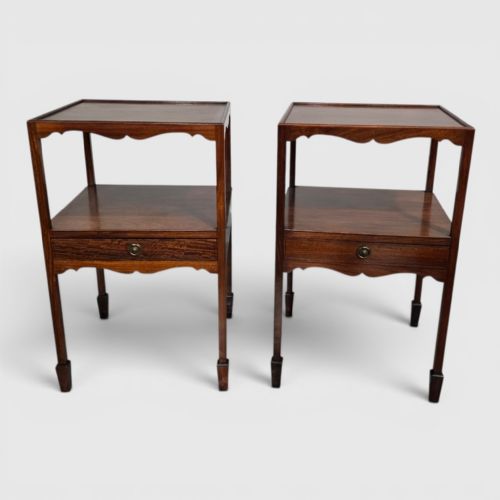
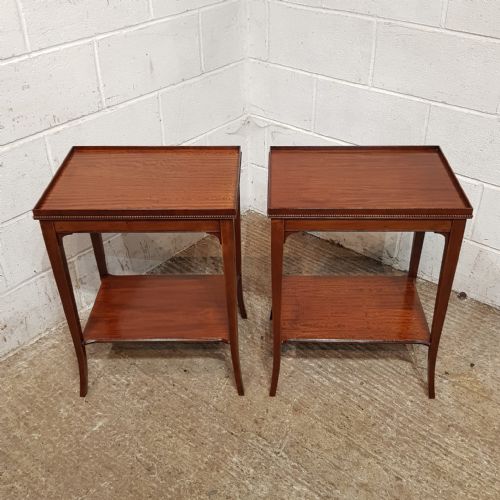
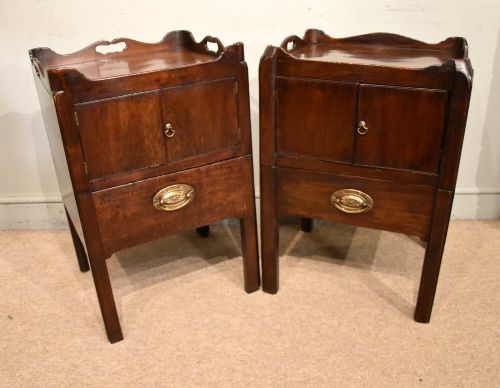
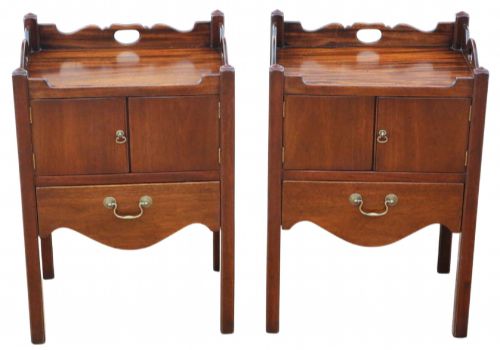
A tray top bedside cabinet is a compact bedroom furniture piece designed with a raised rim or gallery edge to prevent items from slipping off the top surface. The search phrase encompasses traditional bedside tables, nightstands, commodes, and pot cupboards spanning the Georgian, Regency, Victorian, Edwardian, and early twentieth century periods.
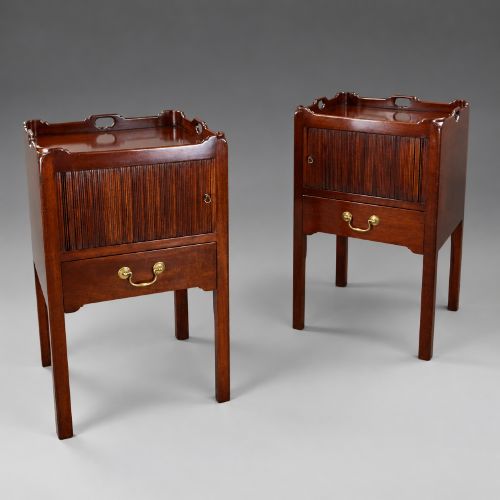
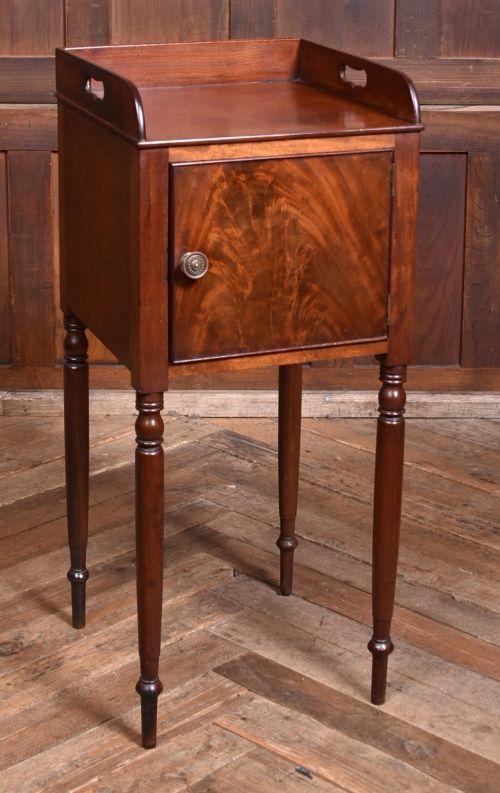
The majority of pieces encountered here date from the eighteenth century through to the Regency era, constructed primarily in solid mahogany or flame mahogany veneer. Buyers frequently find matching pairs alongside single examples, reflecting how these cabinets were originally commissioned for period bedchambers.
How they were made
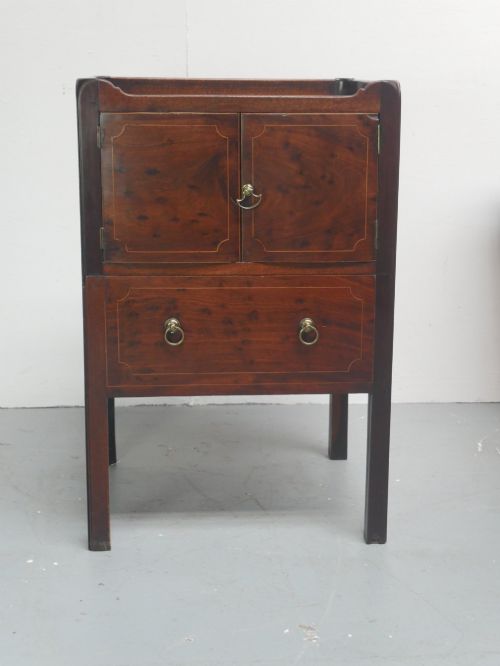
Cabinet makers utilised dense timbers such as mahogany and satinwood, often accentuating the primary wood with delicate boxwood inlay or contrasting brass hardware. The defining tray top feature was typically formed by shaping solid timber rails or curving veneers to create a raised barrier around the upper surface.
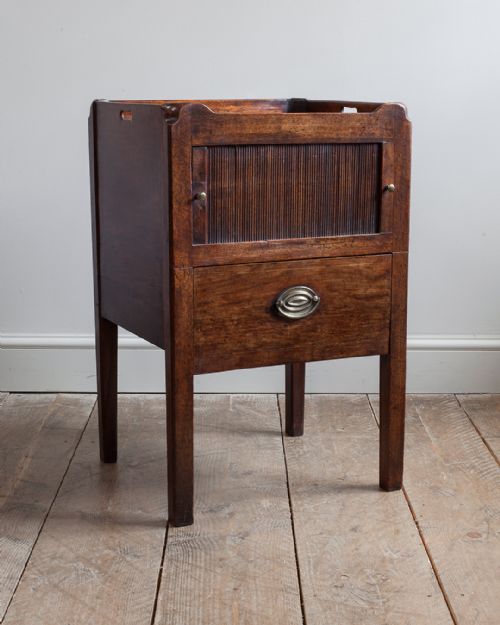
Construction methods relied on traditional joinery techniques to support enclosed cupboards, tambour doors, or open compartments beneath the main surface. Artisans also incorporated hand-painted detailing and marquetry on specific stylistic variations originating from the Georgian and Regency periods.
Tray Top Bedside Cabinet Retail Price Guide 2026
Typical asking prices for tray top bedside cabinet among the pieces listed under this phrase on Sellingantiques today, from the lower quarter to the upper quarter. They describe what is for sale here now, not the wider market.
Materials documented across the inventory include mahogany, satinwood, burr walnut, brass, and leather.
What varies in quality
The standard of a tray top bedside cabinet depends heavily on the grain selection of the timber, particularly when flame mahogany veneer or figured satinwood is employed on the exterior surfaces. Finer examples display meticulous attention to detail in the execution of boxwood inlay, hand-painted motifs, and the seamless integration of the raised gallery edge.
Proportion and structural integrity also dictate the calibre of the piece, with superior specimens retaining their original brass handles, hinges, and internal fittings without unnecessary alterations. Matched pairs demonstrating consistent timber ageing and uniform cabinet work command particular attention from collectors.
The Tray Top Bedside Cabinet Glossary
- Tray top
- A furniture surface finished with a raised rim or moulded gallery designed to secure objects placed upon it.
- Pot cupboard
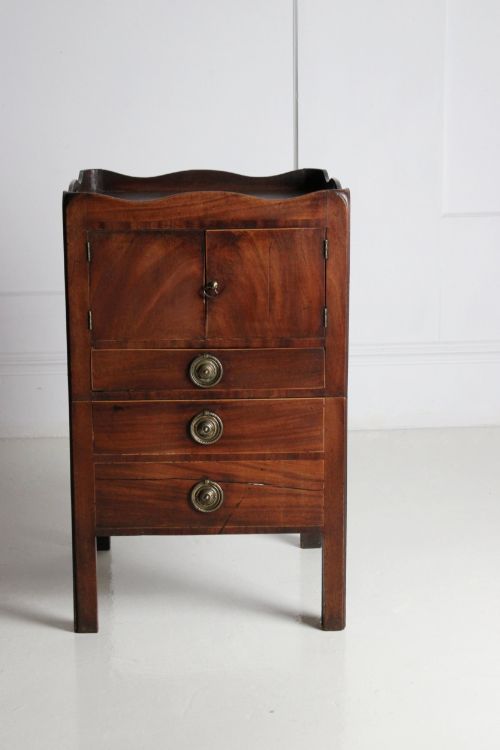
- A small enclosed bedside cabinet historically utilised to house a chamber pot.
- Commode
- A term applied in these listings to decorative enclosed bedside tables with cabinet doors or drawers.
- Tambour
- A flexible shutter door constructed from narrow vertical strips of wood glued to a canvas backing.
- Flame mahogany
- A veneer cut from the fork of the mahogany tree, producing a distinctive flickering flame-like grain pattern.
Tray Top Bedside Cabinet: Frequently Asked Questions
What is a tray top bedside cabinet?
A tray top bedside cabinet is a small table featuring a raised gallery edge around the perimeter of the top surface. This raised border was originally designed to stop items from rolling off.
Beneath this distinctive surface, these cabinets typically provide enclosed storage through cupboard doors or drawer spaces. They appear across Georgian, Regency, and later periods as functional bedroom furniture.
How were these cabinets used historically?
These pieces served practical functions in period bedchambers, holding lighting, personal items, or water pitchers on the top surface. Enclosed lower compartments often functioned as pot cupboards or nightstands to keep bedroom essentials out of sight.
Pairs were frequently placed on either side of larger beds, while single pieces stood beside smaller sleeping quarters. Their compact footprints made them adaptable to various corners of the home.
How do I date a Georgian cabinet?
Dating relies on observing construction characteristics, timber choices, and stylistic traits associated with the eighteenth century. George III pieces often feature solid mahogany construction, precise dovetail joinery, and restrained inlay work.
Later Victorian and Edwardian interpretations often adopted lighter woods like satinwood or incorporated revival styling. Comparing the hardware and internal secondary timbers helps confirm the manufacturing era.
Can I use an antique cabinet today?
These cabinets integrate smoothly into contemporary bedrooms as bedside tables or lamp tables. Their enclosed storage remains practical for modern belongings while offering historic character.
The raised tray top functions just as well today for securing phones, books, and lamps. Their modest proportions ensure they fit comfortably beside standard bed heights.