


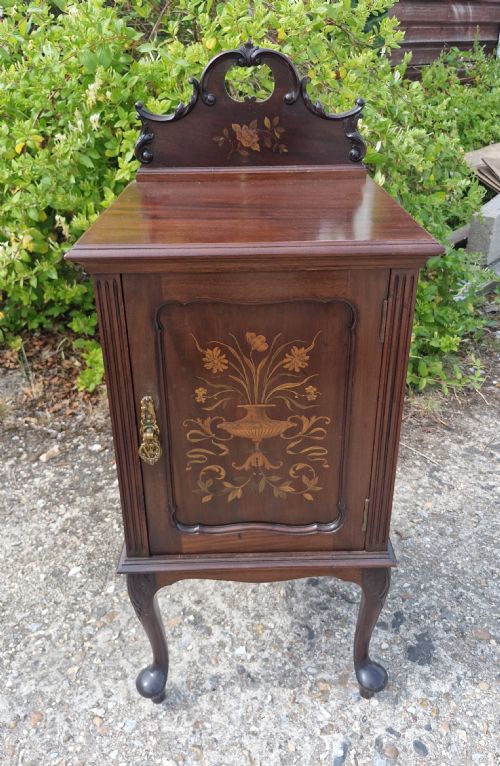

Mahogany Night Cupboard
A mahogany night cupboard brings eighteenth-century practicality to the bedside, offering enclosed storage with period elegance.
Mahogany Night Cupboard
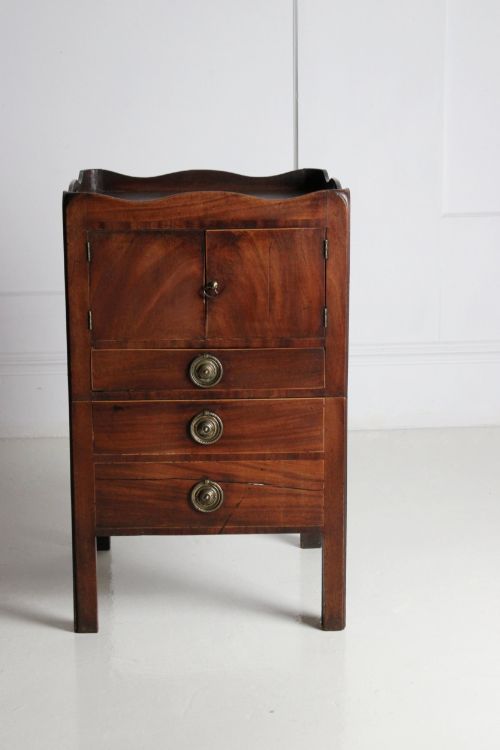
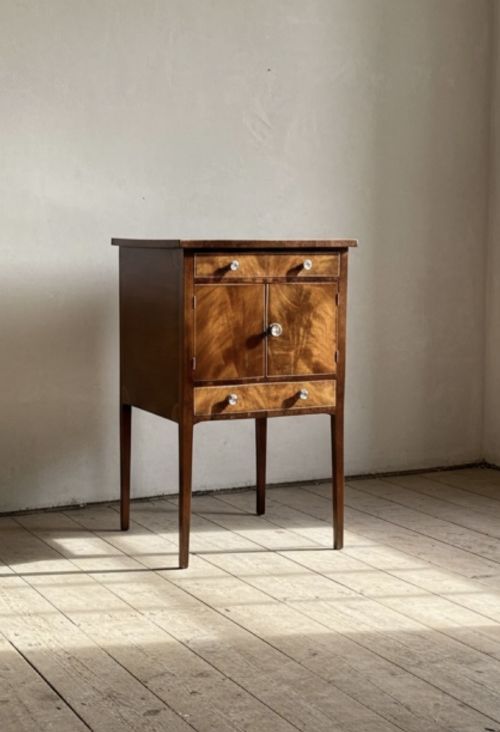
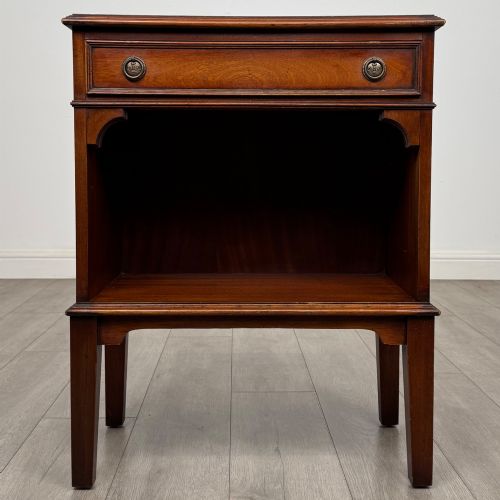
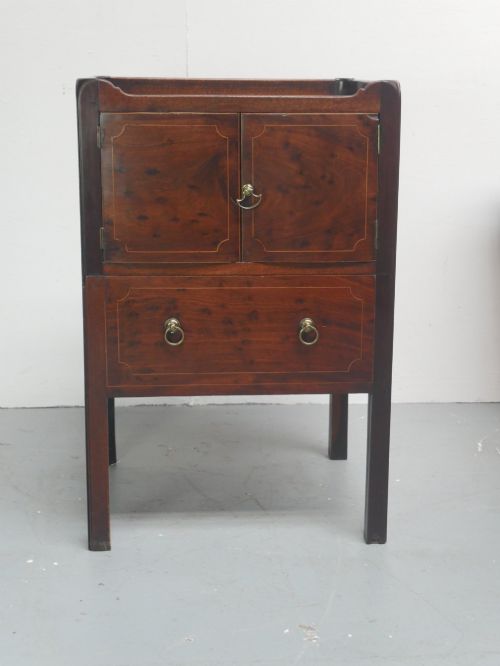
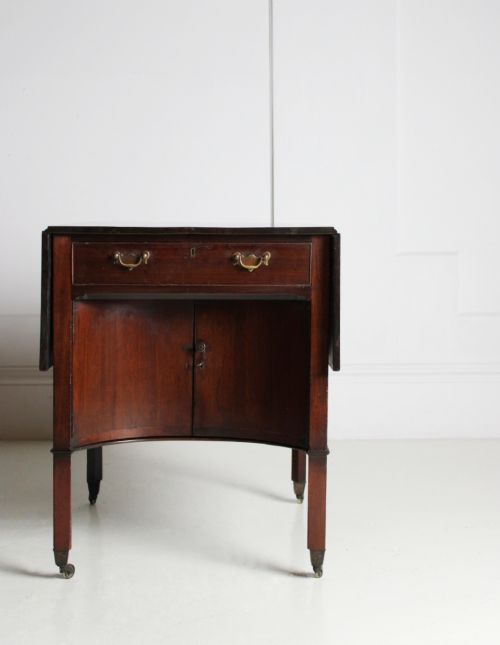
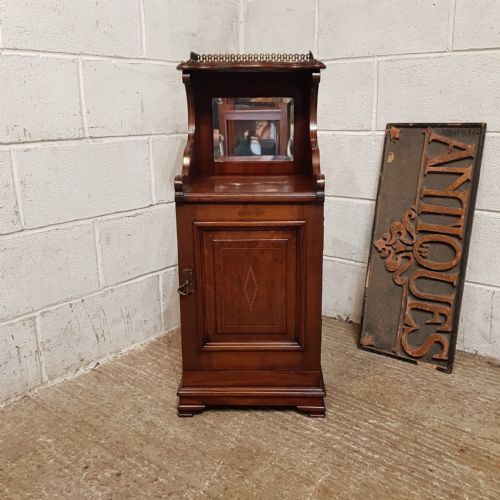
A mahogany night cupboard serves as a compact bedroom cabinet originating primarily from the Georgian and Victorian eras, though earlier eighteenth-century forms and later revival pieces also appear. Buyers seeking these items will encounter bedside tables, commodes, and pot cupboards designed to hold chamber utensils or personal belongings.
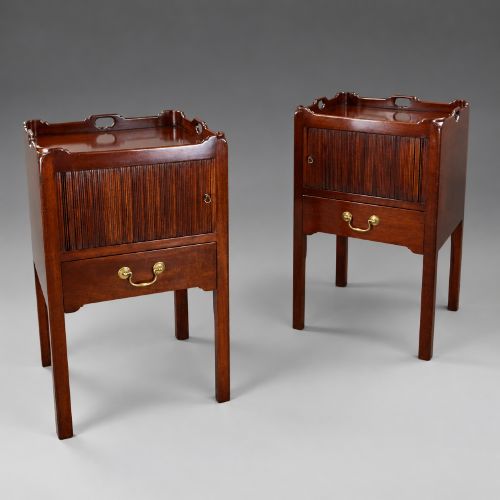
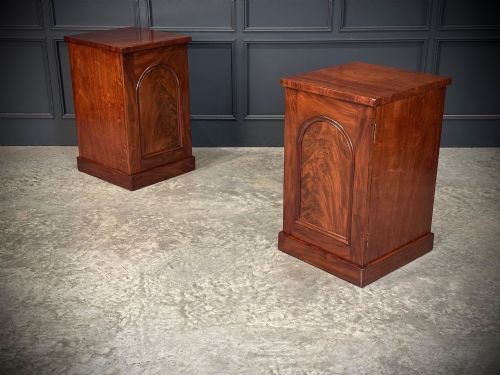
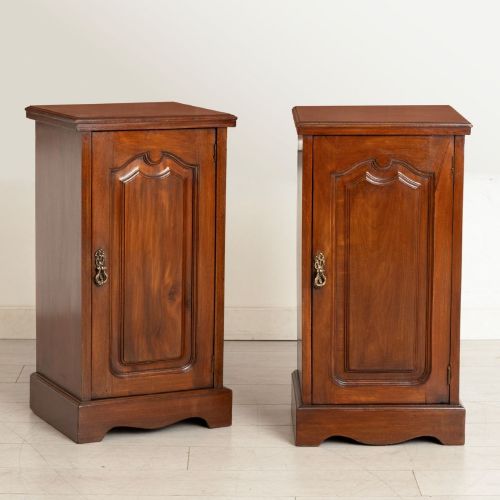
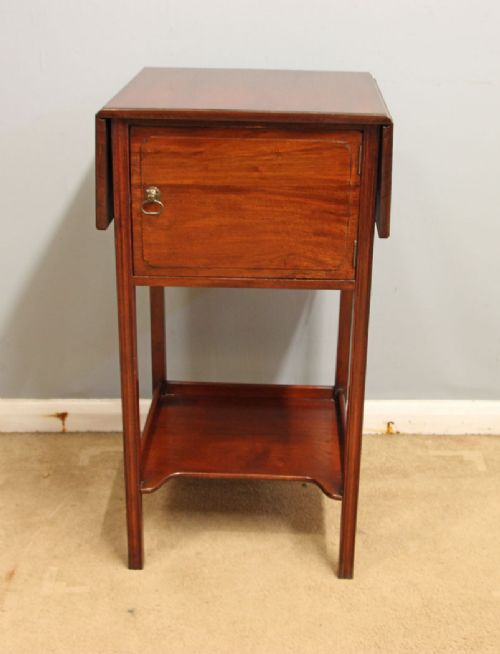
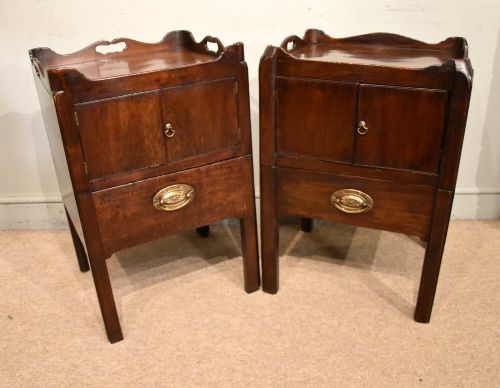
The inventory on this page ranges from George III tray-top commodes to late Victorian and Edwardian examples. Matched pairs are frequently found alongside single freestanding cabinets from various decades of the nineteenth and twentieth centuries.
Materials and construction
Cabinet makers built these pieces using solid mahogany and flame mahogany veneer, often enhancing surfaces with satinwood, boxwood inlay, or marquetry. Brass handles, hinges, and occasional glass elements complete the structural hardware.
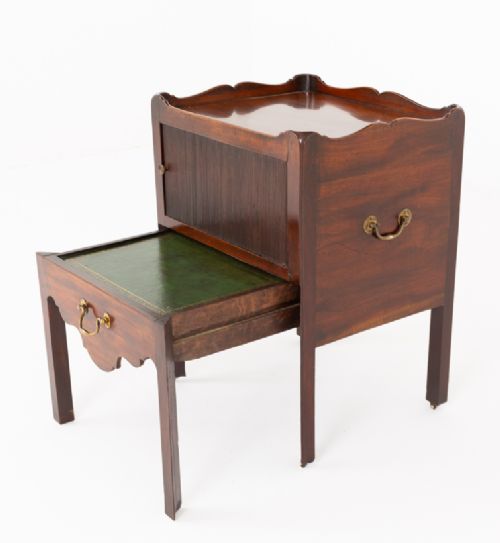
Joinery techniques from the eighteenth and nineteenth centuries dictate the build quality, utilising tightly fitted drawers, panelled doors, and occasionally tambour shutters or tray-tops designed to prevent items from rolling off.
Listings feature mahogany, satinwood, marble, and brass across pieces dating from the eighteenth century through the Edwardian era.
Evaluating craftsmanship
Quality rests upon the selection of timber grain, particularly the depth and figuring found in flame mahogany veneers. Finely executed boxwood inlay and crisp marquetry distinguish superior pieces from plain utilitarian examples.
Proportion and structural integrity define the higher tiers of the range. Original brass hardware, uncompromised gallery rails on tray-tops, and tidy internal compartments elevate a cabinet's standing among collectors.
Howard and Sons·Holland and Sons
The Mahogany Night Cupboard Glossary
- Pot cupboard
- A small enclosed bedside cabinet originally designed to house a chamber pot. These pieces usually feature a cupboard door above a lower section or drawer.
- Commode
- In the context of British bedroom furniture, a small cabinet that conceals a commode seat or basin. Eighteenth-century versions often present a refined serpentine or tray-top exterior.
- Tray-top
- A raised edge surrounding the upper surface of a table or cabinet. This feature prevents items placed on top from sliding off.
- Tambour
- A sliding door constructed from narrow vertical strips of wood glued to a canvas backing. This mechanism allows access to tight cabinet spaces without swinging doors.
- Flame mahogany
- A veneer cut from the fork of the mahogany tree where the branch meets the trunk. It creates a distinctive, fiery pattern across the wood surface.
Mahogany Night Cupboard: Frequently Asked Questions
What is a mahogany night cupboard?
A mahogany night cupboard is a small enclosed bedside piece from the Georgian or Victorian period. They provided discreet storage in bedrooms before modern plumbing.
Today these compact cabinets function well as functional lamp tables or bedside storage units. Their timber tones complement both traditional and contemporary interiors.
How do I identify a Georgian piece?
Georgian pieces display clean proportions, subtle bracket feet, and solid mahogany construction without heavy Victorian ornamentation. Look for hand-cut dovetails and period-appropriate brass hardware.
Tray-tops and tambour doors frequently appear on eighteenth-century examples. Checking internal secondary woods helps confirm the period of manufacture.
Are pairs difficult to find?
Matched pairs of nineteenth-century bedside cabinets appear regularly in the selection. Cabinet makers often produced these pieces as twins for larger bedrooms.
Pairs require careful comparison of timber grain and height to ensure symmetry beside a bed. Finding matching antique pairs commands stronger interest from collectors.
How should I care for the surface?
Mahogany requires minimal maintenance using a soft cloth and occasional quality beeswax to nourish the timber. Avoid placing damp glasses directly onto the polished wood.
Protecting the top with glass or keeping liquids on coasters preserves the historic French polish or wax finish. Direct sunlight should be avoided to prevent fading the flame veneer.