
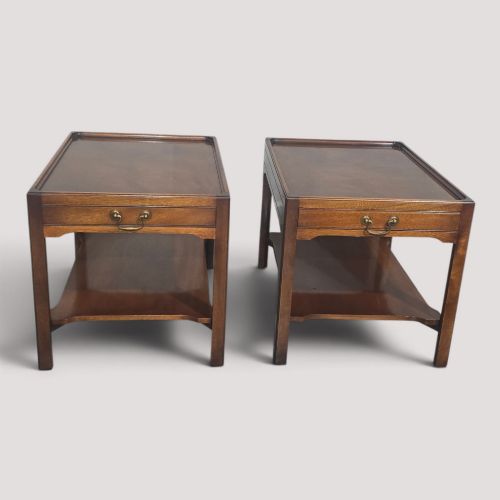

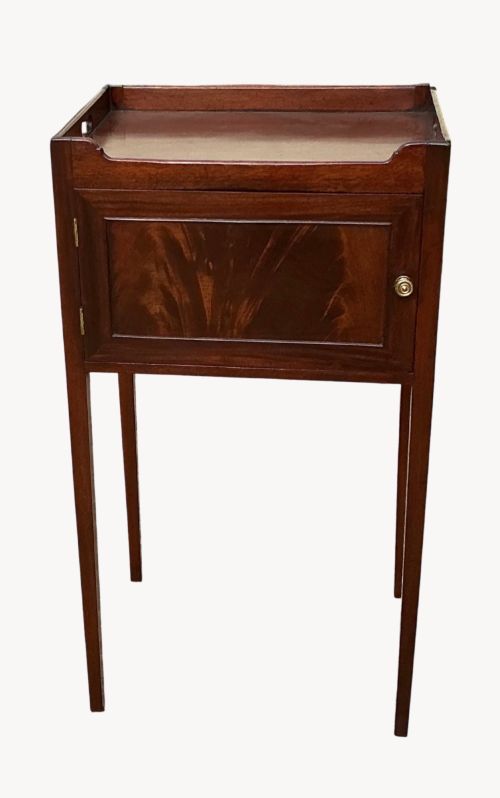
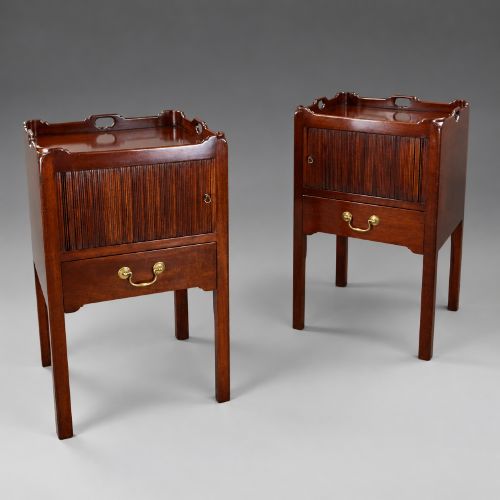
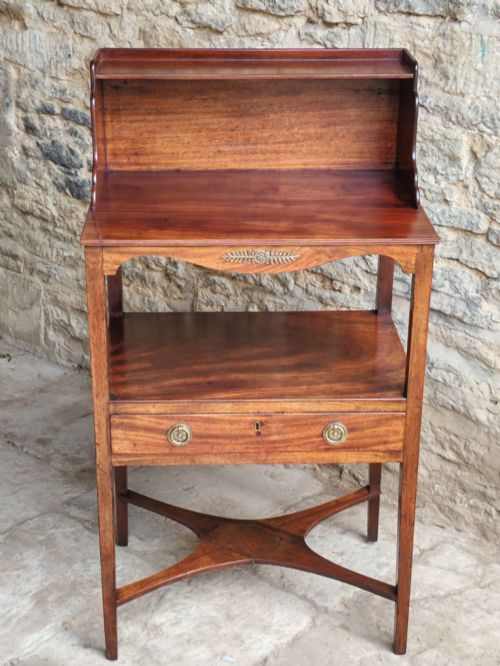
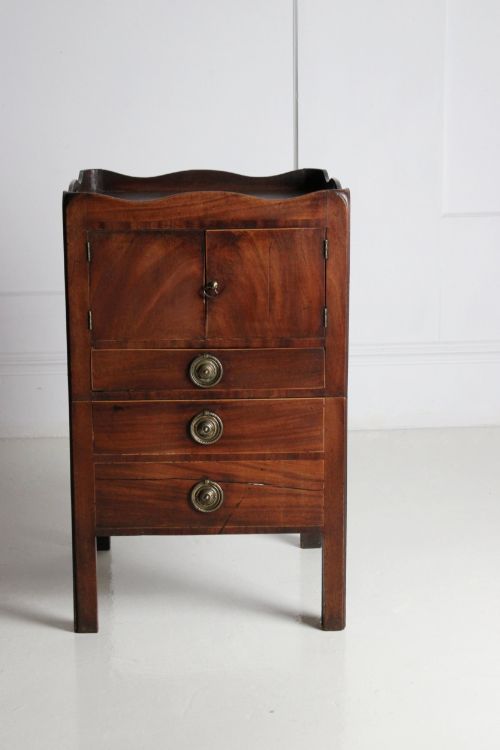
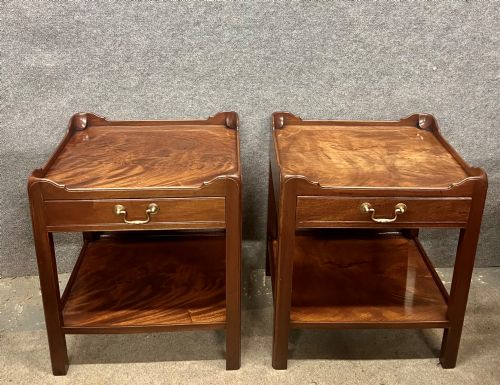
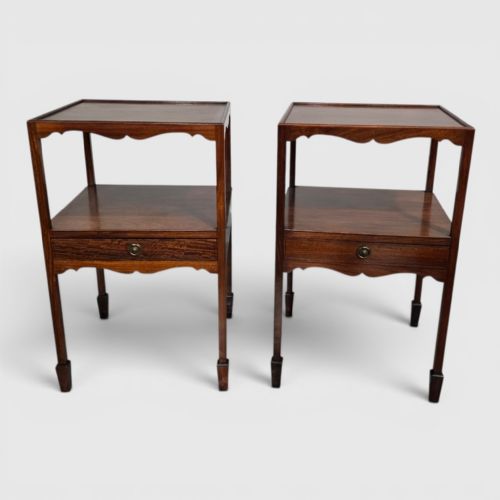

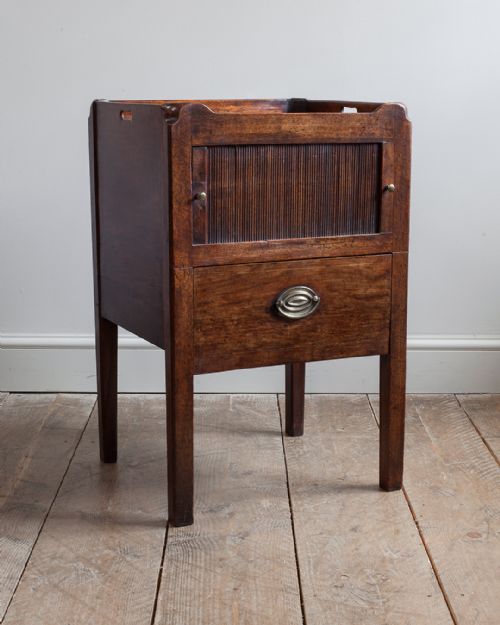
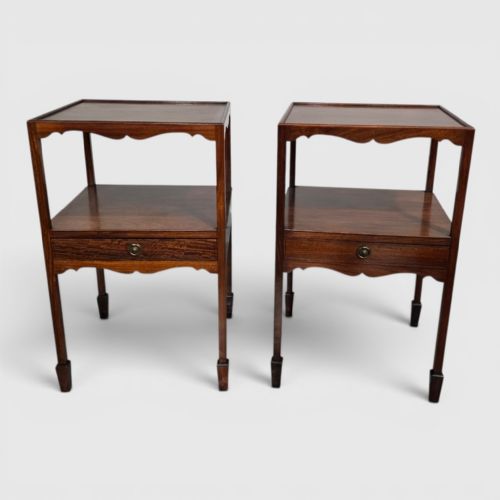
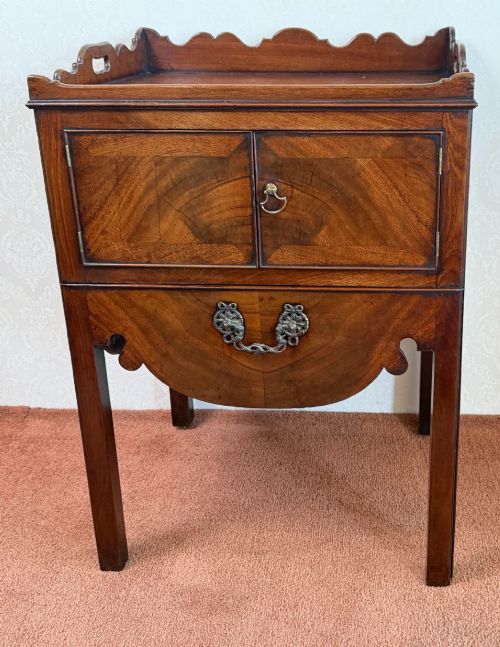
Georgian Tray Top Nightstand
A georgian tray top nightstand offers a practical bedside surface framed by a raised gallery, bringing understated 18th-century utility to any room.
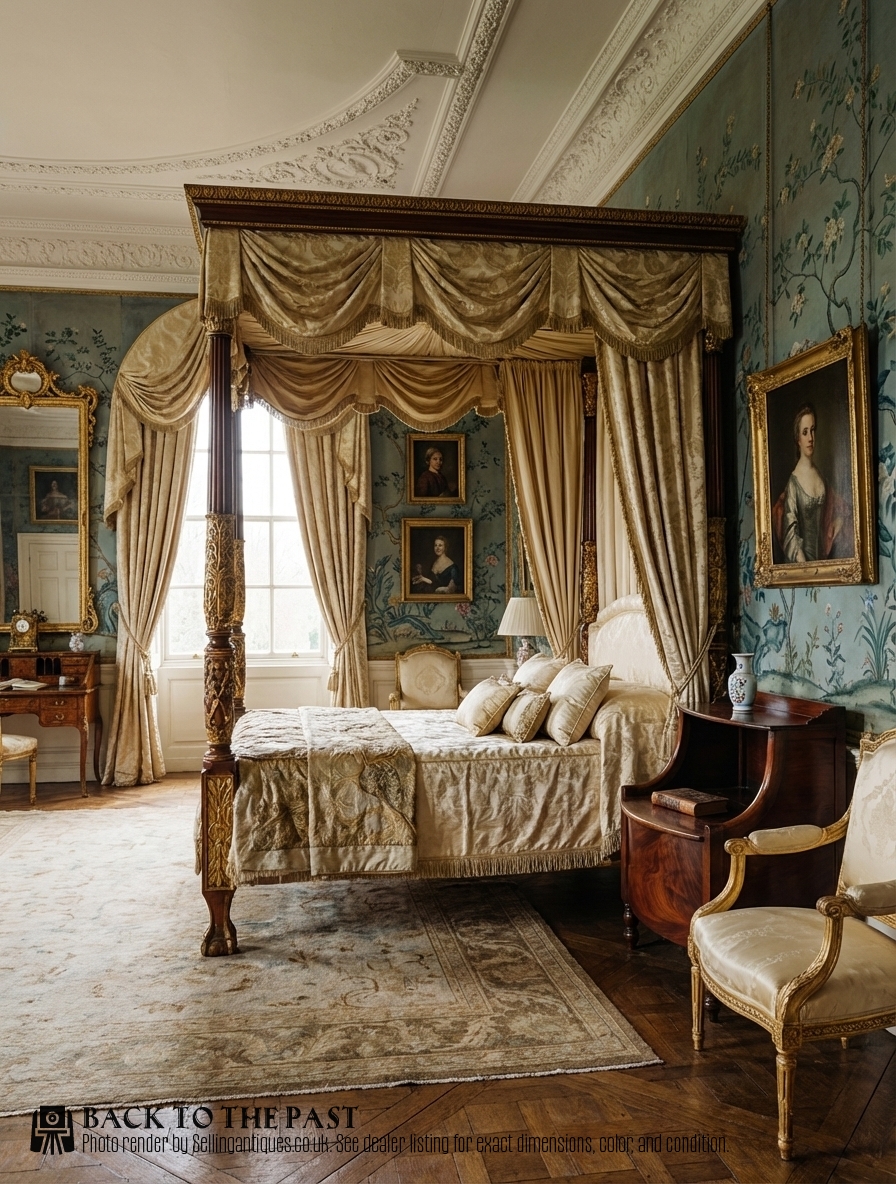
What georgian tray top nightstand pieces are
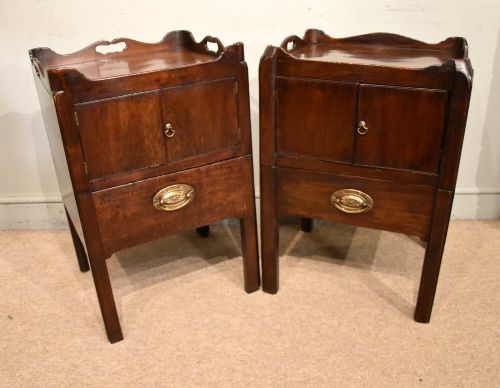
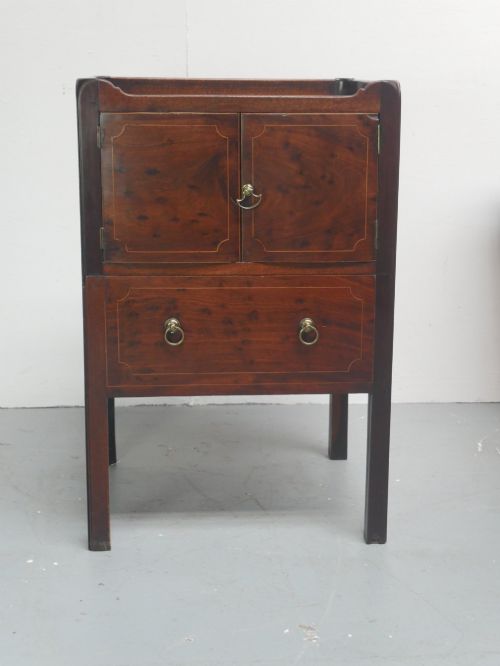
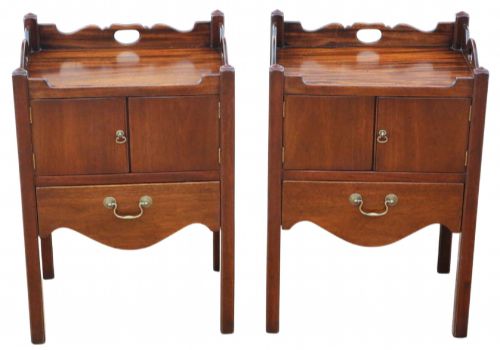
When you search for a georgian tray top nightstand, you are looking at compact bedroom furniture designed during the Georgian and Regency periods. The listings here include bedside tables, bedside cabinets, and commodes featuring the characteristic shaped or moulded raised edge.
The pieces on this page span the eighteenth century and the early nineteenth century, encompassing George III and Chippendale styles. Examples range from standard single tables to matched pairs and concave forms.
How they were made
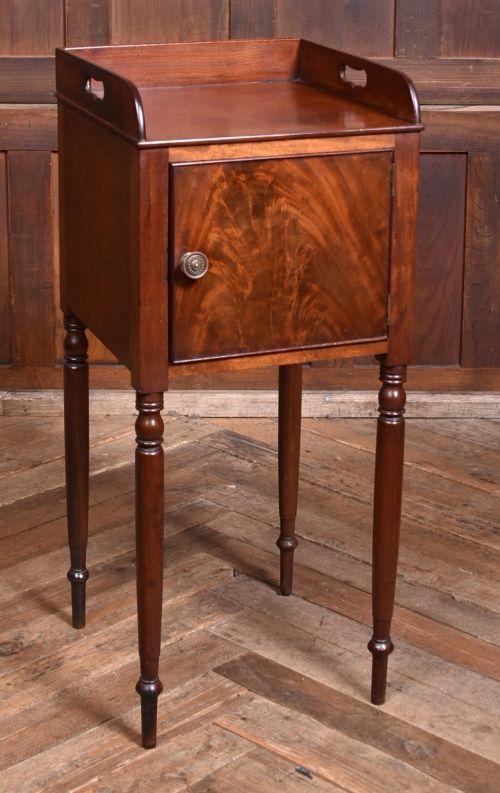
Cabinetmakers constructed these pieces primarily from solid mahogany and flame mahogany veneer, selecting timber for deep grain patterns and rich natural colour. Brass hardware such as hinges and carrying handles appears frequently on cabinet doors and sides.
Construction relies on traditional joinery techniques suited to the period, shaping solid hardwoods and veneers to form the characteristic tray tops, panelled doors, and sturdy supporting legs.
Retail Price Guide 2026
Typical UK retail prices for georgian tray top nightstand, calculated from the Sellingantiques database of over a million retail prices indexed since 2003. This retail price guide relies exclusively on Sellingantiques data; no external sources or auction records are used, so the figures do not describe the wider market.
Object types seen in the inventory include bedside tables, bedside cabinets, and commodes.
What varies in quality
Quality rests in the selection of timber and the precision of the cabinetwork, particularly in how the flame mahogany veneer is matched across drawer fronts and doors. Superior examples display crisp moulding on the tray top and refined proportions that balance height with a compact footprint.
The treatment of secondary timbers and the integrity of the original brass fittings further separate standard utility pieces from finer workshops of the Georgian era.
The Georgian Tray Top Nightstand Glossary
- Tray top
- A tabletop finished with a raised moulded rim designed to prevent items from rolling off. This feature defines the primary silhouette of these bedside tables.
- Commode
- A term used in the period for a small enclosed cabinet or chest of drawers standing on legs. These often house a cupboard space below the upper surface.
- Flame mahogany
- A veneer cut from the branch junction of the mahogany tree, producing a distinctive fire-like ripple pattern. It was utilised on principal display surfaces.
- George III
- The stylistic period spanning the long reign of the third British monarch from seventeen sixty to eighteen twenty. Pieces from this era show confident proportions and classical restraint.
Frequently Asked Questions
How were these nightstands used originally?
These pieces served in bedrooms to hold chamber utensils, lighting, or personal items during the eighteenth and early nineteenth centuries. Their enclosed lower cupboards kept necessary items out of sight.
They sat beside sleeping quarters as functional furniture pieces rather than pure decorative items.
How do I date a Georgian nightstand?
Dating relies on observing structural characteristics, timber selection, and stylistic details associated with periods like George III or Regency. Cabinet construction methods and hardware types help narrow the decade of origin.
Comparing the primary mahogany stock and veneer work against documented examples provides a clearer timeline.
Are these bedside tables sturdy?
Yes, solid mahogany frames and traditional joinery make these pieces durable for daily use today. Their construction was intended to withstand heavy domestic demands.
Simple routine care keeps the timber and joints stable across centuries of service.