
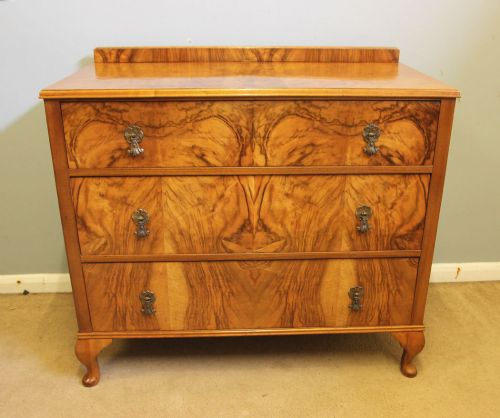
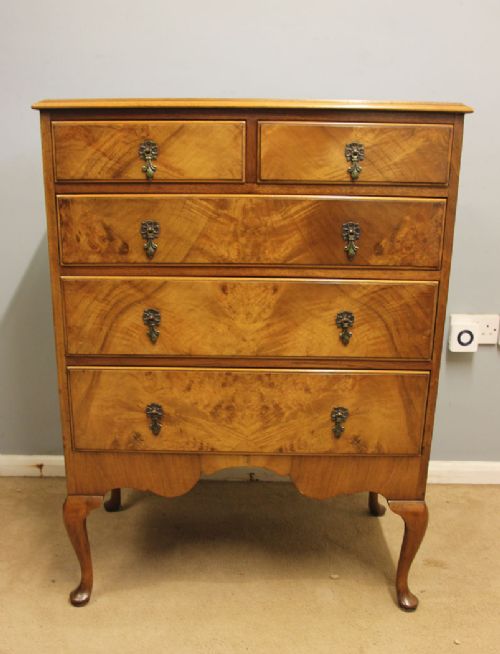
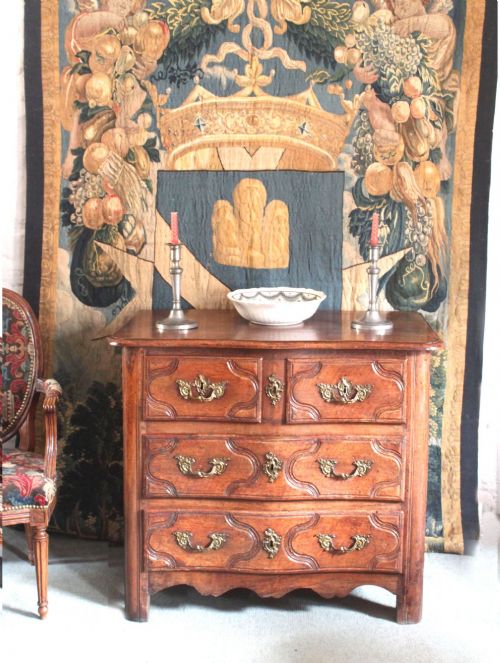
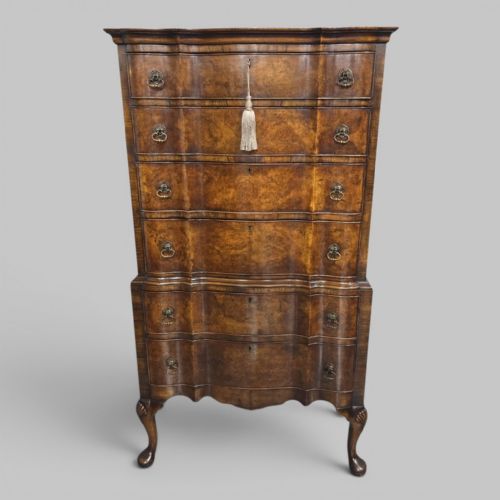
Traditional Walnut Chest Drawers
These traditional walnut chest drawers span centuries of cabinet-making, offering generous storage through figured grain and brass hardware.
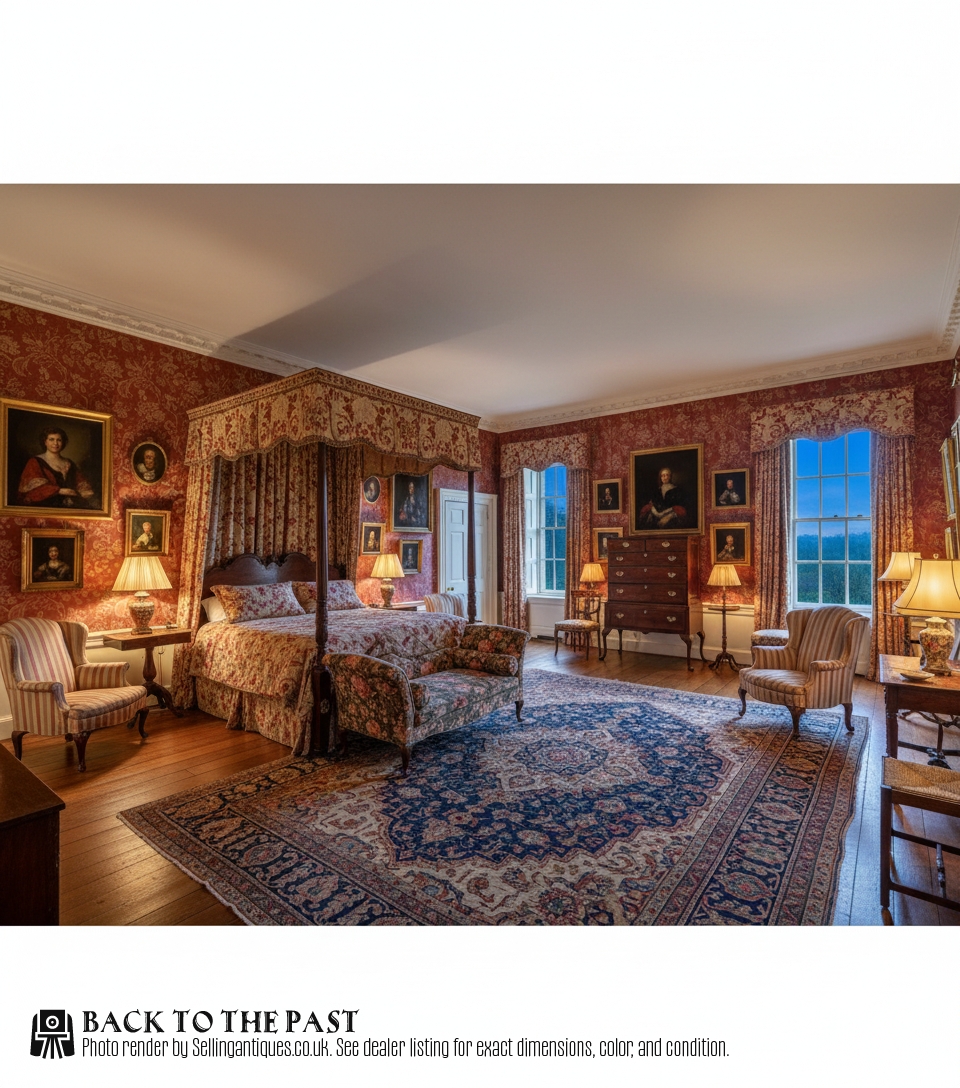
Traditional Walnut Chest Drawers
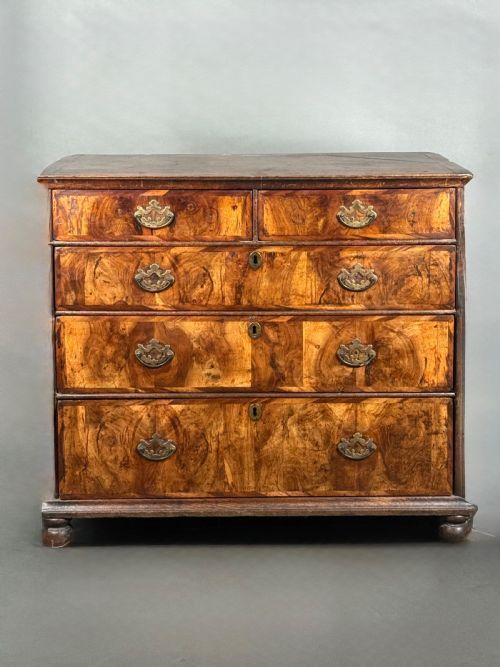
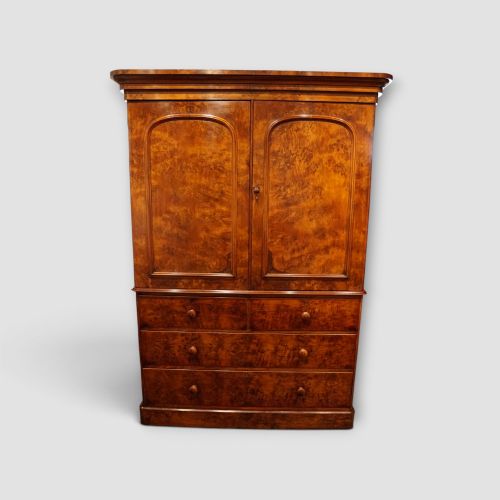
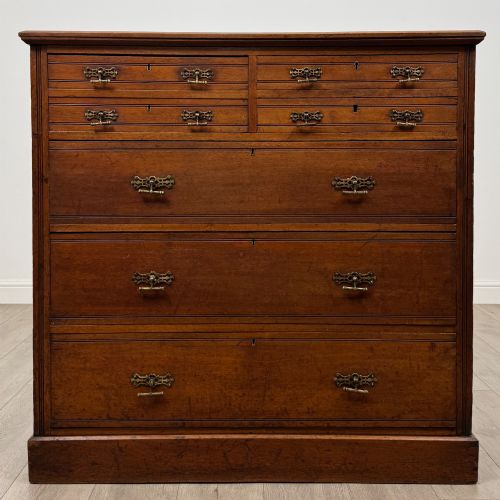
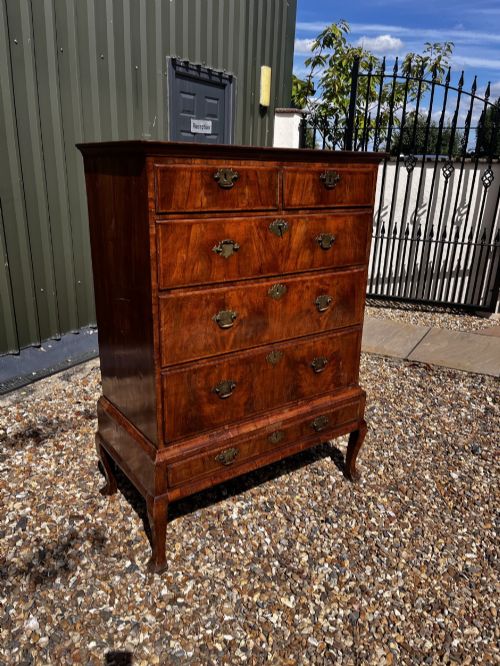
Buyers frequently encounter pieces created during the Georgian and Victorian periods, alongside later 20th-century revivals in the Queen Anne and Georgian styles. Regional variations like French provincial commodes and Dutch marquetry tallboys also appear within the selection.
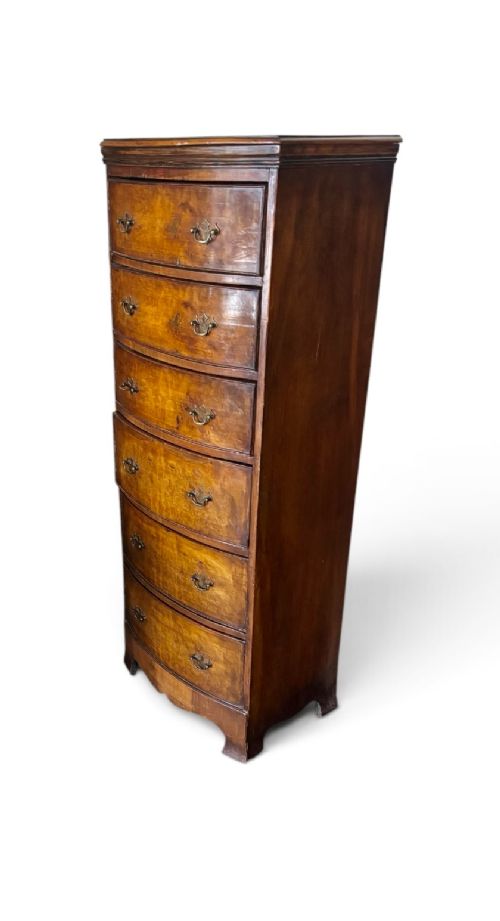
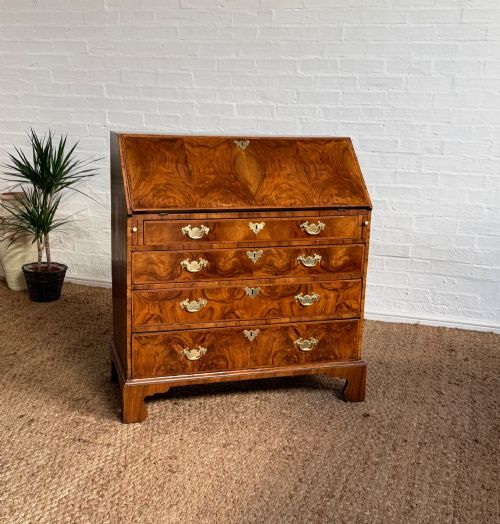
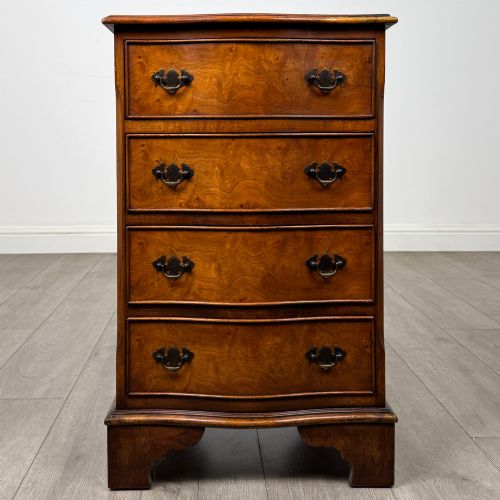
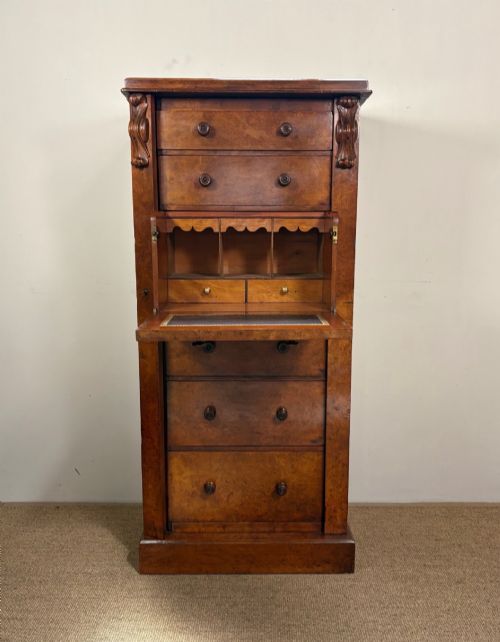
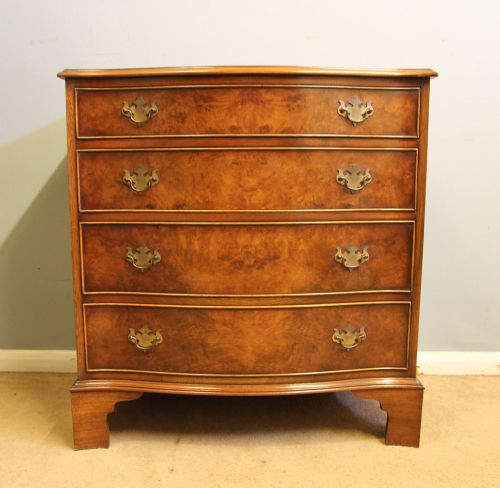
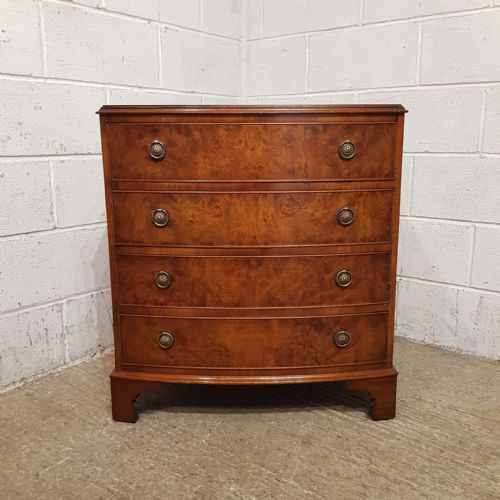
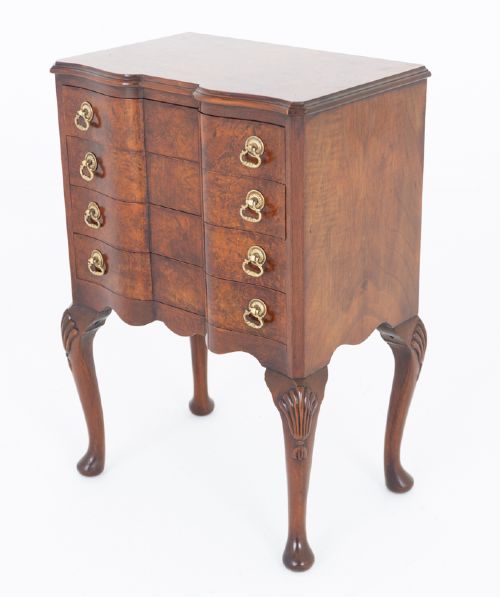
Primary configurations range from compact bedside chests and small bow-front designs to large graduated tallboys and bureau combinations incorporating leather writing surfaces. Secondary timbers such as oak, pine, and fruitwood often support the primary walnut construction.
How traditional walnut chest drawers were made
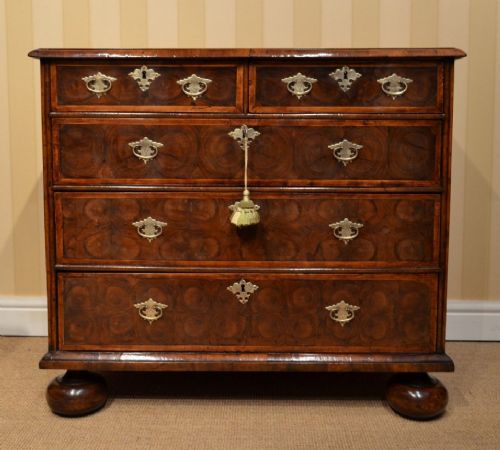
Cabinet-makers utilised solid walnut and decorative veneers, including burr walnut, figured walnut, and oyster veneers, applied to carcases constructed from secondary woods like oak and pine. Individual boards were selected to highlight the natural grain patterns across the drawer fronts and top surfaces.
Hardware such as drop handles, escutcheons, and drawer pulls were cast and worked in brass, complementing the dark tones of the timber. Drawer linings frequently utilised fruitwood or pine, joined with traditional methods suited to the period of origin.
The selection includes regional variations such as French provincial serpentine commodes and Dutch marquetry tallboys alongside standard British forms.
What varies in quality in traditional walnut chest drawers
The sophistication of the timber selection dictates much of the distinction between pieces, particularly the choice between plain walnut and highly figured burr or oyster veneers. Matching the grain across multiple drawer fronts demonstrates the skill of the original maker.
Structural complexity alters the character of each piece, from simple four-height chests to elaborate chests on stands, tallboys with graduated drawers, and pieces incorporating marquetry or cross-banding. The crispness of the mouldings and the integration of brass fittings further separate standard examples from finer works.
Jas Shoolbred
The Traditional Walnut Chest Drawers Glossary
- Burr walnut
- A figured wood grain obtained from the abnormal growth of a walnut tree, highly prized for its swirling patterns on drawer fronts and surfaces.
- Tallboy
- A tall storage piece comprising a chest of drawers stacked upon another chest or a separate stand, maximising vertical storage capacity.
- Oyster veneering
- A technique where small branches are cut transversely to produce circular or oval veneer patterns resembling oyster shells.
- Chest on stand
- A cabinet or chest raised off the floor on a separate frame with legs, typical of earlier periods like the William and Mary era.
- Marquetry
- The art of applying decorative pieces of veneer to a structure to form intricate floral or geometric designs.
- Serpentine
- A front profile characterised by a gentle convex centre flanked by concave curves, requiring advanced woodworking skill.
Traditional Walnut Chest Drawers: Frequently Asked Questions
How do I date a walnut chest?
Dating relies on examining the construction methods of the drawers, the timber used for secondary linings, and the overall style of the piece. Periods range from early 17th-century oyster veneers to Georgian proportions and 20th-century revivals.
Hardware styles and veneer thickness also provide reliable indicators of age. Earlier pieces often show hand-cut dovetails and solid timber carcases, while later revival pieces from the Edwardian or 1930s eras employ different internal construction techniques.
Where should I place a walnut chest at home?
These chests function effectively in bedrooms, hallways, and living spaces where traditional storage is required. Their rich timber tones complement both period and contemporary interiors.
Due to the sensitivity of walnut veneer to direct sunlight and extreme temperature changes, placement away from radiators and windows helps preserve the finish and timber stability.
What woods are used alongside walnut?
Cabinet-makers frequently used secondary woods such as oak, pine, and fruitwood for internal carcases, drawer linings, and structural framing. These timbers provided stability beneath the decorative walnut veneers.
In some instances, pieces combined walnut with oak or mahogany, particularly in transitional periods or later Victorian interpretations.