


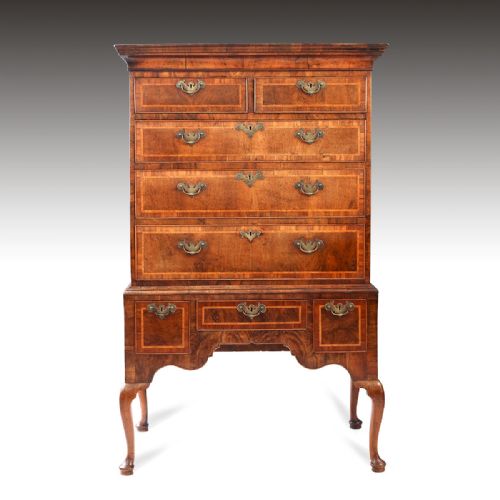
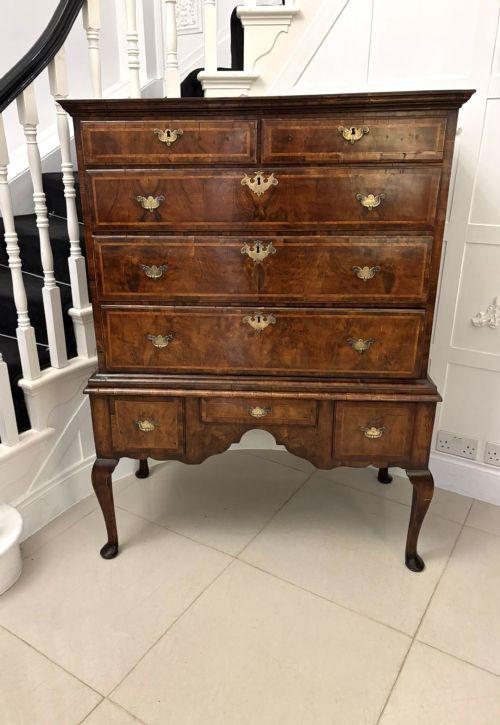
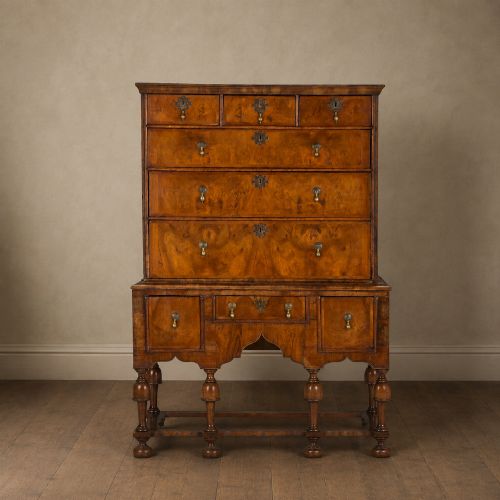


Walnut Chest on Frame
A walnut chest on frame offers elevated storage with distinctive timber grain, combining architectural stands with fitted drawers.
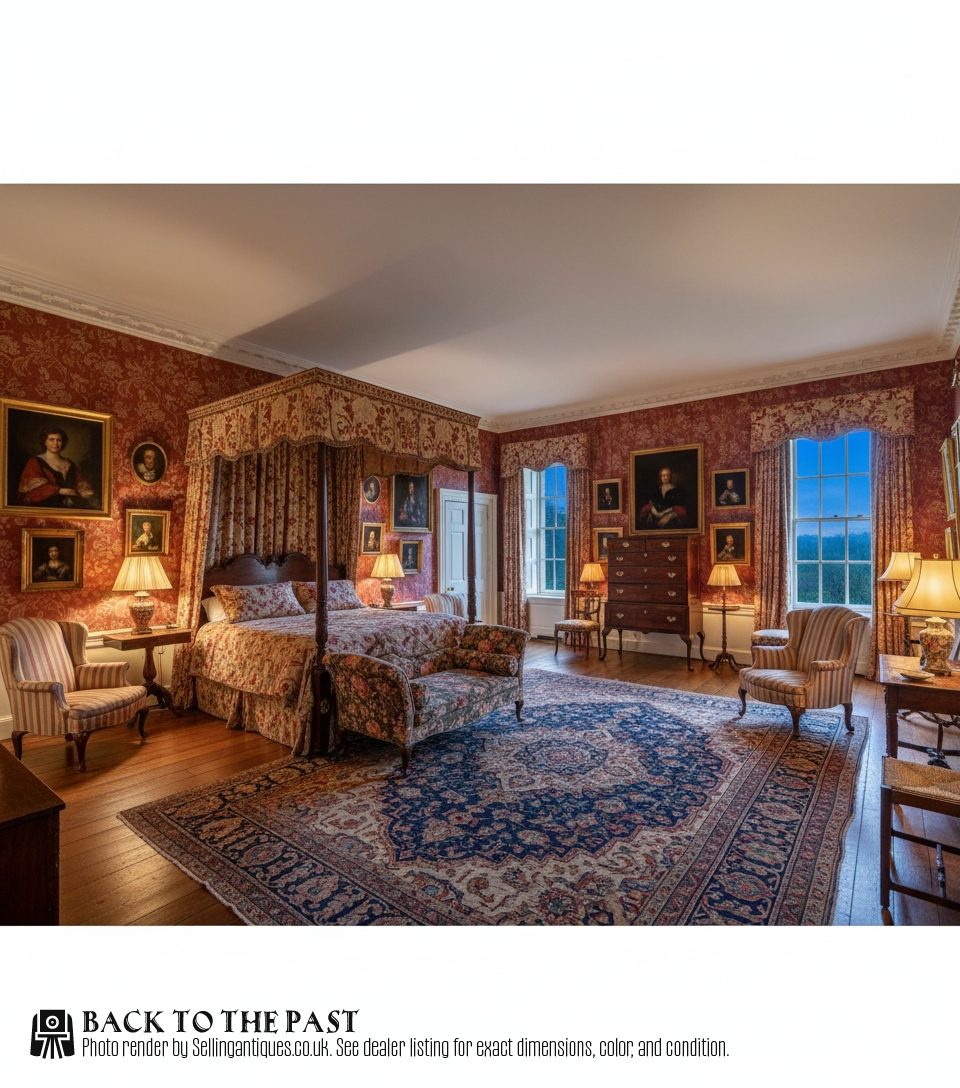
Walnut Chest on Frame
A walnut chest on frame combines a set of graduated drawers elevated on a dedicated base or stand, creating a commanding piece of storage furniture. When exploring a walnut chest on frame, buyers encounter forms originating across the seventeenth, eighteenth, and nineteenth centuries, alongside revival pieces.
The most frequent examples on this page date from the eighteenth century and display the classic Queen Anne or George I aesthetic. These pieces rest on shaped or cabriole supports, separating the main drawer compartments from the floor.
Makers also produced later iterations, including Victorian revivals and Edwardian examples. The fundamental architectural layout remains consistent, housing smaller upper drawers over larger lower tiers.
Materials and construction methods
Cabinet makers utilised solid timber and figured veneers applied over secondary woods such as oak. The application of walnut veneer created highly decorative grain patterns across the primary surfaces.
Brass hardware, including drop handles and escutcheons, fastened the drawer fronts. Joinery relied on traditional techniques to construct the internal carcase and the supporting stand.
Walnut Chest on Frame Retail Price Guide 2026
Typical asking prices for walnut chest on frame among the pieces listed under this phrase on Sellingantiques today, from the lower quarter to the upper quarter. They describe what is for sale here now, not the wider market.
Some chests arrive with secret drawers hidden within the frieze, daring modern owners to find the release catch.
Assessing quality and craftsmanship
The sophistication of the timber selection distinguishes finer examples from simpler workshops. Pieces featuring matching burr walnut veneers across all drawer fronts demand greater skill in preparation and application.
The harmony of proportion between the upper chest and the supporting frame dictates visual success. Stands with crisply turned legs or well-carved cabriole supports elevate the overall execution.
Shapland & Petter
The Walnut Chest on Frame Glossary
- Walnut veneer
- Thin slices of decorative walnut timber applied to a stable secondary wood carcase. This technique allowed cabinet makers to display symmetrical grain patterns.
- Cabriole leg
- A furniture support curving outward at the knee and tapering inward toward the foot. This form draws inspiration from animal limbs and defines many Queen Anne designs.
- Escutcheon
- A protective plate surrounding a keyhole. These brass mounts prevented wear to the surrounding timber.
- Carcase
- The foundational structural body of a piece of furniture before drawers and hardware are fitted. It provides the rigid skeleton for the exterior veneers.
Walnut Chest on Frame: Frequently Asked Questions
What is a walnut chest on frame?
A walnut chest on frame is a tall storage unit featuring multiple drawers housed in an upper section, elevated above the ground on a separate stand or base. This elevated design kept textiles away from damp floors in earlier centuries.
These pieces typically combine substantial drawer capacity with slender supporting legs, creating a lighter visual presence than a standard floor-standing wardrobe or chest.
How do I date a walnut chest on frame?
Dating relies on examining construction methods, hardware fixings, timber selection, and overall stylistic motifs. Seventeenth and early eighteenth-century examples often display William and Mary or Queen Anne characteristics.
Later Victorian revivals incorporate nineteenth-century manufacturing traits while imitating earlier historical aesthetics. Comparing the secondary woods inside the drawers provides further chronological clues.
Where should I place this in my home?
These pieces suit bedrooms, living rooms, or hallways where vertical storage is required without occupying excessive floor space. Their elevated stands allow light to pass underneath, making rooms feel larger.
Position the furniture away from direct heat sources and strong sunlight to protect the walnut timber and delicate veneers from drying out.
How do I care for walnut furniture?
Dust the surfaces regularly with a soft, dry cloth to prevent particulate buildup. Avoid silicone-based polishes, opting instead for traditional microcrystalline waxes when the timber requires nourishment.
Maintain stable indoor humidity levels to prevent the wood and veneers from expanding, contracting, or splitting over time.