

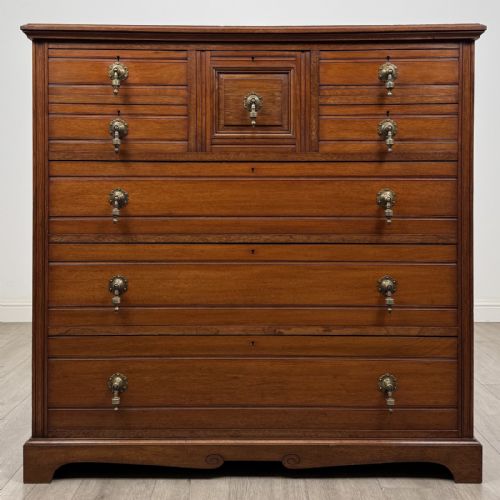
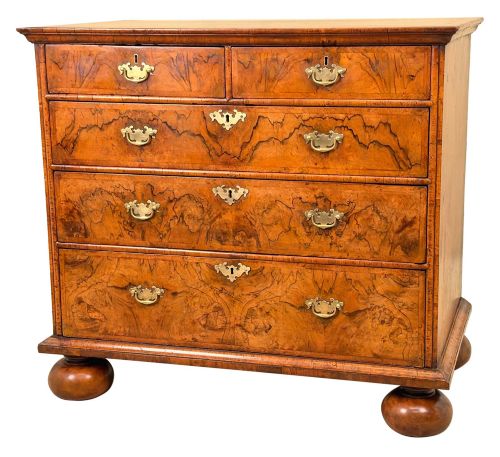
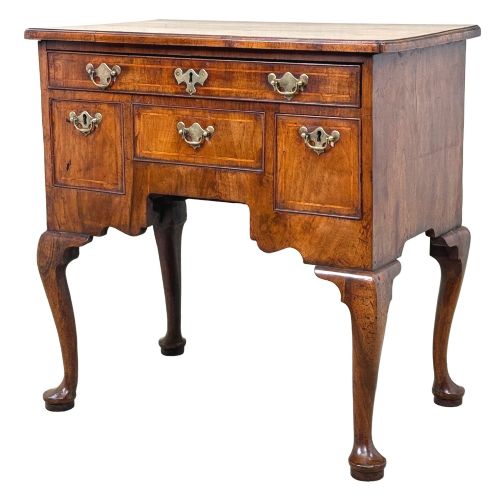
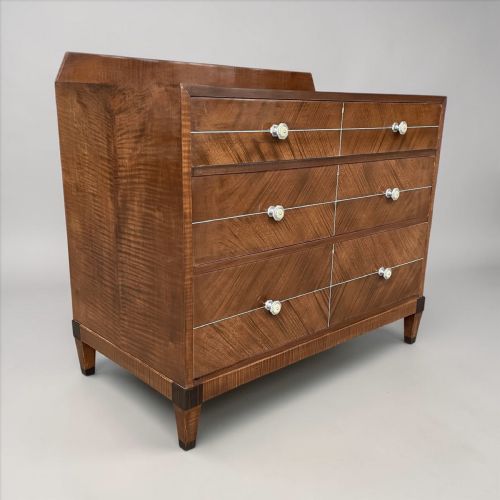
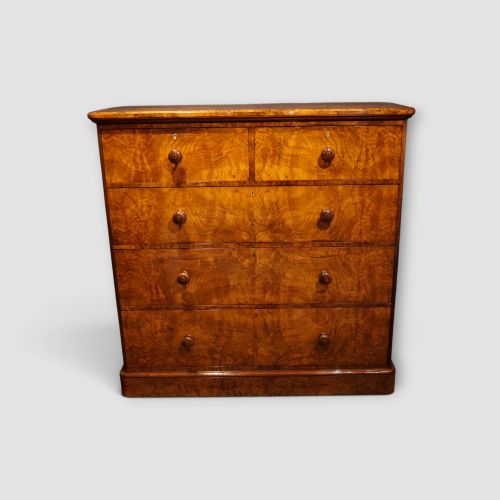
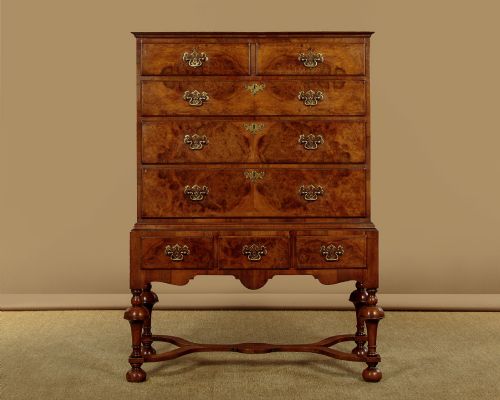
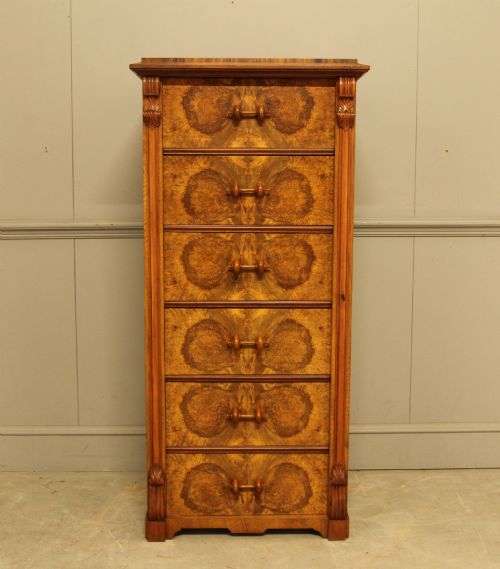
Walnut Furniture with Drawers
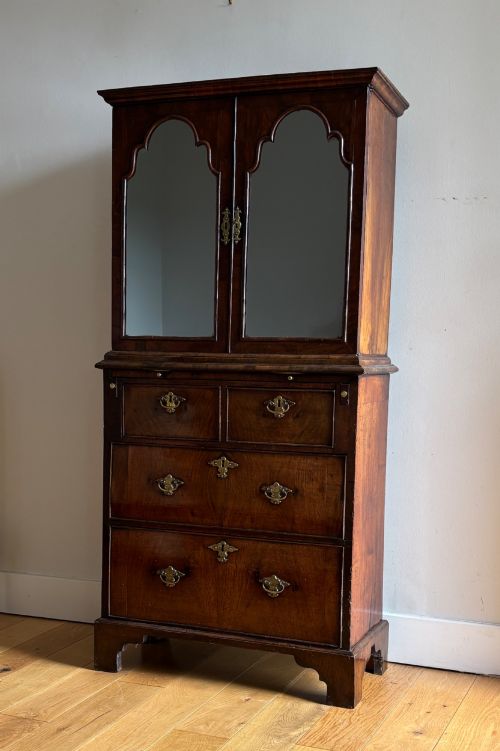
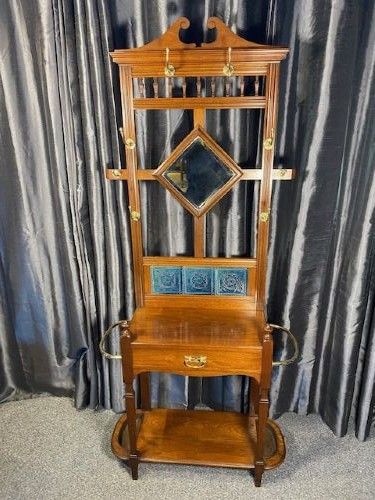
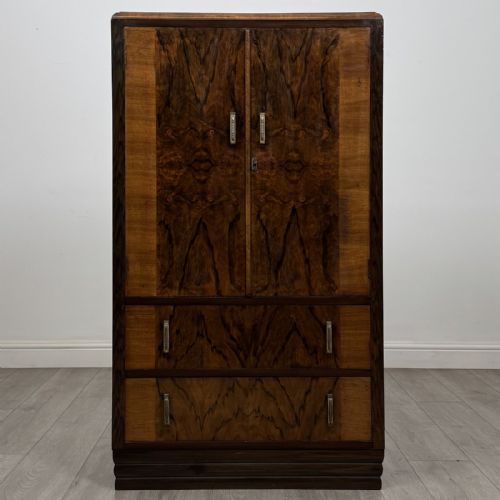
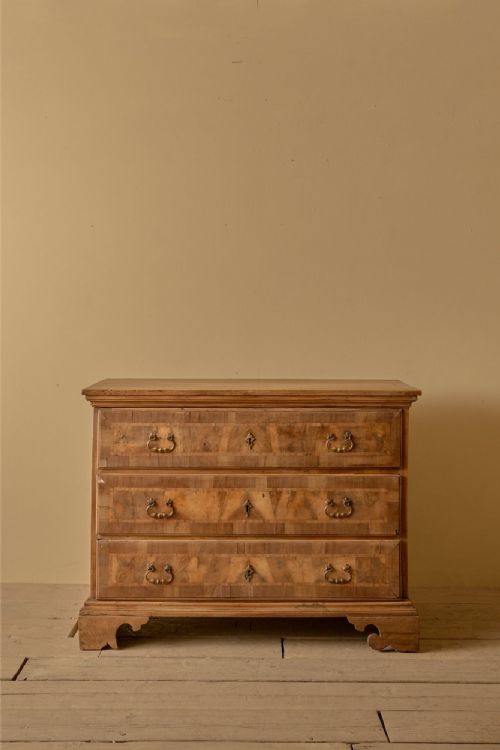
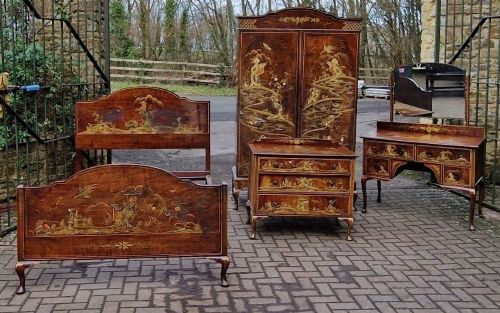
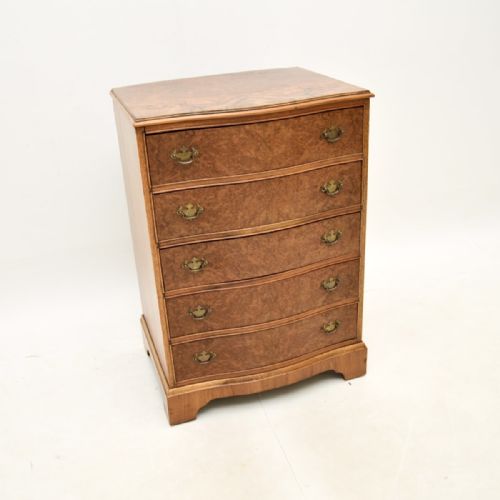
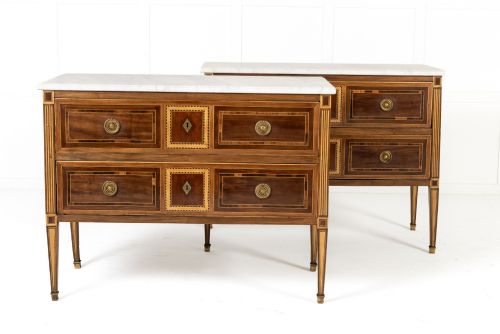
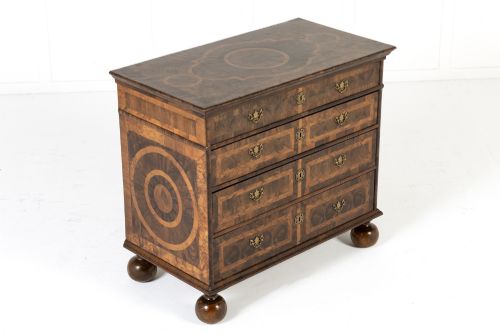
These walnut furniture with drawers pieces span centuries of cabinet-making, offering functional storage with rich timber figuring.
Walnut Furniture with Drawers
When searching for walnut furniture with drawers, buyers encounter a diverse selection of practical forms designed for writing, dressing and storing. These items originate from several distinct eras, stretching from the late seventeenth century through the Georgian period and into the nineteenth and twentieth centuries.
Origins span English, French, and Dutch workshops, encompassing periods such as William and Mary, Queen Anne, George I, George II, Regency, and Victorian styles. Bureau bookcases and davenports further illustrate the range of utilitarian forms meeting the search criteria.
How they were made
Cabinet-makers relied on walnut and burr walnut timber, frequently applied as veneers over secondary woods such as oak to create striking figured surfaces. Feather-banding, line inlay, and floral marquetry decorated the exteriors, while structural components incorporated solid red walnut and oak.
Metalwork played a functional and decorative role, with brass handles and original ironwork securing drawers and doors. Surface details like mirror glass and rouge marble tops appear on specific pieces from later periods.
Specialist mechanisms facilitated secret drawers, sliding top panels, and fitted writing interiors. Joinery techniques accommodated complex forms like chest on chest structures and break-fronted bookcases.
Walnut Furniture with Drawers Retail Price Guide 2026
Typical asking prices for walnut furniture with drawers among the pieces listed under this phrase on Sellingantiques today, from the lower quarter to the upper quarter. They describe what is for sale here now, not the wider market.
Listings feature walnut and burr walnut combined with oak, brass, leather, and mirror glass across eighteenth and nineteenth-century forms.
What varies in quality
Distinction across the range rests upon the selection and matching of the timber veneer. Highly figured burr walnut and carefully aligned feather-banded borders elevate the visual impact of a chest of drawers or bureau.
The integrity of the original surface patination and hardware defines the preservation state of early examples. Pieces retaining original ironwork, brass handles, and untouched finishes command greater interest from collectors.
Complexity of interior construction, such as fitted bureau compartments, secret drawers, and sliding top panels, demonstrates the skill of the original maker.
Gillow and Co·Edwards and Roberts·Maple and Co
The Walnut Furniture with Drawers Glossary
- Burr walnut
- Timber taken from a tree growth deformity, producing intricate, swirling grain patterns highly prized for veneer work on fine cabinet doors and drawer fronts.
- Lowboy
- A small side table with one or more rows of drawers, standing on relatively tall legs and commonly used during the eighteenth century as a dressing or writing table.
- Bureau
- A sloping desk that opens to reveal internal compartments and pigeonholes, usually positioned above a set of graduated drawers.
- Feather-banding
- A decorative inlay technique using small pieces of veneer arranged in a V-shape pattern to frame drawer fronts and tabletops.
- Chest on chest
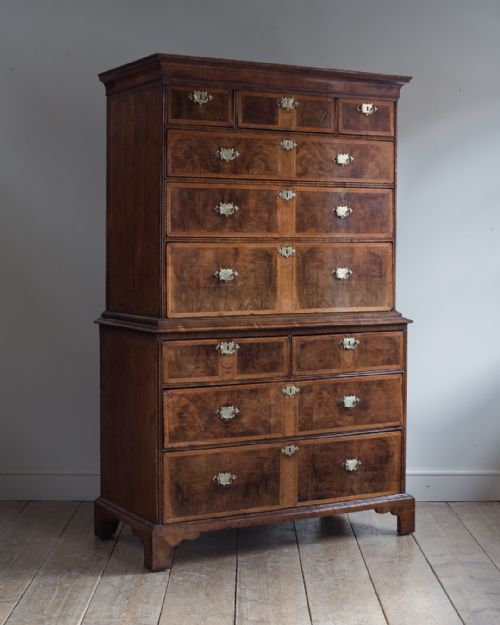
- A tall storage piece comprising a smaller upper chest mounted upon a wider lower chest, sometimes called a tallboy.
Walnut Furniture with Drawers: Frequently Asked Questions
What periods do these pieces date from?
The selection includes pieces originating from the late seventeenth century, the Queen Anne and Georgian eras, through to the Victorian period and twentieth-century revivals.
Craftsmen across these periods utilised walnut and burr walnut in various regional styles, ranging from early English walnut to French Louis XVI interpretations.
How do bureaus differ from standard chests of drawers?
Bureaus feature a sloping flap that folds down to create a writing surface, often concealing small drawers and pigeonholes inside.
Standard chests of drawers focus entirely on vertical storage accessed through horizontal drawer fronts stacked from top to bottom.
What is a lowboy used for?
A lowboy functions as a small table equipped with drawers, historically utilised for personal grooming, dressing, or writing.
Their compact proportions allow them to fit easily into smaller residential spaces as accent furniture.
Are secret compartments common in these desks?
Secret drawers and concealed compartments appear in several desk forms, particularly writing tables and cabinets from the eighteenth and nineteenth centuries.
Cabinet-makers incorporated these hidden spaces behind sliding panels or removable internal fittings.
How should walnut furniture be maintained?
Walnut timber benefits from placement away from direct heat sources and strong sunlight to prevent veneer drying and fading.
Routine care involves gentle dusting and occasional application of appropriate traditional wax polishes to preserve the surface patina.