



Georgian Chest on Frame
A georgian chest on frame brings elevated storage to any room, combining deep drawers with slender legs.
Georgian Chest on Frame
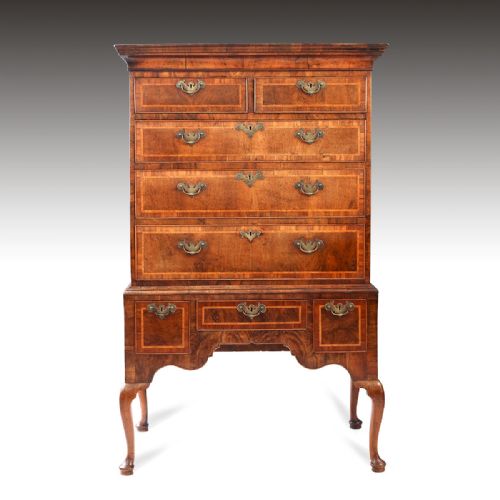
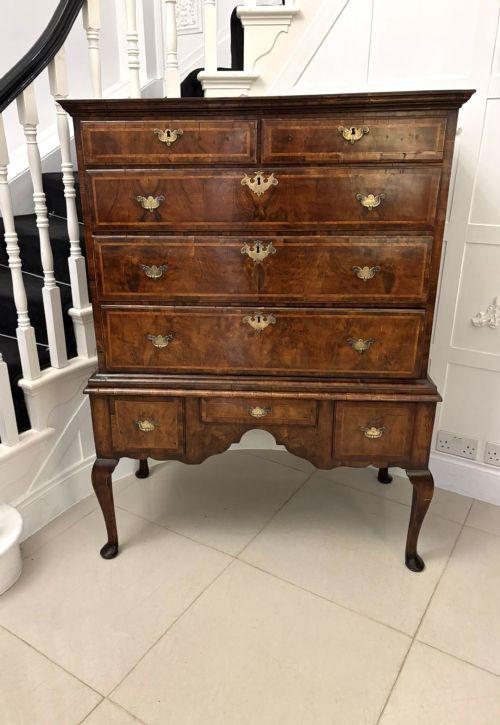
A georgian chest on frame combines a set of drawers sitting atop a separate elevated stand or frame. Buyers searching for a georgian chest on frame encounter pieces primarily from the eighteenth century, including the reigns of George I and Queen Anne.
Most examples on this page take the form of an oak chest on stand or a walnut chest on stand. Variations include walnut veneered pieces alongside mahogany highboy styles.
Makers constructed these storage pieces to lift clothing and valuables off damp floors while providing a decorative focal point. The form bridges the heavy chest of drawers and the lighter display furniture of the period.
Materials and construction
Craftsmen built these pieces using solid oak, mahogany, and walnut, frequently applying walnut veneer to primary surfaces for visual depth. Structural elements like drawer linings utilised secondary timbers native to the workshop.
Joinery techniques included hand-cut dovetails for the drawer construction and mortise and tenon joints for the supporting stands. Brass hardware such as drop handles and escutcheons completed the construction.
Georgian Chest on Frame Retail Price Guide 2026
Typical asking prices for georgian chest on frame among the pieces listed under this phrase on Sellingantiques today, from the lower quarter to the upper quarter. They describe what is for sale here now, not the wider market.
Materials span solid oak, figured walnut veneer, and mahogany, occasionally accented with brass hardware and line inlay.
Judging quality
Quality rests in the handling of the timber, particularly where walnut veneer matches across drawer fronts or grain patterns run continuous. Finer examples display crisper carving on the cabriole legs of the stand.
Proportion dictates worth, separating pieces where the chest balances harmoniously over its frame from those appearing top-heavy. The integrity of the original brass handles and the preservation of the structural joints mark the upper tier.
The Georgian Chest on Frame Glossary
- Chest on stand
- A two-part form comprising an upper section of drawers raised on a low frame with legs. This configuration elevates storage above floor level.
- Walnut veneer
- Thin slices of figured walnut timber applied to a secondary wood core. This technique created decorative geometric patterns across the drawer fronts.
- Highboy
- A tall chest of drawers consisting of a double-cut chest sitting on a high stand. The style gained popularity during the eighteenth century.
- Cabriole leg
- A furniture leg that curves outward and then tapers inward with a pad or foot at the base. It derives inspiration from animal limbs.
- Dovetail
- A joint formed by interlocking wedge-shaped fingers used at the corners of drawers. It provides high tensile strength against being pulled apart.
Georgian Chest on Frame: Frequently Asked Questions
What is a georgian chest on frame?
A georgian chest on frame is a storage unit where a chest of drawers rests on a raised wooden stand. These pieces lift the main body off the floor on legs.
Craftsmen built them primarily during the eighteenth century in oak, walnut, and mahogany. They offer deep drawer storage combined with a lighter profile than standard floor chests.
How do I date a georgian chest on frame?
Dating relies on examining the timber species, construction methods, and hardware styles. Oak and walnut dominate earlier eighteenth-century examples, while mahogany appears toward the middle of the century.
Secondary woods inside the drawers and the style of the legs, such as cabriole forms, help narrow down the period. Hand-cut joinery provides further clues to the manufacturing decade.
Where were these pieces used?
Original owners placed these chests in bedchambers and dressing rooms to store linens and personal garments. The raised stand kept textiles away from damp ground floors.
Today they function effectively in hallways, living rooms, and bedrooms as statement storage items. Their vertical proportions suit rooms with limited floor space.
How do I care for walnut veneer?
Protect walnut veneer by keeping the furniture away from direct sunlight and steady heat sources. Extreme temperature shifts cause the thin wood layers to lift or crack.
Apply traditional wax sparingly to nourish the timber surface without building up residue. Dust the piece regularly with a soft, dry cloth.