


Traditional Upholstered Dining Chairs
Traditional upholstered dining chairs bring solid timber frames and substantial seating into the dining room, offering both formal presence and reliable comfort around the table.
Traditional Upholstered Dining Chairs
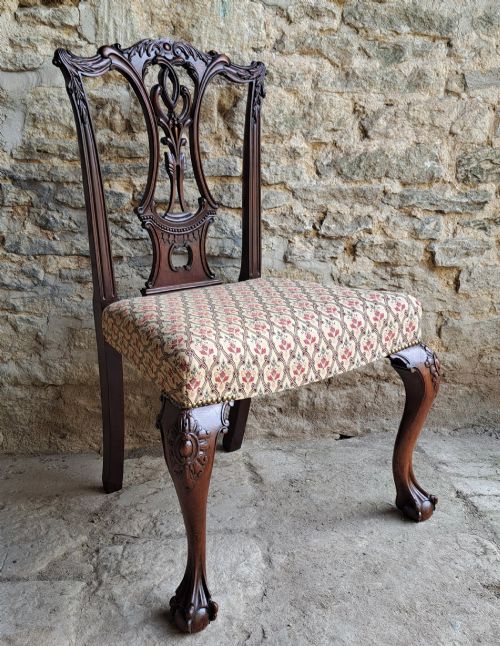
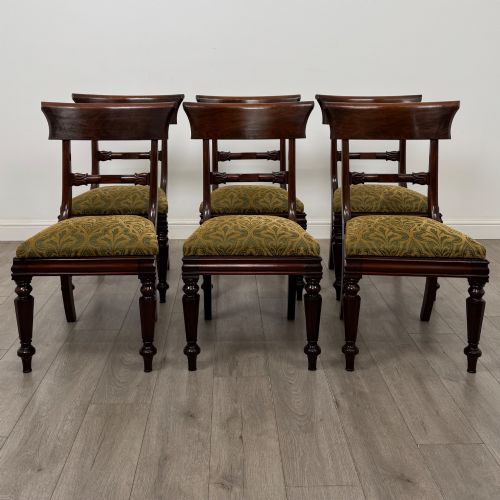
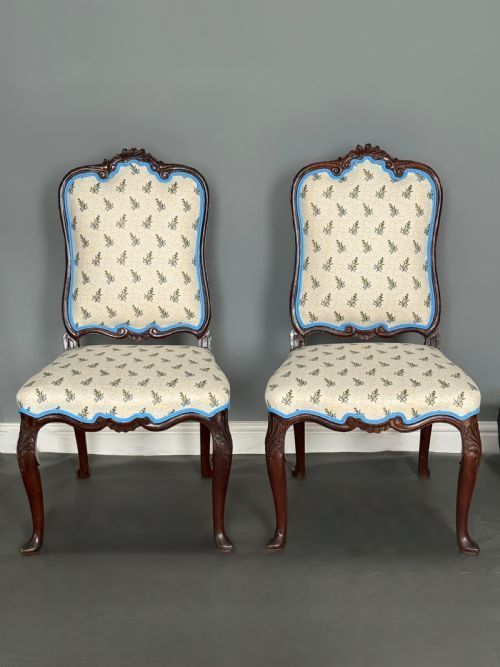
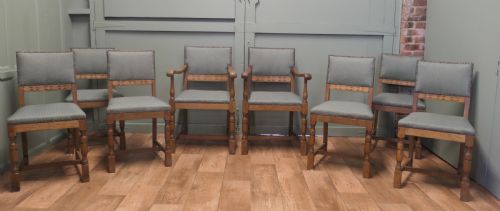
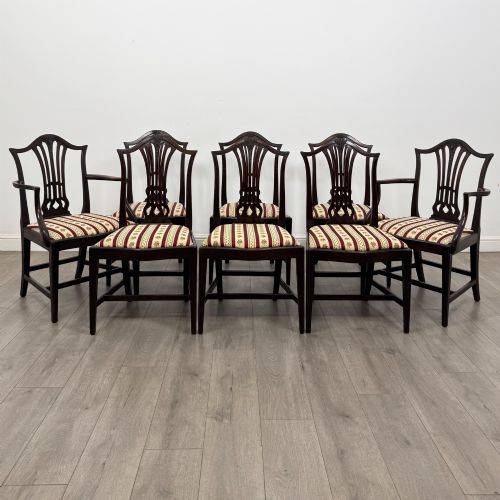
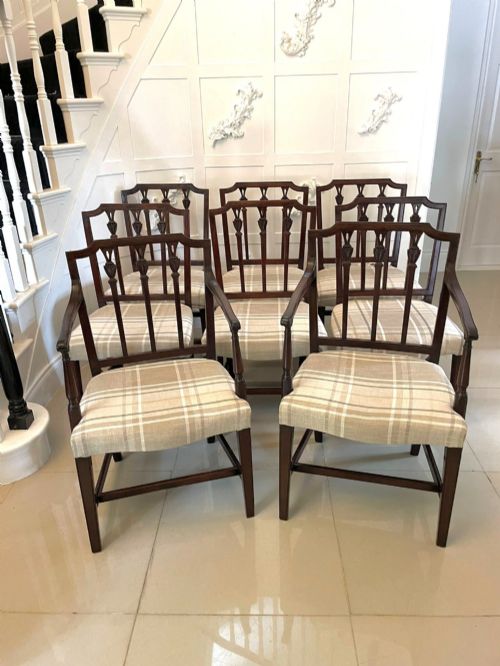
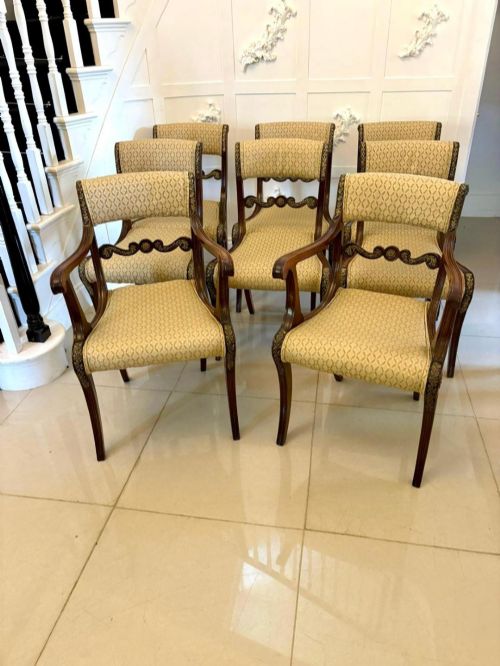
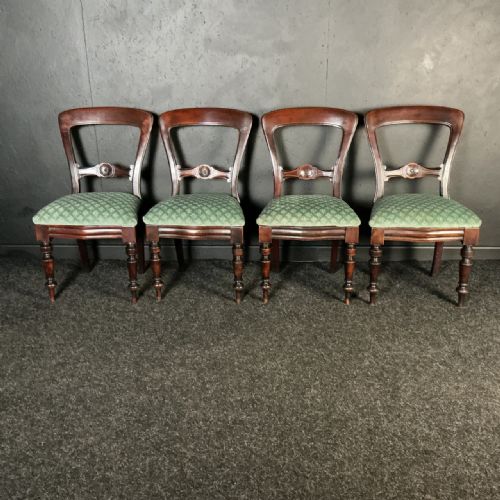
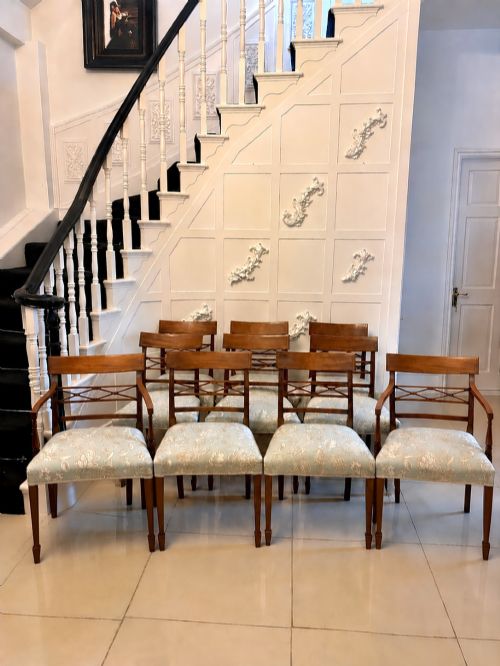
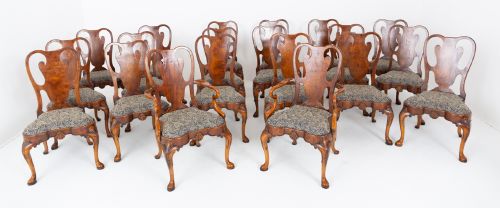
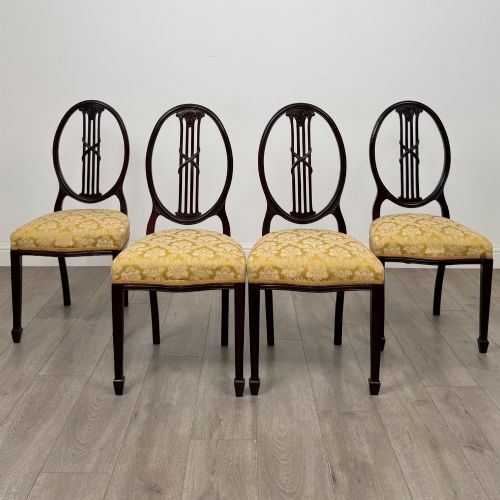
Traditional upholstered dining chairs combine sturdy wooden frames with padded seats, appearing frequently in sets ranging from pairs up to twenty pieces. The selection spans distinct historical eras, with Victorian and Edwardian examples sitting alongside earlier Georgian and Regency designs.
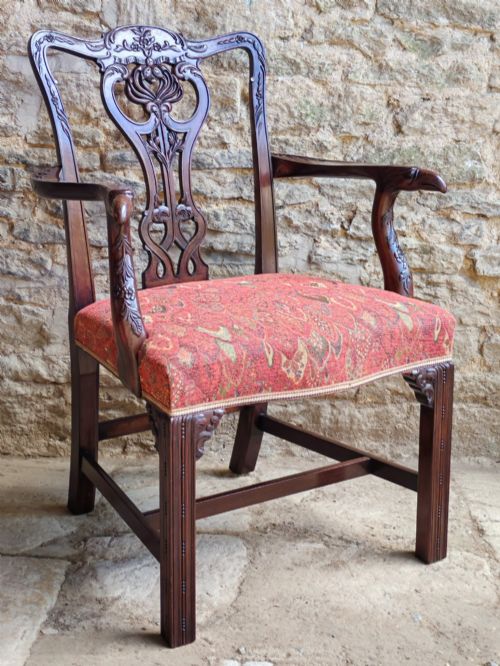
Makers utilised resilient timbers such as mahogany, oak, and walnut to build side chairs, armchairs, and carvers that survive from the eighteenth, nineteenth, and early twentieth centuries. These seats accommodate dining rooms by providing supportive upright postures wrapped in textile or leather upholstery.
Buyers encounter matching sets of six, eight, or ten chairs, as well as pairs and larger assemblies designed for communal dining. The forms reflect stylistic revivals, including Queen Anne, Hepplewhite, and Chippendale interpretations alongside balloon backs and bar backs.
Materials and Construction
Carpenters constructed the underlying frames using dense hardwoods like mahogany, oak, walnut, and elm, often employing traditional joinery to ensure stability under daily use. Timber selection dictated the weight and grain pattern of each piece, ranging from deep reddish-brown Cuban mahogany to pale golden oak.
Upholstery techniques involved securing supportive webbing and padding directly to the wooden seat frame before applying outer textiles such as velvet, woven upholstery fabric, or leather. Brass elements occasionally appeared in castors, studs, or decorative mounts to complement the woodwork.
Traditional Upholstered Dining Chairs Retail Price Guide 2026
Typical asking prices for traditional upholstered dining chairs among the pieces listed under this phrase on Sellingantiques today, from the lower quarter to the upper quarter. They describe what is for sale here now, not the wider market.
Listings feature dining chairs spanning the 18th Century, Victorian, Edwardian, and 1930 periods, constructed primarily from mahogany and oak.
Quality Variations
The standard of carving and timber selection determines the division between standard seating and exhibition pieces, with dense, finely figured mahogany commanding greater attention than plain secondary woods. Crisp detailing in shield backs, lyre backs, and carved walnut framing denotes skilled workshop execution.
Completeness of a set and matching proportions across larger groups of chairs influence desirability, particularly when sets reach twelve or twenty matching seats. Original structural integrity and untouched timber surfaces separate pieces retaining their historic character from those altered over time.
Howard and Sons·Charles Tozer·Maple and Co·Alfred Allen of Birmingham·Gillows
The Traditional Upholstered Dining Chairs Glossary
- Carver
- An armchair designed with armrests, traditionally placed at the head of a dining table. These match the side chairs in a larger dining suite.
- Balloon back
- A rounded, curved wooden backrest shaped like an inflated balloon, popular during the Victorian period. This design provides ergonomic support while maintaining a light silhouette.
- Shield back
- A chair back shaped like a heraldic shield, frequently associated with eighteenth-century revival styles. Cabinetmakers carved intricate decorative splats within this outline.
- Side chair
- An upright chair built without armrests, intended for placement along the sides of a dining table. These pieces economise on space while matching the paired carvers.
Traditional Upholstered Dining Chairs: Frequently Asked Questions
How do I care for antique upholstery?
Protect fabric and leather surfaces from direct sunlight to prevent fading and textile degradation over time. Regular gentle brushing removes dust without straining the underlying webbing and padding.
Condition leather periodically with appropriate balms while keeping wooden frames polished with traditional wax. Avoid placing these seats near heat sources that might dry out timber and brittle upholstery fibres.
Can I mix these chairs with modern tables?
Historic timber seats pair effectively with contemporary dining tables, introducing textural contrast and established craftsmanship to modern interiors. The varied wood tones found in mahogany and oak complement minimalist or glass-topped surfaces.
Consider seat height and arm clearance when pairing older carvers with modern table aprons. Measuring the floor clearance ensures comfortable seating positions during meals.
How do I distinguish Victorian from Georgian styles?
Georgian chairs emphasise proportion, lighter timber framing, and classical revival motifs such as shield or pierced ladder backs. Victorian examples typically display heavier proportions, darker finishes, and rounded forms like the balloon back.
Examining the underside construction and wood ageing provides further clues regarding the manufacturing period. Revival pieces from the Edwardian era often replicate these earlier motifs with slight variations in tool marks.
Are large sets harder to find?
Assembling matching sets of ten or twelve chairs proves challenging because many original suites were separated or reduced over centuries of use. Surviving large sets retain higher desirability among collectors needing seating for extended dining tables.
Single carvers and pairs appear more frequently than complete dining suites of twenty. Checking the uniformity of timber grain helps verify whether a large set originated together.