


Traditional Station Clock
A traditional station clock carries the steady, authoritative face of the transport network into domestic and commercial interiors.
Traditional Station Clock
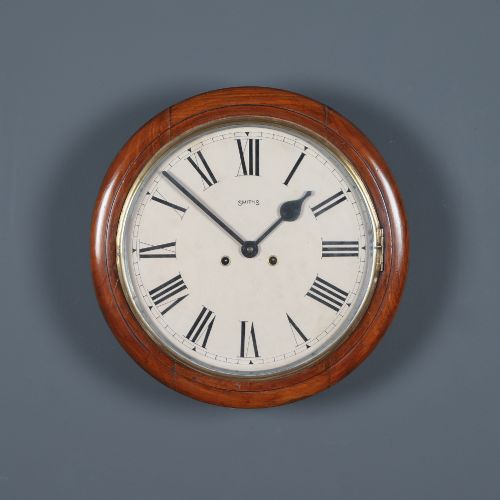
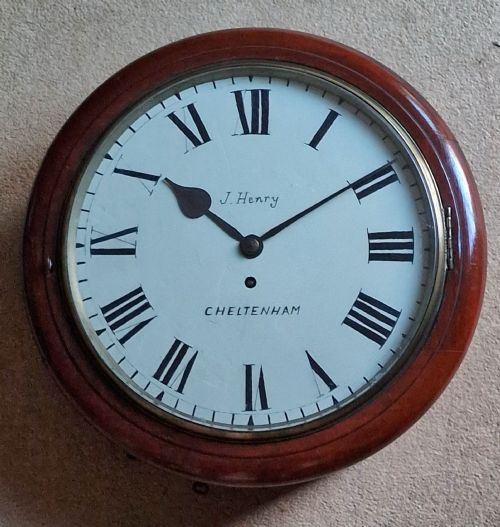
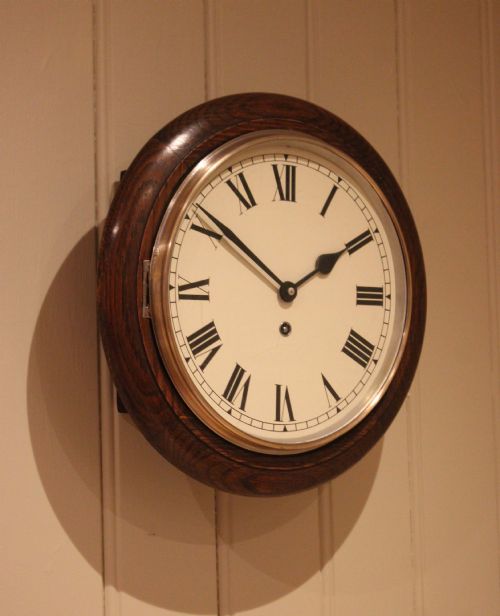
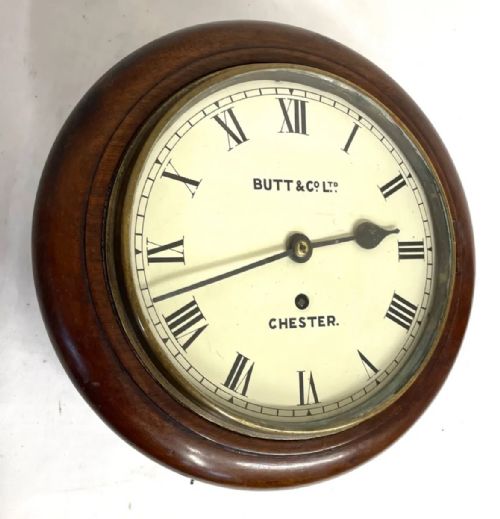
A traditional station clock is typically encountered as a round wall clock designed for clear legibility in public spaces, offices and platforms. When exploring a selection of traditional station clock examples, the buyer will frequently encounter Victorian and early twentieth-century pieces framed in mahogany or oak.
The inventory on this page spans from the nineteenth century into the 1930s, featuring regional makers and railway companies such as the N.E.R and LMS alongside domestic wall clocks and combined banjo barometers. Wall clocks with fusee movements dominate the selection, offering a reliable mechanical timekeeper built for rigorous daily service.
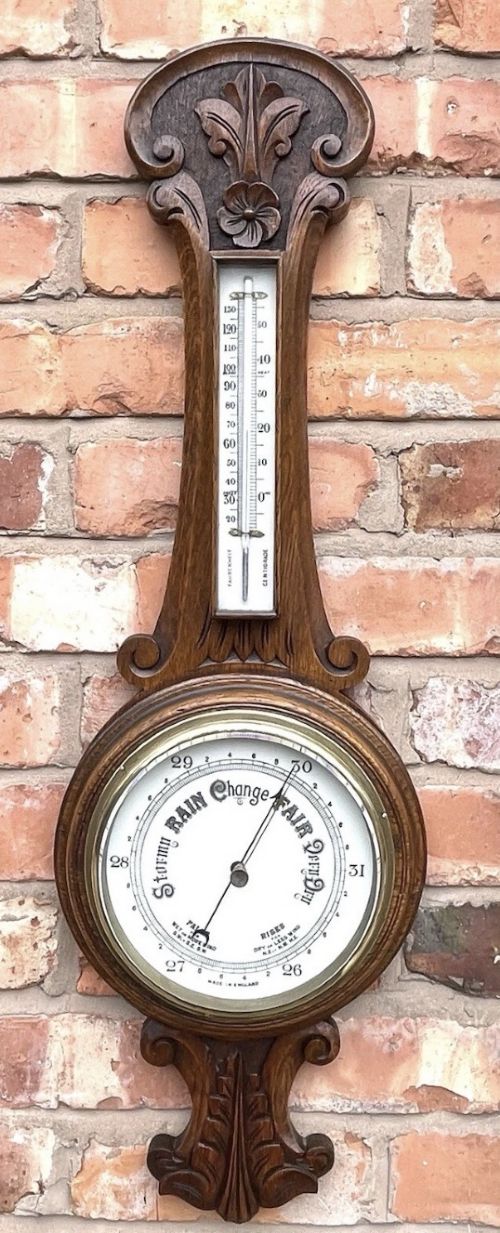
Beyond standard timepieces, the offerings include combined instruments housing thermometers and barometers within carved wooden cases. These instruments reflect the utilitarian yet handsome aesthetic of British and American workshop production from the Victorian and Edwardian eras.
How they were made
Cases were constructed from dense hardwoods such as mahogany, oak and walnut, often turned or carved to house the heavy mechanisms securely. Dial faces utilised painted wood, metal or convex glass to protect the hands while preventing glare in busy environments.
The interior engineering relied upon fusee movements, which maintained even tension on the gear train as the mainspring unwound to ensure accurate timekeeping. Brass components interacted with robust iron and wooden framing to withstand decades of continuous operation.
Listings feature Victorian and early twentieth-century fusee wall clocks housed in mahogany, oak and walnut cases.
What varies in quality
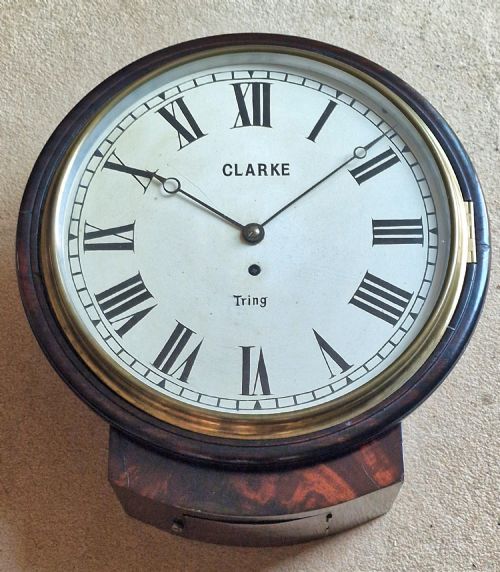
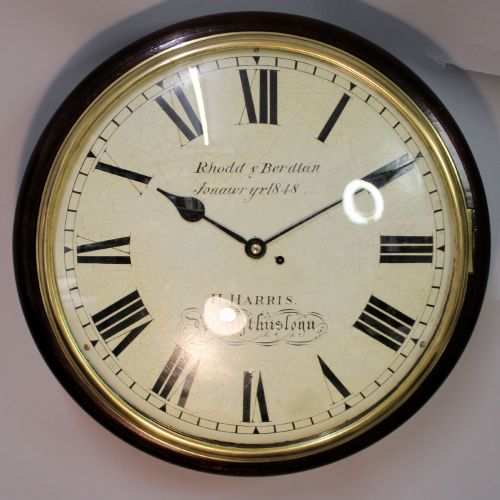
Quality rests in the precision of the fusee movement and the crispness of the dial markings inscribed by regional makers. Master clockmakers signed their work on the dial face, distinguishing bespoke local commissions from mass-produced utilitarian pieces.
The choice of timber casing and the intricacy of carved walnut or golden oak cabinetwork further separate standard utility clocks from finer examples. Preserved wooden bezels and original brass fittings indicate a higher grade of preservation and original craftsmanship.
Henry Harris of Monythuslwyn·Joseph Bird of Stroud·J C Ralls·John Wilson·George Clarke
The Traditional Station Clock Glossary
- Fusee
- A conical pulley used in clock movements to equalise the torque of the mainspring as it runs down. This mechanism ensures consistent force is applied to the escapement for greater accuracy.
- Dial clock
- A wall clock featuring a prominent circular face designed to be read from a distance. These were standard fixtures in offices, schools and railway stations.
- Banjo barometer
- A wall barometer shaped like a banjo, typically combining a thermometer, hygrometer and spirit level within a carved wood case. Victorian examples often paired this layout with matching wall clocks.
- Barograph
- A mechanical instrument that records barometric pressure over time onto a revolving paper chart. They are usually housed in glazed oak or mahogany cases.
- Convex dial
- A clock face curved outward toward the viewer to eliminate reflections from interior lighting. It was a common feature on high-grade nineteenth-century wall timepieces.
Traditional Station Clock: Frequently Asked Questions
What is a fusee wall clock?
A fusee wall clock is a mechanical timepiece driven by a chain or cord connected to a conical pulley. This system regulates the power of the mainspring to maintain steady timekeeping.
Such clocks were widely utilised in railway stations and municipal buildings where precise scheduling was essential.
How do I identify a Victorian station clock?
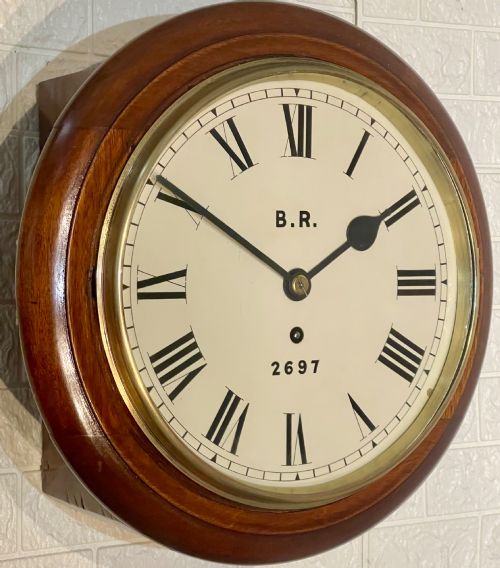
Victorian station clocks generally feature robust mahogany or oak cases with clear, painted circular dials designed for distance legibility. Many bear company initials or the names of regional makers on the dial face.
They rely on heavy mechanical movements rather than modern quartz mechanisms.
Can I hang a heavy wooden dial clock on plaster walls?
These clocks are constructed from dense hardwoods and house substantial brass movements, making them quite heavy. Secure mounting directly into wall studs or using heavy-duty fixings is necessary to support the weight safely.
Professional installation is recommended for larger fusee models.
What is the difference between a barometer and a barograph?
A barometer displays current atmospheric pressure through an analog dial or mercury column to indicate weather changes. A barograph continuously plots that pressure onto a rotating paper drum using a mechanical arm.
Both instruments frequently appear in wooden cases alongside traditional timepieces.