
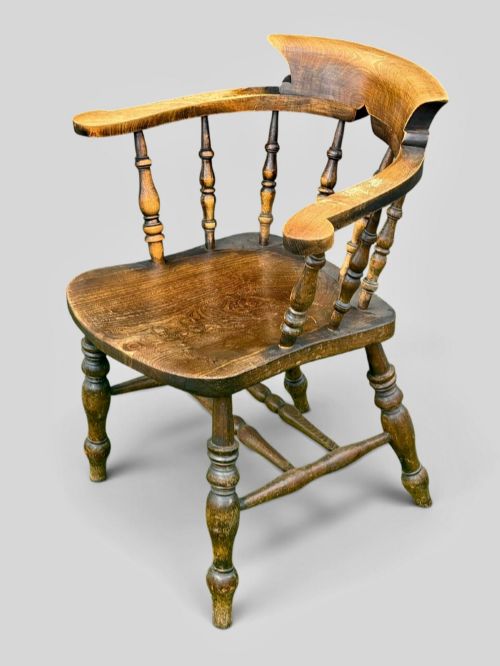
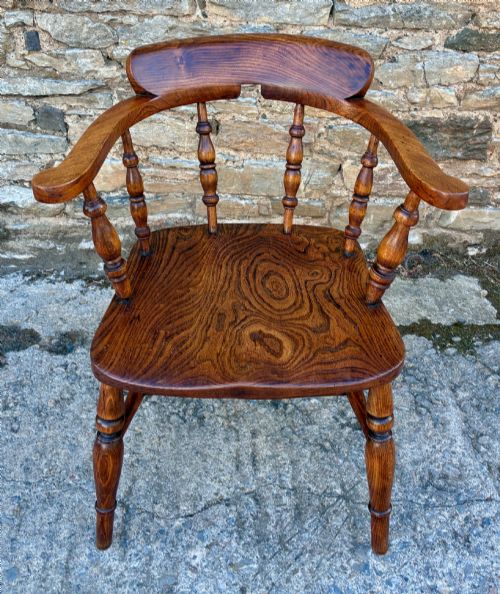
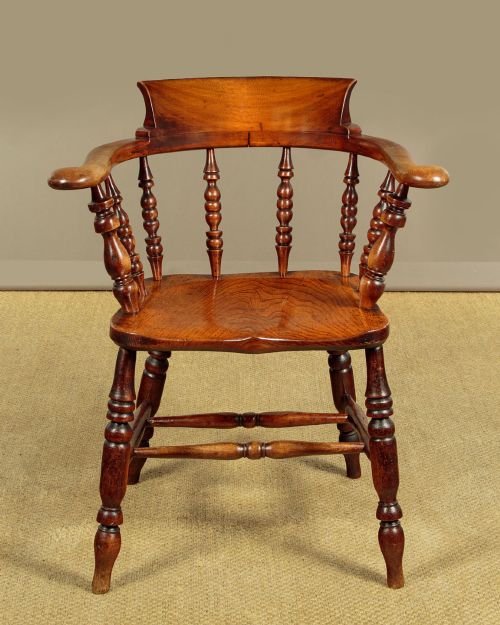
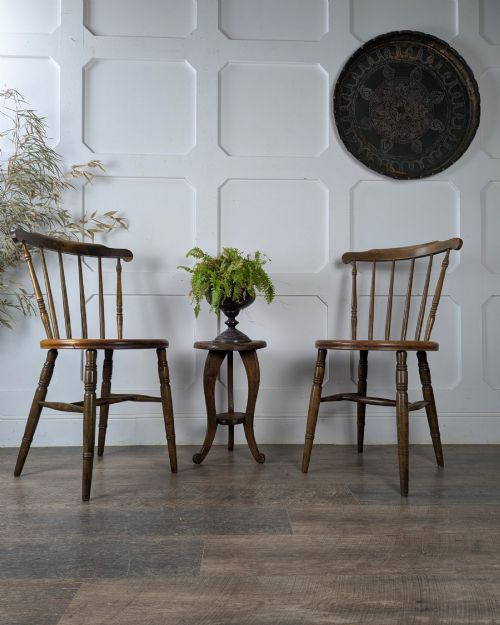
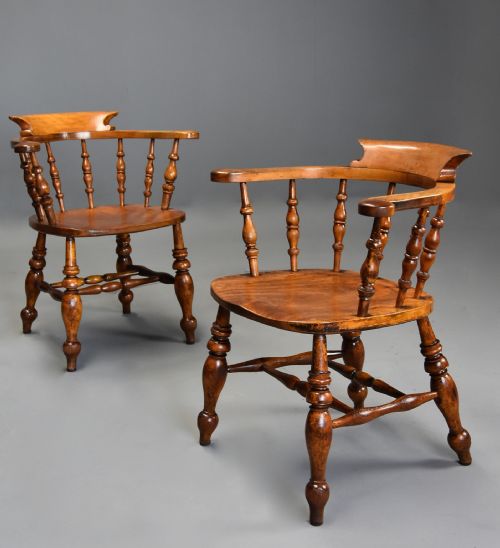
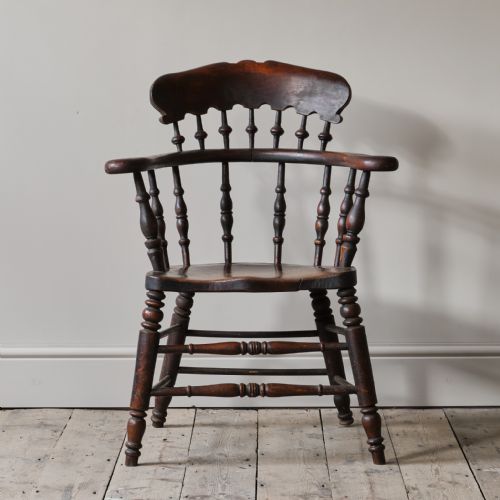
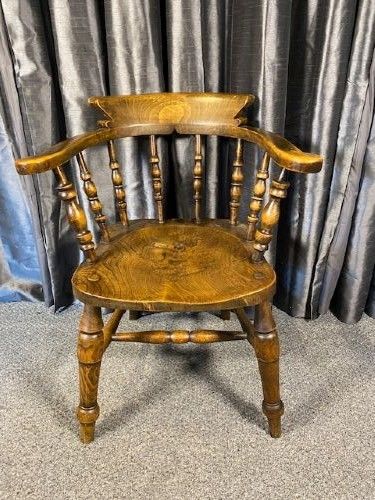
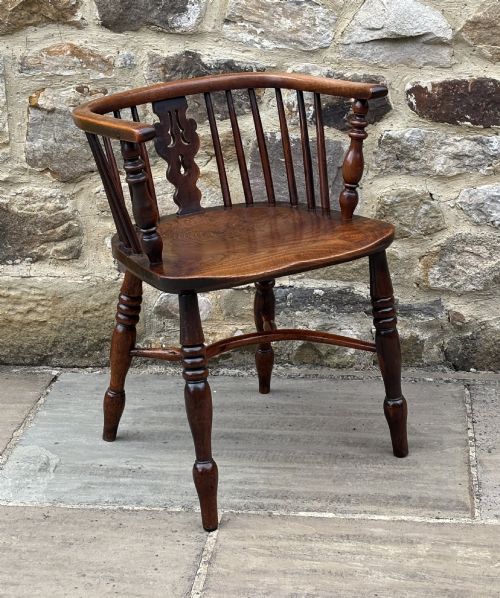
Traditional Smokers Chair
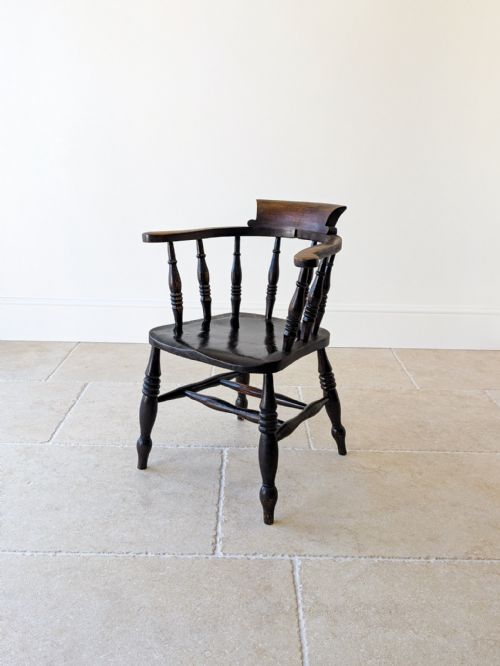
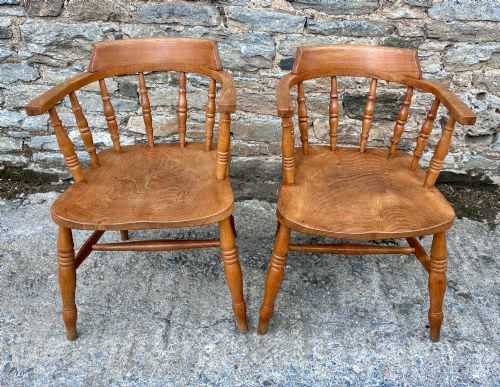
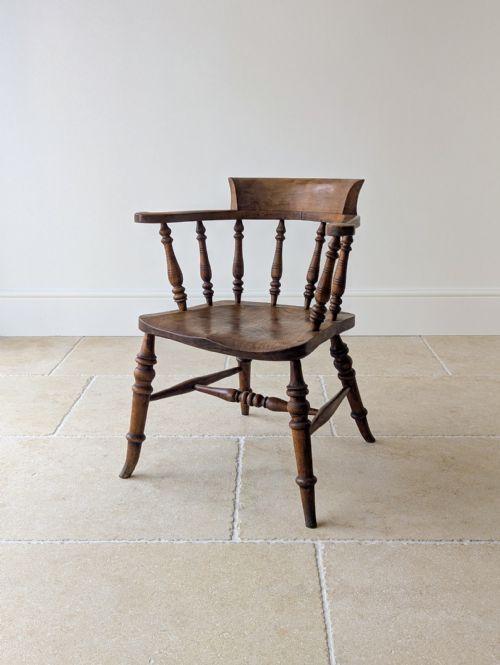
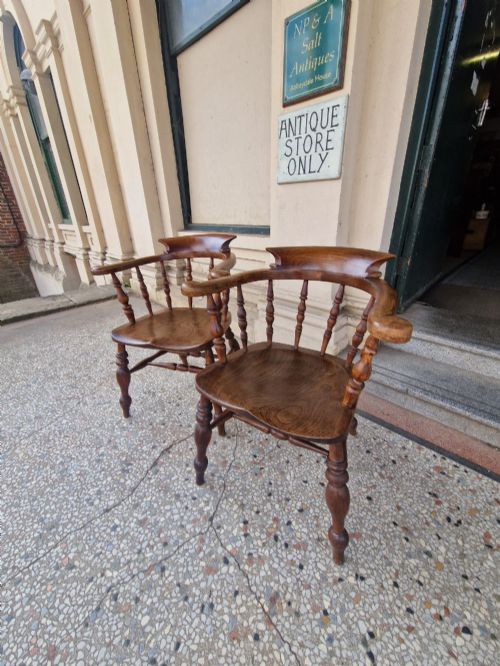
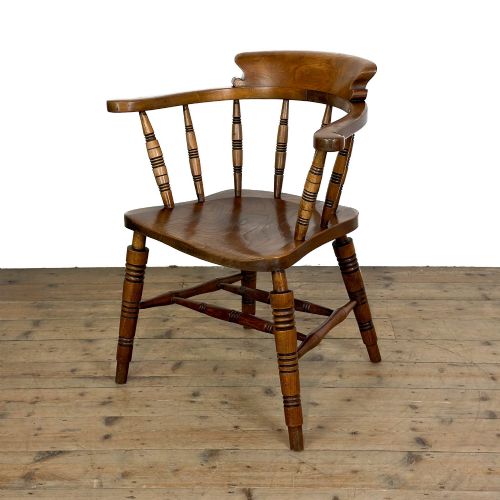
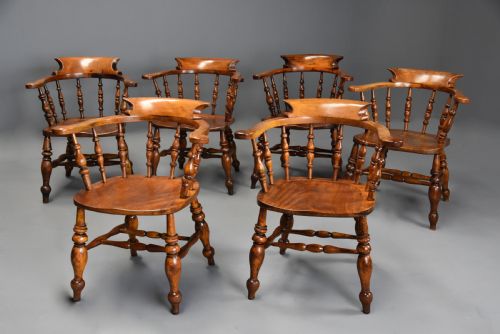
These traditional smokers chairs are sturdy country armchairs offering low backs and broad elbow rests, built for comfort in parlours and studies.
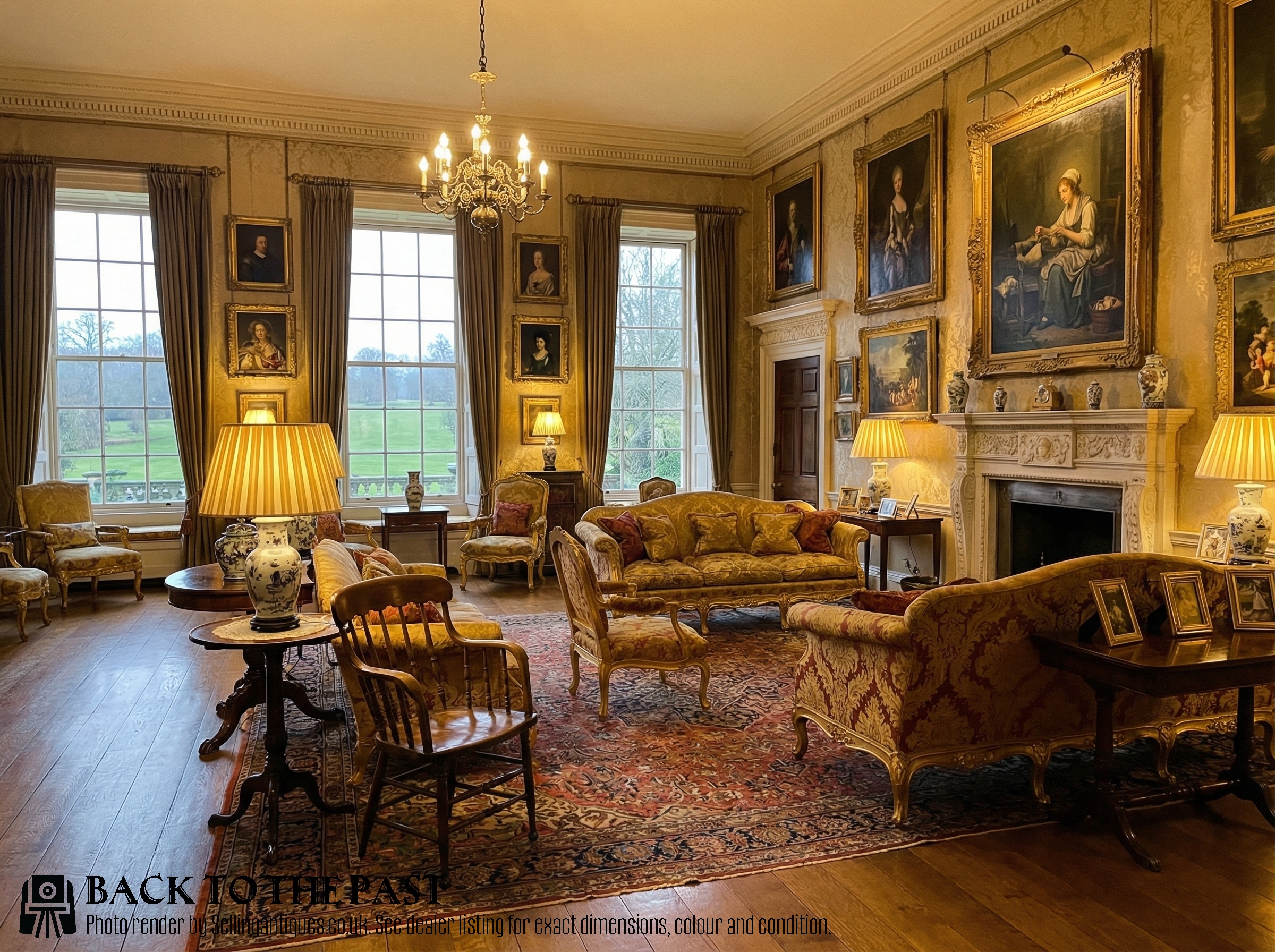
Traditional Smokers Chair
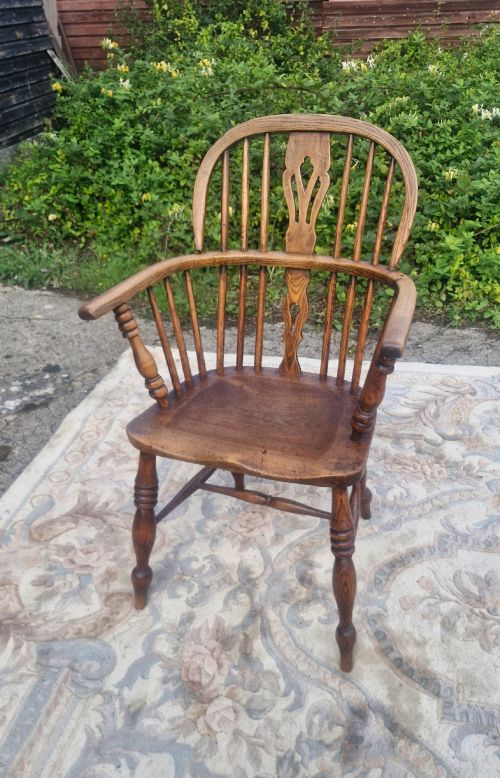
A traditional smokers chair is a low-backed armchair designed for domestic or tavern use, often found under names such as Smoker's Bow, captain's chair or low-back Windsor. These timber seats appeared across English provinces during the nineteenth century, spanning Victorian and Edwardian periods.
The most common examples on this page are constructed with wooden seats and turned spindles, functioning well as desk chairs, library chairs or farmhouse armchairs. Regional variations range from Nottinghamshire low-backs to general English country house elbow seats.
Makers produced these chairs for practical daily seating, leading to robust forms with deep elm seats and supportive bentwood rails. Their simple lines fit well into modern studies and living rooms while retaining the character of provincial workshops.
How they were made
Craftsmen built traditional smokers chairs using a combination of local timbers, most frequently pairing an elm seat with ash, beech or birch for the spindles and legs. Elm provided a tough, dense surface that resisted splitting when shaped into a saddle seat.
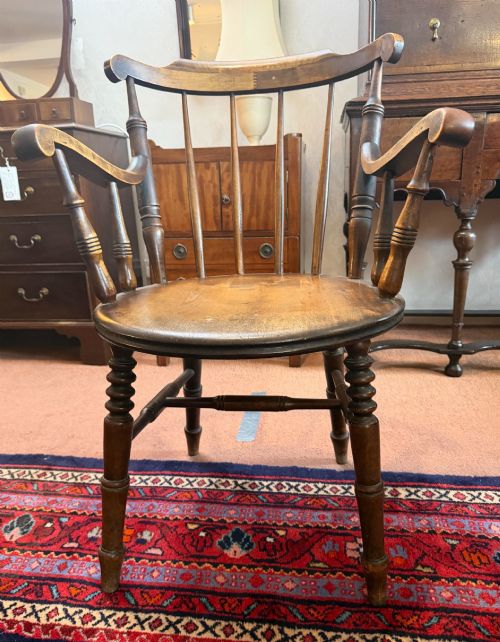
Turned spindles and steam-bent arm rails formed the upper section, joined securely to the seat board through wedged tenons and mortise joints. Some desk variants incorporated oak frames with leather or hide upholstery pinned to the seat.
Several chairs carry names like Dinco Penny or country house elbow seats, hinting at local tavern chatter.
What varies in quality
Quality in a traditional smokers chair rests upon the timber selection and the depth of the patination built up through decades of use. Chairs featuring strongly figured elm seats and rich, untouched surface tones stand apart from heavily restored examples.
Structural integrity relies on the tightness of the original joints and the grace of the steam-bent bow. Sharply turned spindles and balanced proportions distinguish finer country workshop production from plainer utilitarian seating.
The Traditional Smokers Chair Glossary
- Smoker's Bow
- A sturdy low-backed wooden armchair with a continuous curved arm rail, popular in nineteenth-century English households and inns.
- Windsor Chair
- A chair built with a solid wooden seat into which the legs and back spindles are inserted directly, often featuring a bentwood hoop.
- Captain's Chair
- A compact low-back armchair designed for office or domestic desk use, closely related in form to the smoker's bow.
- Saddle Seat
- A wooden seat base carved into a hollowed shape to improve comfort for the sitter.
- Patina
- The surface sheen and colour developed by timber over long periods of handling, polishing and exposure to light.
Traditional Smokers Chair: Frequently Asked Questions
What is a traditional smokers chair?
A traditional smokers chair is a low-back wooden armchair featuring a continuous curved rail and turned spindles, designed for everyday seating in nineteenth-century homes and inns.
These chairs combine sturdy timber construction with a low profile, making them suitable for use at desks or in farmhouse kitchens.
How do I date a smokers bow?
Dating relies on observing the timber types, turning styles, and construction methods characteristic of the Victorian and Edwardian eras. Mid-nineteenth-century examples often display distinct patination on solid elm seats.
Later Edwardian versions can incorporate oak frames or different combinations of beech and ash alongside the standard elm seat.
Were these chairs used at desks?
Many nineteenth-century examples served as desk chairs or library armchairs due to their supportive low backs and sturdy elbow rests. They provided a comfortable seat for writing or reading.
Some variants feature upholstered leather pads or adjustments tailored specifically for office environments.
How do I live with a country armchair?
These timber chairs fit naturally into modern studies, hallways, and living rooms as functional seating with historical character. Their robust construction handles daily use well.
Keep them away from direct heat sources to protect the old timber and maintain the natural surface finish.