
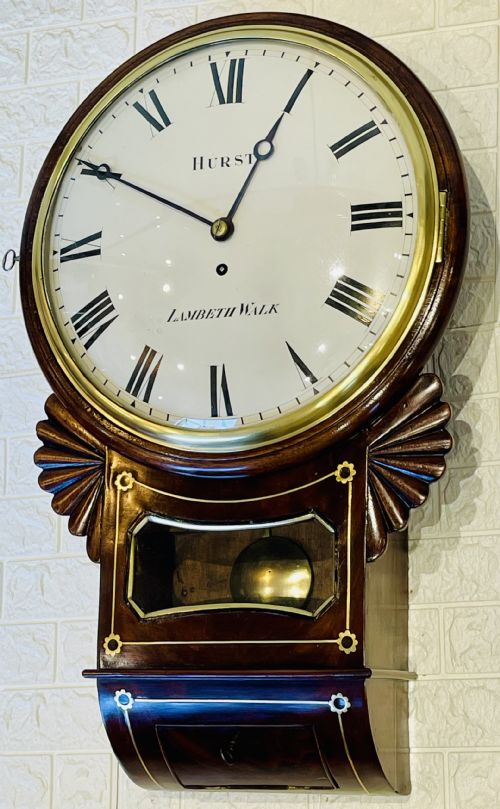


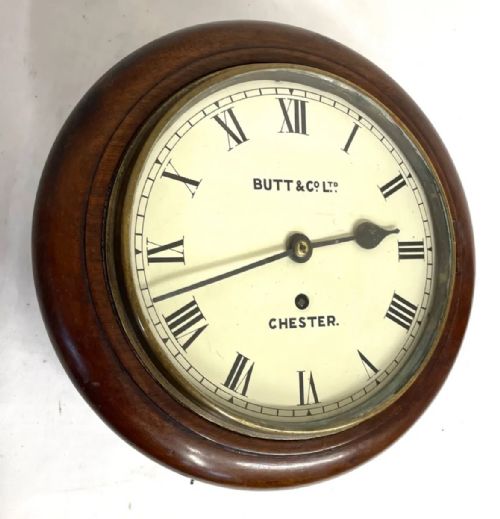


Traditional School Clock
A traditional school clock brings purposeful British timekeeping into a room, offering clear dials and robust timber cases that suit domestic and commercial spaces alike.
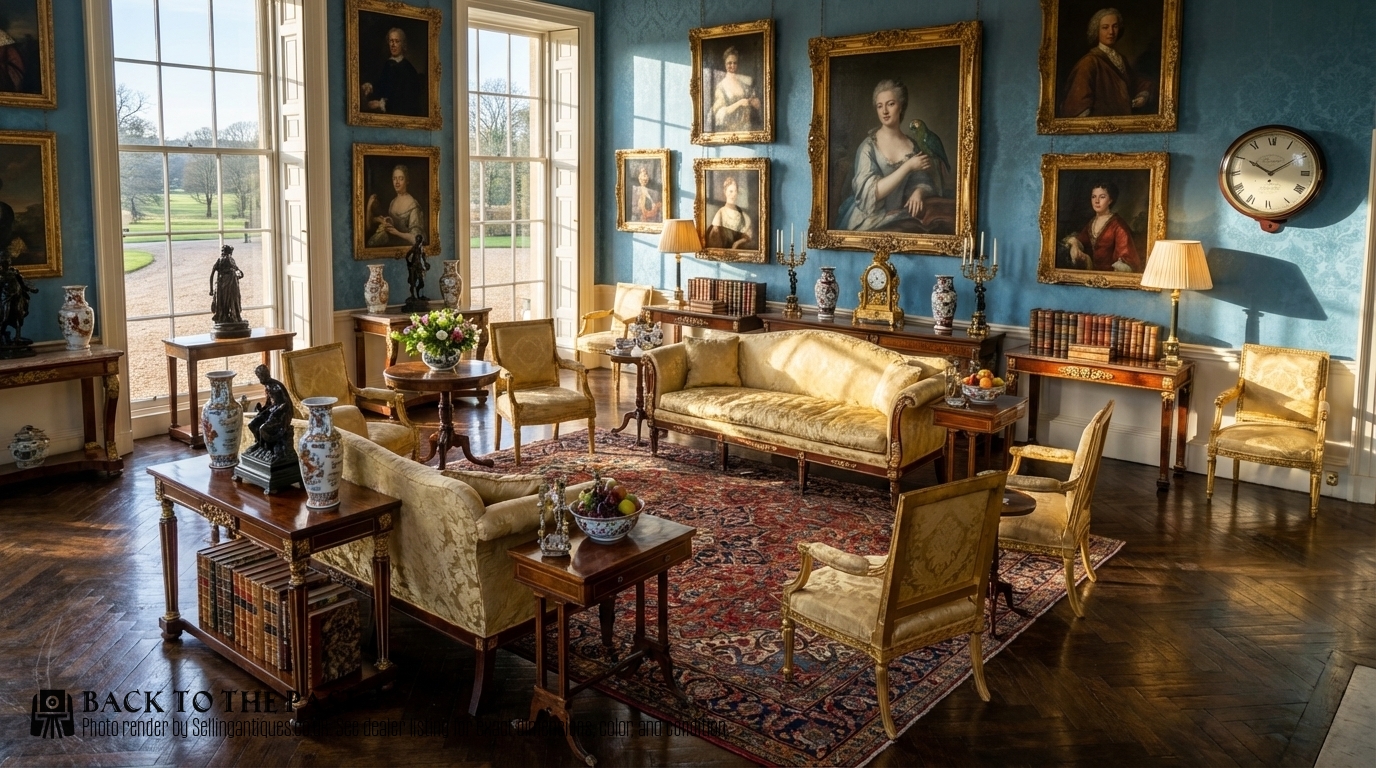
Traditional School Clock
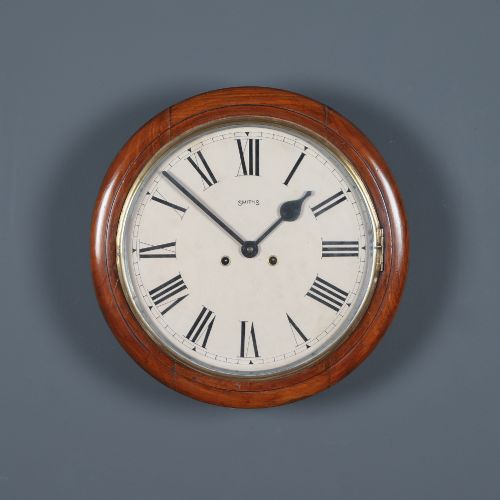
A traditional school clock is a wall-mounted timepiece designed for legibility and dependable timekeeping, taking the form of round dial clocks and drop-dial wall clocks. These clocks frequently appear in Victorian and 19th-century iterations, alongside pieces from the early decades of the twentieth century.
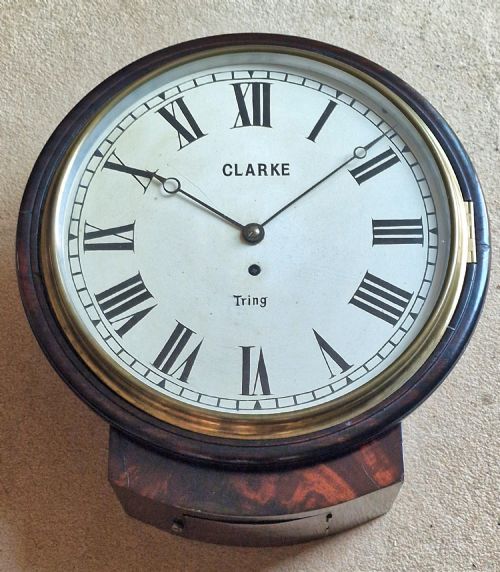
The objects span simpler circular dial formats to the elongated drop-dial cases that house the pendulum swing below. Most examples hail from traditional British workshops, reflecting regional maker traditions across England and Wales.
Materials and construction
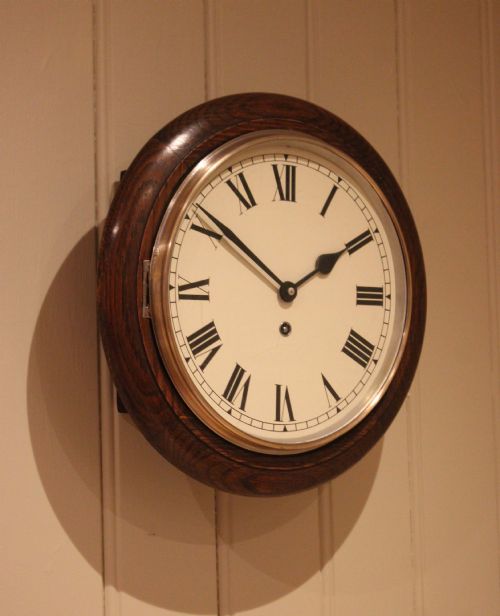
Cases are predominantly constructed from dense timbers such as mahogany and oak, providing the structural stability required for wall-hung movements. Brass and iron components form the mechanical inner workings, while glass protects the painted metal or wooden dials.
Movements often utilise fusee mechanisms to maintain even tension as the mainspring unwinds, ensuring accurate timekeeping across the duration of the run. Dials are carefully painted and fitted with distinct numerals to be read clearly from a distance.
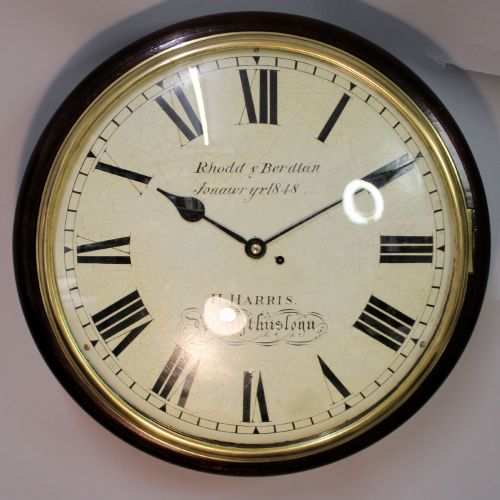
Some provincial makers proudly signed their wooden dials directly, leaving a charmingly rustic record of local trade.
Judging quality
Quality rests in the precision of the movement and the integrity of the timber case, where a refined fusee movement commands greater respect than a standard striking train. Superior examples display crisp dial lettering, well-figured mahogany or oak grain, and sound bezel hinges.
Maker attribution elevates an example significantly, particularly when signed on the dial or movement by established regional or London watchmakers. The proportion between the dial diameter and the drop case also dictates the visual balance of the piece.
Henry Harris·Joseph Bird·J C Ralls·Butt Co Ltd·Palmer Co·Sly Weymouth·J Beckett·Webster·George Clarke·Smiths
The Traditional School Clock Glossary
- Fusee
- A conical pulley connected to the mainspring by a chain or cord that equalises the torque as the spring unwinds. This mechanism is central to the accuracy of better-grade wall clocks.
- Drop dial
- A clock case featuring a circular dial at the top and an extended lower trunk that houses the pendulum. This configuration allows room for the pendulum to swing beneath the dial.
- Convex dial
- A clock face that curves outward toward the viewer rather than remaining flat. This shape reduces glare from windows and gas lighting.
- Bezel
- The brass or wooden ring that holds the protective glass over the clock dial. It usually opens on a hinge to allow hand-setting.
- Striking
- A mechanical function that chimes the hours on a bell or gong. Many wall clocks perform this task alongside timekeeping.
Traditional School Clock: Frequently Asked Questions
How do I wind a fusee wall clock?
Use the appropriate winding key on the dial arbor, turning it steadily until resistance is felt. Care must be taken not to overwind the mechanism.
Ensure the pendulum is hanging correctly on its suspension spring before setting the clock in motion and bringing it to beat.
Where were these clocks originally used?
These timepieces hung in public buildings, railway stations, classrooms, and offices where reliable visibility was paramount. Their straightforward layouts served communal spaces effectively.
Domestic settings later adopted them for kitchens, hallways, and living rooms due to their practical design and strong presence.
How do I date a dial clock?
Dating relies on examining the timber, the construction of the dial surround, and the signature of the maker on the face. Fusee movements and mahogany cases often point toward the Victorian era or earlier.
Later twentieth-century examples frequently feature oak cases and simplified movements without fusee cones.
How do I hang a heavy wall clock?
Secure the clock directly into a wall stud or use heavy-duty wall anchors rated for the weight of the timber case. The backboard should sit flush against the wall to prevent vibration.
Check that the clock hangs plumb so the pendulum swings evenly without catching on the interior sides of the drop case.