
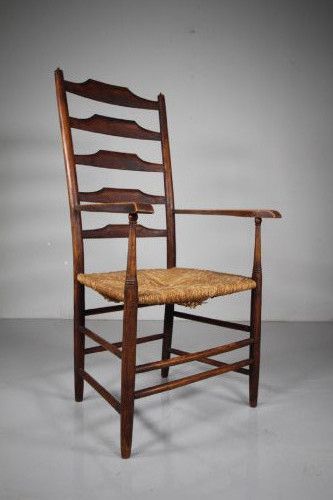
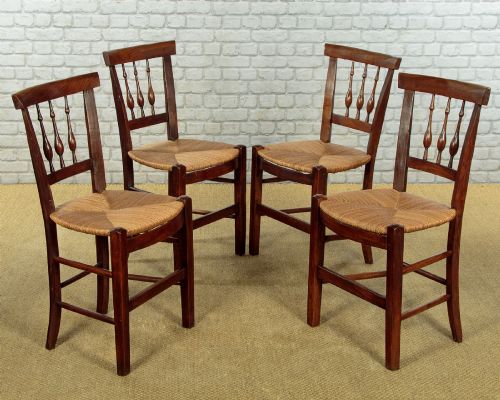
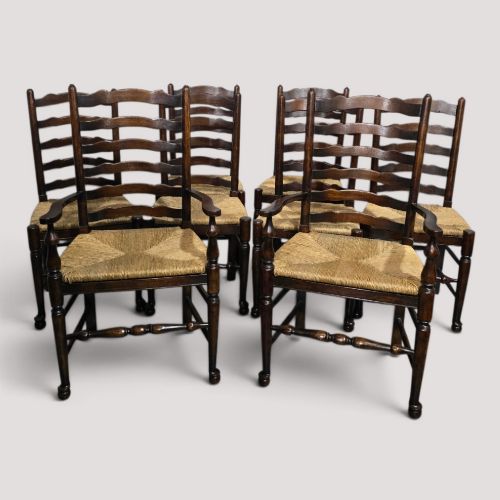
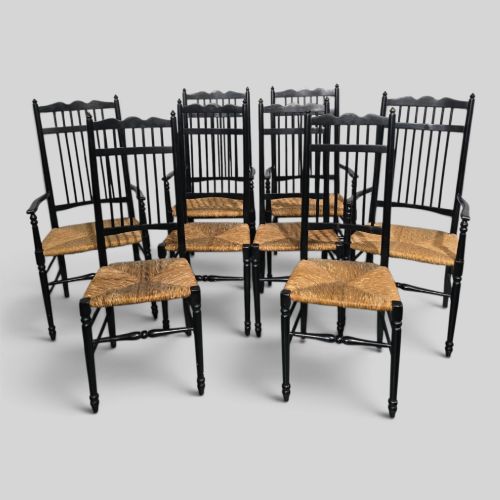
Traditional Rush Seated Chair
These traditional rush seated chair pieces bring genuine country vernacular character to an interior.
What these pieces are
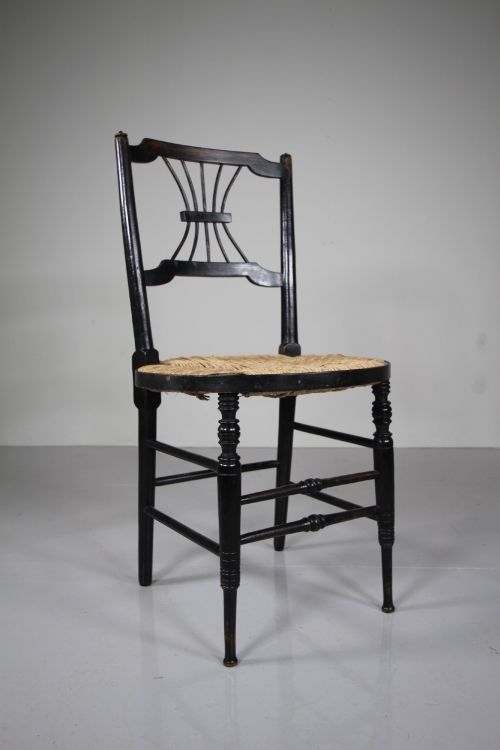
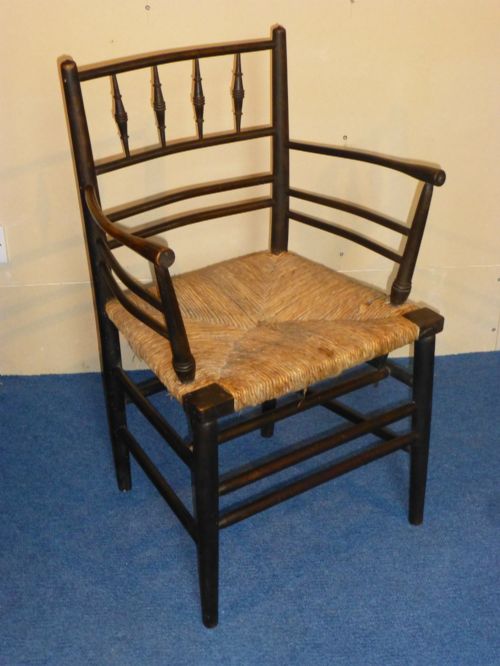
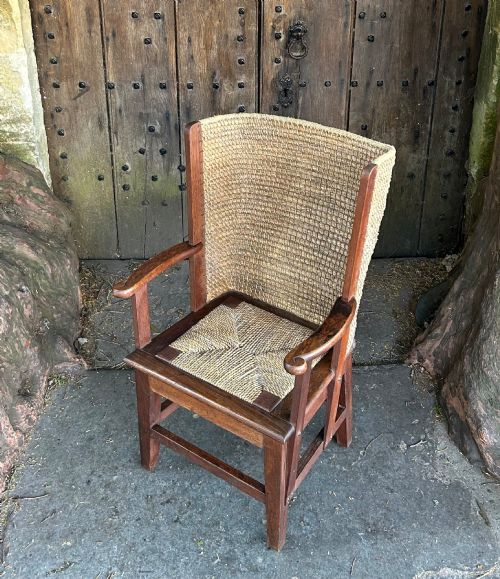
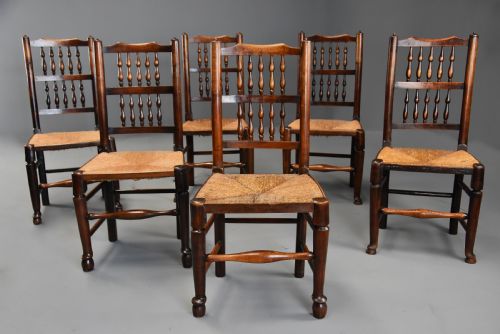
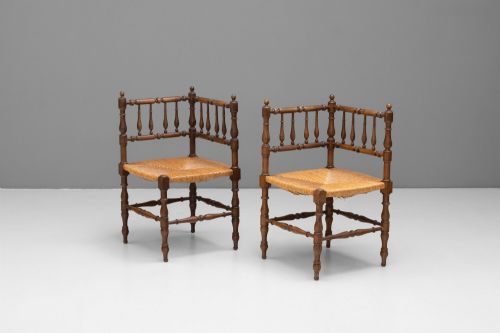
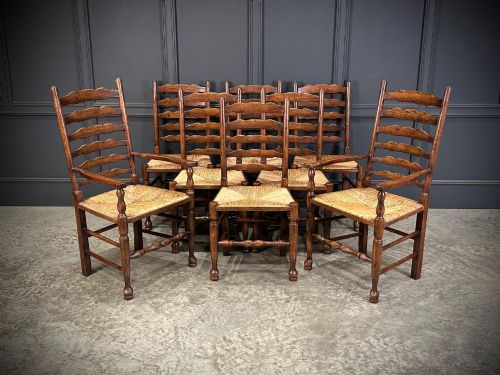
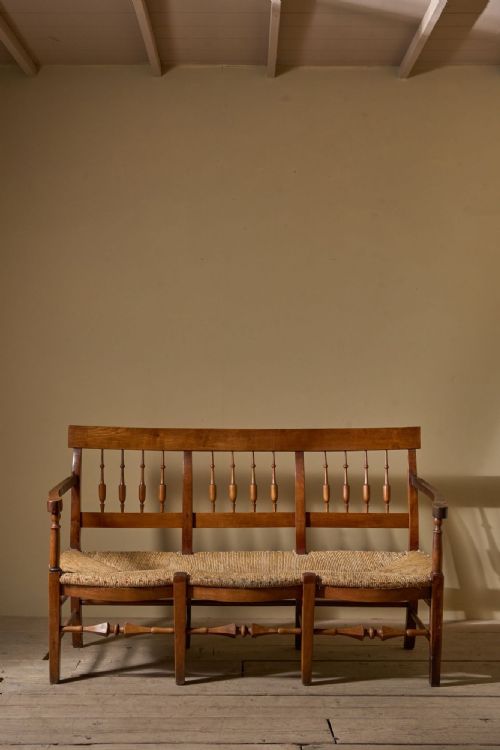
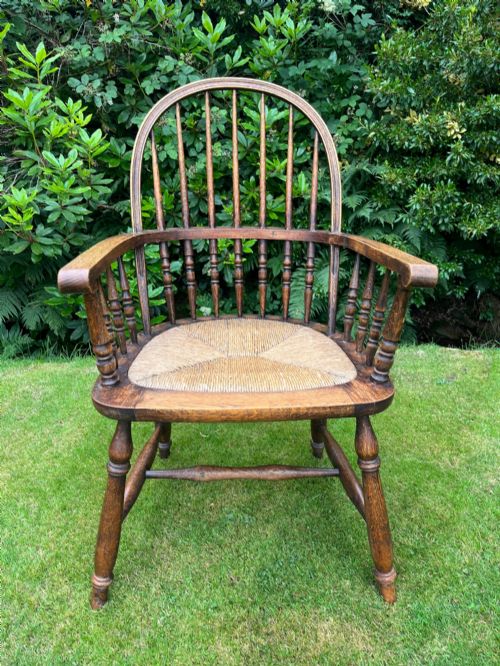
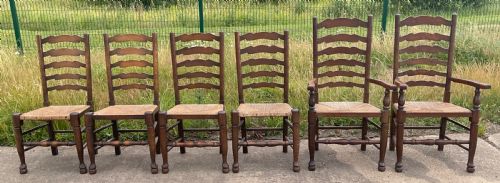
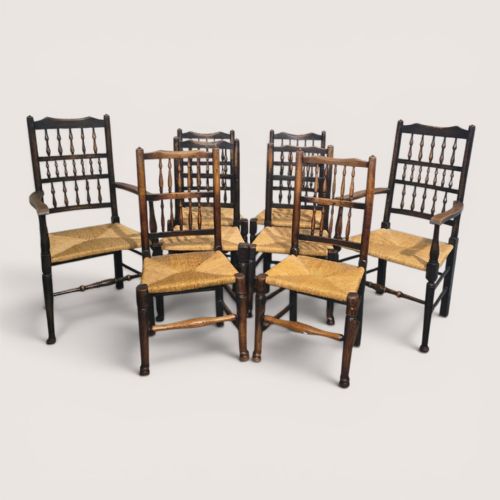
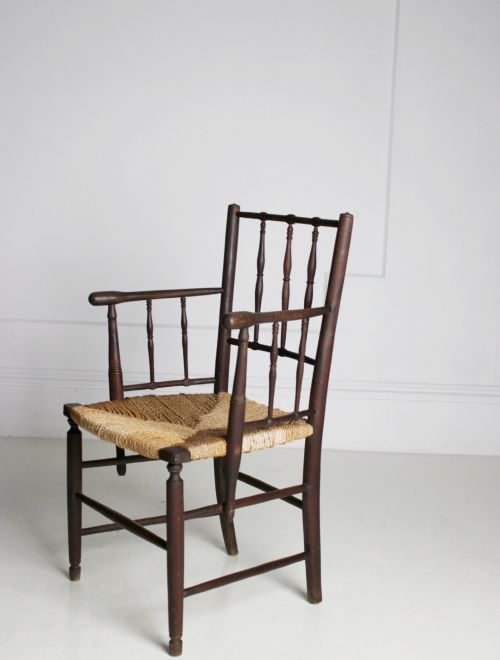
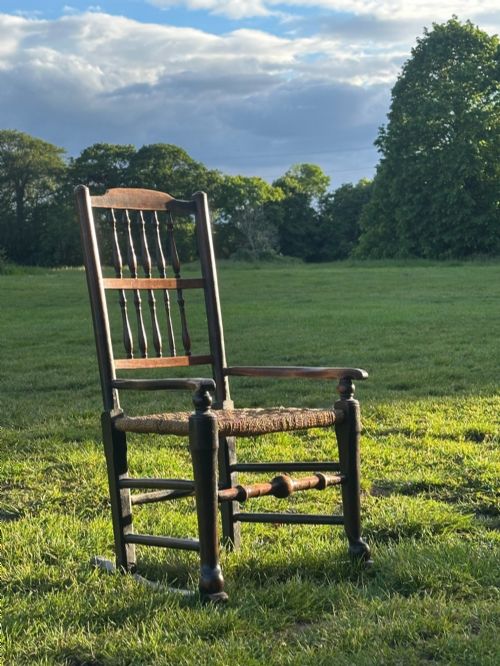
A traditional rush seated chair offers tactile seating rooted in centuries of domestic vernacular furniture making. You encounter these in forms ranging from simple single chairs to corner chairs, low ladder back armchairs, and child high chairs.
The evidence shows examples spanning the nineteenth century through to the 1930s, reflecting both rustic farmhouse production and named Arts and Crafts workshops. These seating options suit everyday use while carrying distinct historical presence.
How they were made
Frames are constructed from sturdy timbers such as oak, elm, beech, and general wood, sometimes finished with later paint. Makers selected these woods for structural resilience in daily domestic environments.
Seats are tightly woven from natural rush, providing a resilient and yielding surface that supports the sitter. This traditional seating craft requires considerable skill to tension the material correctly around the wooden rails.
Retail Price Guide 2026
Typical UK retail prices for traditional rush seated chair, calculated from the Sellingantiques database of over a million retail prices indexed since 2003. This retail price guide relies exclusively on Sellingantiques data; no external sources or auction records are used, so the figures do not describe the wider market.
Even a toddler needed proper lumbar support, as proved by the surviving high chairs.
What varies in quality
Quality separates through the integrity of the wooden frame construction and the tightness of the rush weave. Finer pieces demonstrate careful timber selection and balanced proportions across ladder back uprights and arms.
Association with notable retailers like Morris and Co or Liberty and Co elevates the standing of a piece within the Arts and Crafts tradition. Workshop provenance and original surface treatments distinguish standard vernacular items from notable design examples.
Morris and Co·Liberty and Co
The Traditional Rush Seated Chair Glossary
- Rush
- Marshland plant material twisted into cords and hand-woven to form durable chair seats. It provides a traditional textured surface that yields slightly to the sitter.
- Ladder back
- A chair back featuring horizontal wooden slats resembling the rungs of a ladder. This structural form is typical of country vernacular and Arts and Crafts seating.
- Corner chair
- A seating form designed to fit into the corner of a room, typically featuring a square seat angled diagonally and supported by multiple legs. It offers a distinct silhouette compared to standard dining chairs.
- Arts and Crafts
- A design movement of the late nineteenth and early twentieth centuries championing traditional craftsmanship and simple forms. Makers from this tradition often reinterpreted vernacular chair designs.
Frequently Asked Questions
How do I care for a rush seat?
Natural rush seats require gentle treatment and stable indoor humidity to prevent the plant material from drying out or becoming brittle. Avoid placing them near direct heat sources or in damp environments.
Cleaning should be limited to gentle dusting with a soft brush. Moisture can damage the twisted fibres, so liquid cleaners are best avoided on the woven portions.
Are these chairs suitable for daily dining?
Many of these pieces were originally constructed for everyday domestic use in farmhouses and homes. Their sturdy wooden frames and resilient woven seats make them practical for contemporary seating.
It is sensible to consider the age and structural condition of individual examples before assigning them to heavy daily service. Lighter pieces, such as child high chairs or low armchairs, serve well as decorative accents.
How do I distinguish Arts and Crafts examples?
Arts and Crafts pieces often exhibit cleaner lines, thoughtful proportions, and direct ties to workshops like Morris and Co or Liberty and Co. They reflect a deliberate revival of traditional hand-craft methods.
Vernacular farmhouse pieces tend to show simpler, utilitarian construction without specific retailer attribution. Comparing the framing style and joinery helps clarify the design context of each chair.