


Traditional River Landscape Art
Traditional river landscape art captures quiet stretches of water, willow banks and historic mills through the eyes of nineteenth and twentieth-century painters.
Traditional River Landscape Art
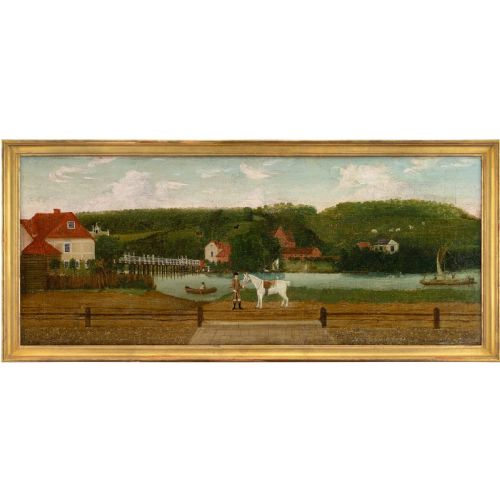
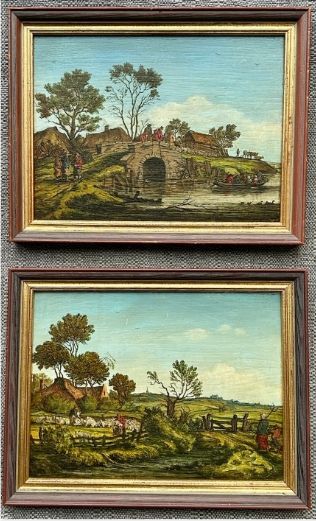
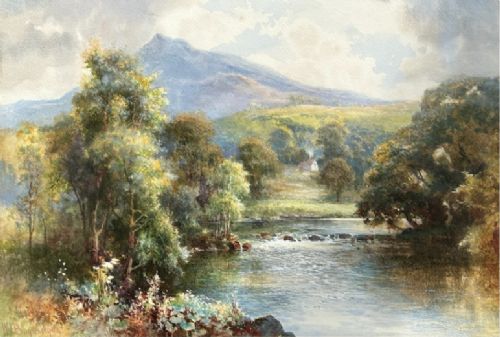
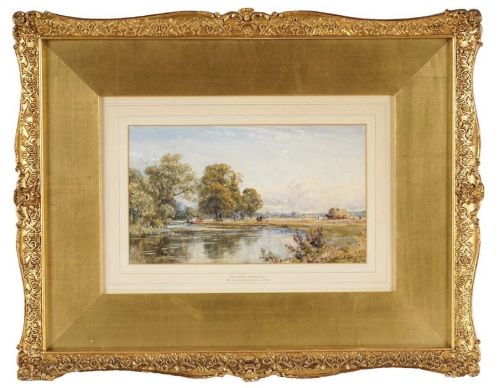
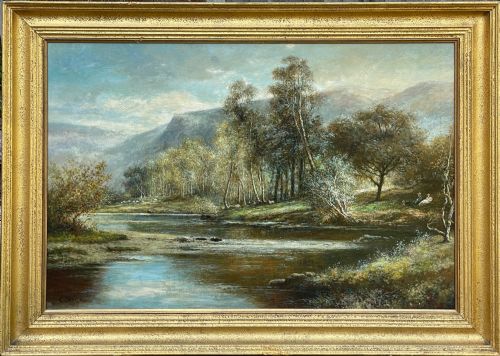
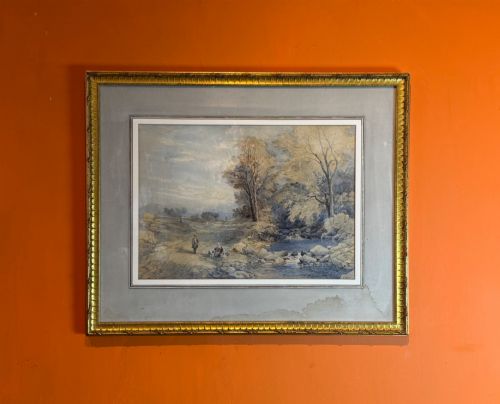
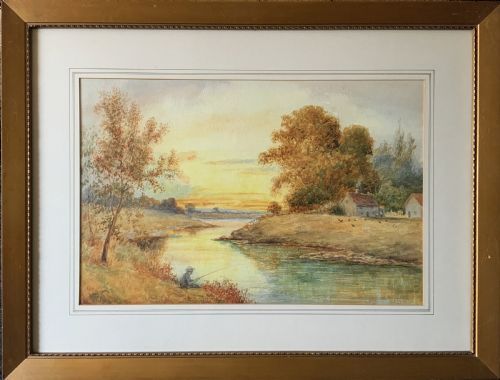
Traditional river landscape art encompasses oil paintings, watercolours and framed wall pieces depicting pastoral waterways, locks and valley views. These works predominantly date from the nineteenth century through to the mid-twentieth century, capturing British, Dutch and broader European scenes.
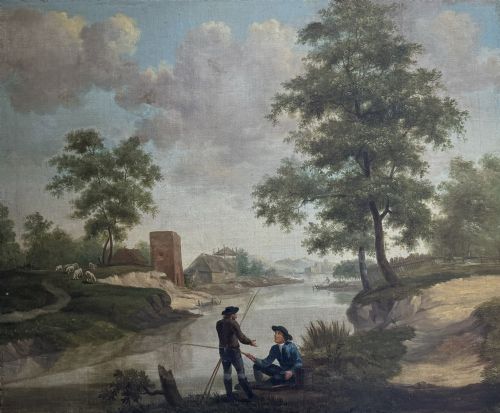
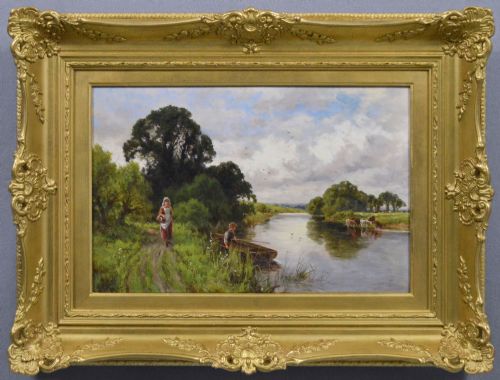
Buyers encountering this genre will find named artists alongside regional British school pieces and continental works. Subjects range from figures fishing beneath willow trees to bustling riverbanks near historic bridges and windmills.
The aesthetic leans towards realism, impressionism and Victorian pastoral scenes. These pictures provide a direct window into historical topography and rural life along notable rivers.
Materials and methods
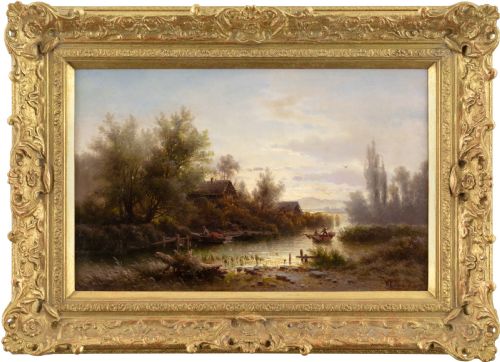
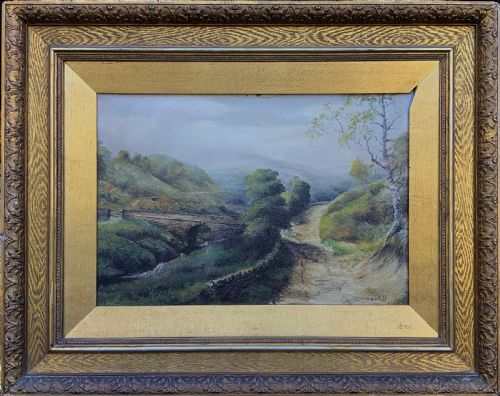
Painters of traditional river landscapes worked primarily with oil on canvas or wood panels, alongside detailed watercolour and gouache on paper. Canvases were occasionally laid onto board for extra stability, while frames often utilised carved gesso and giltwood.
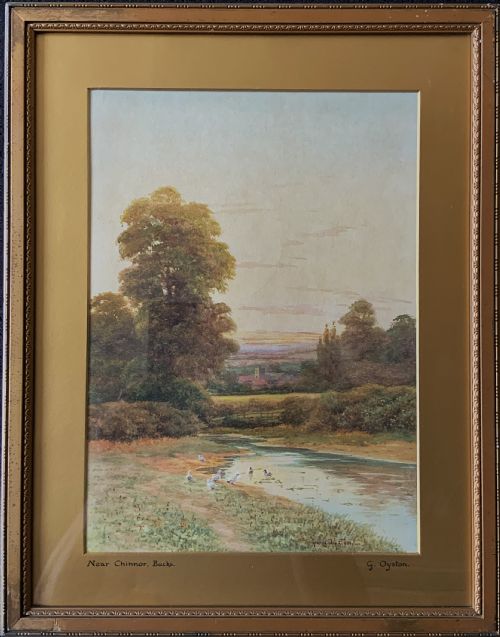
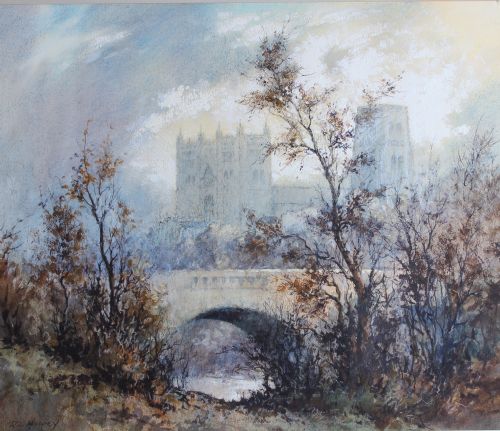
Techniques varied from fine, detailed brushwork capturing atmospheric morning light and reflections to looser impressionistic applications of paint. Watercolour artists utilised washes to render water transparency and soft skies over valleys and estuaries.
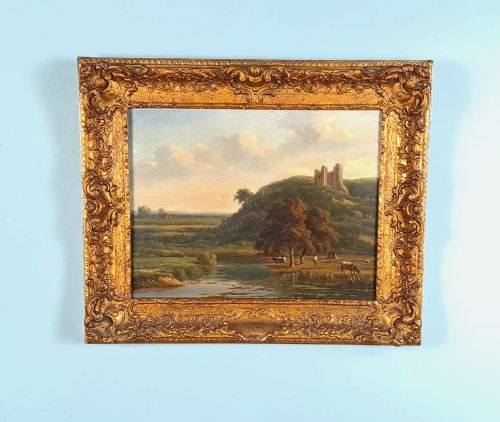
Several artists clearly enjoyed painting cows standing near water just as much as the fishermen did.
Factors influencing quality
The distinction between standard works and finer pieces rests in the handling of light, atmospheric depth and topographical detail. Superior paintings demonstrate a confident command of water reflections and tonal harmony rather than rigid formulaic composition.
The retention of original frames, particularly period giltwood or gesso mouldings, adds notable contextual value. Clear provenance, legible signatures and documented exhibition histories elevate individual pieces within the broader corpus of landscape painting.
George Graham·Alfred Young Nutt·William Joseph Boyes·Robert Thorne Waite·George Oyston·Albert Rieger·E Brown·Robert Leslie Howey·T C Hofland·Henry H Parker·David Cox·T Bergman·Sydney Yates Johnson·John Horace Hooper·Hubert Wellington·Archibald Kay·Alexandre Le Bihan·Thomas Baker·John Constable·Carl Johan Fahlcrantz·Henry John Kinnaird·Thomas Bush Hardy·Alfred Augustus Glendening Jnr·Owen Bowen·William Sydney Cooper
The Traditional River Landscape Art Glossary
- Gesso
- A plaster-based material applied to wooden frames before gilding. It provides a smooth surface for intricate decorative moulding.
- Giltwood
- Timber carved and coated with gold leaf or a metallic finish. It frames many nineteenth-century paintings.
- Watercolour
- A paint consisting of pigment suspended in a water-soluble binder. It is traditionally applied to paper to create translucent washes.
- Wood Panel
- A rigid wooden support used by artists before canvas became dominant. Panels often bear early oil paintings and distinct grain patterns.
Traditional River Landscape Art: Frequently Asked Questions
What periods do these paintings cover?
The available selection spans primarily from the nineteenth century through the early and mid-twentieth century.
You will encounter Victorian pastoral works, Edwardian watercolours and later European interpretations of river scenes.
How were these watercolours and oils framed?
Many works are housed in their original period frames constructed from wood with gesso and gilt ornamentation.
These frames often show period patination that matches the age of the canvas or paper within.
Are these river landscapes signed by the artists?
A significant number of pieces feature artist signatures, monograms or contemporary inscriptions on the front or reverse.
Other works are attributed to specific regional schools or created in the manner of established masters.
Where do these landscape subjects originate?
The geographical focus centres heavily on British rivers, Welsh valleys and Thames waterways, alongside Dutch and continental scenes.
Artists frequently depicted specific named locations such as Durham Cathedral, Stratford-upon-Avon and various international riverbanks.