
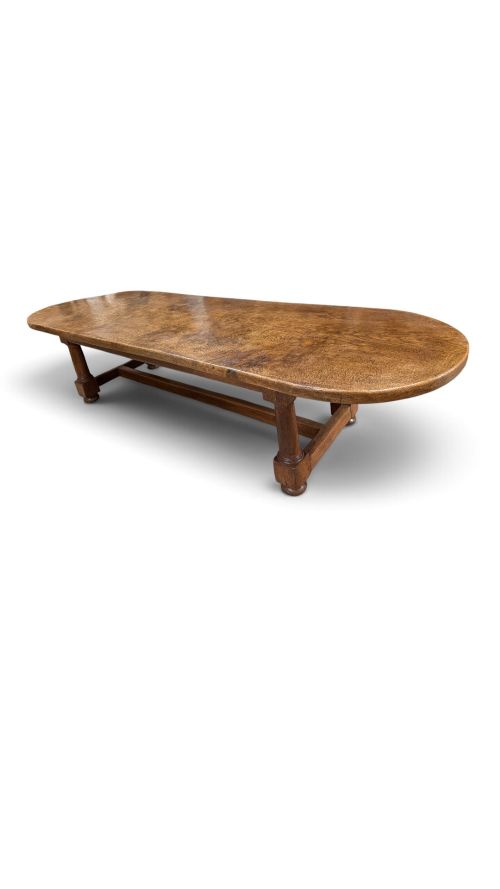
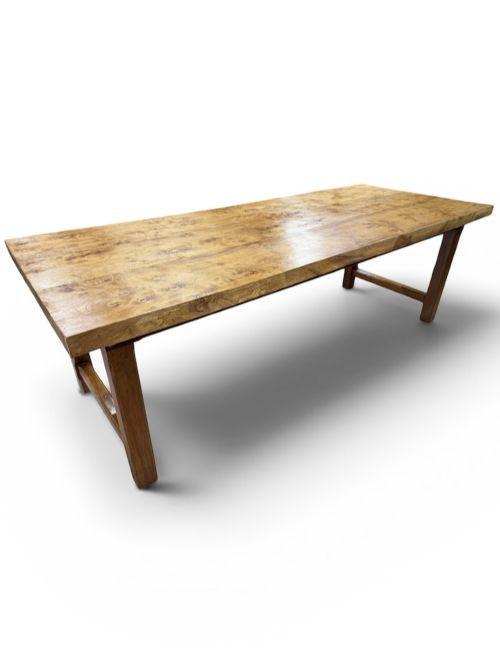
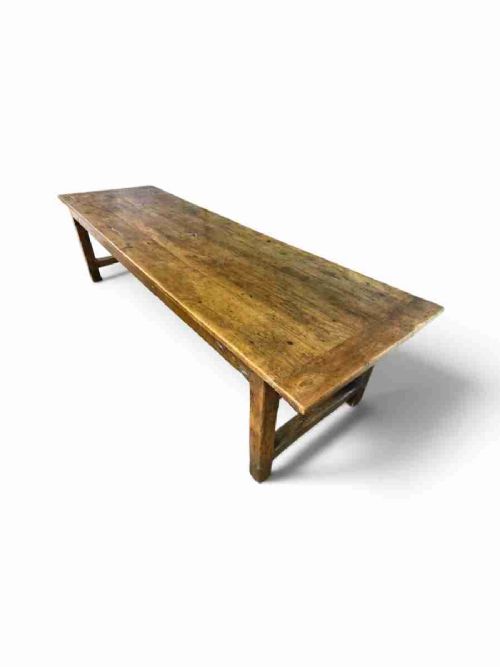
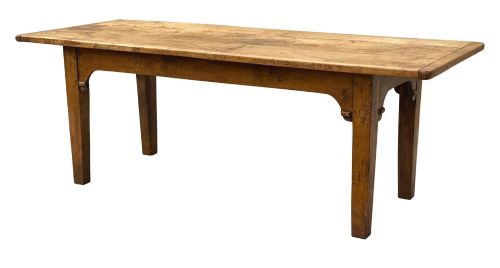
Traditional Refectory Dining Table
A traditional refectory dining table anchors a room with timber character and generous proportions built for gathering.
Traditional Refectory Dining Table
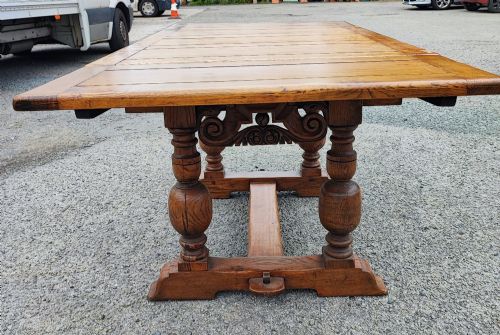
A traditional refectory dining table provides a long, substantial surface originally designed for communal meals in monastic halls and large country houses. These pieces span centuries of craftsmanship, ranging from early examples through Georgian and Victorian periods to Edwardian revivals.
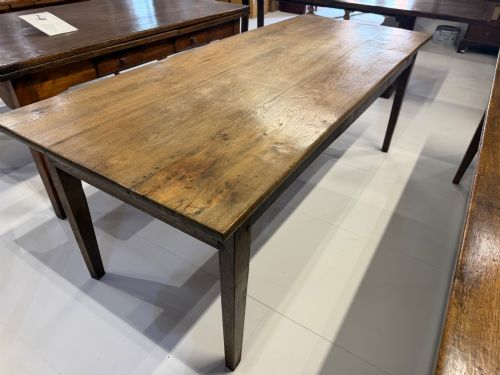
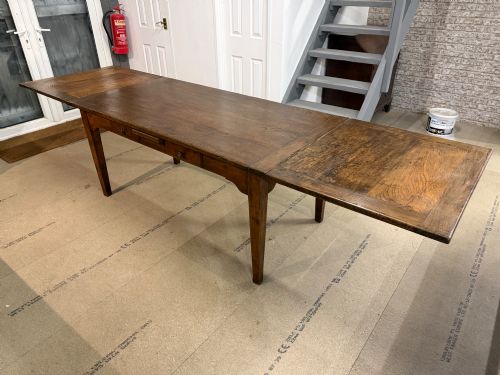
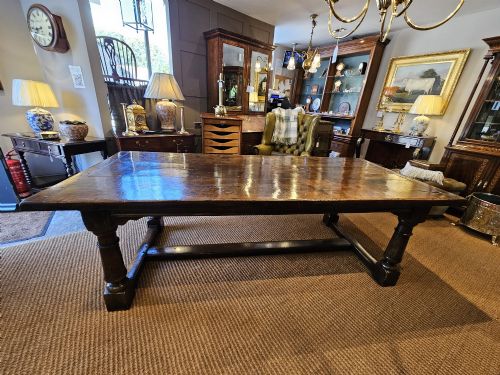
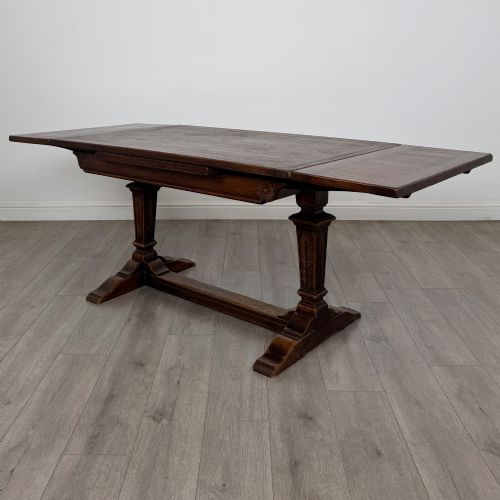
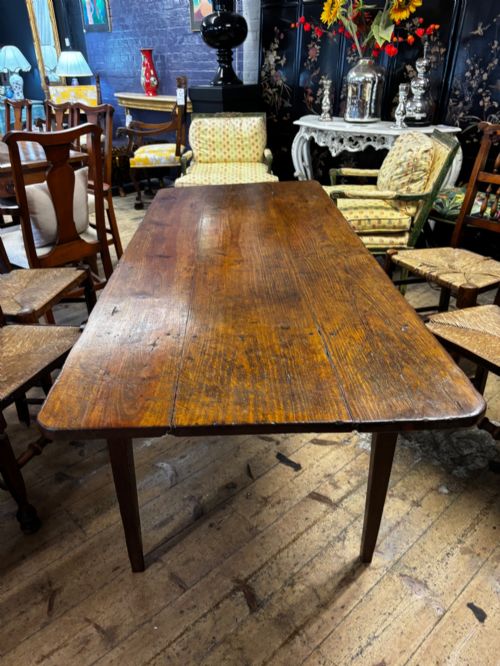
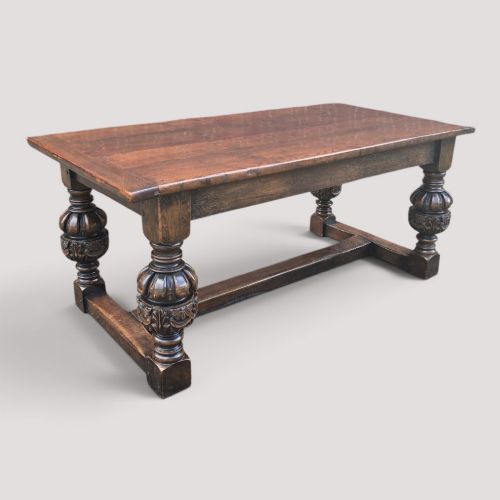
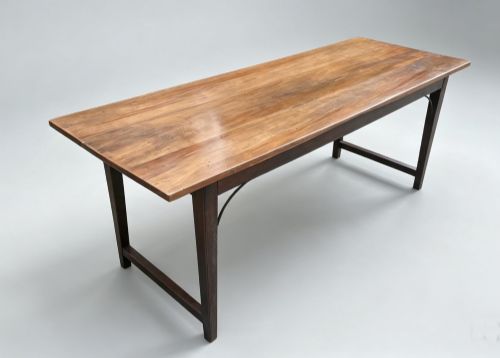
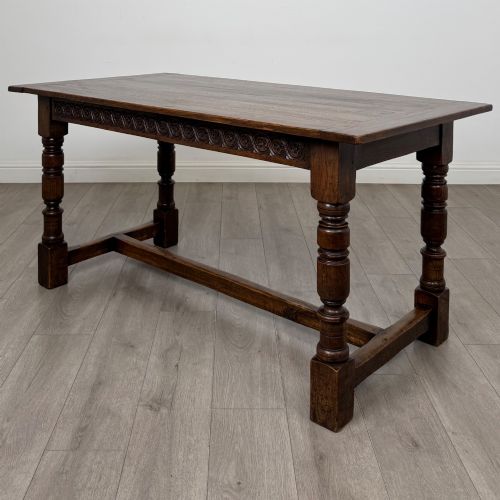
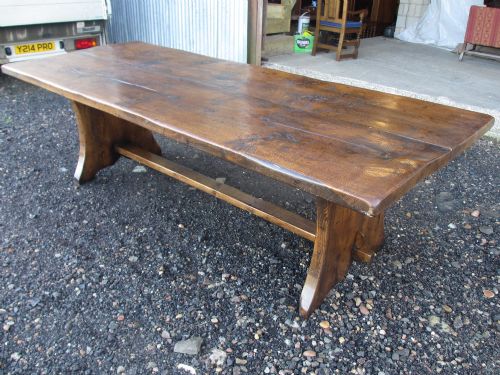
Buyers frequently encounter solid oak construction featuring structural trestle ends or stout legs, often incorporating draw leaf mechanisms for extension. The selections visible here include styles from Jacobean Revival to rustic farmhouse and French provincial forms.
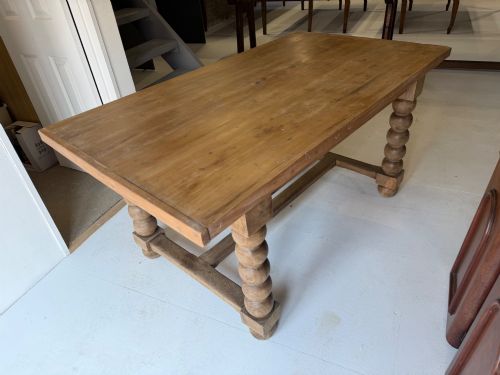
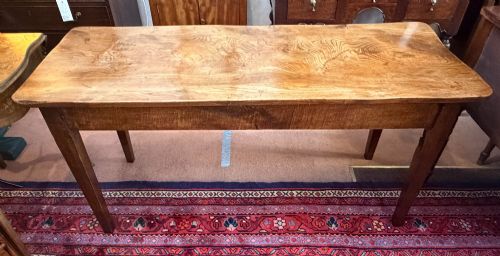
Proportions tend to be deep and long, accommodating seating for eight or ten diners comfortably. Woods such as pine, fruitwood, and elm also appear alongside heavy oak, showing varied patination from decades of domestic use.
How they were made
Makers relied primarily on solid native timbers, selecting oak as the principal wood for its durability, supplemented by beech, fruitwood, pine, and elm for tops and secondary framing. Joinery relied on traditional pegging and mortise and tenon techniques to support heavy boards without metal fasteners.
Surfaces received wax or oil finishes to nourish the timber and highlight the natural grain, while some examples exhibit traces of early paint or bleached treatments. Structural support came through shaped trestle ends, tapered legs, or bobbin turnings, frequently tied with heavy stretchers for stability.
Traditional Refectory Dining Table Retail Price Guide 2026
Typical asking prices for traditional refectory dining table among the pieces listed under this phrase on Sellingantiques today, from the lower quarter to the upper quarter. They describe what is for sale here now, not the wider market.
One piece carries the specific legacy of the Arnold School, proving that even school dinners once happened over proper oak.
What varies in quality
Quality rests in the integrity of the timber selection, visible in single plank oak tops versus multi-board construction. Heavier framing timbers and hand-carved details reflect greater artisan time and superior structural longevity.
The sophistication of the mechanism in extending variants, such as smooth draw leaf movement, separates standard production from finer cabinet work. Original patination accumulated over generations distinguishes pieces with uncompromised surfaces from heavily restored equivalents.
The Traditional Refectory Dining Table Glossary
- Refectory table
- A long, narrow dining table traditionally used in monastic refectories and large domestic halls. These forms prioritise length and sturdy stretcher bases.
- Draw leaf table
- A table equipped with sliding leaves stored beneath the main top that pull out to extend the surface length. This mechanism increases seating capacity efficiently.
- Trestle ends
- Supporting vertical frames set near the ends of a table rather than corner legs. They provide maximum legroom along the length of the top.
- Patina
- The surface sheen and colour developed by timber over decades of handling, light, and polishing. It signifies age and consistent use.
Traditional Refectory Dining Table: Frequently Asked Questions
How do I seat eight people?
Traditional refectory tables offer generous lengths, often exceeding standard dimensions to accommodate eight or more diners along the sides. Trestle designs help maximise legroom because corner legs do not restrict chair placement.
Selecting a version with draw leaf extensions allows you to lengthen the surface further when guests arrive. Benches also pair with these tables to fit additional diners flexibly.
What is a draw leaf table?
A draw leaf table incorporates two sliding panels hidden beneath the main surface. Pulling these ends outwards raises them into alignment to extend the overall length.
This mechanism provides extra dining space without requiring separate table leaves stored elsewhere. It remains a practical feature found on many twentieth century oak variants.
How do I care for oak?
Solid oak surfaces respond best to regular dusting with a soft cloth and occasional applications of beeswax to nourish the timber. Avoid placing these pieces near direct heat sources or strong sunlight to prevent wood movement.
Using placemats and coasters protects the wax finish from moisture and heat rings. Gentle maintenance preserves the natural patination built up over decades.
Are these tables heavy?
Solid timber construction, particularly in oak and elm, creates considerable weight that requires multiple people to move safely. This mass ensures stability during daily dining use.
The heavy framing and thick top boards mean these pieces stay firmly in place once positioned in a dining room.