
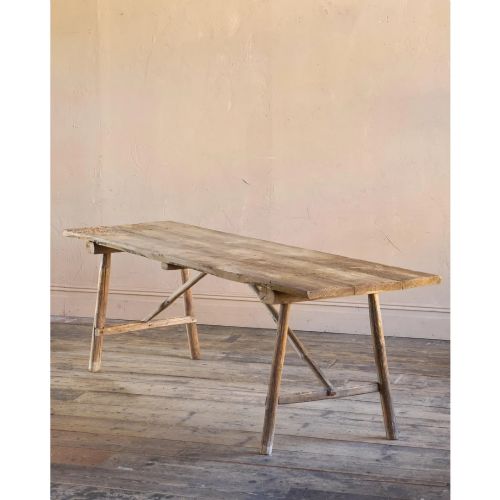
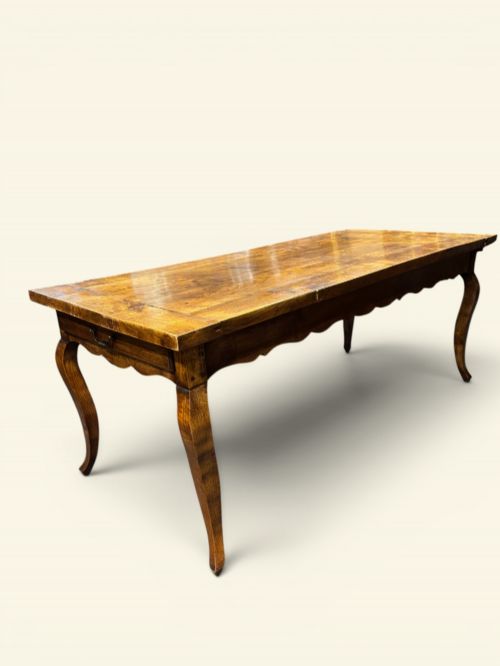
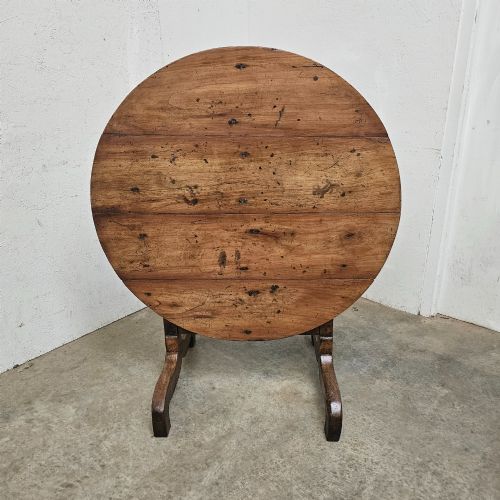
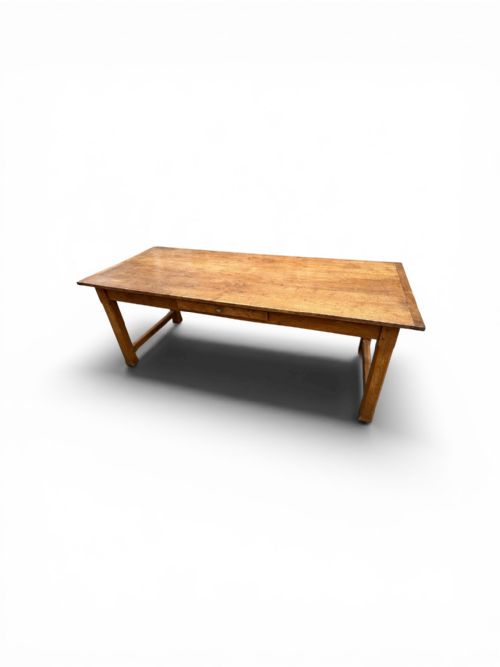
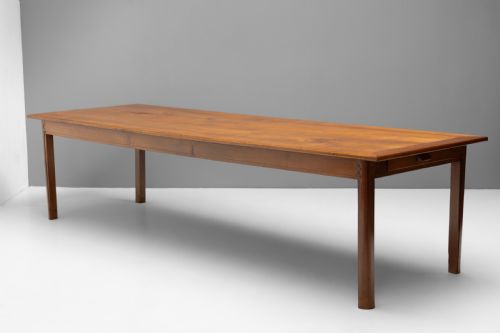


19th Century Harvest Table
A 19th century harvest table brings vernacular utility to modern interiors, offering robust dining surfaces shaped by rural tradition.
19th Century Harvest Table
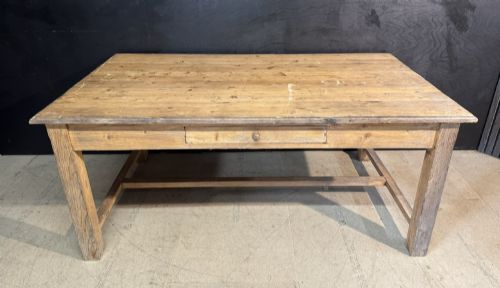
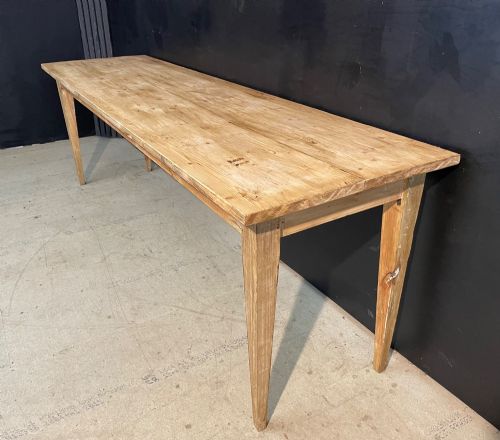
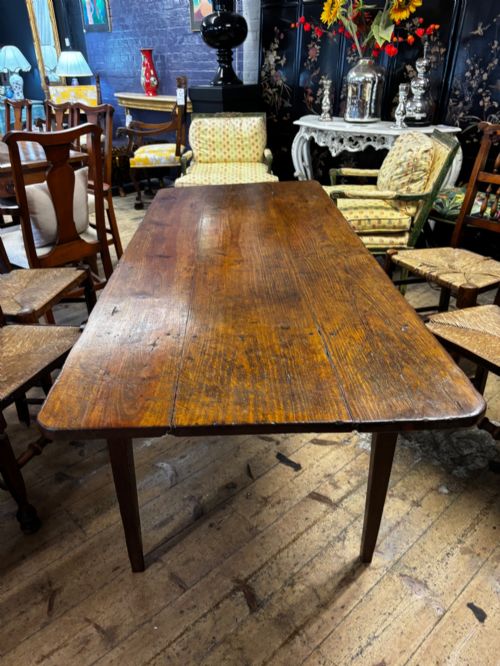
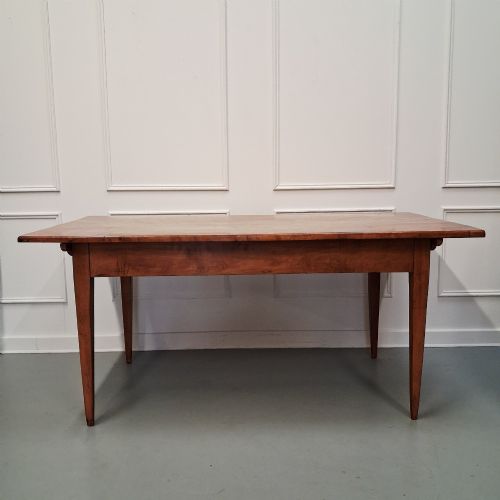
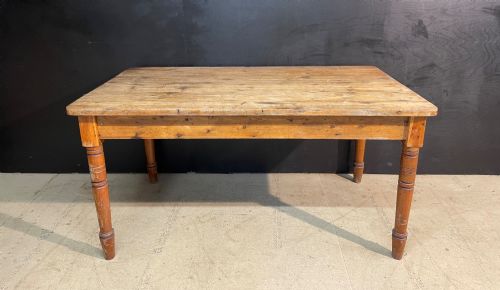
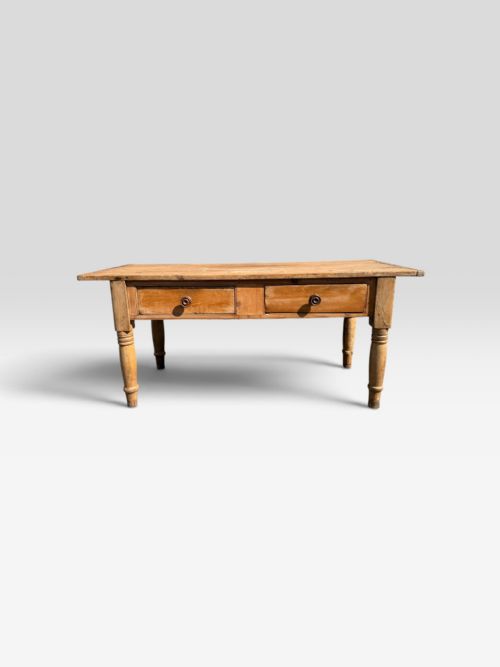
A 19th century harvest table serves as a functional centrepiece derived from rural domestic traditions, designed for communal dining and food preparation in farmhouse kitchens.
The pieces on this page span the 19th century and early 20th century, encompassing French provincial designs, Welsh tavern tables, and rustic refectory forms.
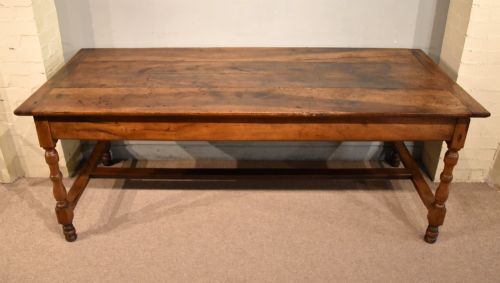
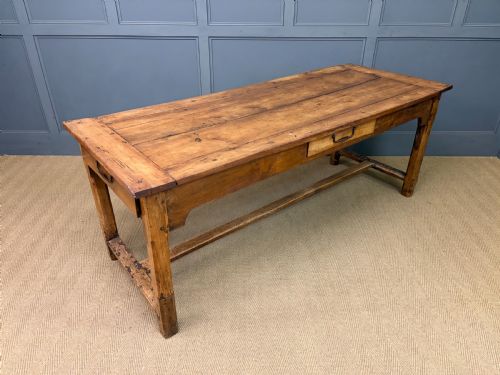
Buyers most frequently encounter timber constructions in pine, fruitwood, and oak, often featuring stretcher bases and generous rectangular tops suited for daily gathering.
How they were made
Joiners constructed these tables using solid timbers such as fruitwood, pine, oak, elm, and cherry, occasionally combining cherry and oak or fruitwood and pine within a single piece.
Construction methods relied on traditional joinery, including end stretchers and folding mechanisms seen in specific vendange tables, alongside structural iron components.
Surfaces frequently display the marks of utilitarian service, with some examples retaining original painted finishes on the base structure.
Period styles include French provincial, rustic farmhouse, Jacobean revival, and Victorian country vernacular.
What varies in quality
The integrity of the timber and the selection of materials dictate the character of each piece, distinguishing fine fruitwood and dense oak examples from softer pine variants.
Proportion and structural balance separate simpler utilitarian boards from sophisticated regional forms like Welsh X-frame tavern tables or refectory designs with end stretchers.
The survival of original surface treatments, such as early red paint on bases, influences the historical completeness of the table.
The 19th Century Harvest Table Glossary
- Refectory table
- A long narrow dining table historically used for communal meals. These examples date across the 19th century and employ sturdy timber frames.
- Vendange table
- A folding table associated with the grape harvest in France. They utilise clever mechanisms to allow compact storage when not in use.
- End stretcher
- A horizontal timber connecting the legs near the floor for added rigidity. This structural element prevents lateral movement in heavy use.
- Fruitwood
- Timber sourced from fruit-bearing trees such as cherry or pear. Cabinetmakers valued it for its fine grain and warm tone.
19th Century Harvest Table: Frequently Asked Questions
What defines a 19th century harvest table?
These tables are utilitarian dining furniture originating from rural homes and farmhouses during the 19th and early 20th centuries.
They are characterised by generous wooden tops and sturdy bases, built primarily for daily domestic labour and communal meals.
How do I maintain a wooden harvest table?
Keep the timber clean using a dry or slightly damp cloth, avoiding harsh chemical polishes that strip historic finishes.
Wax can be applied periodically to nourish older woods like pine, fruitwood, and oak while preserving their natural character.
Where were these tables originally used?
They stood in country kitchens, farmhouses, and regional taverns across Britain and France.
Their robust construction was intended to withstand heavy daily use in food preparation and family gatherings.
Are these tables suitable for modern dining?
Their substantial proportions and durable wooden surfaces make them practical choices for contemporary dining rooms and kitchens.
They accommodate daily seating while introducing distinct historical presence to a domestic interior.