



Scalloped Apron Console
A scalloped apron console is a statement table combining architectural form with decorative undercarriage work, designed to anchor a hallway or reception room.
Scalloped Apron Console
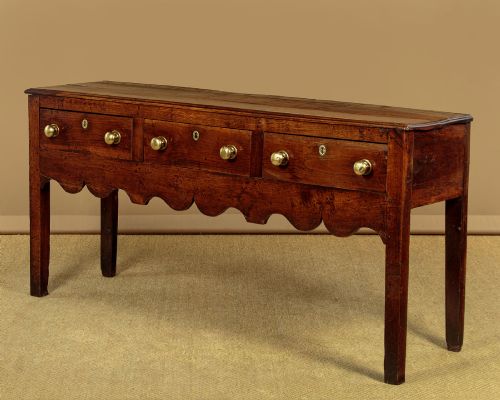
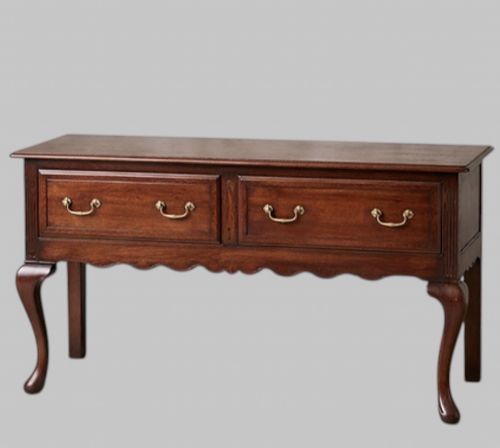
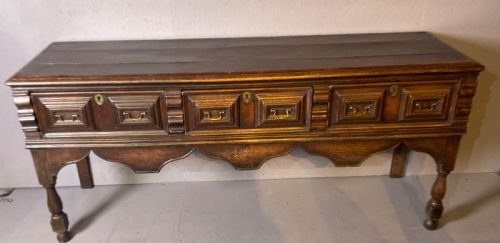
A scalloped apron console represents a distinct fusion of side tables, dresser bases, and serving furniture shaped by Georgian and later revival movements. When searching for a scalloped apron console, buyers encounter forms ranging from 17th-century oak serving dressers to 19th-century mahogany lowboys and Victorian walnut card tables.
The inventory on this page draws heavily from 18th-century English and Welsh traditions, alongside Victorian interpretations and 20th-century Georgian revivals. Most examples take the form of side tables, lowboys, or dresser bases utilised for display and storage in domestic interiors.
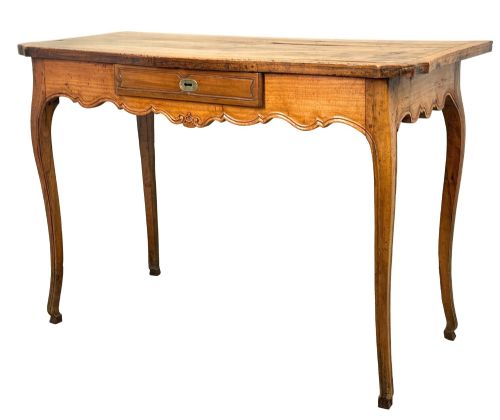
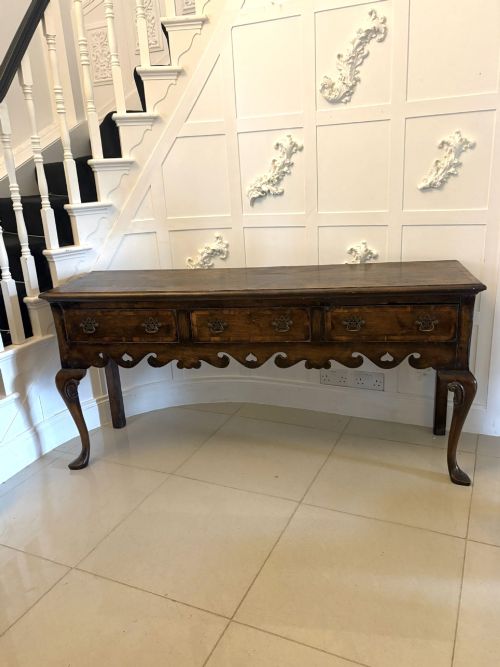
Makers and regional workshops from periods such as the Georgian era and the Victorian epoch shaped these timbers into functional wall tables. The selection balances rustic country pieces with formal urban designs featuring cabriole legs, bow ends, and open pot boards.
How they were made
Cabinetmakers constructed these tables primarily using native hardwoods such as oak, mahogany, fruitwood, and walnut, often enhanced with timber inlay or gold leaf. Structural joints relied on traditional pegged mortise and tenon construction to support heavy tops and decorative aprons.
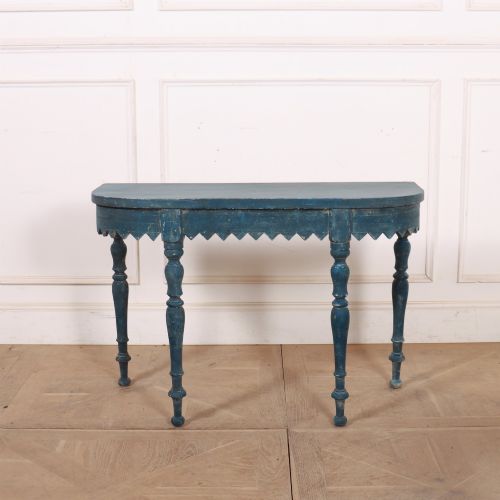
Surfaces received various finishes including hand-applied paint, wax, and polished varnish to highlight the grain of the timber. Aprons were hand-carved or pierced to create the characteristic scalloped profile beneath the table top.
Listings span from the 17th century through the Victorian era, uniting oak, mahogany, and figured walnut forms.
What varies in quality
The distinction between standard utility furniture and superior examples lies in the crispness of the apron carving and the choice of primary timber. Tables utilising dense, figured walnut or well-selected mahogany demonstrate a higher grade of craftsmanship than plain deal or utilitarian softwood carcasses.
Proportion and the preservation of original hardware and patination dictate the desirability of each piece. Later revivals often display mechanical uniformity, whereas earlier 18th-century constructions exhibit the subtle irregularities of hand-tooled execution.
W.F. Greenwood And Sons York
The Scalloped Apron Console Glossary
- Apron
- The horizontal structural member connecting the legs beneath the table top. This is the central area shaped into curves or scallops on these consoles.
- Lowboy
- A small dressing table or side table featuring one or more rows of drawers beneath the work surface. These compact pieces frequently share forms with console tables.
- Pot Board
- An open lower shelf fitted between the legs of a dresser base or serving table. It was originally utilised for storing pots and serving vessels.
- Cabriole Leg
- A furniture leg that curves out in a convex arc and tapers inward in a concave arc, terminating in a foot. This style gained prominence during the Georgian period.
Scalloped Apron Console: Frequently Asked Questions
Where should I place a console table?
These tables fit naturally against entrance hallway walls, beneath mirrors in reception rooms, or serving as sideboards in dining spaces.
Their shallow depth allows them to occupy narrow passages without obstructing movement while providing a surface for lamps and decorative objects.
How do I care for antique oak furniture?
Maintain the timber by applying natural beeswax periodically and avoiding placement near direct heat sources or strong sunlight.
Keep the surface dry and dust with a soft cloth to preserve the historic patina developed over centuries.
What is the difference between a lowboy and a console?
A lowboy typically incorporates functional drawers beneath the top surface, designed historically for personal grooming or storage.
Console tables focus primarily on display and architectural support against a wall, though regional terminology often overlaps.
How do I identify a Georgian revival piece?
Revival items produced around 1900 adopt the stylistic vocabulary of 18th-century cabinetmaking, such as cabriole legs and brass hardware.
Closer inspection of tool marks, timber seasoning, and construction methods reveals the later date of manufacture compared to authentic Georgian work.