
Victorian Walnut Console
When a room calls for a victorian walnut console, these timber pieces bring rich grain and architectural presence.
Victorian Walnut Console
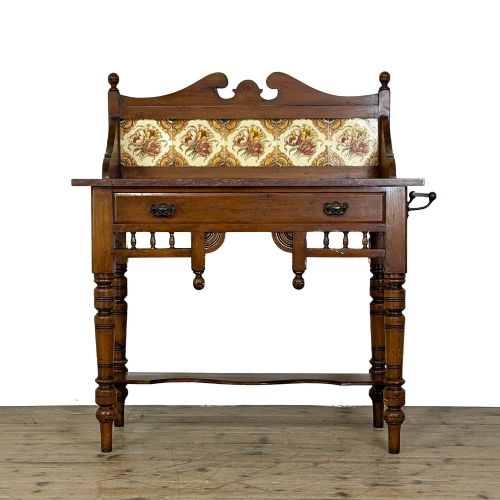
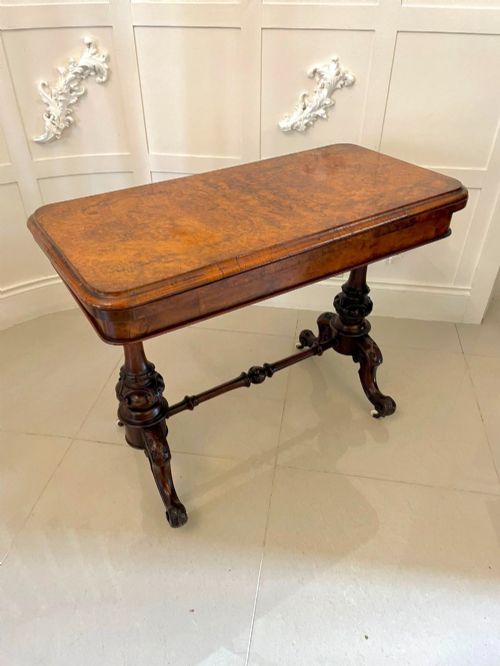
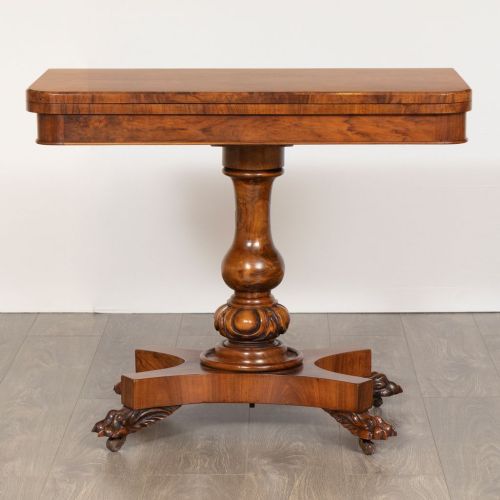
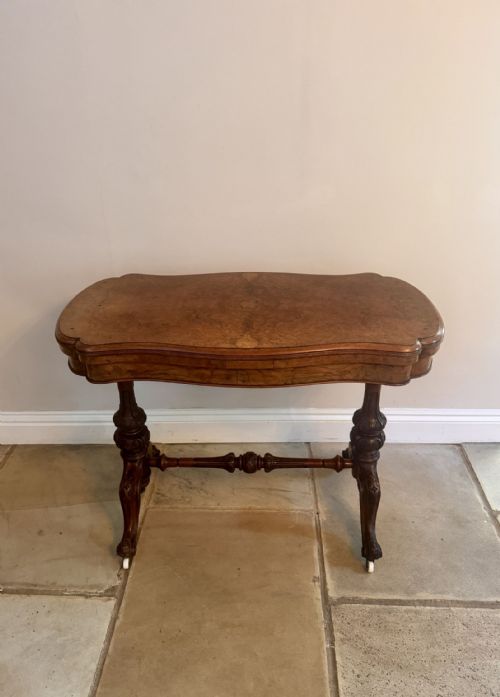
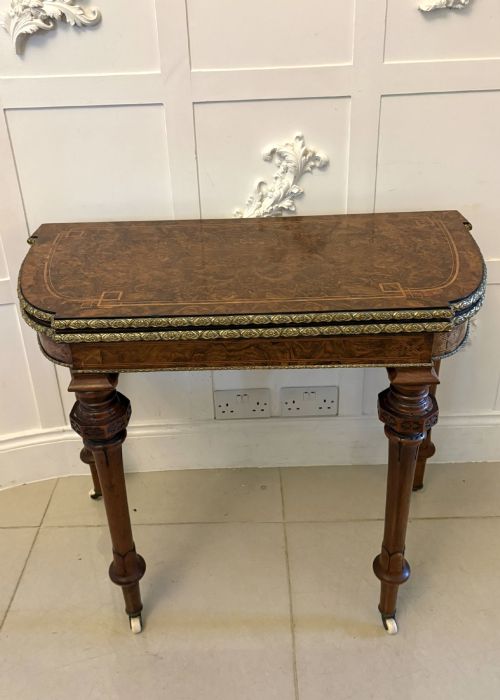
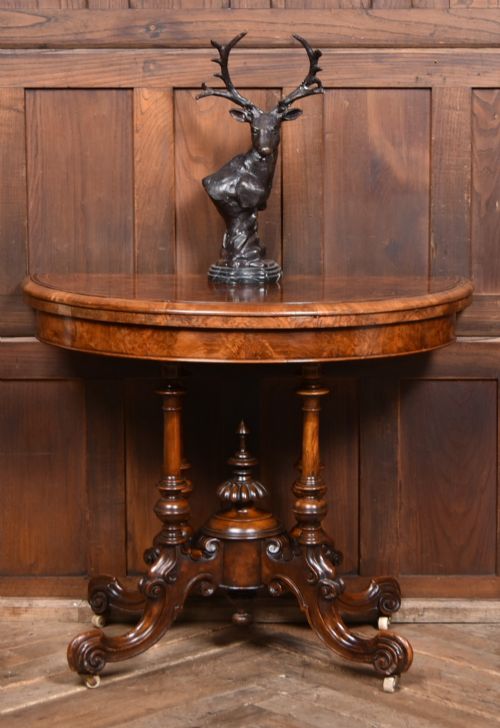
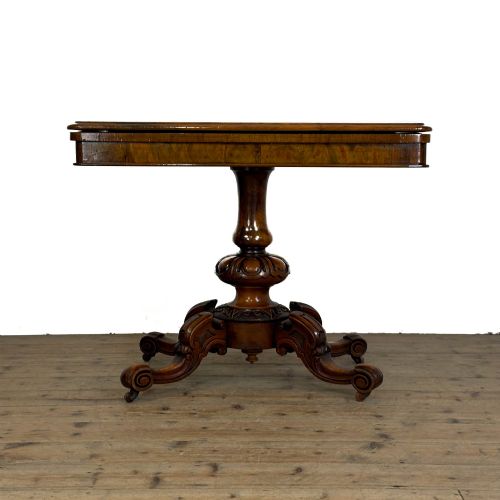
A victorian walnut console serves as a substantial yet refined surface designed to sit flat against a wall in a hallway, parlour or drawing room. The pieces on this page frequently double as card, games or fold-over tables, combining a wall-anchored console format with a swivel top that opens for entertainment.
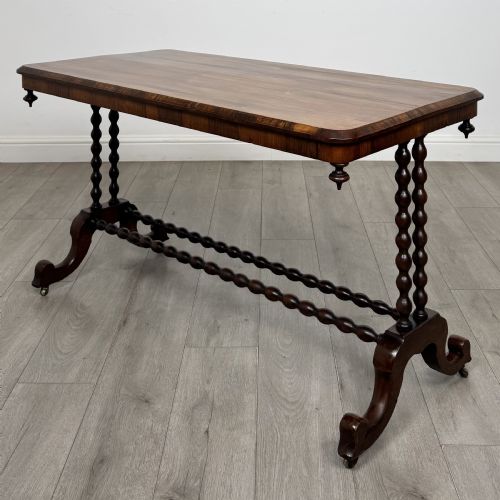
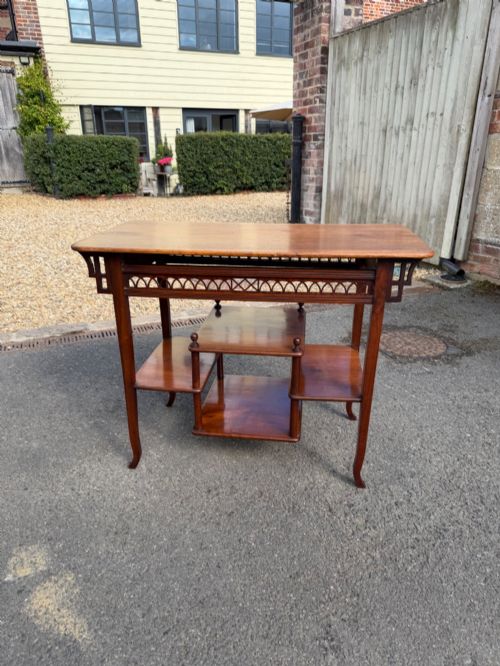
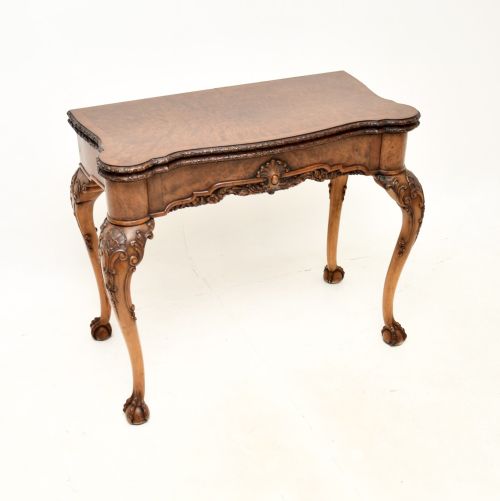
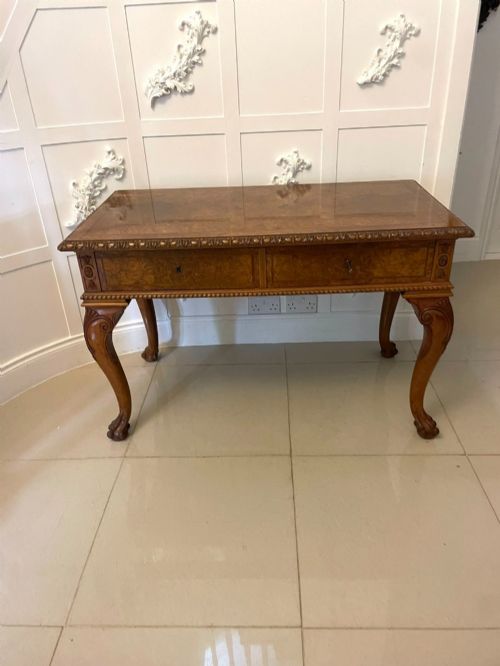
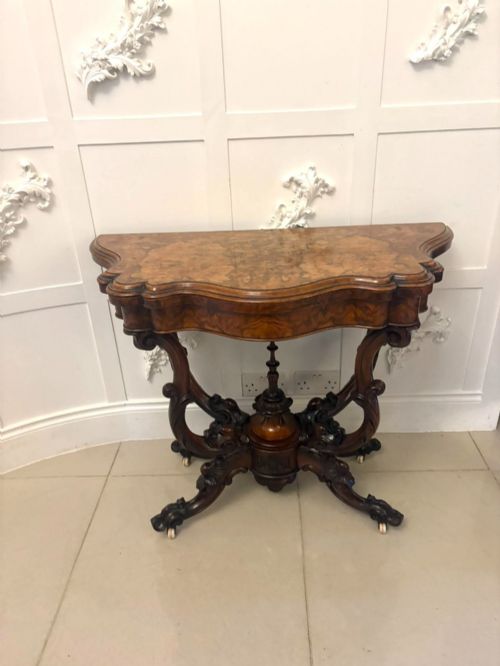
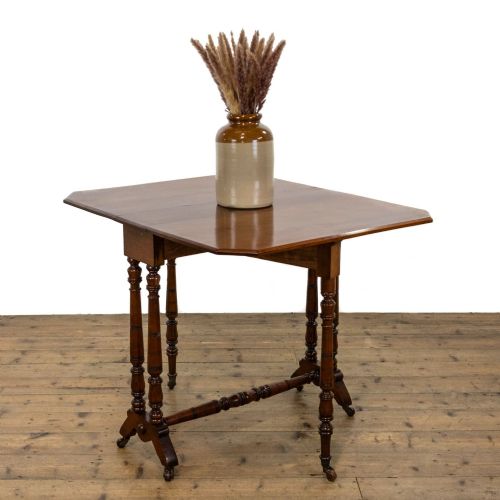
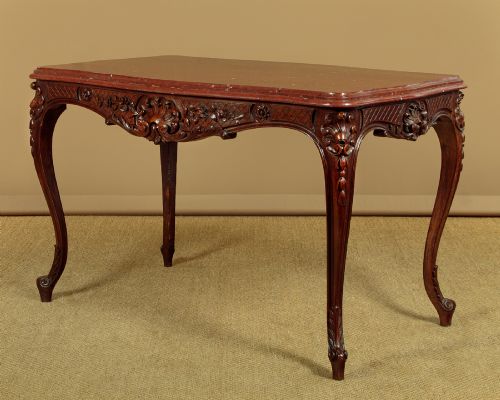
Makers of the period also produced side tables, serving tables and occasional pieces in the same timber, often adopting revival styles such as Rococo or Queen Anne. These forms span from the mid-nineteenth century through to later decades, showing serpentine fronts, carved supports and occasional marble tops.
Materials and construction
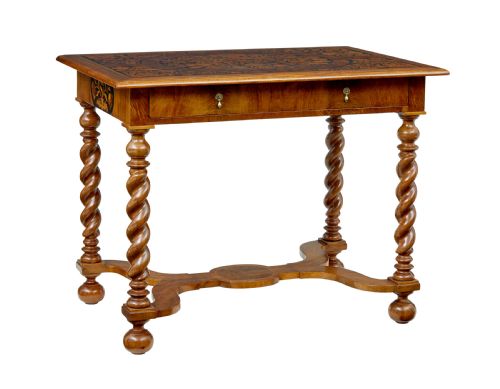
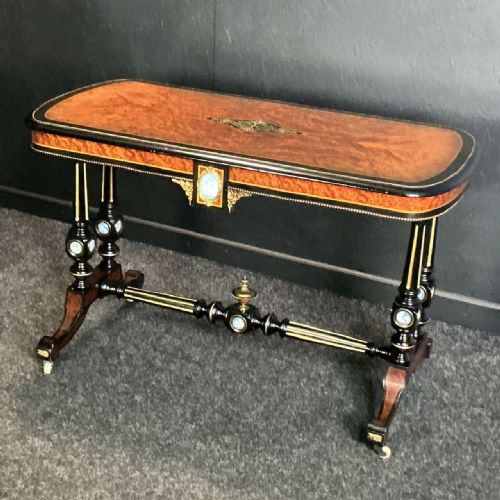
Cabinet makers utilised walnut timber, particularly burr and figured variations, to achieve striking natural patterns across the primary surfaces. Marquetry inlay, often incorporating contrasting light woods like satinwood or tulipwood, decorates the top panels and friezes of finer examples.
Structural embellishments frequently include cast or chased ormolu mounts, brass details and ebonised wood highlights. Carved wooden bases, pillar supports and occasional marble inserts complete the construction of these substantial tables.
Some tables hide their card-playing purpose entirely until someone swings the top over to reveal a green baize surface.
Distinctions in craftsmanship
Quality rests heavily on the choice of timber veneer and the precision of the marquetry inlay across the top and frieze. Pieces featuring heavily figured burr walnut with crisp floral or geometric inlays sit firmly above plain-grained alternatives.
The sophistication of the structural carving, particularly on the legs, basket bases and support brackets, separates standard utility pieces from exhibition-grade examples. Integrated metalwork mounts, such as finely detailed ormolu, further elevate the standing of a table.
Edwards And Roberts·Gillow And Co·J And T Scott
The Victorian Walnut Console Glossary
- Burr walnut
- A prized timber harvested from the gnarled growths of a walnut tree, yielding complex, swirling grain patterns. It was sliced into thin veneers for the top surfaces of quality tables.
- Marquetry
- The art of forming decorative patterns using fitted pieces of various coloured woods and veneers. Craftsmen set these into the main timber surface to create floral or geometric motifs.
- Ormolu
- Gilded bronze or brass applied as decorative mounts to furniture frames and legs. It provides a bright metallic contrast to the dark timber.
- Serpentine
- A curved shape resembling a snake, featuring a convex centre flanked by concave curves. This contour is frequently seen along the front edges of console and card tables.
- Console table
- A wall-mounted or flat-backed table designed to stand flush against a room's perimeter. Many period versions include folding mechanisms to serve multiple domestic functions.
Victorian Walnut Console: Frequently Asked Questions
What is a console table?
A console table is an architectural table built to stand flat against a wall, often supported by decorative brackets, carved legs or pillar assemblies.
In period interiors, these tables occupied entrance halls and reception rooms, sometimes featuring mirrored backs or marble tops for added durability.
How do you identify burr walnut?
Burr walnut is recognised by its dense, swirling grain clusters and rich tonal variation across the wood surface.
Cabinet makers used these figured veneers on prominent display areas like table tops to catch the light and show off the natural timber.
Where did these tables sit?
These tables were typically positioned against the walls of grand hallways, drawing rooms and parlours where space permitted a shallow surface.
They often held decorative lamps, card boxes or silver items, serving both a functional and a decorative role in the home.