
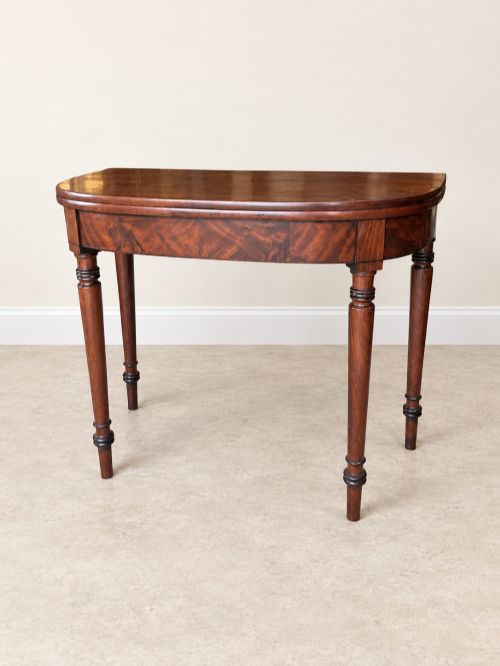
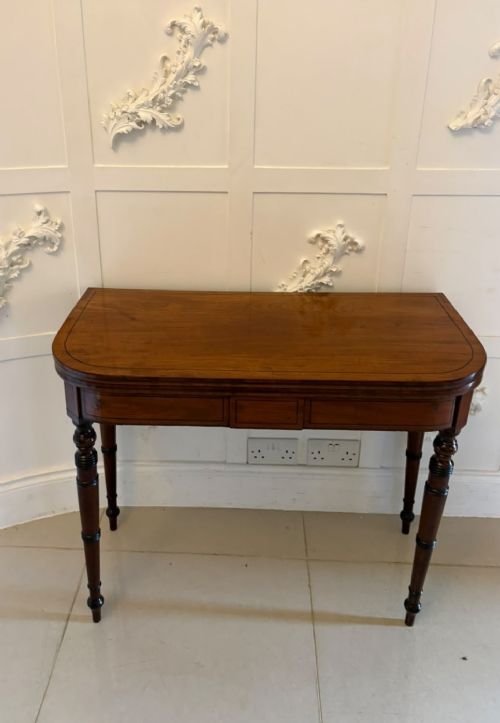
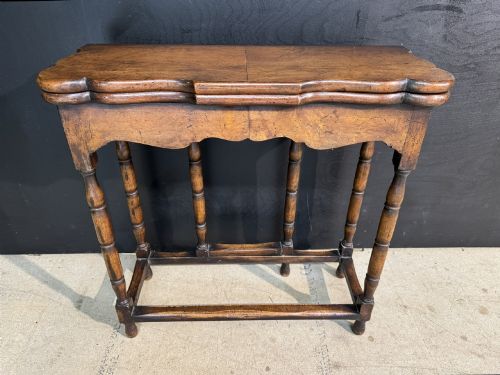
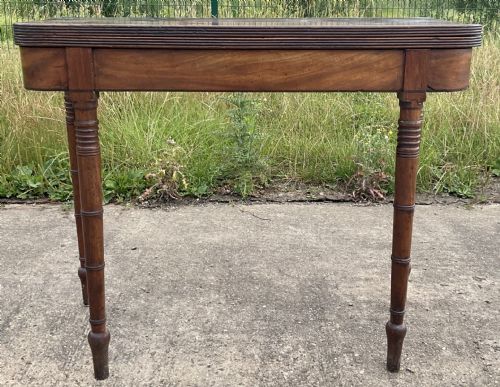
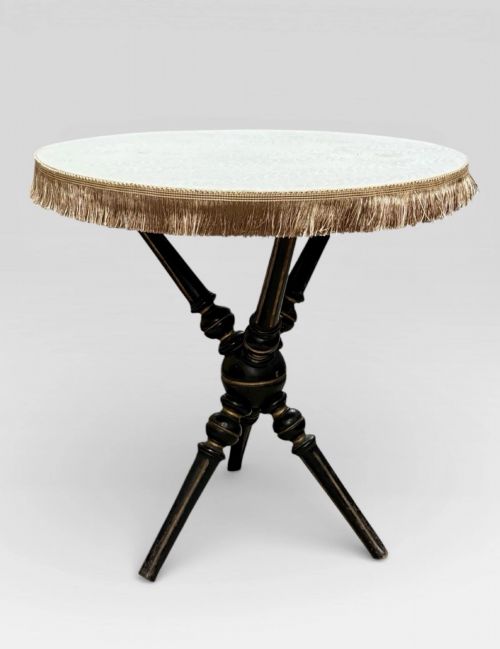


Turned Leg Card Table
A turned leg card table is a folding piece of furniture designed for games, and collectors prize these tables for their versatile timber surfaces and clever folding mechanisms.

What a turned leg card table is
When you search for a turned leg card table, you are looking at dual-purpose furniture designed to stand against a wall as a console before opening out for evening entertainment. These pieces belong primarily to the Victorian and Regency periods, alongside Georgian examples.
The versions most likely to be met on this page are mahogany, walnut, and amboyna folding tables featuring turned supports. Their forms range from D-end consoles to inlaid folding tops configured for card and games use.
How they were made
Cabinet makers utilised dense timber stocks such as mahogany, burr walnut, flame walnut, and amboyna to construct these tables. Surfaces frequently display intricate inlaid detailing alongside ebonised wood elements and brass mounts.
Structural integrity relied upon robust joinery to support the folding top mechanism. Turned legs required precise lathe work to achieve the tapering or ring-turned profiles characteristic of the period.
Retail Price Guide 2026
Typical UK retail prices for turned leg card table, calculated from the Sellingantiques database of over a million retail prices indexed since 2003. This retail price guide relies exclusively on Sellingantiques data; no external sources or auction records are used, so the figures do not describe the wider market.
Multiple pieces on this page feature maker marks or attributions to London and provincial cabinet makers.
What varies in quality
The distinction between ordinary and superior examples lies in the selection of timber veneers and the crispness of the turning. Flame mahogany and figured walnut display natural grain patterns that elevate the visual weight of the piece.
Workshop origin and maker attribution significantly influence standing. Stamped maker marks and pieces associated with known cabinet makers represent a higher tier of craftsmanship than anonymous workshop production.
W.F. Greenwood and Sons York·S and H Jewell·Gregory and Co
The Turned Leg Card Table Glossary
- Card table
- A specialist table with a hinged top that folds open to reveal a baize or timber playing surface. These items served as social furniture in drawing rooms.
- Console table
- A table designed to stand flat against a wall, frequently supported by legs at the front. They often matched pier mirrors in nineteenth-century interiors.
- D-end
- A semi-circular table end shaped like the letter D. This configuration allowed tables to be joined together or placed neatly against walls.
- Inlay
- The technique of inserting contrasting pieces of wood or metal into recesses within a solid timber surface to create decorative patterns.
Frequently Asked Questions
What is a turned leg card table?
A turned leg card table is a folding piece of furniture designed for parlour games and card playing. These items feature distinctive turned wooden supports beneath a hinged top.
Cabinet makers produced them across the Georgian, Regency, and Victorian eras using timbers such as mahogany and walnut.
How were card tables used originally?
These tables stood against drawing room walls as decorative console tables when not in use. For evening gatherings, the top unfolded to reveal a playing surface for cards.
They provided a stable, dedicated space for social entertainment before being folded back down to save floor space.
How do I identify the period?
Period identification relies on timber choice, construction techniques, and decorative styles. Regency and Georgian examples often feature straight-grained mahogany, while Victorian pieces frequently showcase figured walnut or amboyna.
Makers' stamps and specific inlay motifs also help date the piece.
Are these tables sturdy enough for daily use?
These tables were built with functional hinges and solid timber frames designed to bear weight when opened. Careful handling of the folding mechanism ensures longevity.
Placing them away from direct heat sources protects the timber and veneer surfaces from drying out.