


Scrubbed Top Dining Table
A scrubbed top dining table brings centuries of practical domestic service to a modern room.
Scrubbed Top Dining Table
A scrubbed top dining table is a utility surface built for hard work in kitchens, farmhouses, taverns and pantries. These pieces generally date from the nineteenth century into the early twentieth century, spanning Victorian, Edwardian and earlier periods.
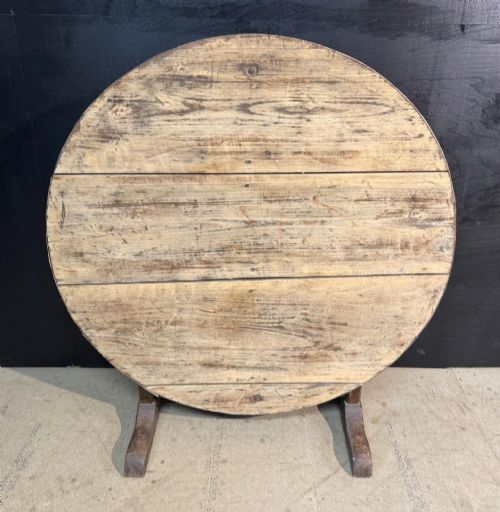
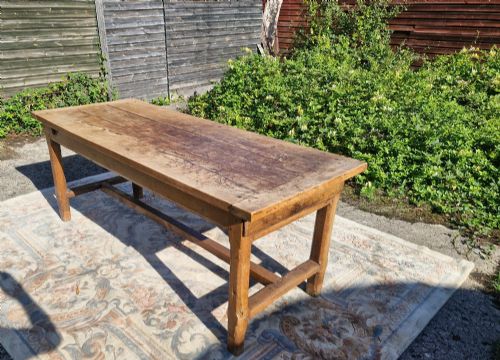
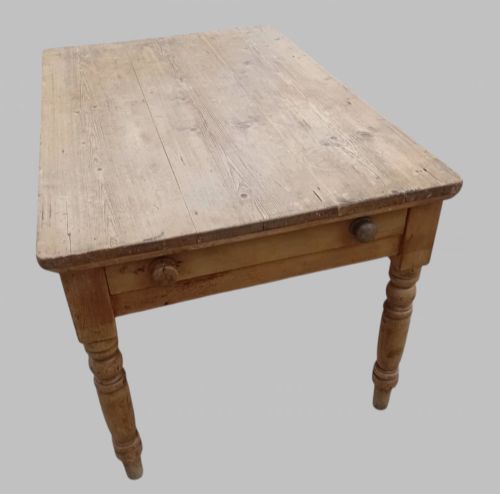
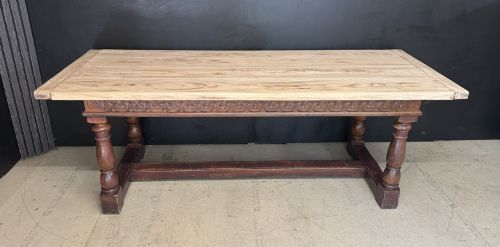
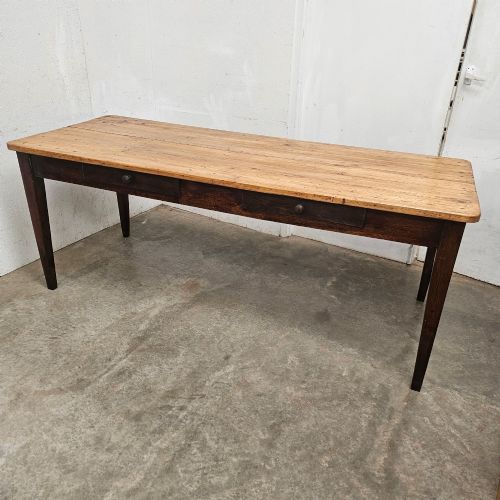
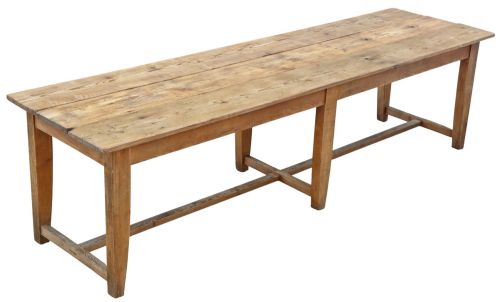
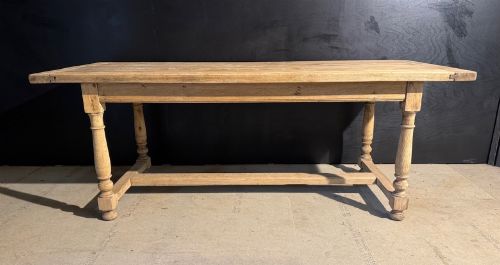
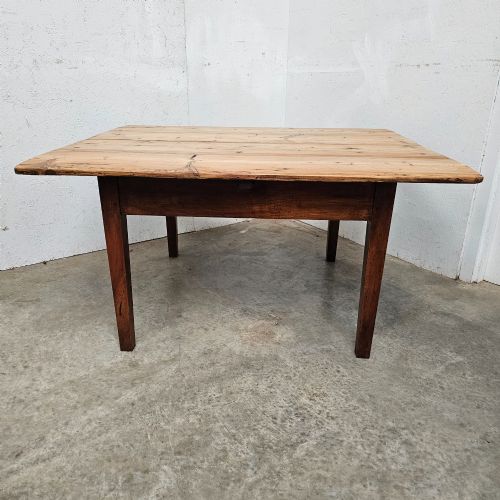
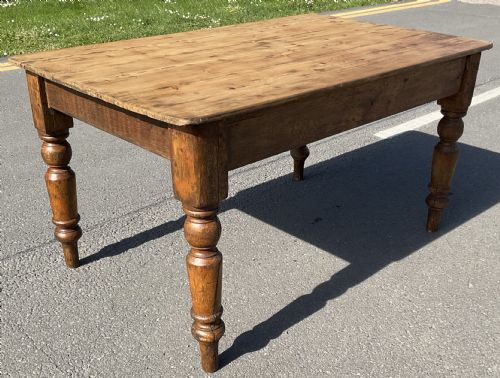
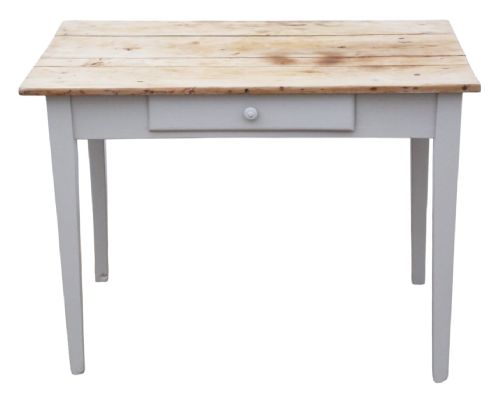
The most common version found here is the pine farmhouse or kitchen table, often featuring a scrubbed wooden top paired with painted or polished wooden legs and drawers. Other forms include oak refectory tables, sycamore and elm trestle tables, and Welsh tavern tables.
Origins stretch across Britain, France, Sweden and Italy, reflecting a shared vernacular tradition of robust communal dining and food preparation. Buyers choose them for daily family meals and straightforward utility.
How they were made
Makers built these tables from solid domestic timbers including pine, oak, sycamore, elm and fruitwood. Tops were scrubbed repeatedly with water and stone or sand to keep them hygienic, leaving the grain raised and pale.
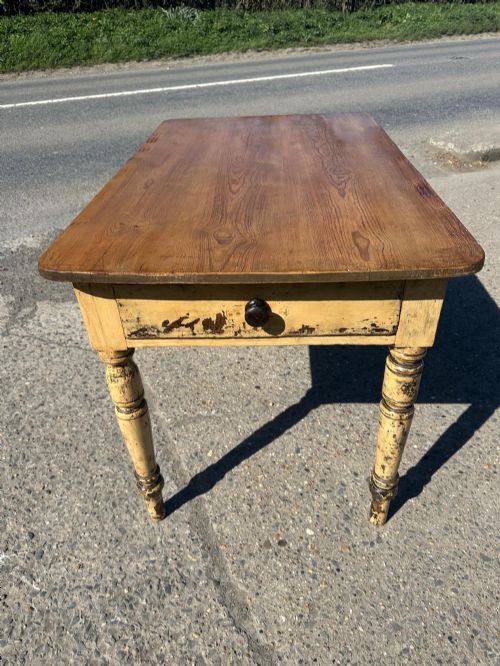
Bases often retained layers of old paint in red or other traditional colours, or were left as bare wood. Construction relied on sturdy joinery, incorporating drawers with brass pulls and sturdy X frames or trestle supports.
Several tables retain layers of historic red paint on their bases, whispering tales of messy nineteenth-century tavern suppers.
What varies in quality
Quality rests in the integrity of the original timber and the depth of surface character earned through decades of genuine use. Tables with undisturbed original painted bases or untouched scrubbed tops hold higher distinction than those stripped down uniformly.
Proportion and scale dictate utility, ranging from compact circular kitchen tables to large refectory and trestle formats spanning several metres. The presence of functional drawers and regional framing details adds architectural interest.
The Scrubbed Top Dining Table Glossary
- Scrubbed top
- A wooden table top cleaned repeatedly with water and abrasive materials, resulting in a pale, clean surface with prominent grain. This finish distinguishes working kitchen tables from formal dining furniture.
- Refectory table
- A long, narrow dining table traditionally used in communal dining halls. These sturdy pieces provide generous seating capacity along the length.
- Trestle table
- A table supported by two or more upright frames connected by a horizontal beam. This design offers maximum legroom beneath the top.
- Pembroke table
- A small table featuring hinged drop leaves on two opposing sides. This format allows the surface area to expand or contract according to space needs.
- Fruitwood
- Timber sourced from fruit-bearing trees such as pear or apple, prized for a dense and uniform grain. It appears on regional pantry and kitchen tables.
Scrubbed Top Dining Table: Frequently Asked Questions
How do I clean a scrubbed top dining table?
Wash the timber surface using warm water and mild soap, scrubbing gently along the grain with a soft brush. Rinse thoroughly and allow the wood to dry completely.
Avoid harsh chemical detergents or soaking the timber, as excess moisture damages aged joints. Periodic light waxing helps protect the surface from stubborn spills.
Can I use a kitchen table for daily family meals?
These tables were originally constructed for heavy daily domestic labour, making them exceptionally durable for modern dining use. The robust wooden construction handles active household environments with ease.
Using placemats and coasters protects the historic timber from excessive heat and moisture rings. Embracing minor marks preserves the authentic character of the piece.
How do I identify a Victorian pine table?
Victorian pine tables generally feature solid plank tops, straightforward turned legs, and often incorporate one or more drawers with simple wooden or brass pulls. Look for hand-cut joinery marks beneath the tabletop.
Patina accumulation around the drawer handles and stretcher bars indicates age and regular handling. Paint remnants on the base frequently point to nineteenth-century vernacular workshop practices.
What is the difference between a farmhouse table and a refectory table?
Farmhouse tables typically feature four corner legs supporting a thick plank top, often accompanied by utility drawers for kitchen storage. They derive from domestic culinary spaces.
Refectory tables are longer and narrower, utilising trestle or inset pillar supports designed for communal dining halls. Their proportions emphasise length and communal seating capacity.