
Vintage French Farmhouse Table
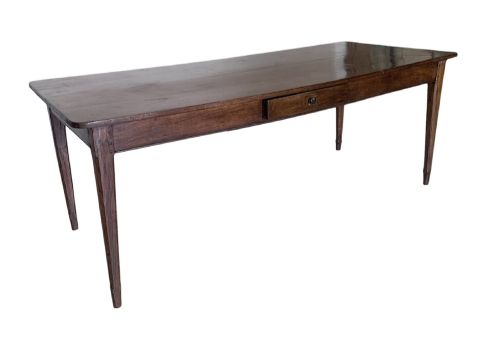
A vintage french farmhouse table brings solid timber grain and provincial character straight into daily use.
Vintage French Farmhouse Table
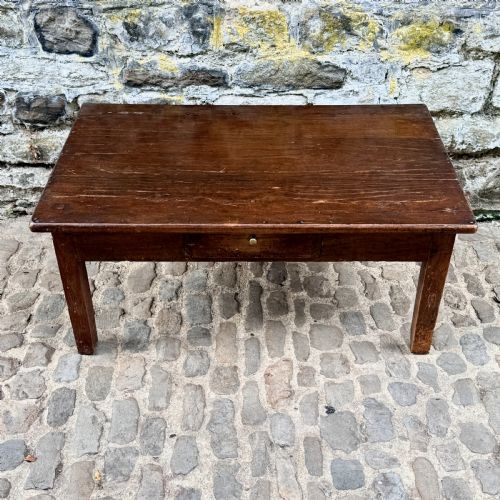
When you search for a vintage french farmhouse table, you encounter robust dining tables, kitchen tables, and smaller coffee or console pieces spanning the nineteenth and early twentieth centuries. These boards served generations of rural households for prep work, dining, and daily trade before finding new life in modern interiors.
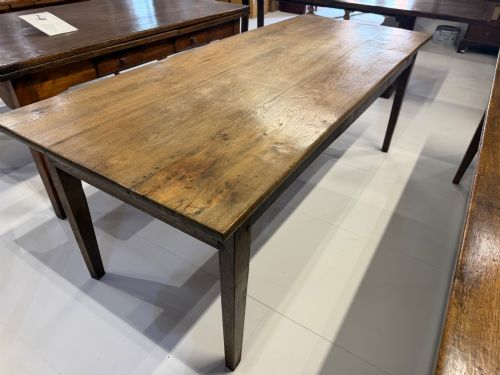
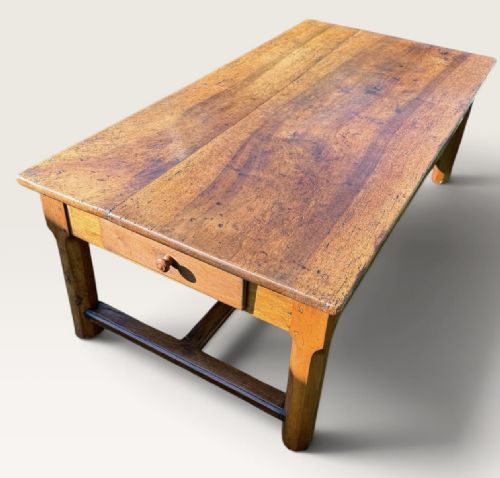
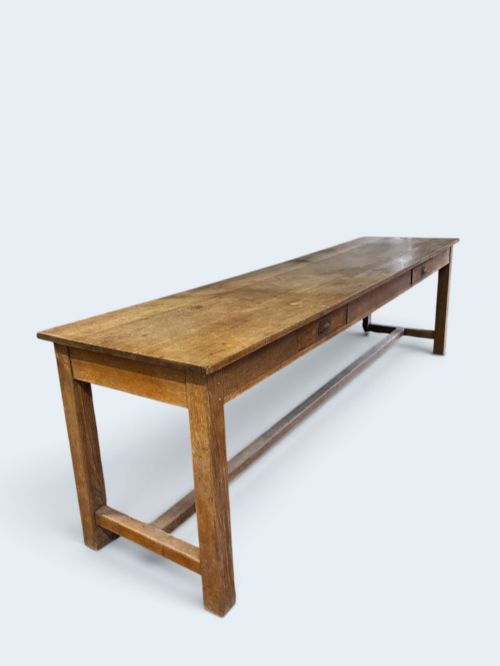
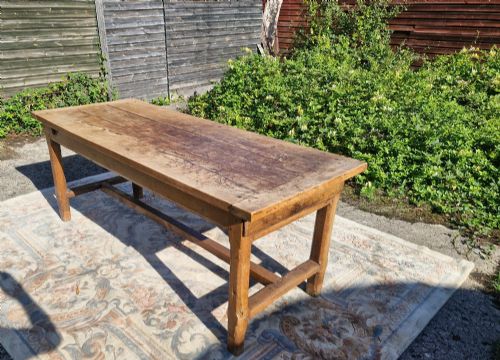
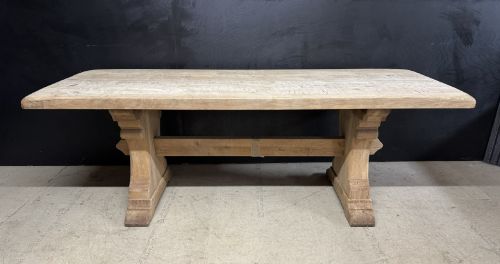
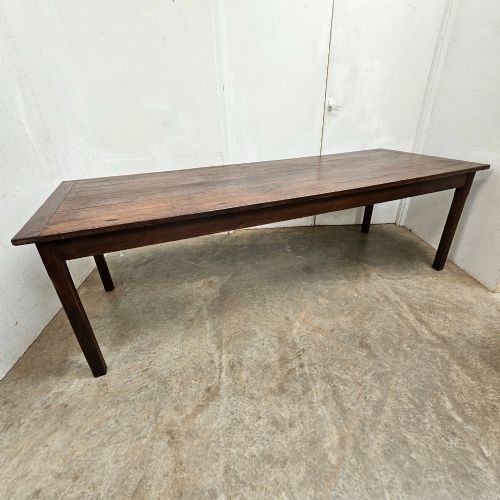
The version most commonly met on this page is the nineteenth century oak or pine dining table, often shaped with simple legs and generous lengths. Oak and cherry variants appear frequently alongside fruitwood and chestnut examples, reflecting the local timber available to regional carpenters.
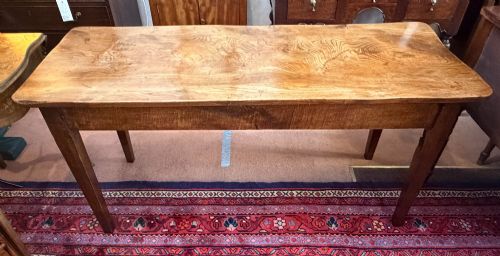
Beyond standard dining formats, the selection includes serving tables, benches, and double extending designs built for practical adaptability. Regional styles range from rustic country and French provincial to occasional French Art Deco interpretations.
How they were made
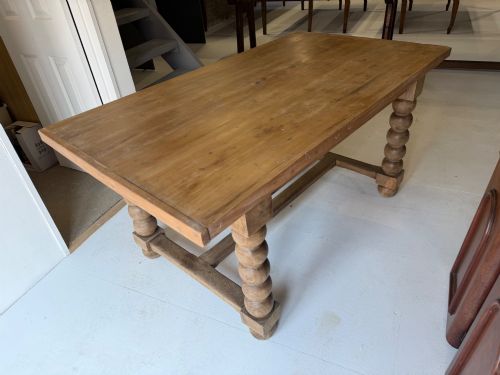
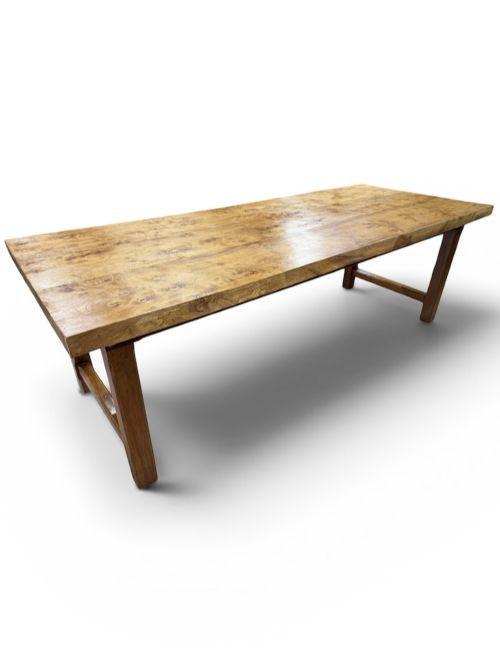
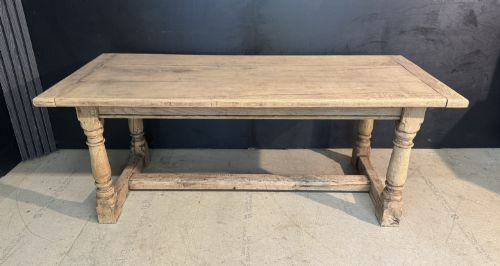
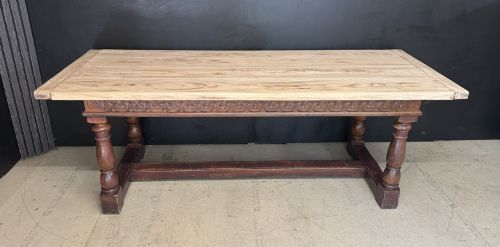
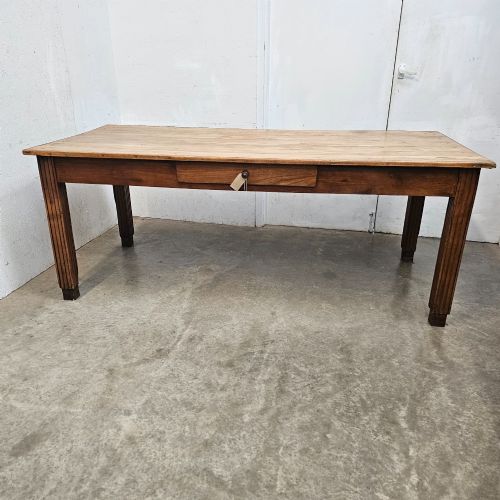
Carpenters constructed these tables from solid hardwoods and softwoods like oak, pine, chestnut, fruitwood, and cherrywood. Planks were joined to form heavy timber tops, supported by structural legs that range from simple tapered styles to turned bobbin and barrel supports.
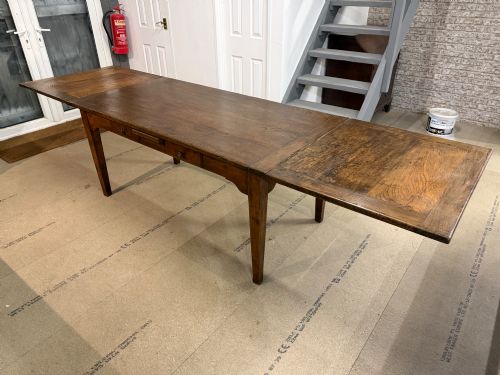
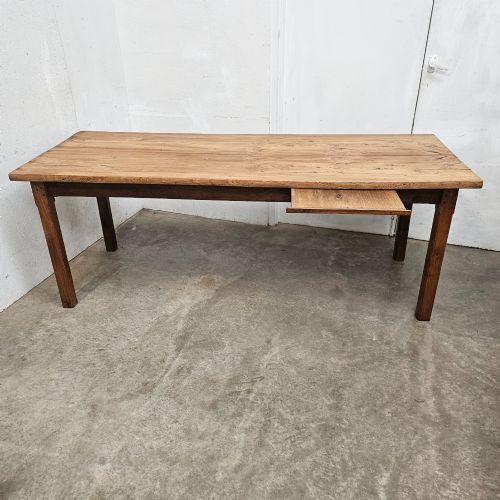
Many tables incorporate functional additions built for daily domestic labour, such as sliding bread boards, end drawers, and double extending mechanisms. Surfaces display the honest marks of hand-planing and centuries of use rather than mass-produced uniformity.
Listings feature timbers including oak, pine, fruitwood, cherrywood, and chestnut across the nineteenth and early twentieth centuries.
What varies in quality
The distinction between ordinary utility boards and finer examples rests on the choice of timber and the integrity of the original construction. Dense hardwoods like oak and cherry hold their structure and patination better over centuries than softer pine alternatives.
Proportion and restrained detail separate standard country workshop output from more considered provincial pieces. Integrated mechanics like sliding bread boards and smooth-running drawers reflect a higher standard of original joinery.
The Vintage French Farmhouse Table Glossary
- Scrub-top
- A plain timber table surface left unpolished to withstand frequent scrubbing with water and sand. This treatment creates a pale, weathered finish characteristic of working kitchen tables.
- Bread board
- A sliding board fitted beneath the main table top that pulls out to provide extra surface area for food preparation. Carpenters integrated these functional panels into nineteenth century kitchen designs.
- Bobbin leg
- A turned furniture leg shaped with a series of rounded, spool-like swellings carved along its length. This decorative turning technique appears on nineteenth century seating and support frames.
- Double extending
- A mechanical table design where end leaves pull outward to lengthen the main surface. This clever engineering allowed smaller dining tables to accommodate larger gatherings.
- Fruitwood
- Timber harvested from fruit-bearing trees such as cherry or pear, valued by provincial makers for its fine grain and warm tone. It was commonly utilised in regional French cabinet work.
Vintage French Farmhouse Table: Frequently Asked Questions
How are these tables cleaned safely?
Wipe surfaces gently using a slightly damp cloth without harsh chemical detergents. Regular dusting keeps the historic timber free from grit.
Nourish dry wood occasionally with a suitable natural wax to protect the grain. Avoid soaking scrub-tops with excess water during routine cleaning.
Did these tables originate in kitchens?
Many examples served as central workspaces for food preparation, baking, and family meals in rural households. Their sturdy construction was built to handle heavy daily labour.
Other formats functioned as dining tables or serving consoles in provincial homes. Their varied forms reflect the practical needs of nineteenth century domestic life.
How do I identify a bleached finish?
Bleached oak and pine tables display a lighter, chalky surface tone compared to dark polished antiques. This treatment strips away heavy historic wax to reveal the pale natural grain.
Such finishes suit modern interiors while retaining authentic nineteenth century timber construction. The wood still shows the dents and marks of its working past.
Can I seat many people comfortably?
Several listings offer extended lengths or double extending mechanisms designed for larger gatherings. Measuring the clearance beneath the apron ensures chairs fit properly.
Benches listed alongside tables provide flexible seating options that tuck away neatly. Timber framing handles regular daily use without losing stability.