
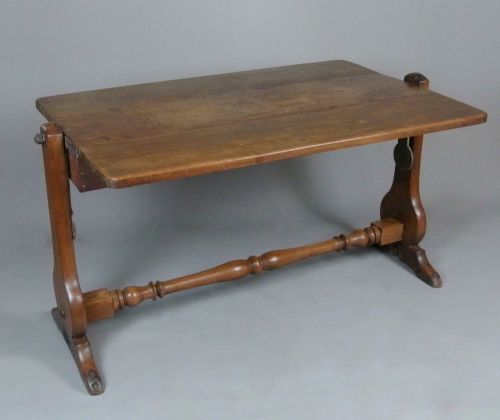
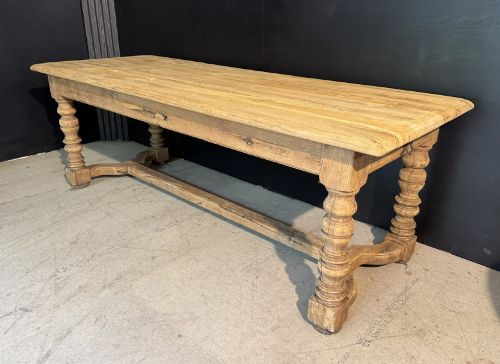

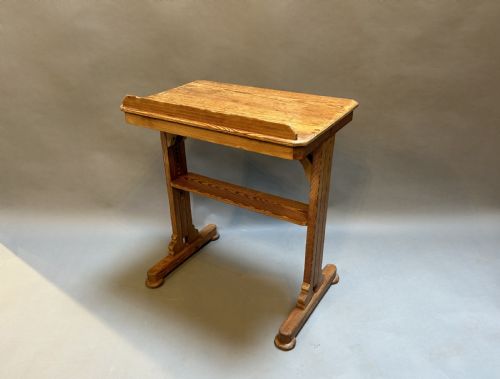
Antique Wooden Trestle Desk
An antique wooden trestle desk provides sturdy writing space rooted in centuries of practical joinery.
Antique Wooden Trestle Desk
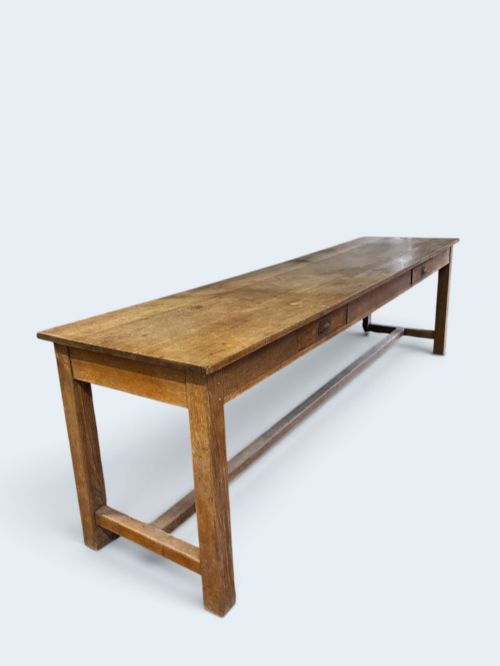
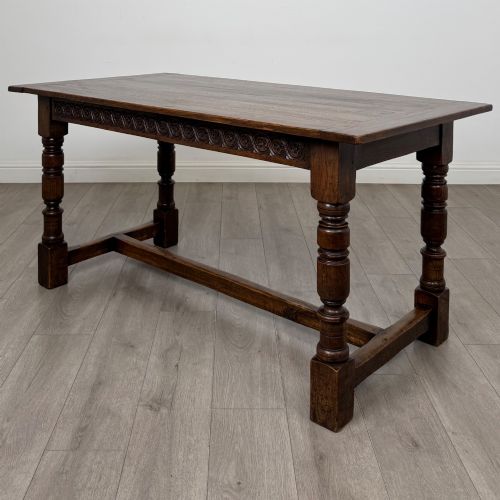
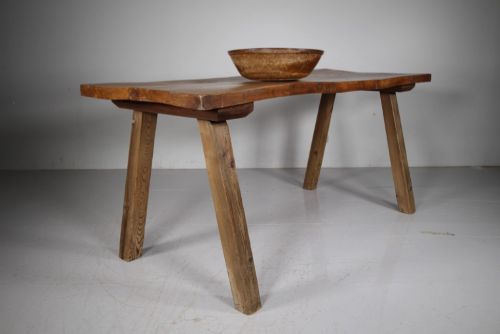
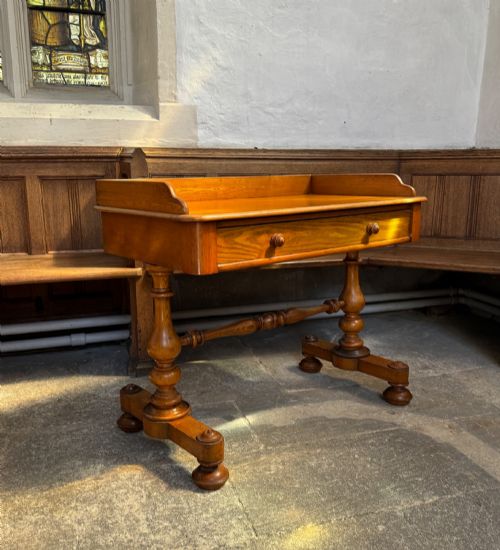
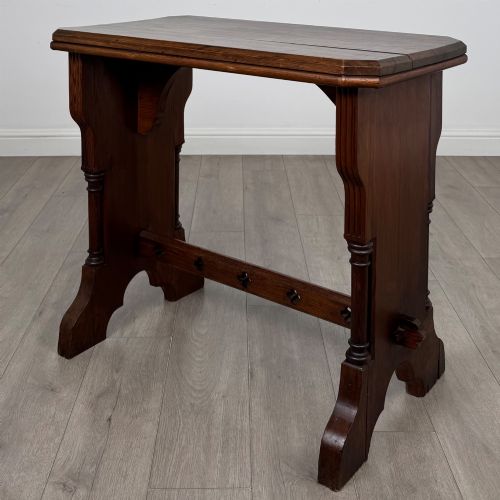
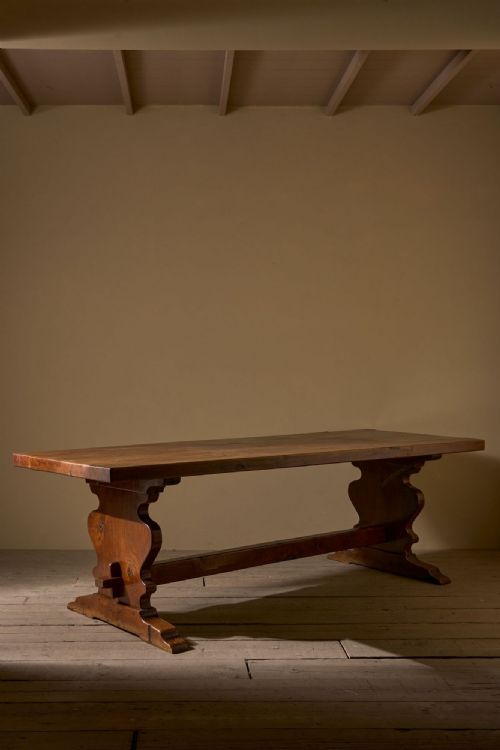
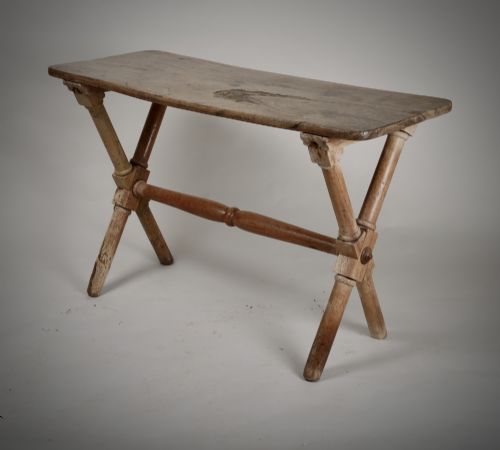
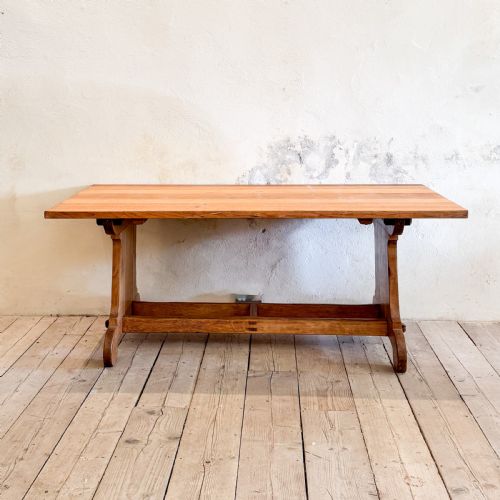
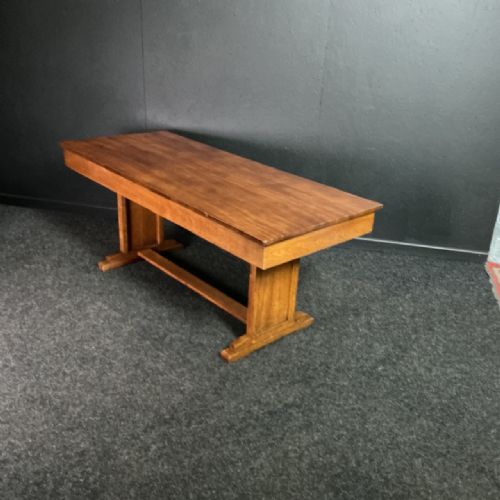
An antique wooden trestle desk unites utilitarian support frames with flat writing surfaces, drawing on forms historically used for dining, libraries, and public school rooms. Buyers searching for an antique wooden trestle desk encounter sturdy surfaces built from solid timbers rather than modern veneers.
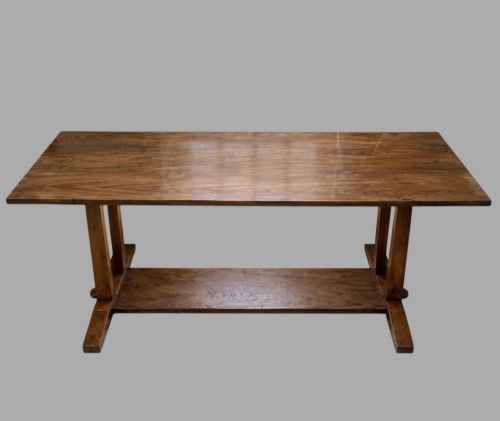
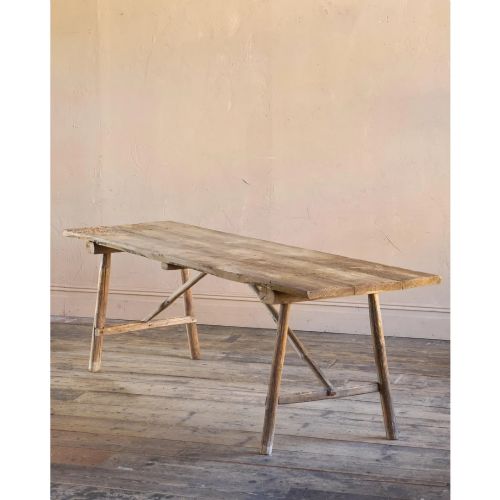
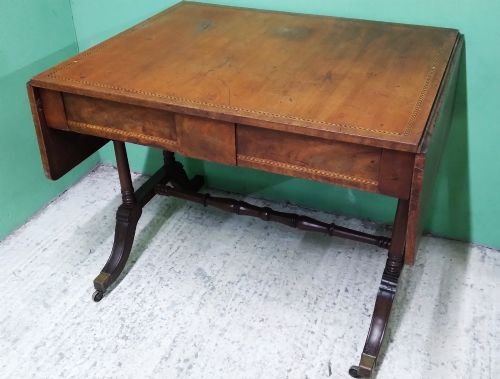
The pieces available span periods from the eighteenth century through the 1930s, incorporating styles such as rustic farmhouse, Arts and Crafts, and nineteenth-century traditional designs. Oak, pine, and mahogany dominate the structural forms, occasionally supplemented by iron or brass fittings.
While many related forms function as tavern tables, refectories, or library tables, the underlying architecture relies on stable vertical uprights joined by horizontal stretchers. This configuration offers generous legroom alongside the substantial weight required for stable daily writing.
Construction and materials
Cabinetmakers and rural joiners relied heavily on native hardwoods like oak, elm, and mahogany alongside durable softwoods such as pine and pitch pine. Timbers were selected for density and strength, ensuring the trestle framework could support heavy library volumes and continuous use.
Joinery techniques prioritised mechanical stability, utilising pegged mortise and tenon joints to secure legs to stretchers without reliance on metal fasteners. Surface finishes ranged from natural waxed patinas to traditional painted treatments like Swedish Falu red.
Secondary metals such as brass and cast iron appear in structural braces, campaign fittings, and drawer pulls on later nineteenth and twentieth-century variants. These mixed media elements reinforced stress points while adding utilitarian utility to writing surfaces.
Listings feature oak, pine, mahogany, walnut, elm, brass, and iron across various nineteenth and early twentieth-century periods.
Distinctions in quality and execution
The distinction between utilitarian utility and finer cabinetmaking rests in the selection of timber and the precision of the joinery. Tables constructed from dense solid oak or figured mahogany exhibit greater structural integrity than simpler pine tavern variants.
Original surface patinas and untouched structural elements distinguish pieces retaining historic integrity from those with heavily restored or replaced components. Fine proportioning in the trestle supports also separates competent regional carpentry from exceptional workshop production.
Pairs MFG Co
The Antique Wooden Trestle Desk Glossary
- Trestle
- A supporting framework consisting of a horizontal beam fixed to two pairs of splayed legs. This design provides exceptional floor clearance and lateral stability for large wooden tops.
- Refectory
- A long dining or working table traditionally used in monastic or communal halls. These heavy timber tables form the structural ancestor to many large trestle designs.
- Patina
- The surface sheen and colour developed through decades of handling, polishing, and natural oxidation. A good patina indicates genuine age and consistent domestic care.
- Mortise and tenon
- A primary woodworking joint where a projecting tongue fits snugly into a corresponding cavity. This interlocking method secures frames without relying on modern glues.
- Stretchers
- Horizontal wooden rails connecting the vertical legs of a table to prevent outward splaying. They add rigidity to the entire support structure.
Antique Wooden Trestle Desk: Frequently Asked Questions
How do I date an antique wooden trestle desk?
Dating relies on examining the timber species, tool marks left by saws or planes, and the construction methods used in the underframe. Eighteenth-century examples often display hand-sawn boards and pegged joinery, whereas twentieth-century pieces incorporate standardised fixings.
Secondary indicators include the presence of drawers, handle styles, and the natural wear patterns accumulated across the feet and stretcher rails over generations of use.
Are these desks suitable for daily computer work?
Most historic tables offer generous surface areas and sturdy timber construction capable of supporting modern desktop equipment. The open trestle base provides ample legroom compared to traditional pedestal designs.
Buyers should measure the height from the floor to the underside of the top rail to ensure adequate clearance for office chairs and seating posture.
What woods were commonly used for these desks?
Oak and mahogany appear frequently in formal library and writing tables, offering dense grain and resistance to warping. Softer woods like pine, pitch pine, and elm served well in domestic farmhouse and institutional settings.
Each timber species ages differently, developing distinct surface characteristics and patinas that reflect its original environment.
How should I care for an antique wooden surface?
Maintenance requires avoiding direct sunlight and excessive humidity fluctuations that can cause timber to split or warp. Regular dusting with a dry, soft cloth preserves the wax finish without building up unwanted residues.
Periodic application of traditional beeswax feeds the wood and helps maintain the historic lustre accumulated over centuries.