
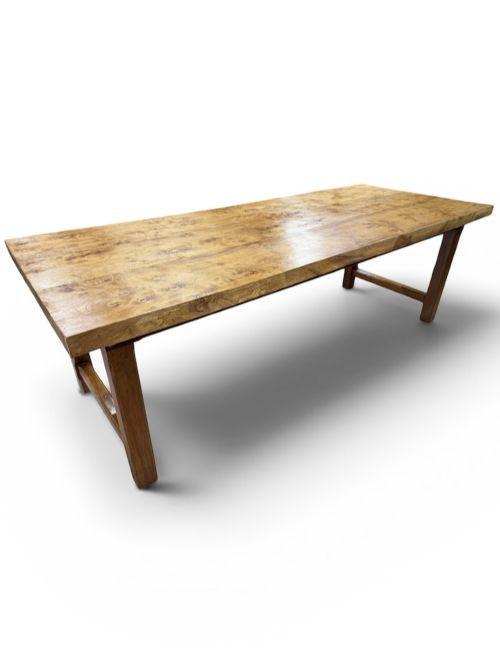
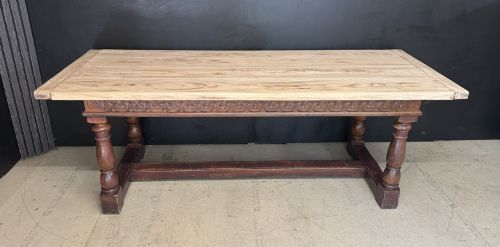
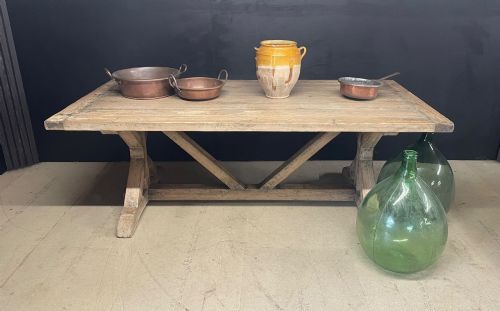
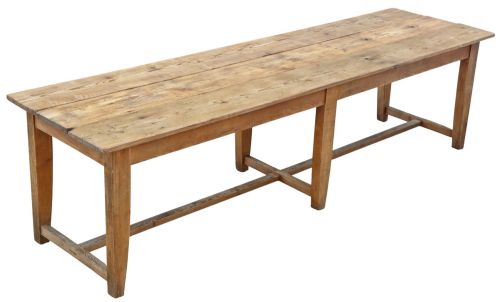
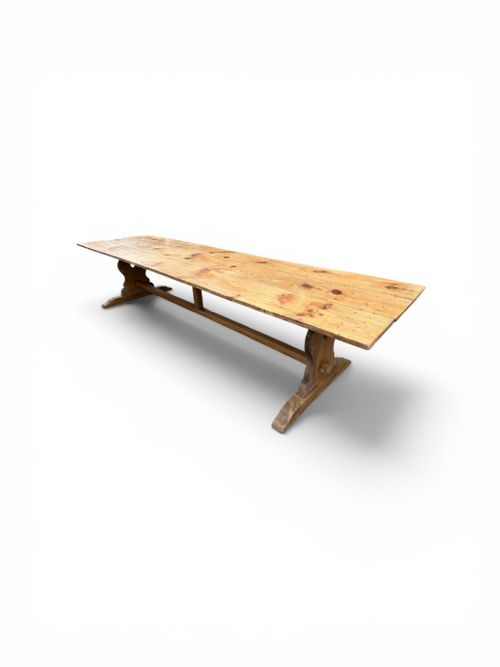


Pine Trestle Dining Table
A pine trestle dining table offers honest utility and enduring style, bringing practical surface space and rustic character to any interior.
What these pieces are
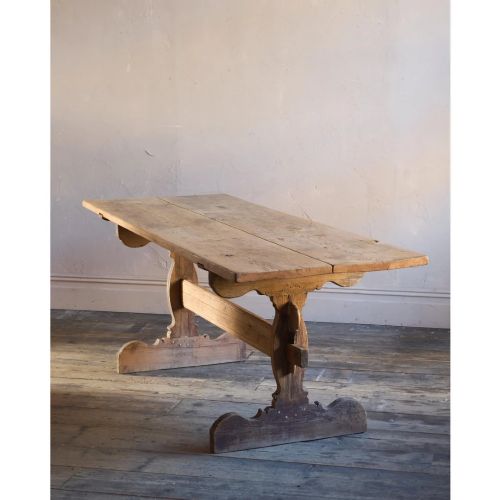
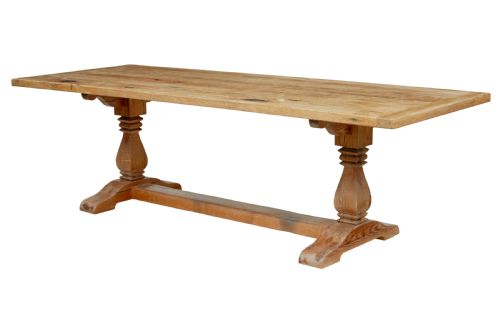
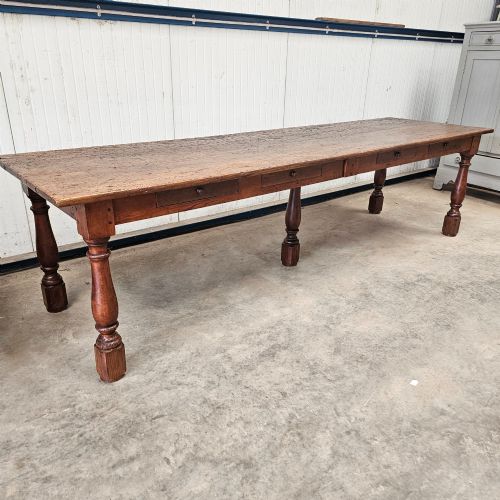
When buyers search for a pine trestle dining table, they are looking for versatile dining furniture defined by sturdy construction and timber character. These pieces emerge from the nineteenth century, including specific dates such as eighteen eighty and eighteen sixty, spanning rustic farmhouse, Scandinavian country, and Victorian country styles. The forms range from standard dining tables to tavern tables and serving tables, reflecting varied utilitarian origins.
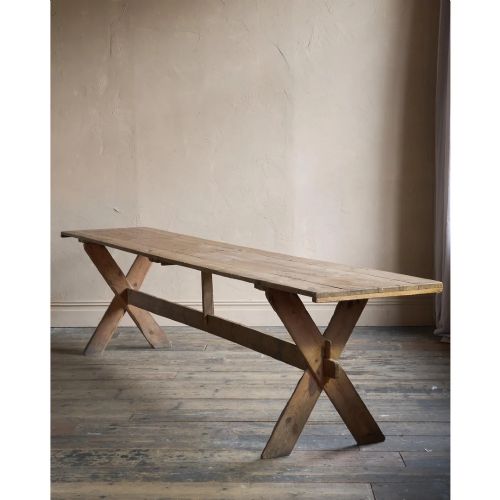
The version most commonly met on this page is the nineteenth century English or Swedish pine trestle table, often featuring an X frame or sturdy supports. They appear in generous proportions, including large farmhouse formats and long kitchen dining tables designed to seat six or more diners. Painted finishes occasionally survive, showing original red paint alongside natural timber surfaces.
How they were made
Makers utilised solid timbers predominantly from pine, pitch pine, and occasionally oak for structural elements. These woods provided the necessary strength for daily dining and kitchen work while accepting paint or natural wax finishes.
Construction methods rely on robust framing, particularly X frame trestle bases that support substantial plank tops. Surviving examples demonstrate period joinery appropriate for heavy tavern and farmhouse use.
Retail Price Guide 2026
Typical UK retail prices for pine trestle dining table, calculated from the Sellingantiques database of over a million retail prices indexed since 2003. This retail price guide relies exclusively on Sellingantiques data; no external sources or auction records are used, so the figures do not describe the wider market.
Listings feature items from the nineteenth century, including specific years like eighteen eighty and eighteen sixty, alongside materials such as pine and pitch pine.
What varies in quality
The distinction between ordinary and superior examples lies in the integrity of the timber and the survival of original surface treatments. Tables retaining authentic period paint finishes or rich patination on pitch pine command greater appreciation.
Proportion and structural balance also dictate quality. Well-balanced trestle framing with original construction provides better legroom and visual harmony than heavier or altered alternatives.
The Pine Trestle Dining Table Glossary
- Trestle table
- A table comprising two or more supports connected by a horizontal beam that holds a plank top. This ancient form maximises legroom for diners.
- Pitch pine
- A durable softwood with prominent grain patterns and high resin content. It provides exceptional strength for nineteenth century dining furniture.
- X frame
- A structural base formed by crossing two timbers in the shape of the letter X. This configuration offers robust support beneath large tabletops.
- Tavern table
- A utilitarian table built for heavy commercial use in public houses. These pieces often feature thick tops and sturdy stretchers.
- Patina
- The surface sheen and colour acquired by wood through age, wear, and polishing. Collectors value this visual evidence of a piece's history.
Frequently Asked Questions
What is a pine trestle dining table?
A pine trestle dining table is a sturdy nineteenth century dining surface supported by end trestles rather than traditional corner legs. These tables draw on vernacular country and farmhouse traditions.
They provide ample legroom and a robust surface suitable for daily kitchen use or larger gatherings.
How were these tables used originally?
These tables served primarily in domestic kitchens, farmhouses, and taverns for dining and food preparation. Their sturdy construction handled heavy daily demands.
Today, they transition easily into modern homes as practical dining or serving surfaces.
How do I date a nineteenth century table?
Dating relies on timber characteristics, construction methods, and hardware integration. Nineteenth century examples often display hand-planed surfaces and period joinery.
Specific dates or stylistic markers like Victorian country or Scandinavian vernacular help narrow the production era.
How do I care for antique pine furniture?
Care involves maintaining stable indoor humidity and avoiding direct heat sources that can dry out old timber. Gentle dusting and occasional waxing preserve the surface.
Protecting the wood from excessive moisture ensures the finish and patina endure.