
Rustic Timber Table
A rustic timber table brings honest grain, enduring utility and centuries of domestic history straight into the kitchen or dining room.
Rustic Timber Table
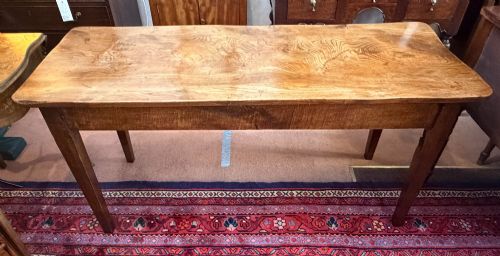
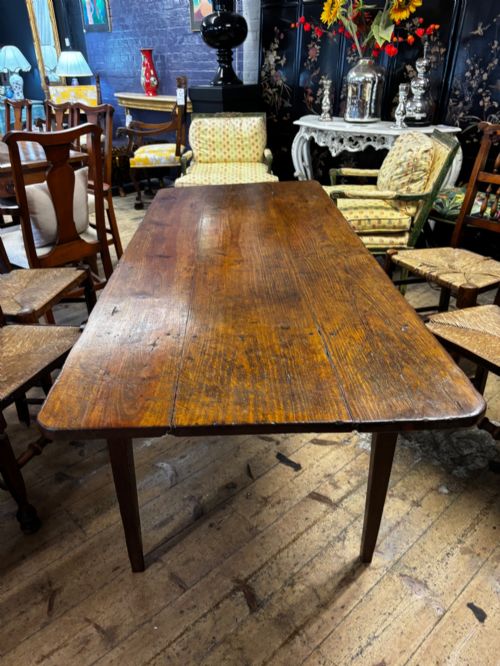
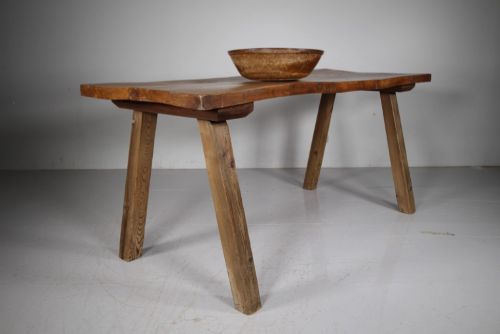
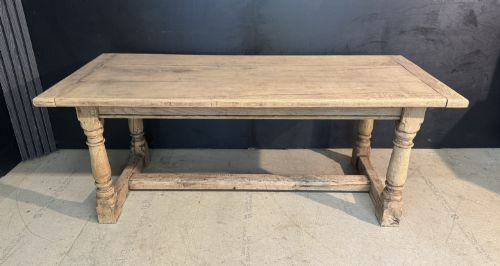
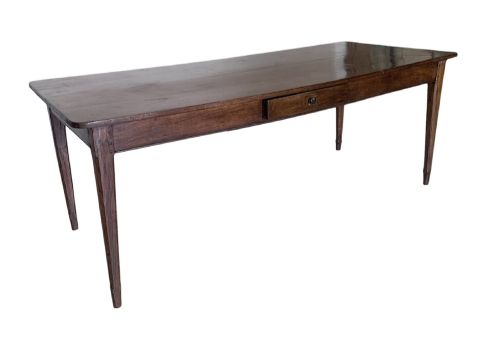
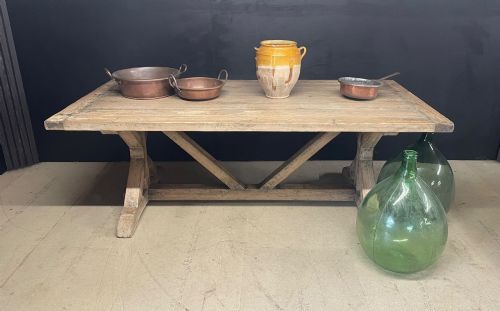
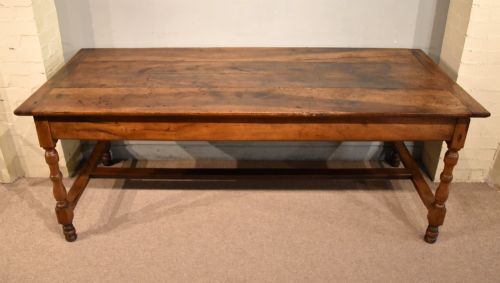
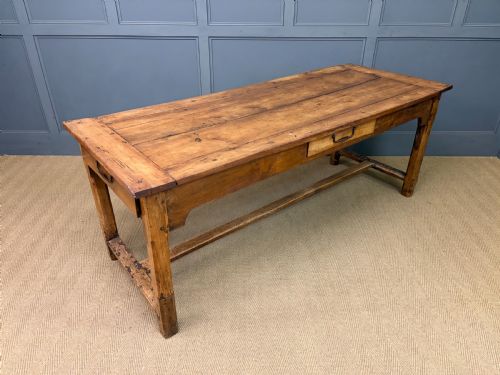
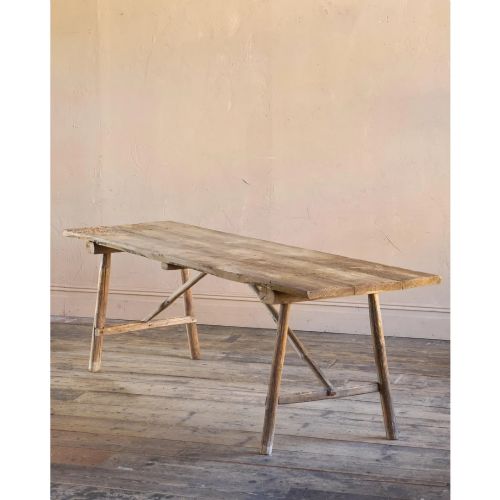
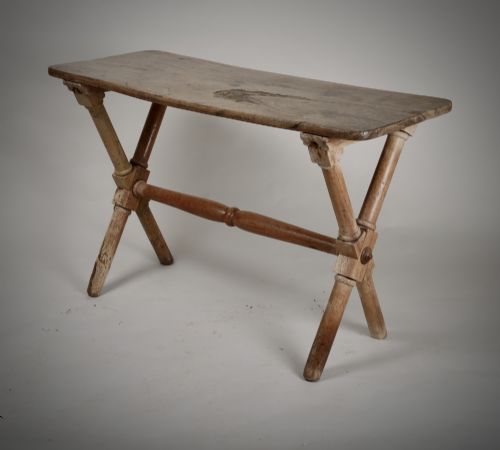
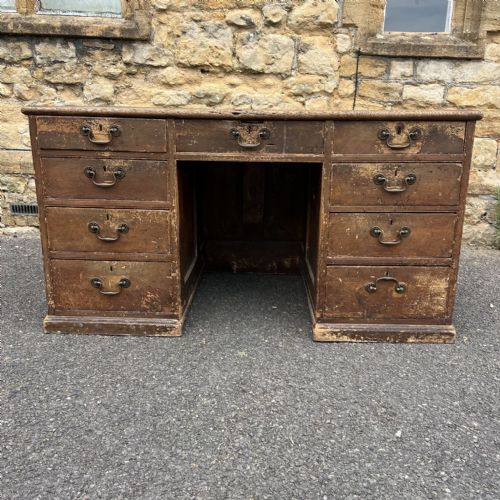
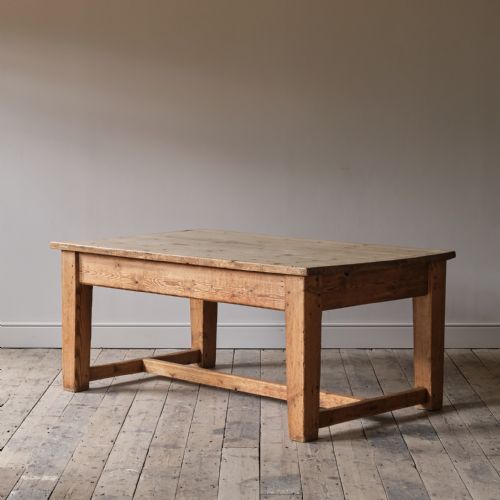
A rustic timber table encompasses sturdy dining boards, kitchen work tables and occasional pieces born from practical country life. Buyers seeking a rustic timber table will find surfaces shaped by decades of honest service in farmhouses, workshops and country houses.
The pieces appearing on this page span the eighteenth, nineteenth and early twentieth centuries, drawing on English, French, Italian and Scandinavian traditions. Oak, pine, fruitwood and elm dominate the forms, reflecting the regional timbers accessible to local joiners.
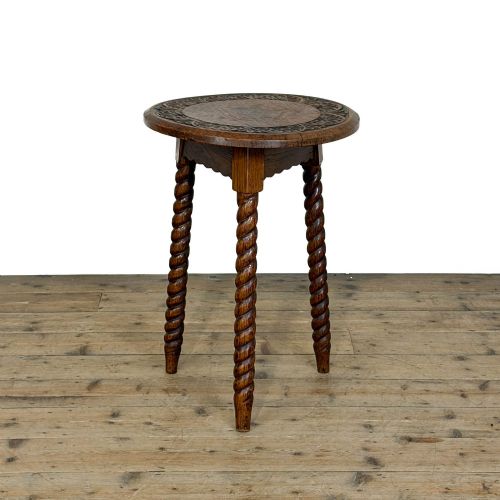
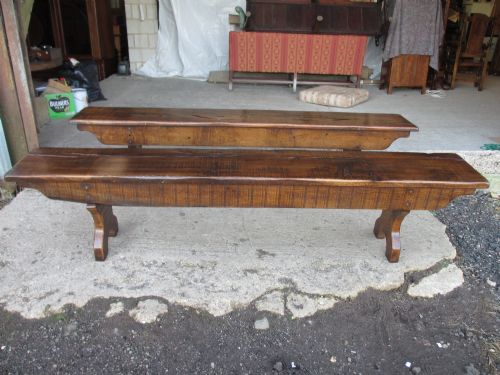
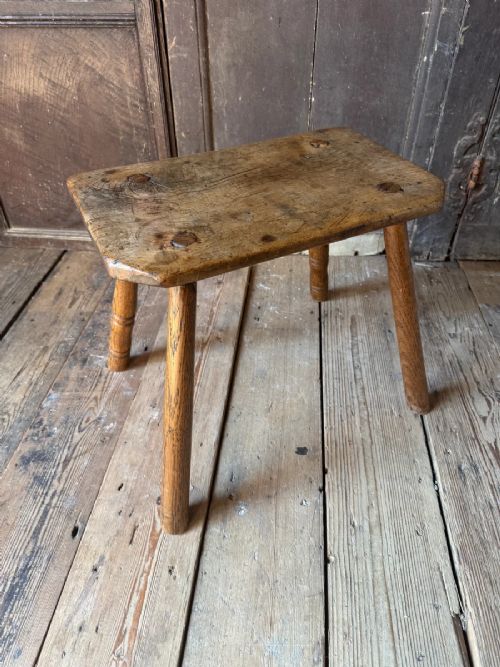
Dining boards and farmhouse tables share space with side tables, coffee tables, benches and robust workbenches. Each item demonstrates the straightforward construction methods characteristic of vernacular furniture.
How they were made
Makers constructed these tables from solid domestic timbers such as oak, elm, pine and fruitwood, often joining thick plank tops directly to sturdy frames with pegged mortise and tenon joints. Saw marks, tool gouges and natural grain variations remain visible on the working surfaces.
Secondary materials like iron and brass appear in structural braces, drop-leaf hinges and hardware, while older surfaces occasionally retain layers of early paint. Construction prioritised absolute stability over hidden fixings, resulting in heavy, robust forms built to endure daily labour.
Several pieces come equipped with original clamping bars and game blocks, proving our ancestors took their woodwork and leisure equally seriously.
What varies in quality
Quality in these pieces rests upon the integrity of the original timber and the proportion of the frame. Tables retaining their unreduced plank tops and original leg heights carry greater architectural authority than those altered or cut down over time.
Subtleties of joinery, timber selection and regional vernacular detail separate ordinary utility furniture from exceptional examples. A piece displaying balanced proportions, honest wear and untouched patination possesses a distinct visual weight.
The Rustic Timber Table Glossary
- Farmhouse table
- A large, utilitarian wooden table traditionally used for daily domestic labour and dining in country kitchens.
- Refectory table
- A long, narrow dining table originating from monastic dining halls, characterised by strong stretcher rails connecting the legs.
- Workbench
- A heavy-duty timber table designed for manual crafts, often retaining vices, clamping bars or tool wells.
- Plank top
- A solid wooden surface constructed from broad boards joined edge to edge, displaying the natural grain and growth rings of the tree.
- Vernacular
- Everyday furniture built by local craftsmen using regional styles and materials, free from high academic architectural pretensions.
Rustic Timber Table: Frequently Asked Questions
How do I care for an old timber table?
Feed the dry wood occasionally with natural beeswax to nourish the grain and protect the surface from moisture marks. Avoid placing the timber directly next to heat sources that might cause the old planks to split.
Clean the surface simply with a damp cloth and dry it immediately afterwards. Embracing the bumps and stains accumulated over generations is part of living with country furniture.
Can I use a workbench as a coffee table?
Workbenches make striking low tables because their thick timber tops, vises and tool trays add immense character to a modern living space. Their low height and sturdy proportions suit relaxed seating arrangements.
Ensure the clearance underneath accommodates your knees if used near seating. The substantial weight of these pieces means they anchor a room effectively.
What is the difference between oak and pine tables?
Oak provides a dense, heavy structure with a pronounced grain pattern that darkens richly over centuries of exposure and polishing. It was traditionally chosen for high-status farmhouse dining boards and structural longevity.
Pine offers a softer, lighter alternative with a paler hue that frequently shows knots and absorbs old paint layers well. It served primarily in sculleries, dairies and country kitchens for everyday utility.
How can I tell an eighteenth century table from a nineteenth century one?
Eighteenth century examples often display wider single-board construction, hand-sawn timber marks and pegged joints that reflect pre-industrial joinery techniques. The patination on older oak and fruitwood develops a deep, glassy smoothness through generations of touch.
Nineteenth century pieces tend towards standardised hardware, machine-sawn components and heavier pine or walnut frames. Regional design traits also become more distinct during the Victorian era.