
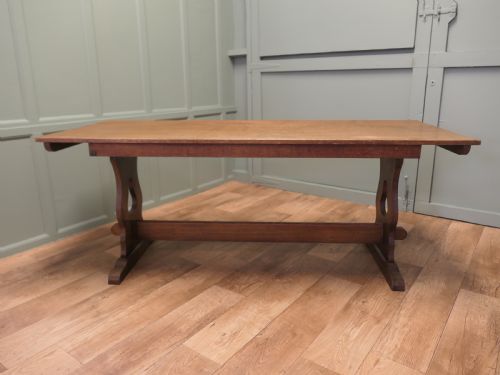
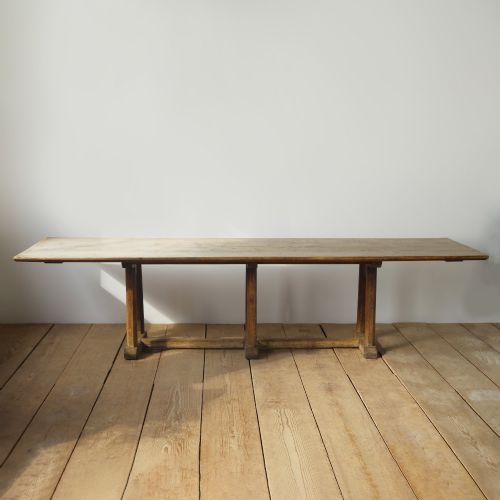
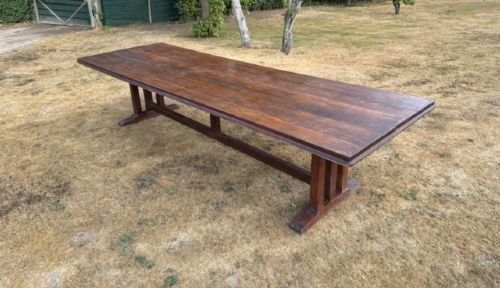
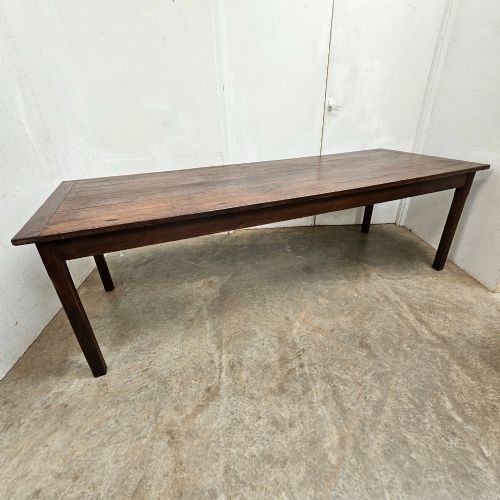
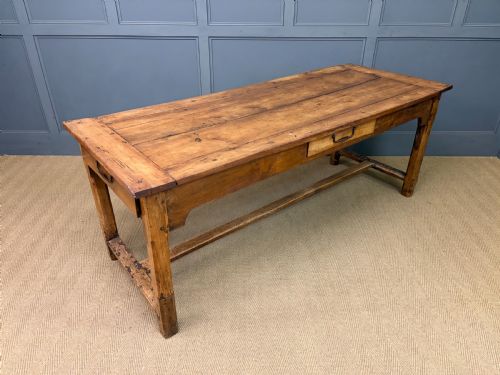

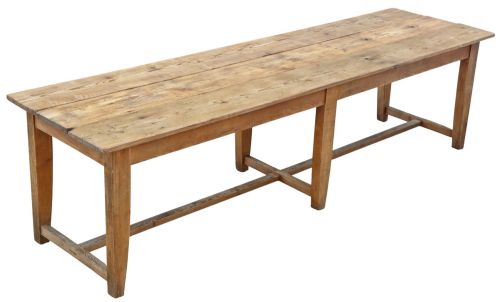
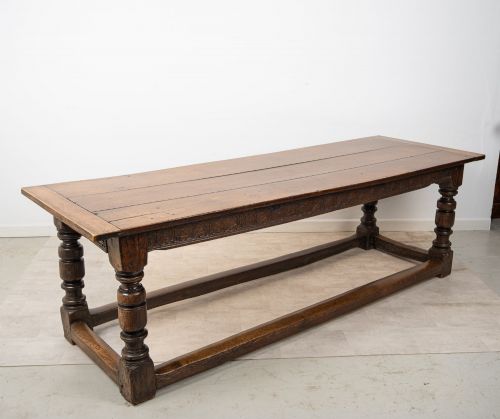
Long Wooden Refectory Table
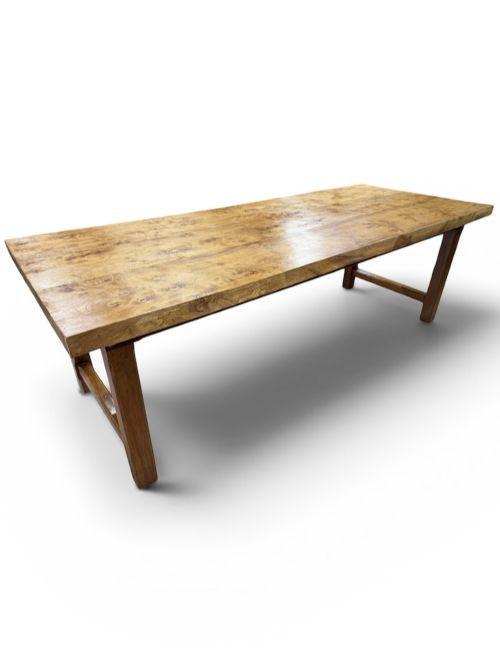
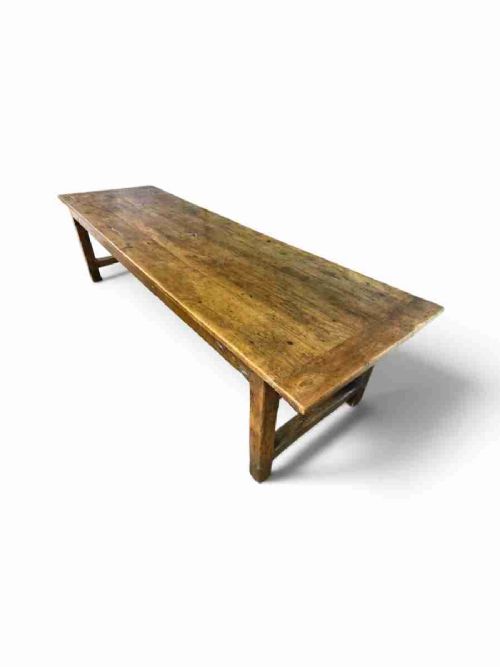
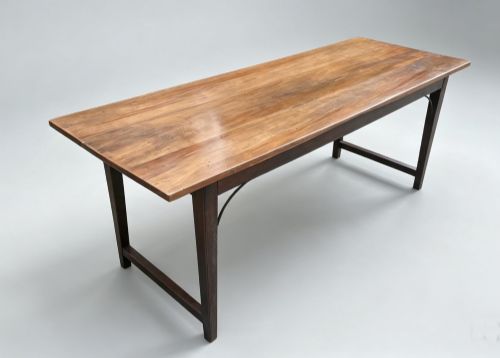
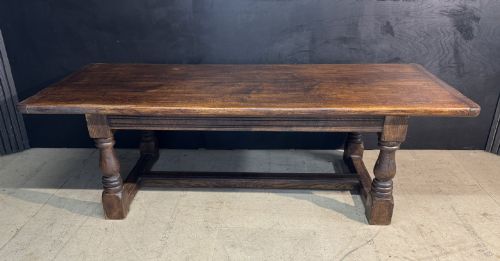
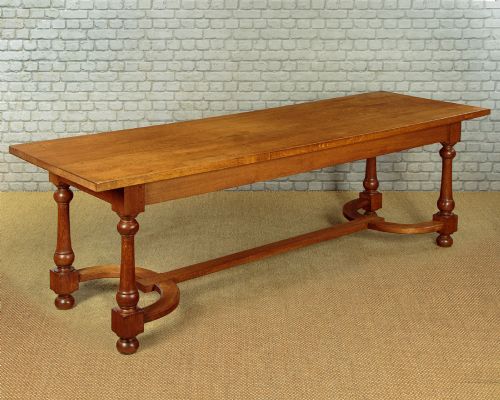
A long wooden refectory table brings historic scale and sturdy presence to a room, offering vast surface space built for communal dining.
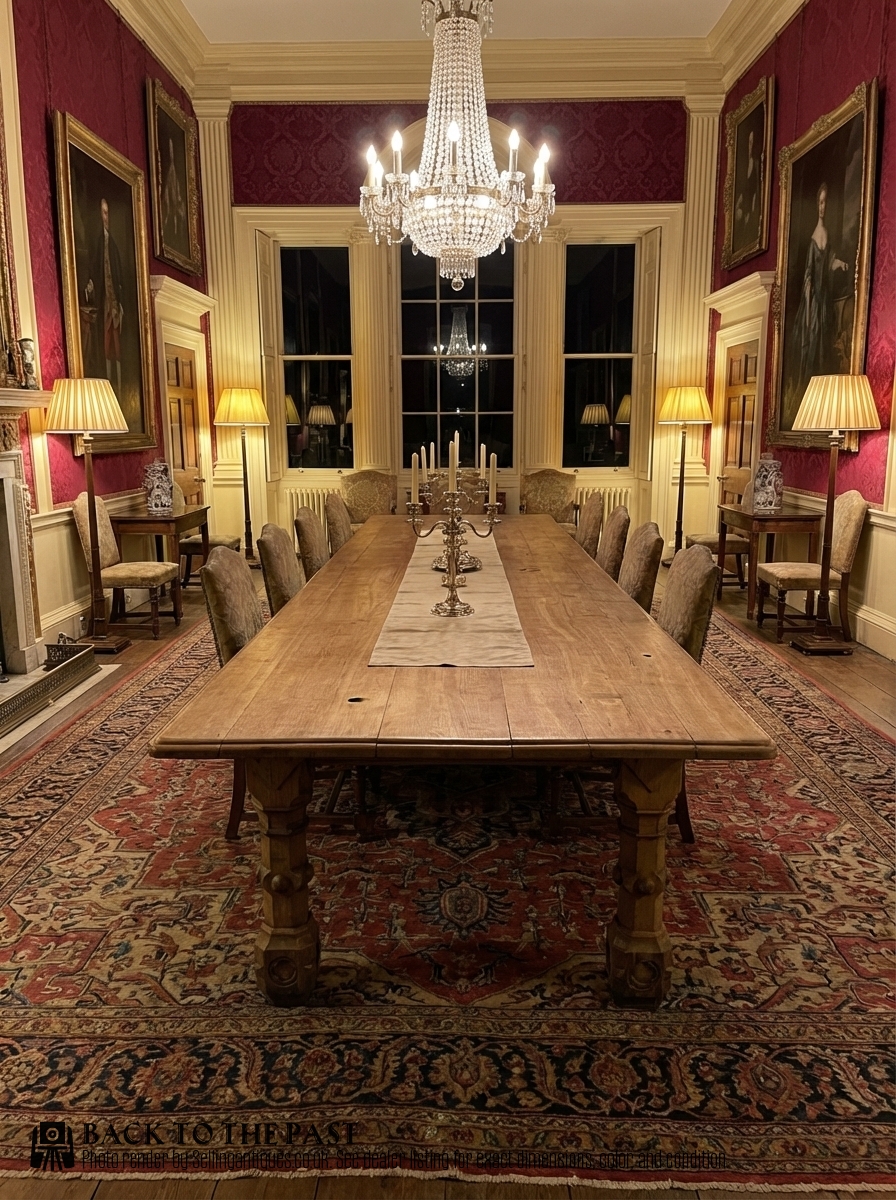
Long Wooden Refectory Table
When you search for a long wooden refectory table, you encounter substantial dining and serving furniture originating predominantly from the seventeenth, eighteenth, and nineteenth centuries. These pieces emerge from English and French country house traditions, designed originally for monastic or large communal meals. The forms span robust refectory dining tables, harvest tables, and monastery tables.
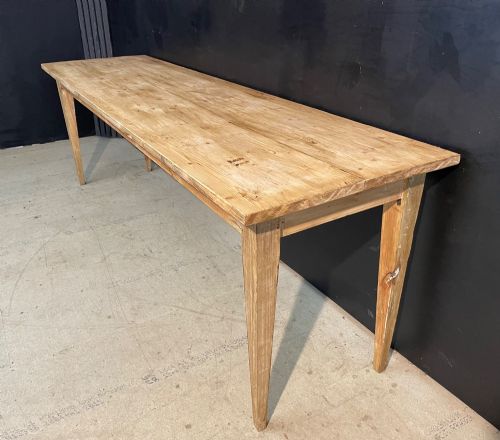
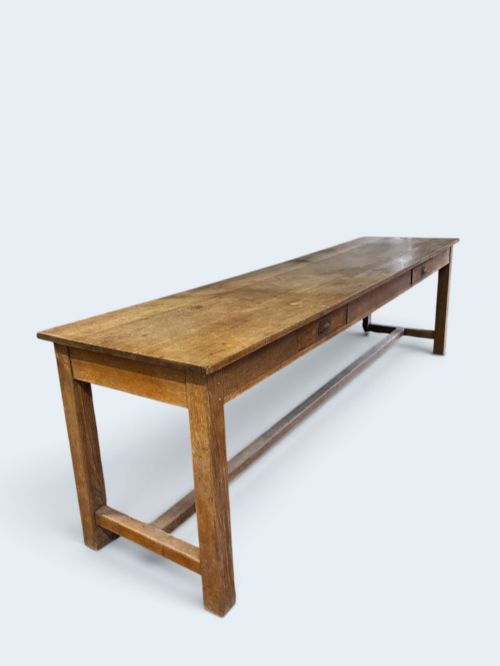
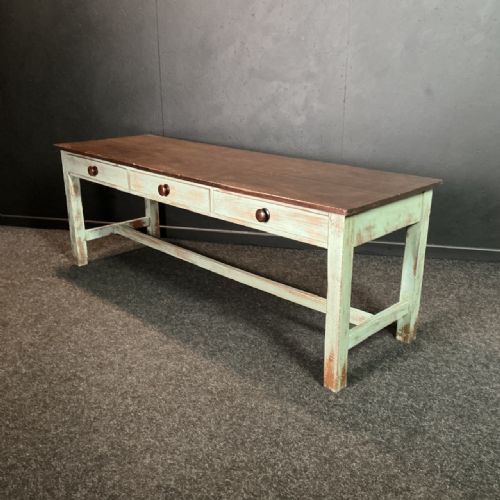
You are most likely to meet nineteenth-century oak and pine examples on this page, often featuring expansive timber tops supported by stretcher bases or trestles. Many survive from rural domestic contexts, displaying generous lengths that accommodate large gatherings easily. Variations include pieces with integrated drawers or two-tier platforms.
The aesthetic leans heavily into rustic farmhouse, French provincial, and Georgian country styles. These tables serve as anchoring focal points in large kitchens, dining rooms, and boardroom settings, prioritizing utility alongside heavy timber construction.
Quality factors in heavy timber tables
The integrity of the timber top determines much of the standing quality, particularly the thickness of the planks and how well the wood has aged without excessive warping. Tables constructed from dense oak or mature fruitwood with minimal structural compromise represent the finer end of survivals.
Construction nuance shows in the stability of the base framework and the honesty of the hardware. Pieces retaining original stretcher placement and period timber fixings command greater appreciation than those altered extensively over subsequent centuries.
Some harvest tables arrive with built-in drawers originally intended for cutlery, proving that crumbs have annoyed diners for centuries.
The Long Wooden Refectory Table Glossary
- Refectory table
- A long, narrow dining table originally used in monasteries for communal dining. They typically feature heavy legs connected by a low stretcher for added rigidity.
- Harvest table
- A large utility table traditionally used during seasonal farm gatherings. These often incorporate pine or mixed timber tops and sometimes include useful storage drawers.
- Trestle table
- A table design where the top is supported by two or more structural uprights connected by a horizontal beam. This configuration allows maximum legroom along the length of the table.
- Plank top
- A table surface constructed from longitudinal wooden boards joined side by side. The number of planks used often dictates the visual texture and age of the piece.
Long Wooden Refectory Table: Frequently Asked Questions
What is a refectory table?
A refectory table is a long, narrow wooden table historically designed for communal dining in monasteries and large country houses. They are built for heavy daily use and feature robust stretcher bases.
Today, they function as substantial dining or kitchen tables that anchor large rooms and accommodate many guests.
How do I clean an antique wood table?
Clean antique timber surfaces gently using a soft, slightly damp cloth to remove dust and surface grit. Avoid harsh chemical sprays or excess moisture that might damage aged wax or polish.
Feed the dry wood periodically with a traditional beeswax polish to maintain the natural lustre of the grain.
Are these tables suitable for everyday dining?
These tables were built for heavy domestic and communal use from the outset, making them exceptionally durable for modern family life. Their solid timber construction handles daily meals and gatherings with ease.
Protecting the surface from extreme heat and moisture preserves the historic finish while you live with the piece.
How do I distinguish oak from pine tables?
Oak is a dense, hard wood with prominent growth rings and medullary rays that create a distinct flecked pattern. It typically exhibits a deep brown or golden hue and considerable weight.
Pine is a softer timber with a lighter colour profile and subtler grain structure, often showing knot formations typical of softwood varieties.