

Traditional Oak Shelves
Traditional oak shelves bring enduring utility and timber grain to a room, offering sturdy ledges for books and display.
Traditional Oak Shelves
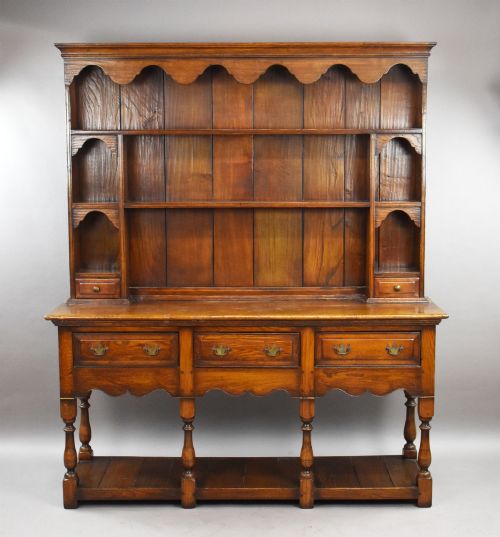
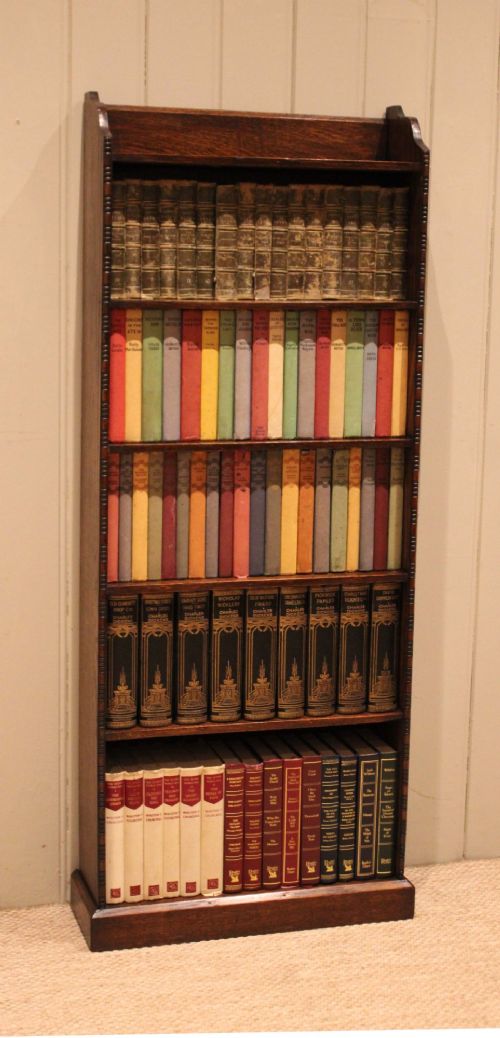
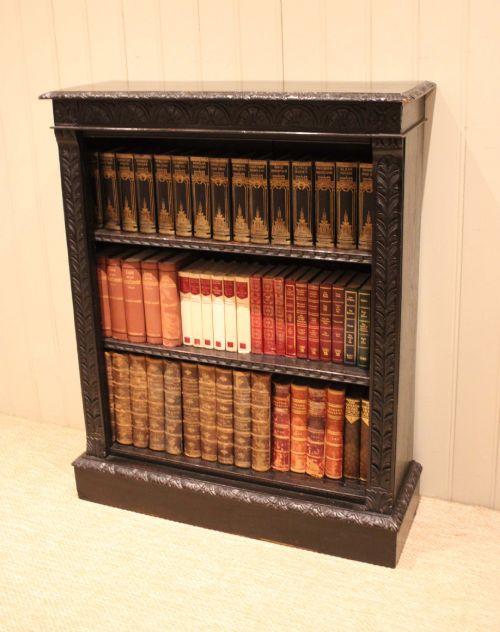
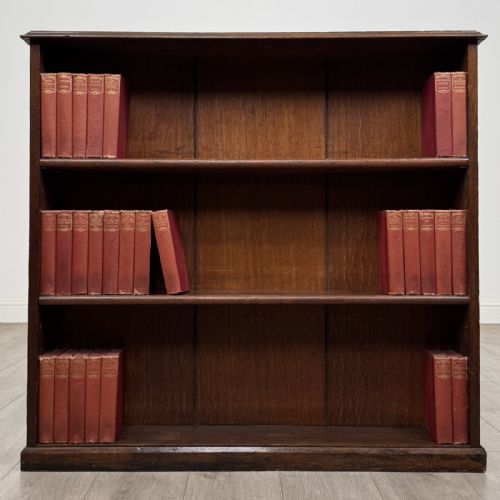
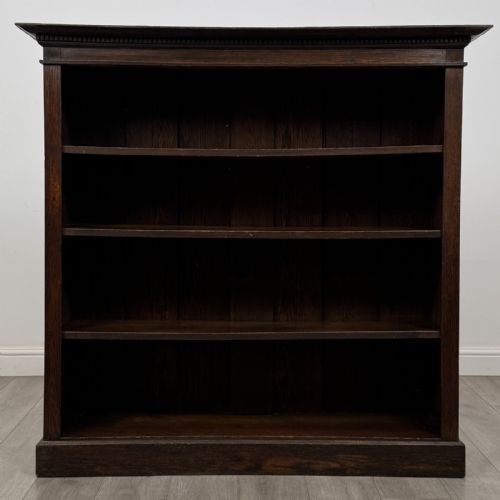
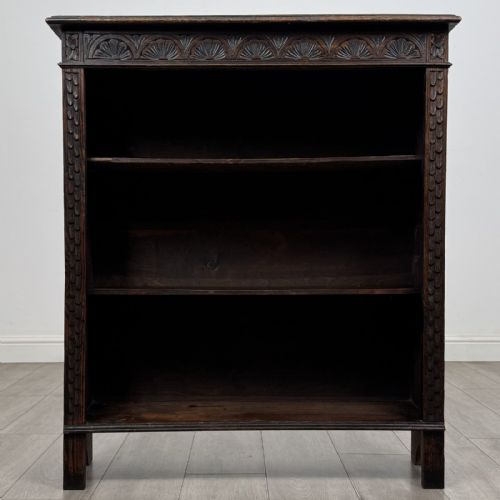
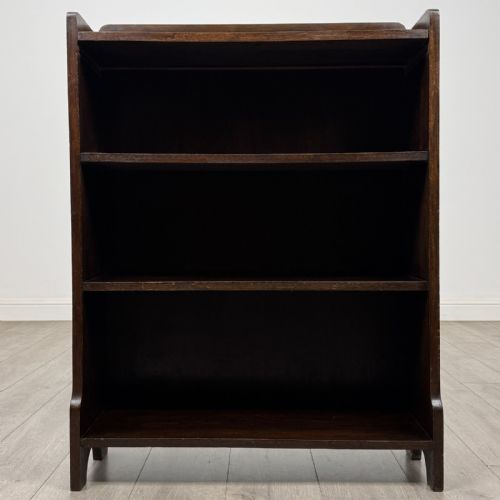
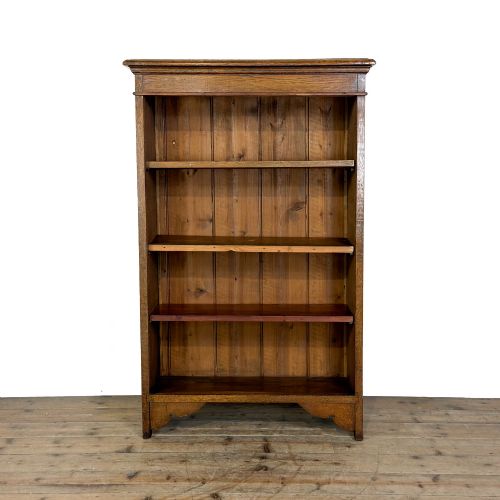
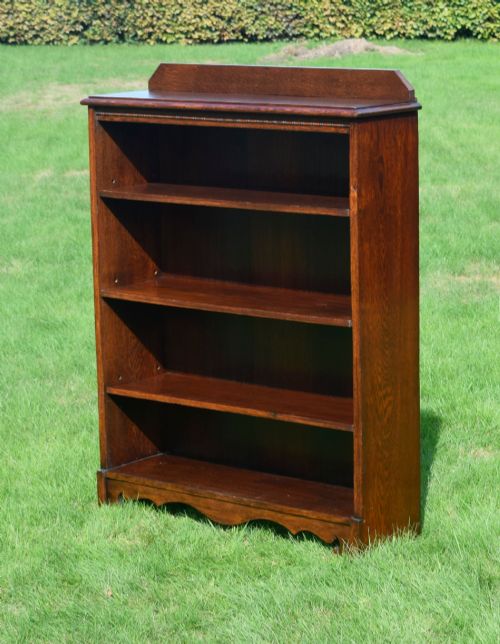
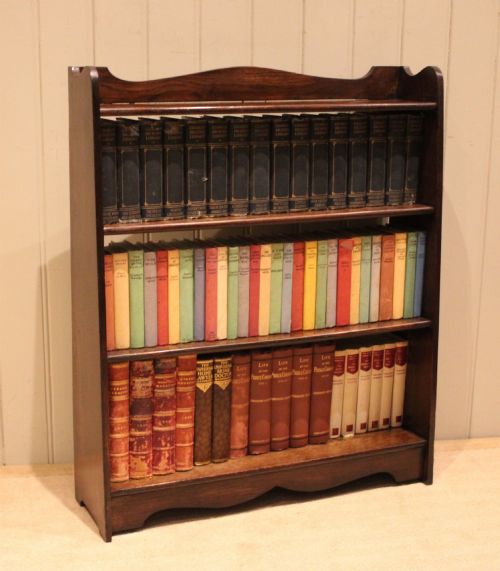
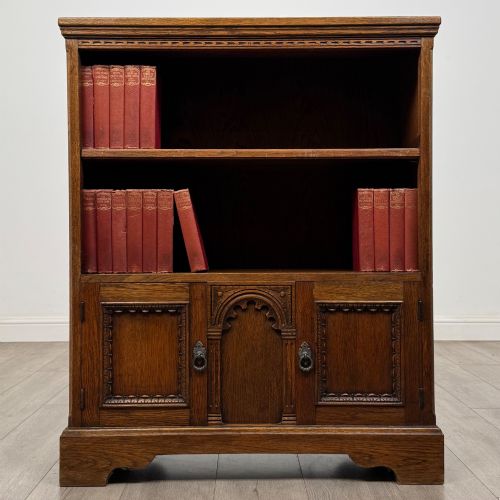
Traditional oak shelves appear in various forms across this page, predominantly as open bookcases, wall plate racks, and sturdy dressers dating from the eighteenth century through the Edwardian period. Buyers searching for traditional oak shelves encounter formats ranging from slim library cases with adjustable timber ledges to rustic country plate racks designed for daily kitchen use.
The pieces span multiple eras including Georgian, Victorian, and Arts and Crafts movements, reflecting shifts in domestic interior design while maintaining solid timber construction. Most examples on this page date from the late nineteenth and early twentieth centuries, offering practical storage solutions with straightforward rectangular proportions.
Form follows function in these pieces, with many items incorporating simple beaded edges, planked backs, or integrated hooks for hanging domestic objects. Whether configured as low coffee tables or towering library bookcases, the core identity rests on sturdy oak boards built to hold heavy volumes and household ceramics.
Materials and construction methods
Makers utilised solid oak alongside tiger oak and dark oak variants, often pairing the primary timber with brass hinges, iron hooks, or glass panels depending on the specific furniture form. Structural integrity relied on thick planks and traditional joinery, ensuring that tall bookcases and wall-mounted plate racks could support substantial weight.
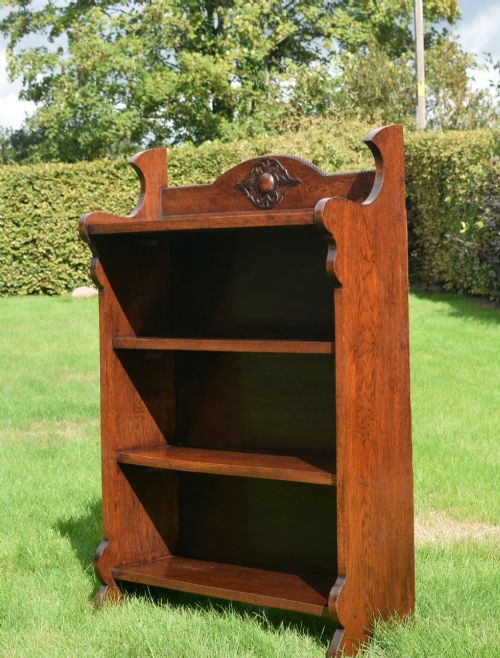
Surface finishes range from golden oak sheens to darker patinas developed over decades of use, sometimes featuring carved decorative elements aligned with Jacobean Revival or Arts and Crafts styles. Backboards typically consist of vertical timber planks secured behind adjustable or fixed shelving tiers.
Traditional Oak Shelves Retail Price Guide 2026
Typical asking prices for traditional oak shelves among the pieces listed under this phrase on Sellingantiques today, from the lower quarter to the upper quarter. They describe what is for sale here now, not the wider market.
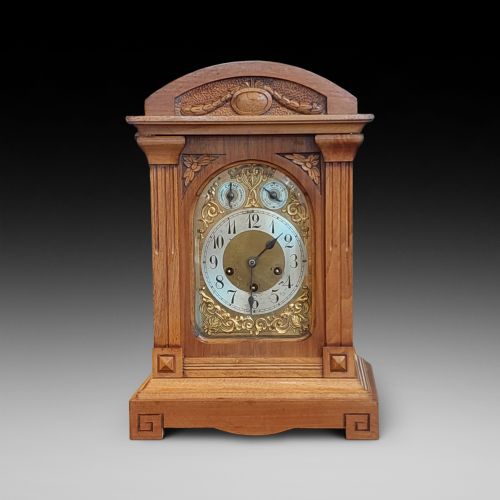
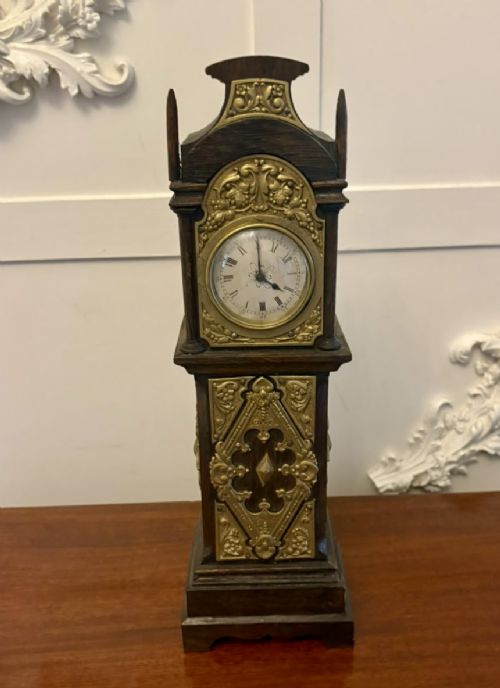
Several items double as miniature clock housings, proving that past owners liked telling time while reaching for a novel.
Assessing quality in oak shelving
Superior examples distinguish themselves through heavier timber gauge, tighter grain patterns, and sophisticated detailing such as beaded shelf edges or finely executed carved motifs. The presence of adjustable shelving mechanisms implemented with neat timber ratchets or brass fittings indicates a higher grade of library furniture.
Construction depth dictates overall merit, separating simple utilitarian pieces from refined pieces commissioned for formal domestic spaces. Original hardware, well-fitted backboards, and stable joinery without excessive modern reinforcement preserve the integrity and standing of older oak items.
The Traditional Oak Shelves Glossary
- Plate rack
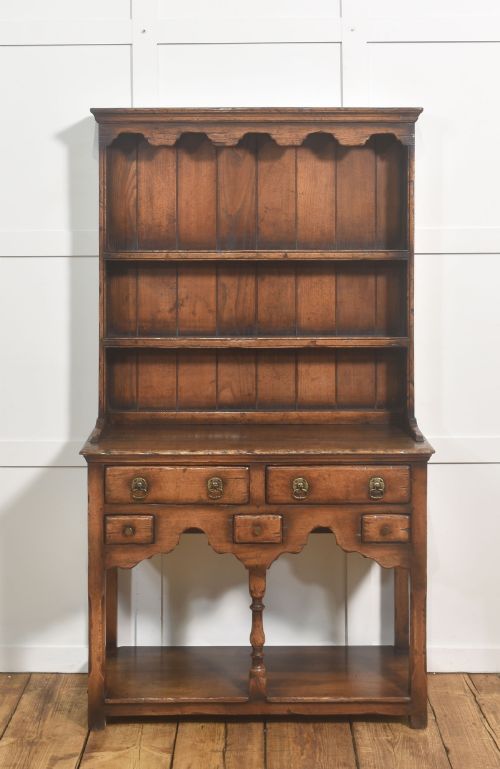
- A wall-mounted or dresser-integrated tier designed specifically to display ceramic plates upright. Grooved wooden bases prevent crockery from slipping forward.
- Tiger oak
- A quarter-sawn oak variety displaying pronounced medullary rays that create a striped pattern resembling tiger skin. Cabinet makers prized this figure for decorative effect on prominent surfaces.
- Adjustable shelves
- Shelving supported by pegs, racks, or sliding brackets that allow vertical repositioning. This feature appears frequently in better quality library bookcases.
- Welsh dresser
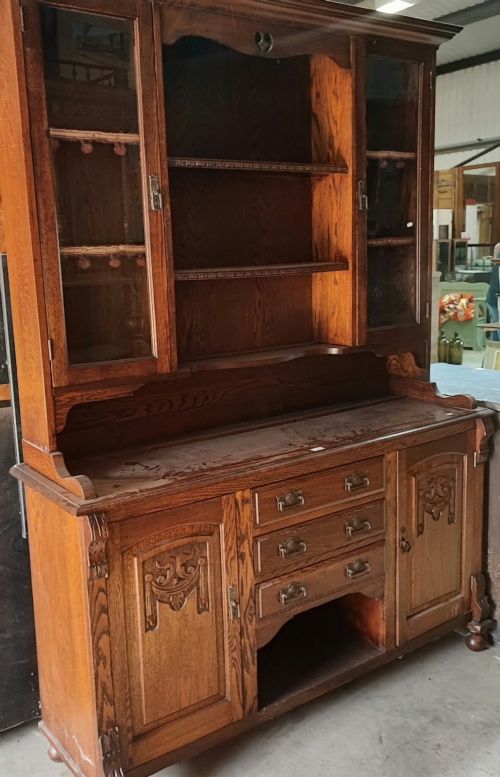
- A large dining room or kitchen storage form combining a lower sideboard base with an upper open plate rack. These units provide substantial surface area for both storage and display.
- Golden oak
- A bright, warm timber finish popular during the late Victorian and Edwardian periods. It highlights the natural grain of the wood through clear varnishing.
Traditional Oak Shelves: Frequently Asked Questions
How do I clean oak shelves?
Dust timber surfaces regularly with a dry cloth and apply occasional clear wax to nourish the grain without building up heavy residue. Avoid harsh chemical cleaners that strip the historic patina.
Keep wooden furniture away from direct heat sources and excessive moisture fluctuations to prevent timber warping or cracking over time.
Are these shelves strong enough for heavy books?
Solid timber construction provides high load-bearing capacity, making these pieces well suited for heavy volumes and dense library collections. Adjustable versions utilise sturdy supports designed to bear substantial weight.
Check shelf thickness and bracket engagement before loading large folios onto antique ledges.
How can I date my oak bookcase?
Examine construction traits, hardware types, and timber finishing methods to determine the likely era of manufacture. Georgian and Victorian pieces often show hand-cut joinery marks, while Edwardian items frequently feature golden oak tones and simpler mechanical adjustments.
Comparing backboards and fastening nails also provides reliable clues regarding age.
Where should I place a wall plate rack?
Kitchens and dining rooms serve as traditional locations for plate racks, offering accessible storage for everyday ceramics and decorative platters. Secure heavy wall-mounted units directly into structural studs for safe support.
Ensure placement avoids areas prone to heavy steam or direct sunlight.