

Late Victorian Shelves
Late victorian shelves bring reliable period storage and display to a room, appearing most often as open mahogany or oak bookcases.
Late Victorian Shelves
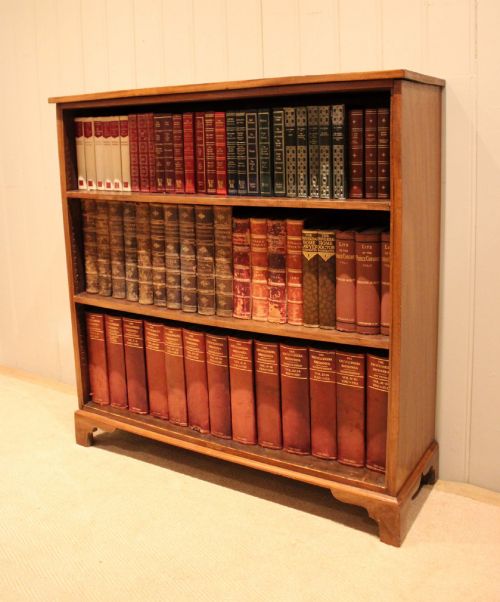
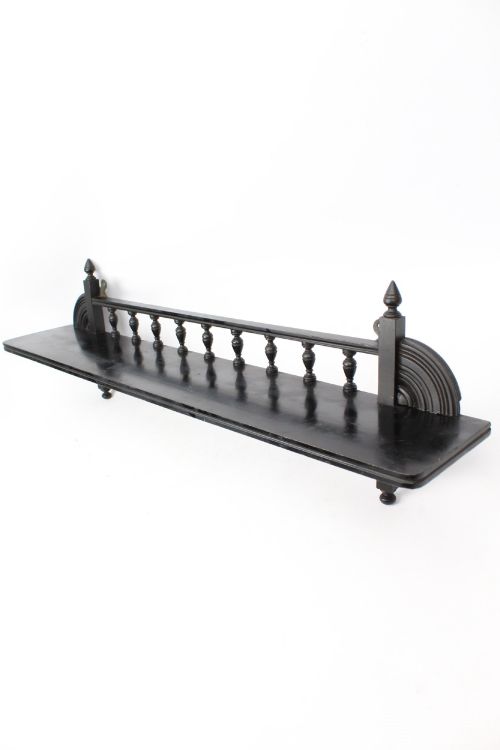
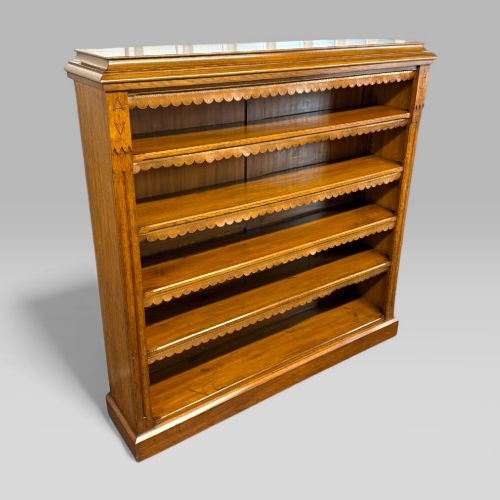
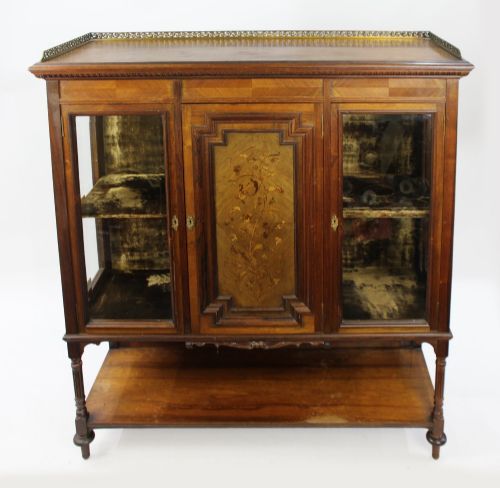
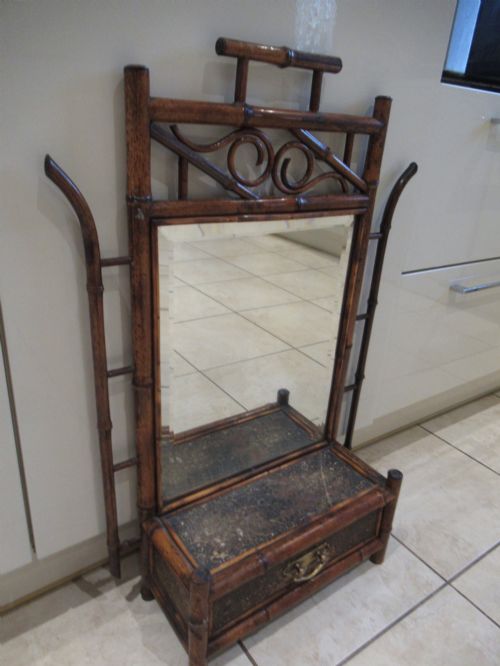
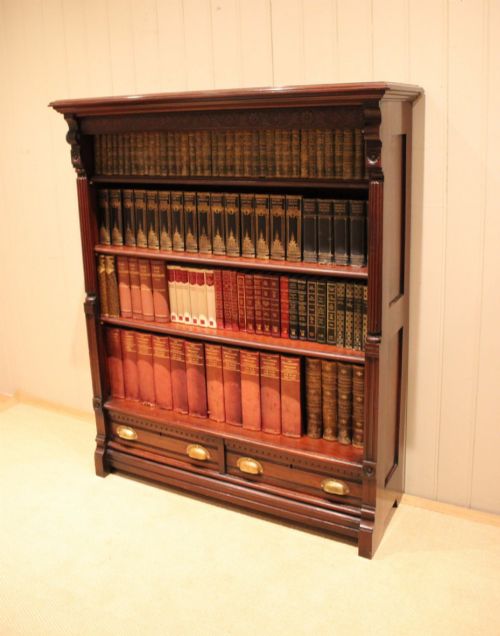
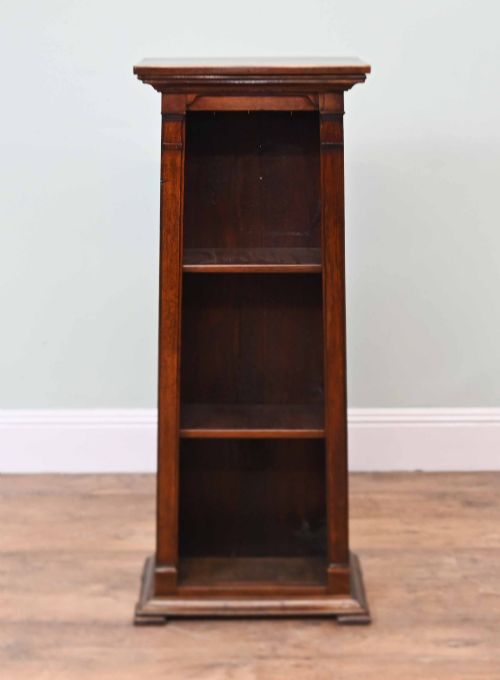
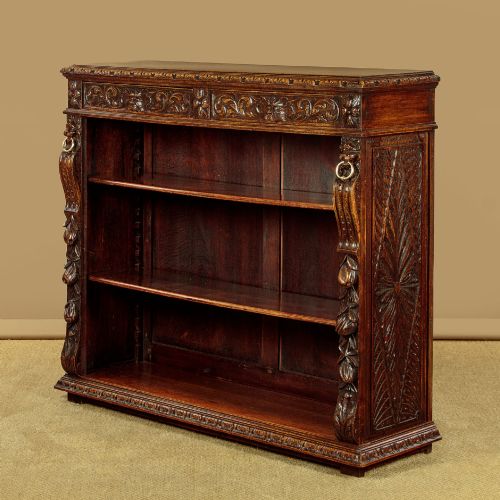
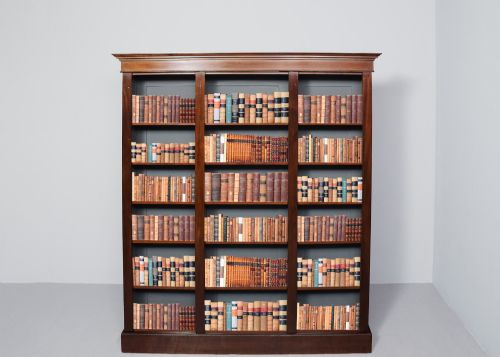
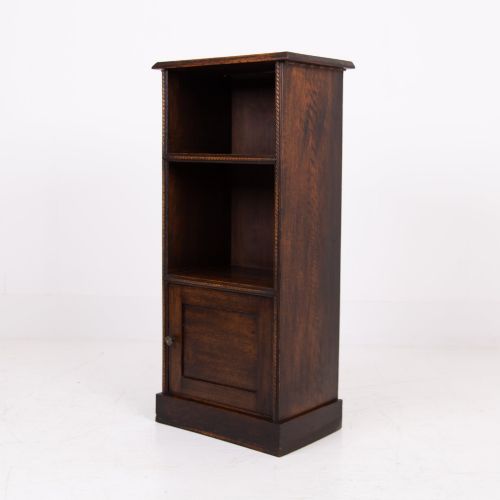
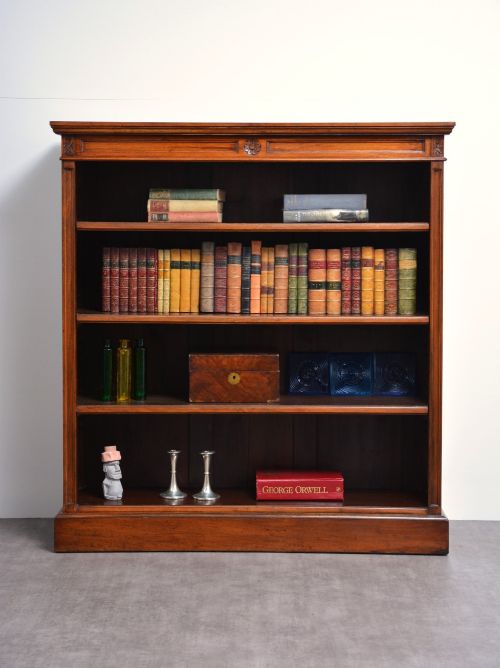
Late victorian shelves primarily take the form of open bookcases, wall shelves, and tiered étagères dating from the final decades of the nineteenth century. These pieces emerge across various woods, serving practical needs for book storage and decorative display in period interiors.
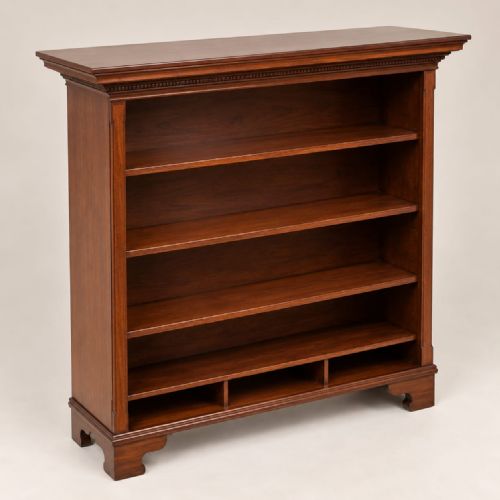
Buyers encounter walnut and mahogany open front bookcases featuring adjustable shelves alongside specialised forms like revolving bookcases and corner cabinets. The selection spans straightforward utility designs to pieces influenced by the Aesthetic Movement and Arts and Crafts ideals.
Materials and Construction
Cabinet makers utilised solid timbers and veneers including mahogany, oak, walnut, and ebonised wood to build these storage pieces. Brass castors, glass elements, and parcel gilding frequently accent the primary woodwork on finer examples.
Construction techniques involve traditional joinery adapted for domestic furniture, such as adjustable shelving systems and inlaid decorative panels. Structural support often relies on sturdy timber frames designed to hold heavy volumes.
Late Victorian Shelves Retail Price Guide 2026
Typical asking prices for late victorian shelves among the pieces listed under this phrase on Sellingantiques today, from the lower quarter to the upper quarter. They describe what is for sale here now, not the wider market.
Periods represented span the Victorian era, specifically covering 1880, 1890, 1900, and 1920.
Craftsmanship and Proportion
Quality rests upon the selection of timber figures, such as burr walnut or figured mahogany, and the precision of inlaid decorative motifs. Superior examples display careful attention to proportion and joinery detail rather than simple utilitarian assembly.
The sophistication of carving and the integration of hardware like brass castors separate standard production pieces from finer workshop outputs. The presence of secondary timbers and the integrity of the original polish dictate the overall standing of an item.
Liberty & Co.·Edwards & Roberts·Cottier & Co.
The Late Victorian Shelves Glossary
- Étagère
- A standing set of open shelves used for displaying small ornaments and bric-a-brac. These tiered pieces often feature mirrored backs or delicate turned supports.
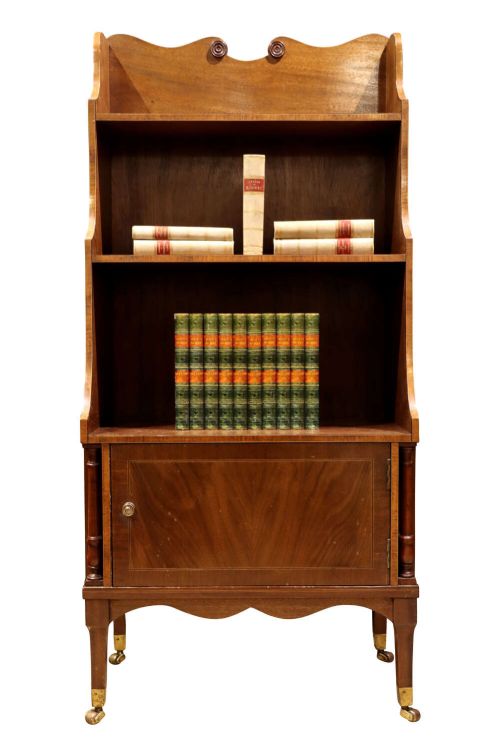
- Waterfall bookcase
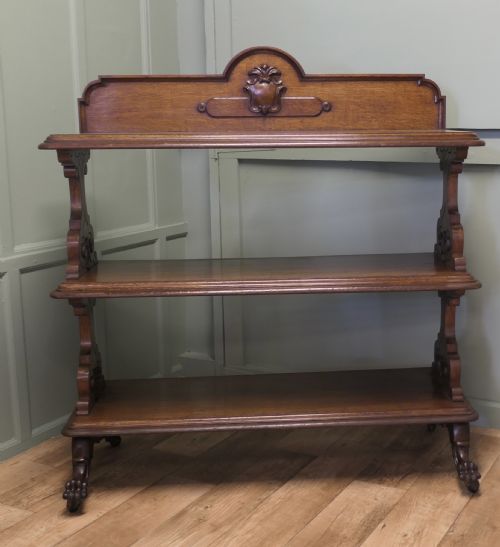
- A standing set of graduated shelves where each tier is narrower than the one below, creating a cascading profile. This form maximises display space for books.
- Aesthetic Movement
- A late nineteenth-century design style emphasising visual beauty over narrative or moral function. Pieces from this movement often incorporate ebonised wood, gilding, and simple geometric lines.
- Revolving bookcase
- A low or table-height bookcase mounted on a rotating pivot base allowing access to books from any angle. This practical form became popular during the late Victorian period.
Late Victorian Shelves: Frequently Asked Questions
How do I adjust the shelves?
Many late victorian shelves utilise traditional wooden side ratchets or metal pins inserted into pre-drilled interior walls. These systems allow individual tiers to shift up or down according to book heights.
Care is needed when repositioning older timber boards within worn housings to prevent splitting the interior veneer or straining the upright supports.
Are these pieces suitable for heavy books?
Solid oak and mahogany open bookcases constructed during the nineteenth century provide sturdy support for substantial volumes. Adjustable shelving accommodates varied collections without bowing.
Heavier loads require stable placement on level flooring, particularly for taller bookcases or those fitted with brass castors.
Where should I place wall shelves?
Wall-mounted variants and hanging cabinets suit smaller spaces where floor area remains limited. Secure fixing directly into masonry or adequate wall studs ensures safe weight distribution.
Placing them away from direct heat sources protects the polished timber surfaces and prevents wood shrinkage over time.
How do I identify the wood type?
Examination of grain patterns, weight, and colour helps distinguish between mahogany, oak, and walnut components. Darker finishes sometimes conceal ebonised or stained pine carcases.
Looking at unexposed interior surfaces or shelf edges reveals the true timber beneath exterior polishes and decorative patination.