

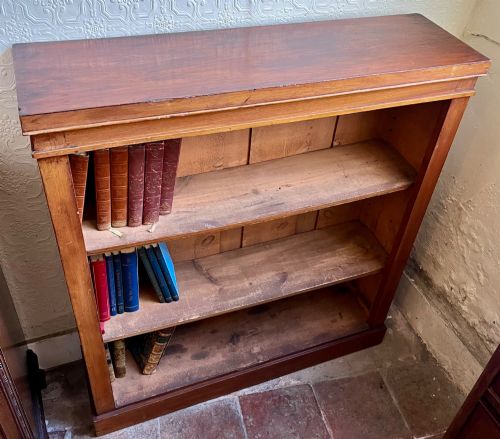
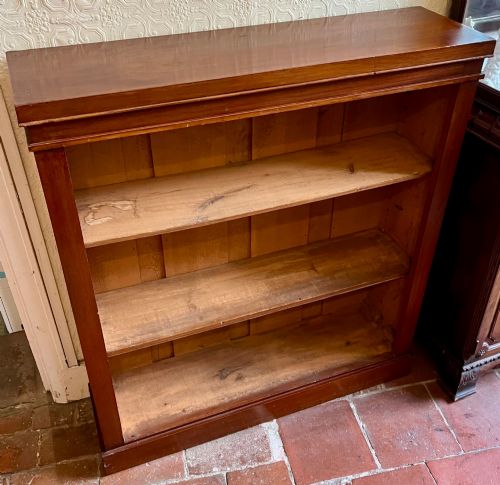
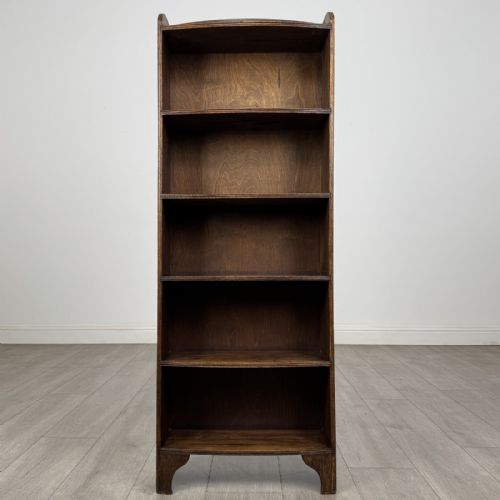
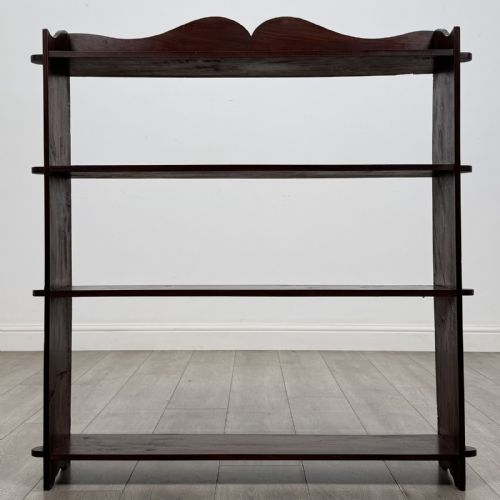
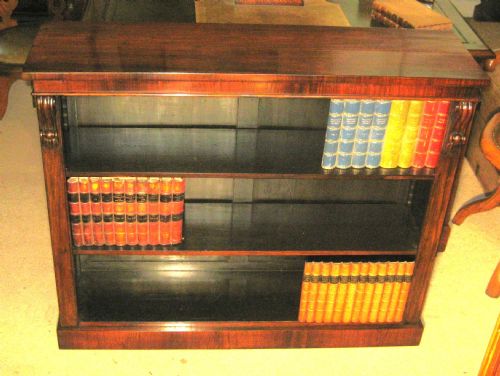
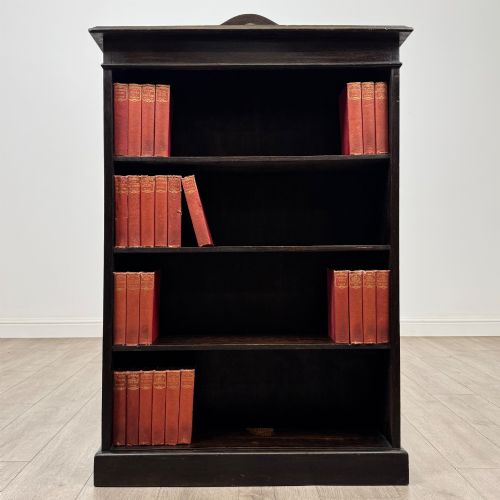
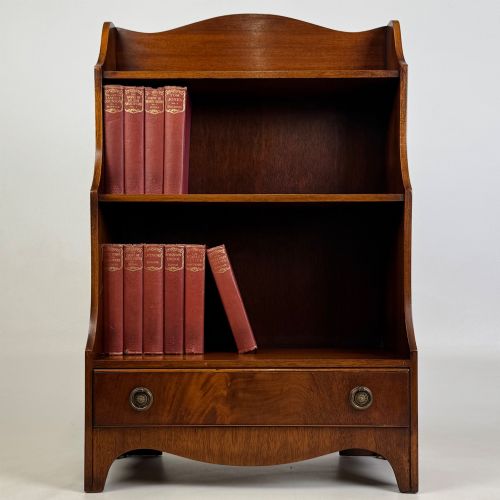
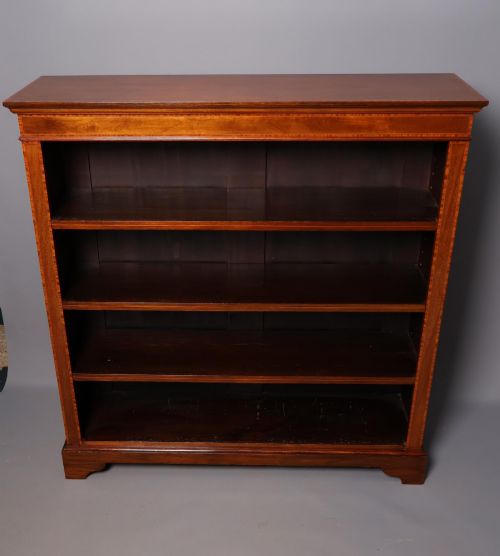
Open Front Bookshelves
Open front bookshelves are practical display furniture for libraries and sitting rooms, prized for immediate access to volumes and handsome timber grains.
Open Front Bookshelves
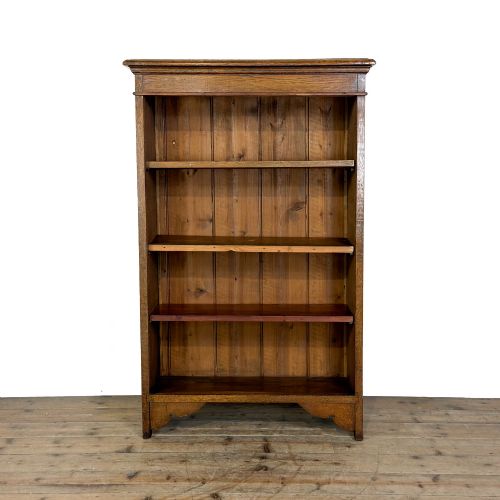
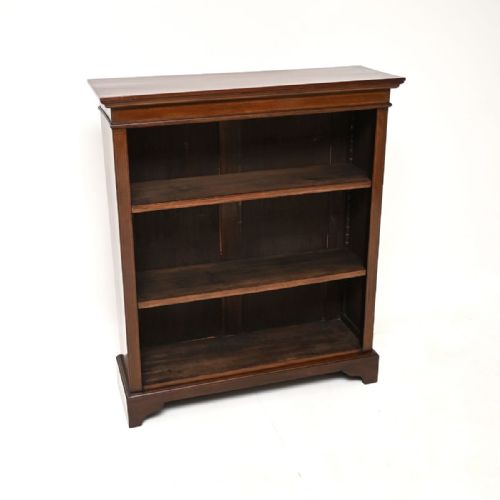
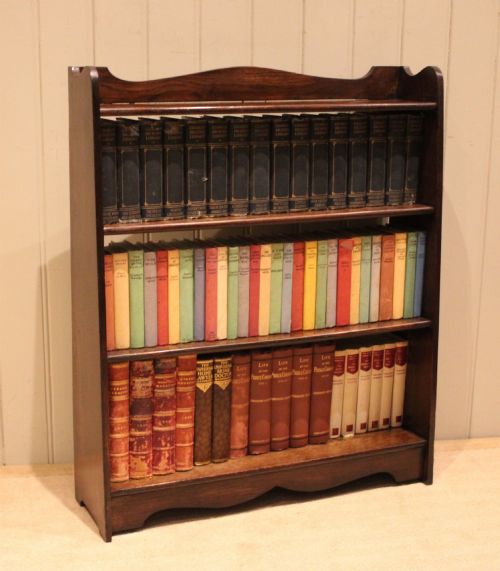
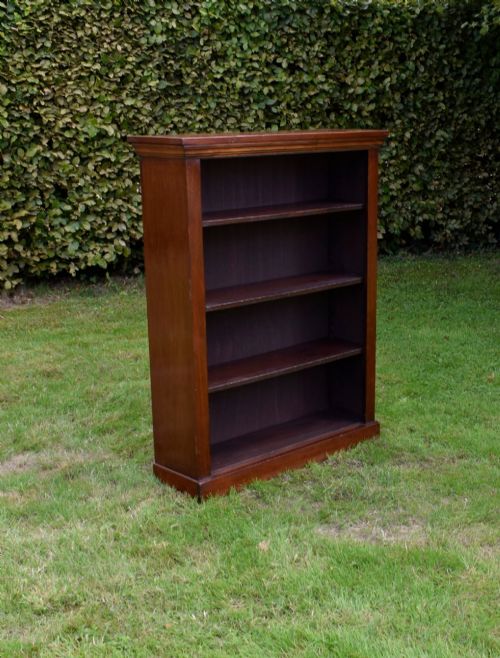
Open front bookshelves provide accessible storage for growing libraries, utilising wall space efficiently without glass doors obstructing the view of the spines. These pieces appear most frequently from the Victorian and Edwardian eras, constructed in substantial timbers designed to hold heavy volumes.
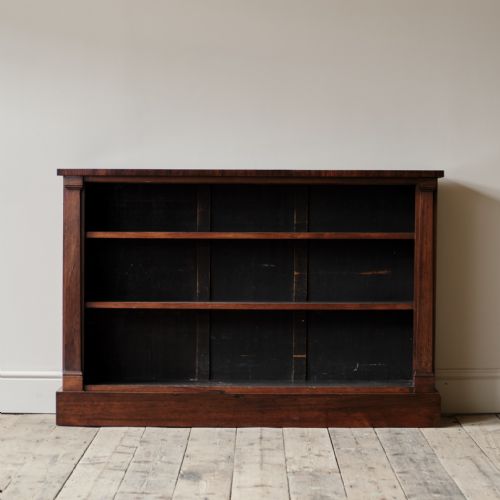
The format ranges from compact dwarf units to large breakfront configurations with multiple tiers. Buyers encounter sturdy oak variants alongside finer mahogany and rosewood examples originating from the nineteenth and early twentieth centuries.
Materials and Construction
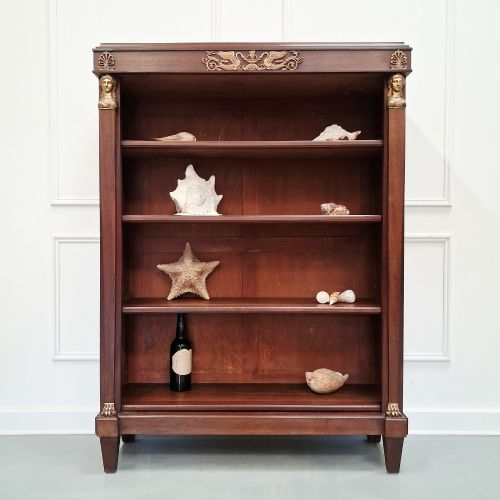
Cabinet makers relied heavily on solid oak, mahogany, and walnut, often selecting figured veneers such as burr walnut, flame mahogany, and rosewood for visual impact on prominent surfaces. Brass hardware appears selectively, while marquetry inlay and carved details ornament specific Edwardian and Victorian pieces.
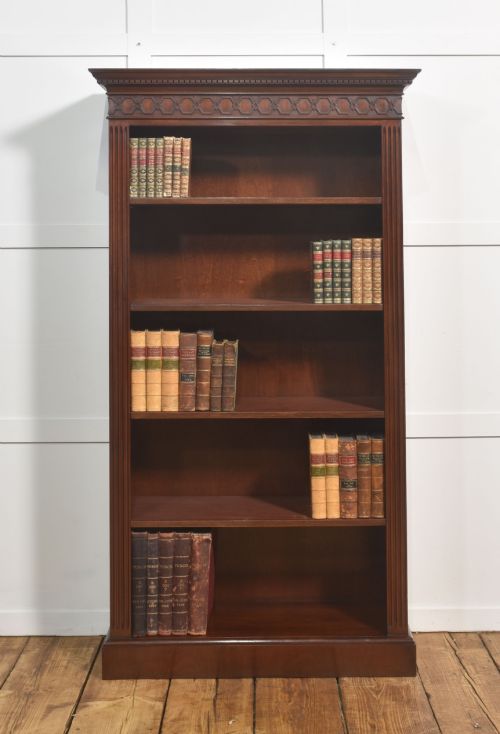
Shelving systems frequently incorporate adjustable brackets to accommodate varying book heights. Breakfront designs provide architectural depth, supported by moulded cornices and plinth bases.
Open Front Bookshelves Retail Price Guide 2026
Typical asking prices for open front bookshelves among the pieces listed under this phrase on Sellingantiques today, from the lower quarter to the upper quarter. They describe what is for sale here now, not the wider market.
Oak and mahogany dominate the material palette, though finer examples employ exotic timbers including rosewood, satinwood, and birdseye maple.
Judging Quality
Quality rests in the selection of timber veneers and the crispness of any applied carving or inlay work. Grain matching across breakfront doors and panels separates standard workshop output from exceptional commissions.
The stability of the carcass and the clever engineering of adjustable shelf mechanisms indicate superior cabinet making. Timber choice dictates character, with dense rosewood and figured walnut commanding attention over plain utility pine.
Sir Charles Barry
The Open Front Bookshelves Glossary
- Breakfront
- A piece of furniture where the central section projects forward from the flanking wings. This architectural arrangement creates depth and shadow across large library walls.
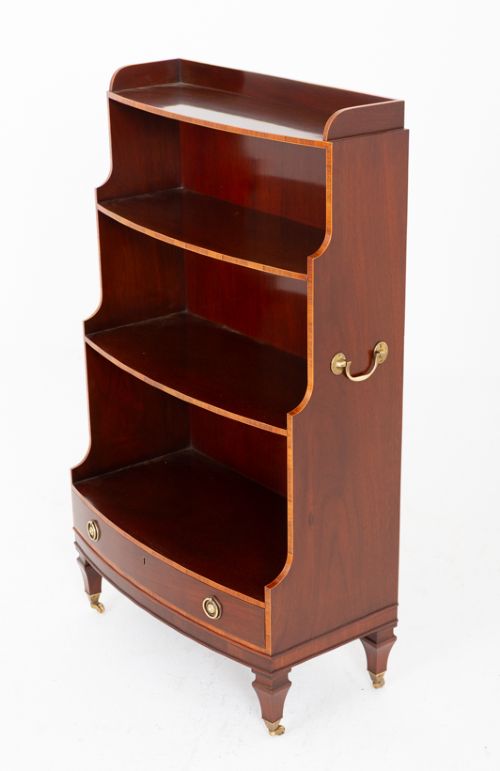
- Waterfall bookcase
- A shelving unit where each tier steps back progressively from bottom to top, creating a profile resembling falling water. These tend to be lighter in scale.
- Pollard oak
- Timber taken from trees that have been pollarded, producing dense knots and a distinctive swirling grain pattern. Cabinet makers valued it for decorative fronts.
- Ormolu
- Gilded bronze mounts applied to furniture surfaces for decorative contrast. This technique appears on select walnut and mahogany pieces from the nineteenth century.
Open Front Bookshelves: Frequently Asked Questions
How do I date an open bookcase?
Dating relies on observing timber choices, decorative motifs, and construction methods. Pieces from the mid-nineteenth century frequently employ rosewood and burr walnut with rich patination.
Later Edwardian examples often feature satinwood inlay and lighter mahogany frames, reflecting changing domestic tastes towards brighter interiors.
Are the shelves usually adjustable?
Many surviving examples incorporate adjustable shelving supported by wooden ratchets or brass tracks. This flexibility allowed Victorian and Edwardian owners to house books of varying heights.
Fixed shelves do appear on smaller utility pieces and simpler oak variants from the early twentieth century.
Where should I place an open bookcase?
These pieces suit studies, libraries, and living rooms where easy access to reading material is paramount. Their lack of glass doors makes them ideal for daily use and frequent volume rotation.
Direct sunlight should be avoided to protect sensitive timber veneers like rosewood and walnut from fading over time.