
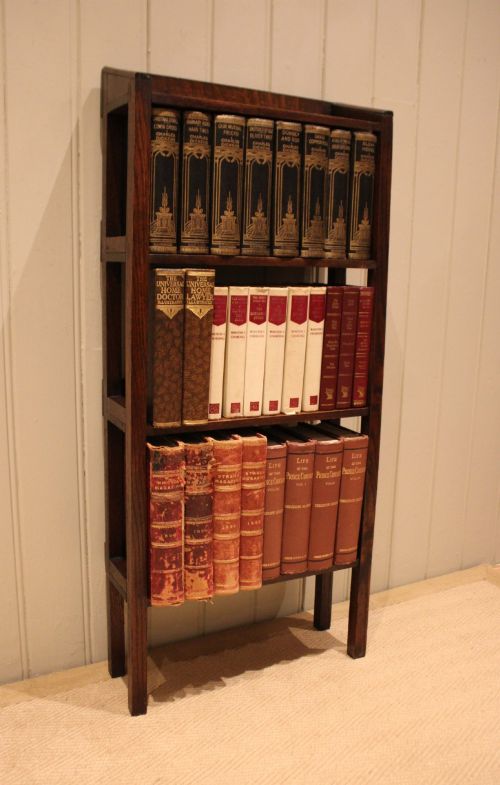


Slim Oak Bookcase
A slim oak bookcase is a practical and enduring piece that holds a personal library without dominating the room.
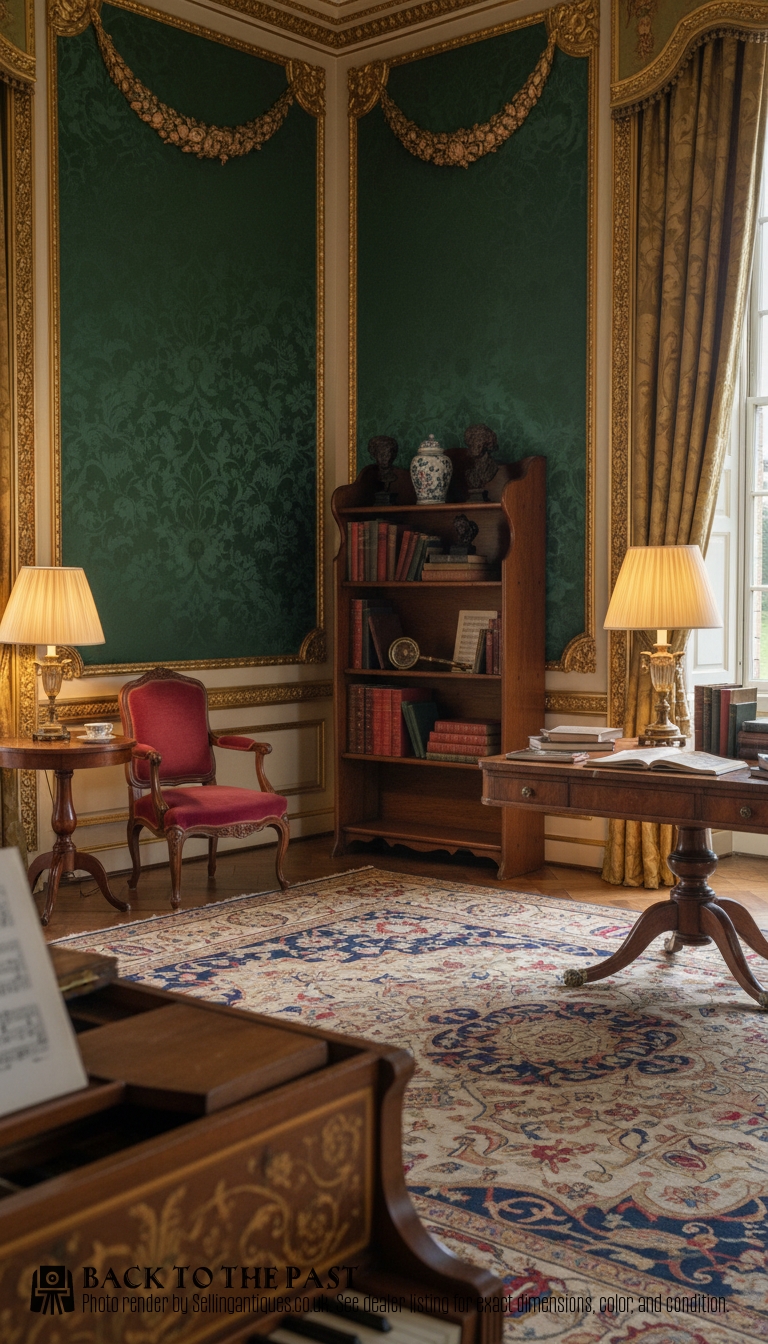
What a slim oak bookcase is
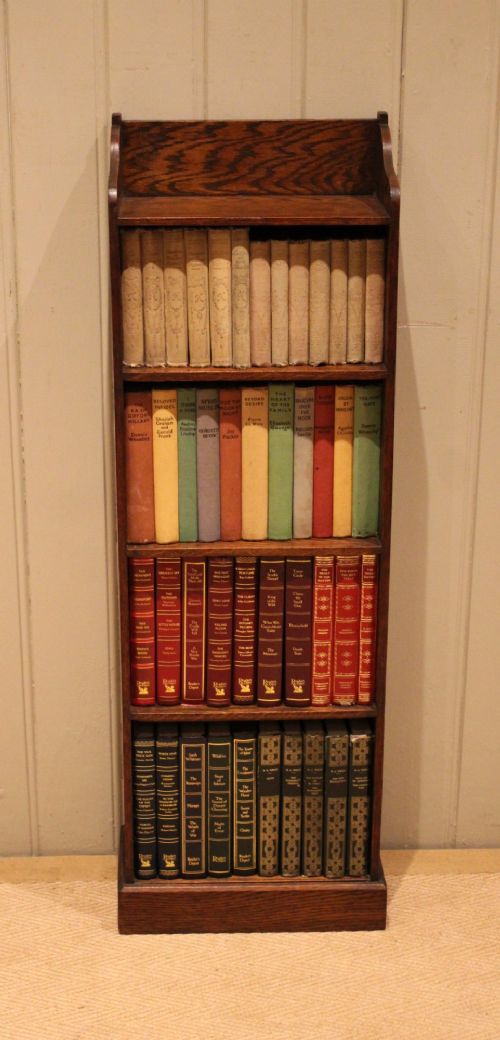
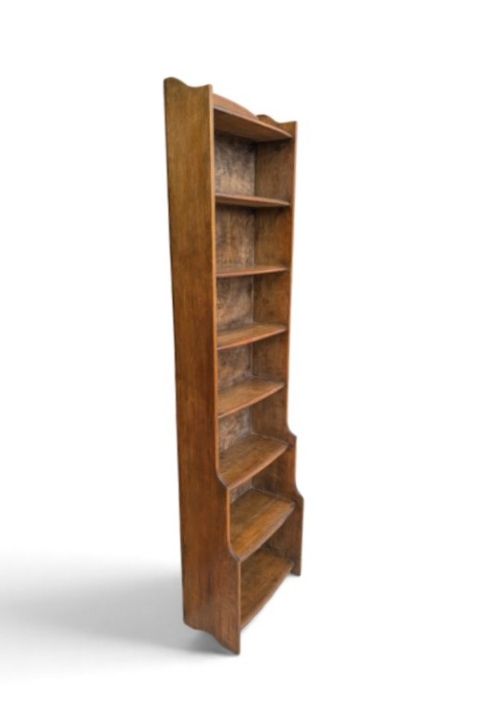
A slim oak bookcase provides vertical storage in timber throughout the Edwardian period and the early twentieth century. These pieces accommodate compact collections where floor space is limited.
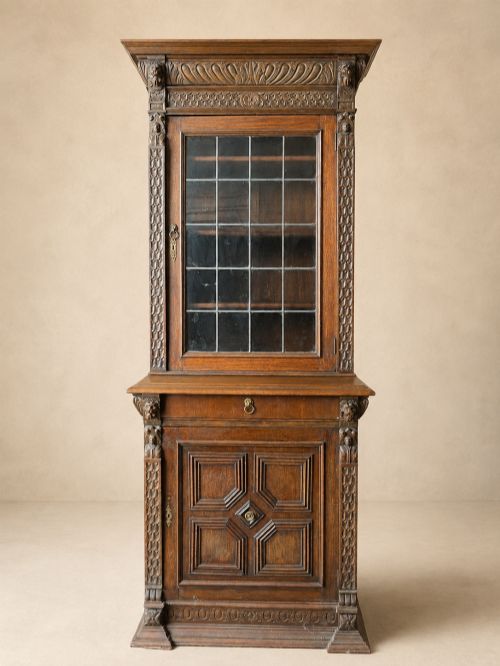
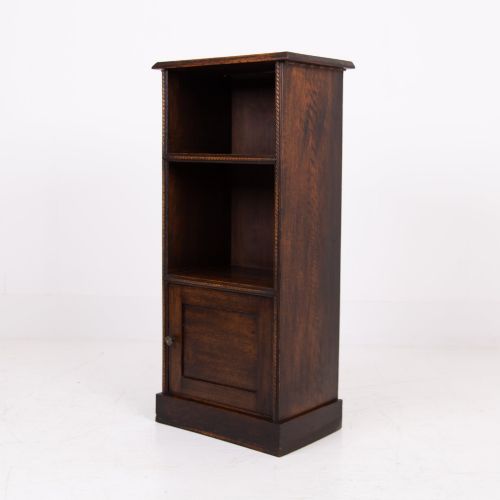
The format appears most often as an open bookcase, alongside variations with glazed doors, cupboards below, or stacking sections. Proportions remain narrow to fit tight spaces.
Edwardian and Arts and Crafts examples dominate the available styles, showing straightforward construction designed for domestic use. Golden, light, and dark finishes appear across the record.
How they were made
Makers utilised solid oak, producing durable frames that support the weight of books over decades. Grain patterns vary from light honey tones to deeper brown shades.
Joinery methods rely on traditional carpentry, securing upright panels to fixed or adjustable shelving. Open backs appear frequently alongside enclosed cupboards and glazed compartments.
Listings demonstrate that oak is the sole timber recorded for these pieces, spanning Edwardian and early twentieth-century periods.
What varies in quality
Distinction lies in the handling of the timber and the refinement of the proportions. Subtle details such as panel thickness and edge moulding distinguish standard production from finer workshop output.
Design characteristics from specific movements, particularly Arts and Crafts influences, add architectural interest through exposed joints or thoughtful bracket placement.
Heals of London
The Slim Oak Bookcase Glossary
- Edwardian
- Pertaining to the reign of King Edward VII from 1901 to 1910. Furniture from this era often retains lighter oak tones and simpler lines than Victorian predecessors.
- Arts and Crafts
- A design movement valuing honest construction and natural materials. Pieces from this tradition often display visible structural details and golden oak finishes.
- Open bookcase
- A shelving unit without doors. This form allows direct access to volumes and keeps room proportions visually light.
- Stacking bookcase
- A modular shelving system with independent upward-opening glazed sections. This format allows individual tiers to be separated or reconfigured.
Frequently Asked Questions
Where do slim oak bookcases fit best?
These narrow pieces suit alcoves, hallways, and small studies where standard furniture proves too wide. Their vertical orientation maximises storage capacity while keeping a minimal footprint.
Placing them beside a window or within a bedroom provides accessible shelving without crowding the living space.
Are most of these bookcases open or enclosed?
Open shelving forms the majority of the surviving pieces, offering immediate access to books. Glazed doors and lower cupboards also appear for dust protection.
Choosing between open and closed formats depends on whether you prefer displaying book spines or keeping volumes protected behind glass.
What colour is the oak on these bookcases?
Finishes range widely from light golden tones to darker brown surfaces. Edwardian examples often feature natural honey or light oak hues.
Over the decades, exposure to light deepens the timber colour, giving each piece a distinct patina unique to its age.
How do I date an early twentieth-century bookcase?
Dating relies on stylistic clues, construction methods, and materials recorded from the period around 1900 to 1930. Edwardian pieces often display simpler mouldings than earlier Victorian work.
Arts and Crafts examples introduce functional hardware and visible joinery that reflect the design priorities of the early 1900s.