
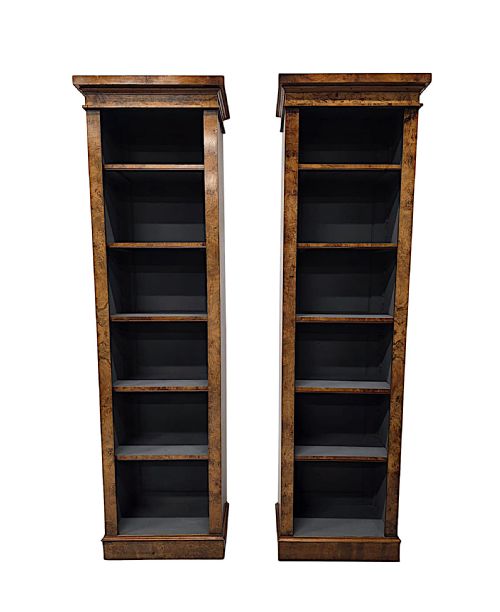
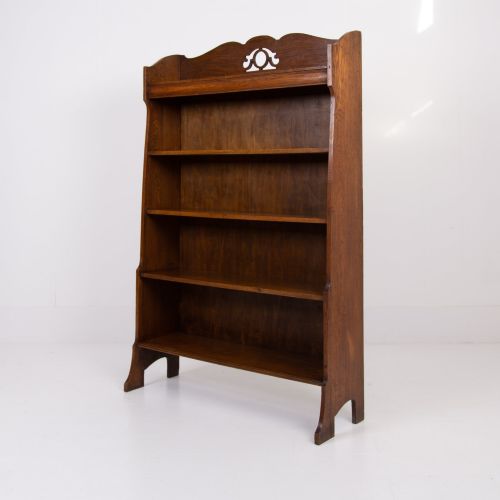
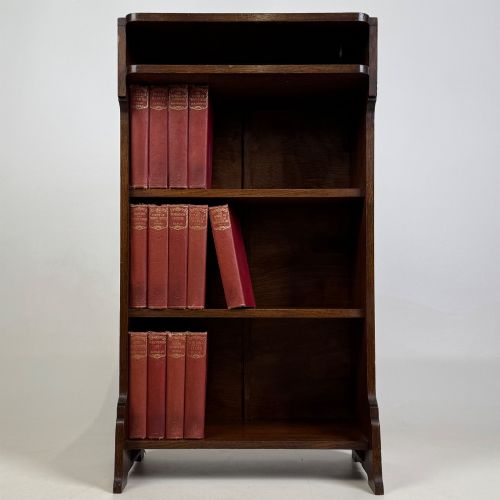
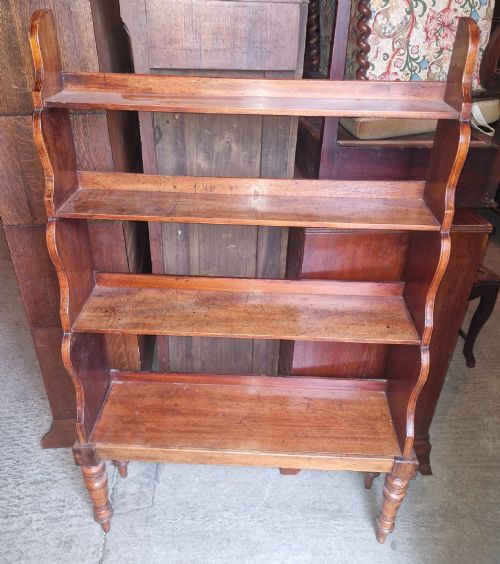
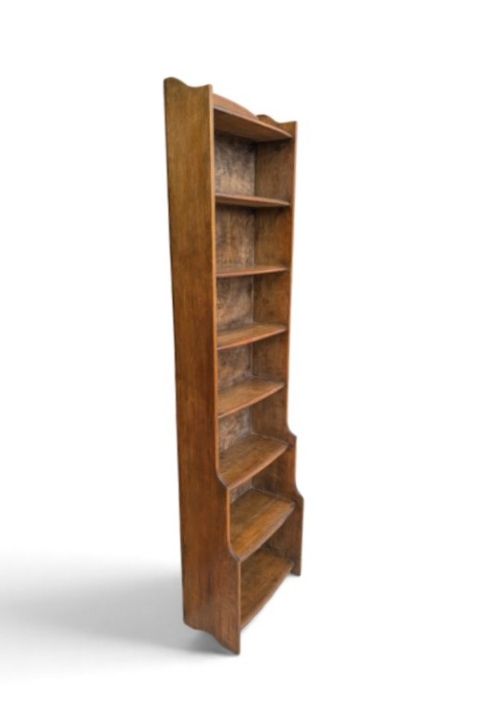
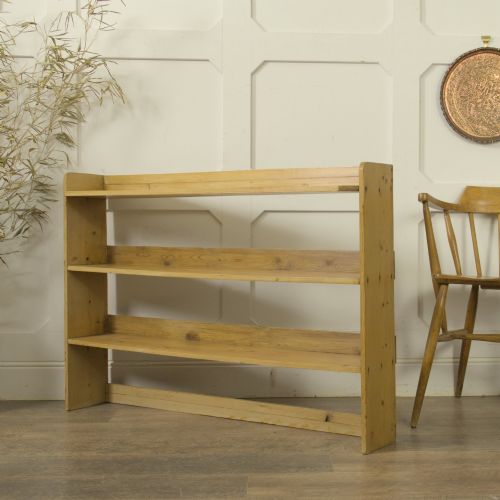
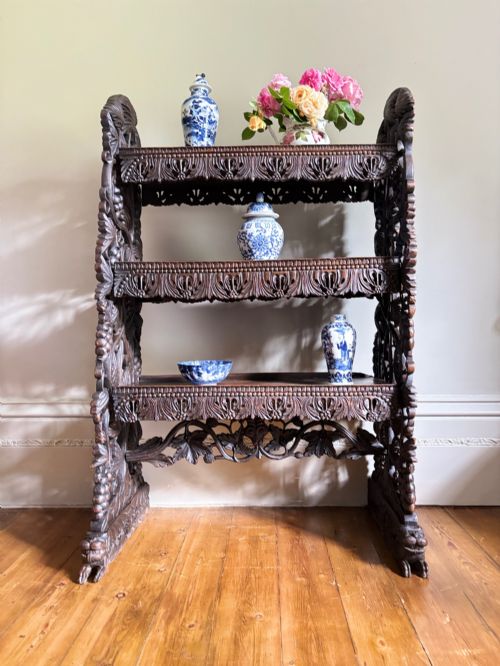
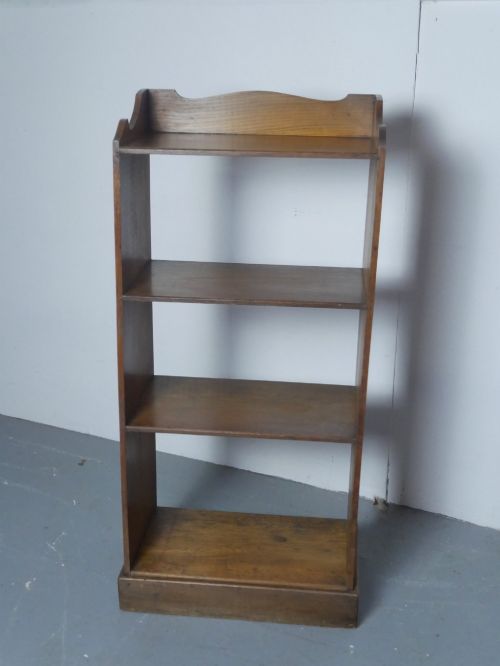
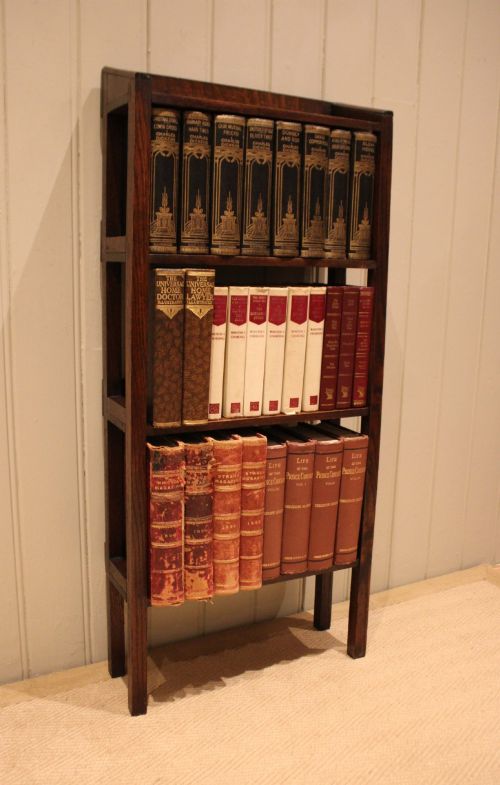
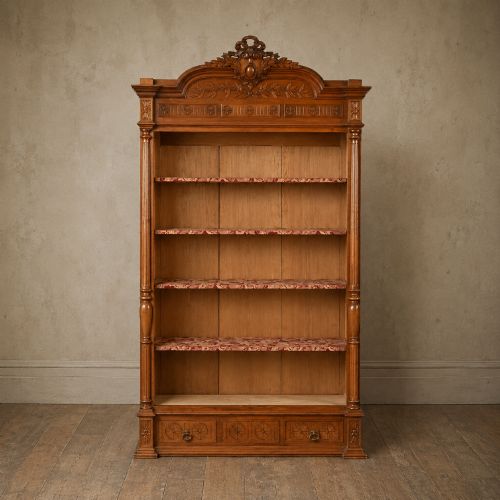
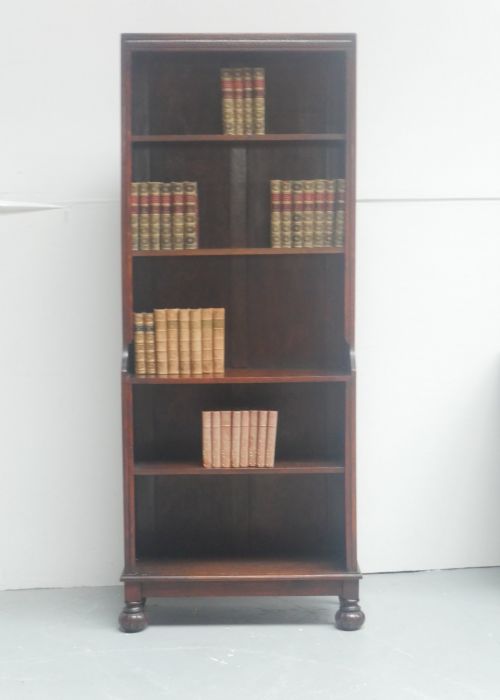
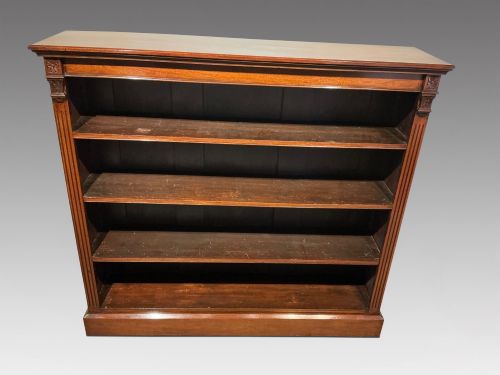
Freestanding Open Bookcase
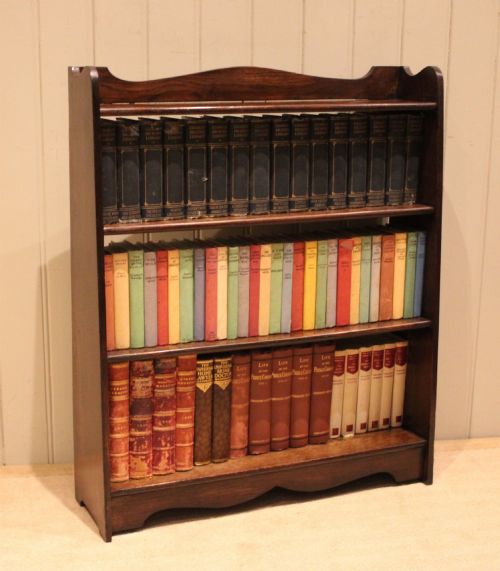
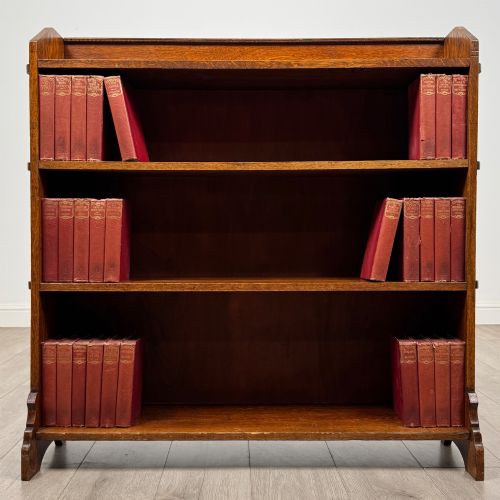
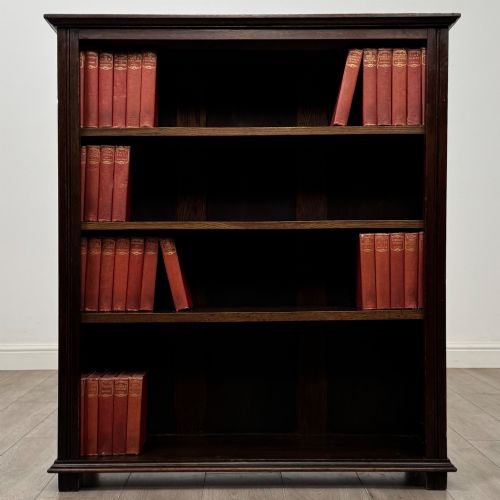
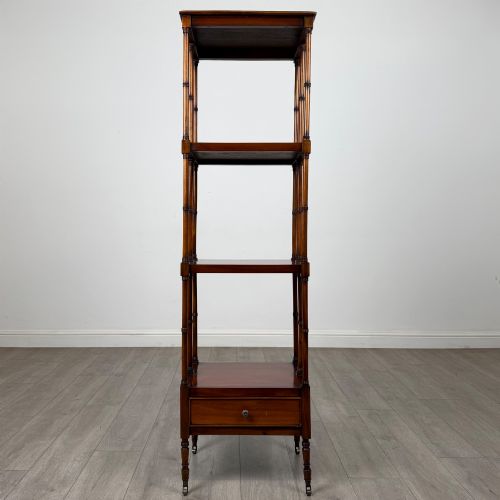
These freestanding open bookcase examples provide accessible shelf space in mahogany, oak, walnut and burr walnut.
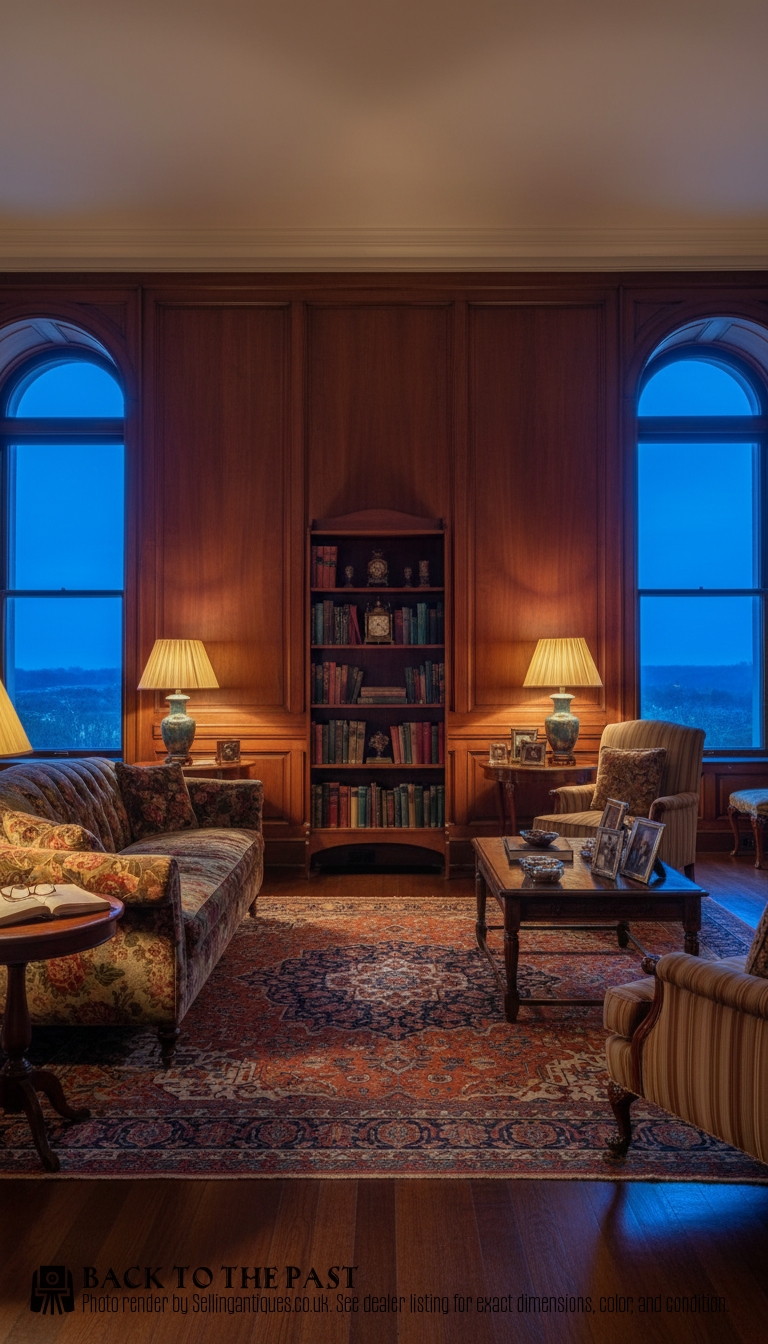
Understanding the freestanding open bookcase
A freestanding open bookcase gives immediate, wall-supported storage for libraries and living spaces without the visual weight of glazed doors. These pieces sit independently in a room rather than built into recesses, allowing light to pass around them while keeping volumes within easy reach. They appear in several timber choices across periods ranging from the nineteenth century into the twentieth century.
The evidence shows these items spanning Victorian, Edwardian, William IV and later twentieth-century eras, incorporating revival styles such as Regency Revival, Georgian Revival and Arts and Crafts. Pieces vary from slim single-bay shelves to large double bookcases, sometimes featuring adjustable shelving or end supports. Oak and mahogany dominate the record, alongside burr walnut and rosewood variations.
Buyers most frequently encounter Edwardian and Victorian iterations, often rendered in mahogany or oak. Simpler variants lack carved detail or inlay, whilst more decorative examples incorporate stringing, brass fittings or carved crests. The underlying form remains consistent: an unglazed front providing open access to books and display objects.
Materials and construction methods
Cabinet makers built these bookcases using solid timbers and veneers, predominantly selecting mahogany, oak, walnut and burr walnut. Oak pieces often display carving along the frieze or uprights, whilst mahogany examples rely on the natural grain or incorporate inlaid details. Rosewood and burr walnut appear on select pieces, adding distinctive figure and tone.
Construction techniques include adjustable shelving systems seen on double bookcases and end support designs. Brass fixtures appear on certain fittings, complementing the darker tones of mahogany and rosewood. Carved decoration on nineteenth-century examples reflects the stylistic preferences of Victorian and William IV makers.
Retail Price Guide 2026
Typical UK retail prices for freestanding open bookcase, calculated from the Sellingantiques database of over a million retail prices indexed since 2003. This retail price guide relies exclusively on Sellingantiques data; no external sources or auction records are used, so the figures do not describe the wider market.
Listings feature mahogany, oak, burr walnut, walnut and brass across Victorian, Edwardian and twentieth-century periods.
Markers of quality and finish
Quality in these bookcases shows in the selection of timber figures, such as burr walnut or well-grained mahogany, and the crispness of any carved oak ornament. Superior examples balance proportion with sturdy timber construction, avoiding excessive bulk whilst supporting heavy volumes. The presence of adjustable shelving or thoughtful proportions marks out finer workshops from standard production.
Finishing details separate simpler pieces from the finest examples. Subtle inlay, refined brass work and clean joints elevate a piece above standard utility items. The integration of end supports or specific revival styling points to higher design ambition during manufacture.
The Freestanding Open Bookcase Glossary
- Freestanding open bookcase
- A piece of furniture designed to stand away from a wall or against it without doors enclosing the shelves.
- Burr walnut
- A highly figured timber veneer taken from the burl growth of a walnut tree, prized for its swirling grain patterns.
- End support
- Structural uprights at either end of a bookcase, often associated with specific nineteenth-century design periods.
- Regency Revival
- A twentieth-century design style looking back to the elegance and motifs of the early nineteenth century.
Frequently Asked Questions
Where should I place a freestanding open bookcase?
These bookcases work well against living room walls or positioned to divide a larger space, as they are finished to stand independently.
Because the shelves are open, they allow light to circulate and provide quick access to books in daily use.
How do I identify the period of a bookcase?
Dating relies on timber choice, construction methods and decorative styles such as Arts and Crafts or Victorian carving.
Victorian and William IV pieces often feature heavier timber and carved oak, while Edwardian and later pieces tend toward lighter mahogany or oak forms.
Are the shelves adjustable?
Certain larger and double configurations include adjustable shelving systems to accommodate books of varying heights.
Simpler or earlier variants often feature fixed shelves integrated directly into the vertical uprights.
What timbers were commonly used?
Mahogany and oak are the most frequent materials found across both Victorian and Edwardian examples.
More decorative items utilise burr walnut, rosewood or walnut veneers to introduce varied grain patterns and rich colour.