


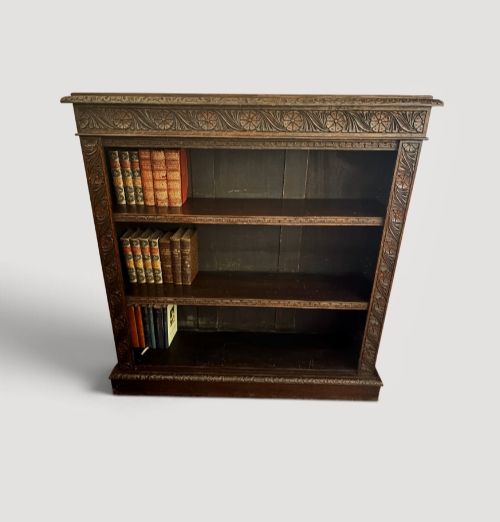
Victorian Open Shelves
When you search for victorian open shelves, you enter a world of timber bookcases and tiered stands designed to display household libraries.
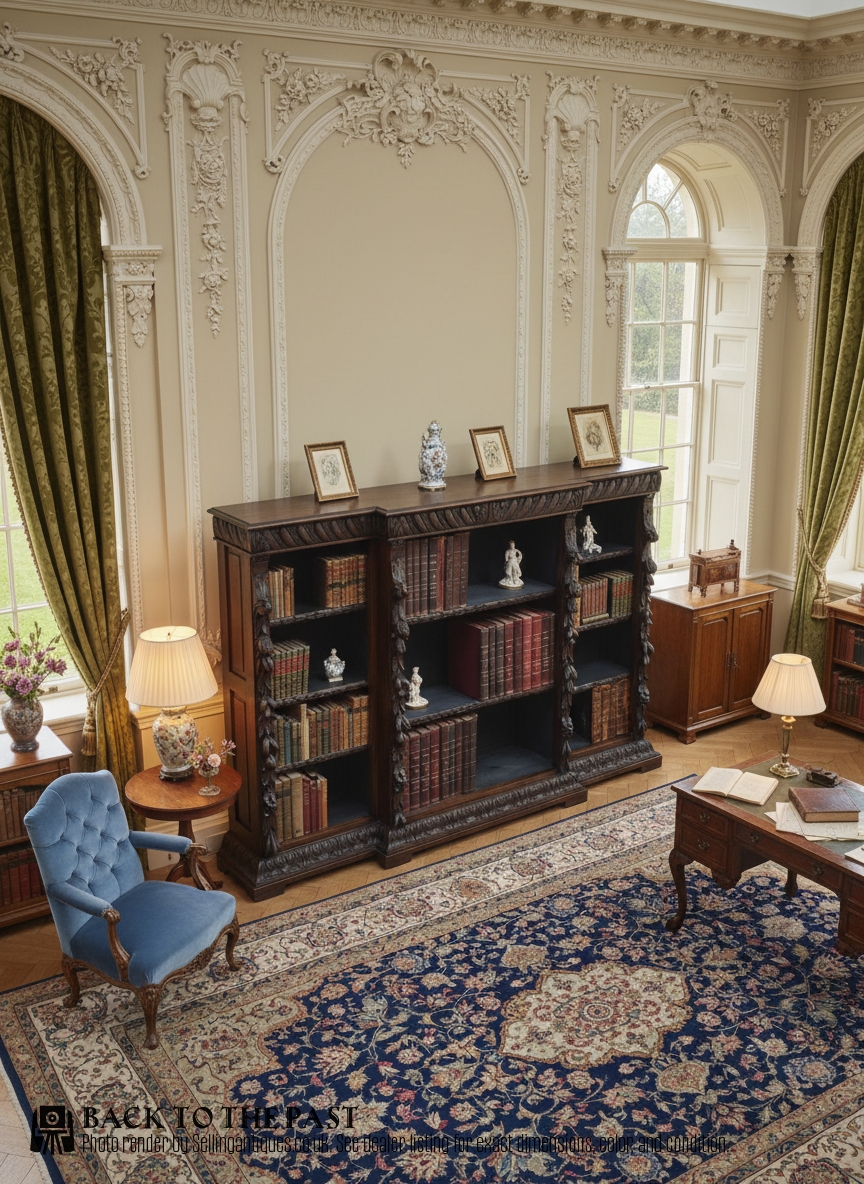
Victorian Open Shelves
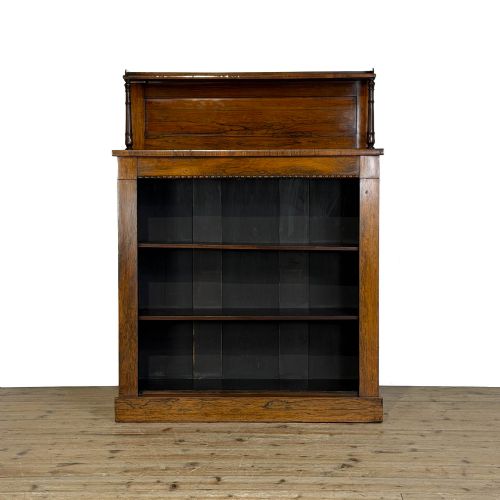
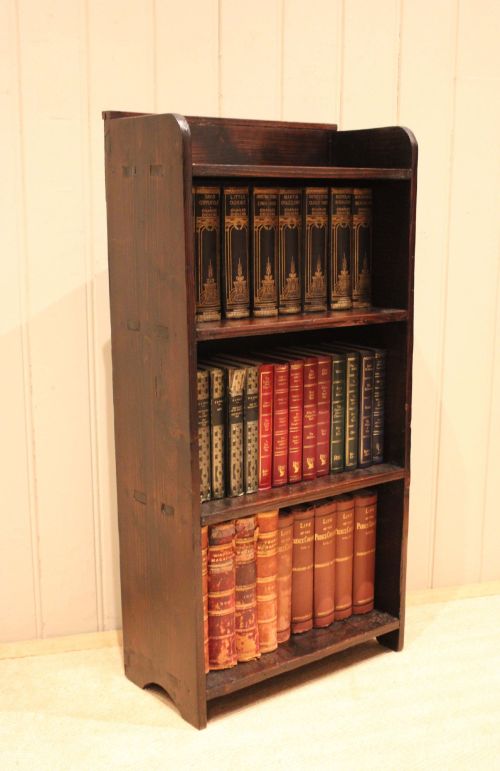
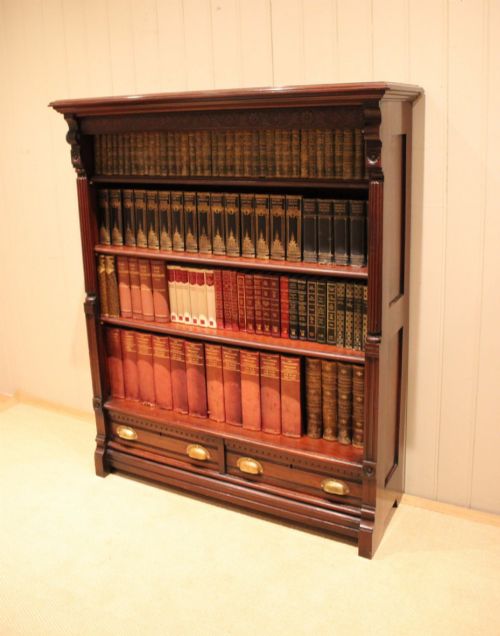
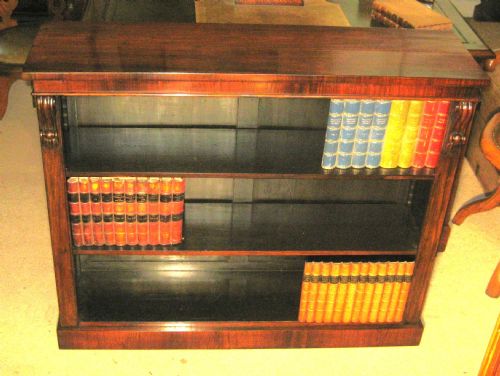
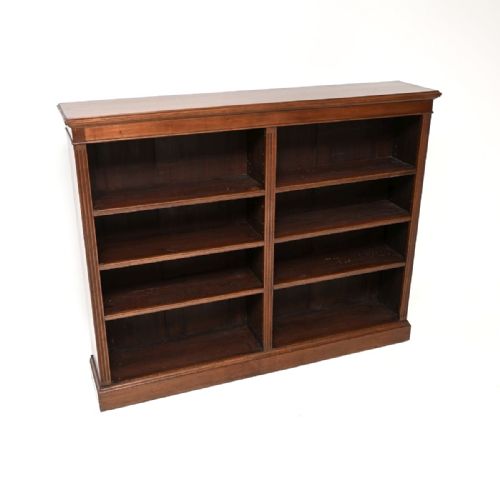
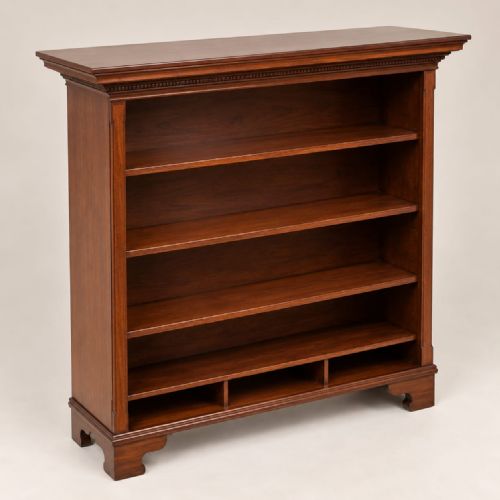
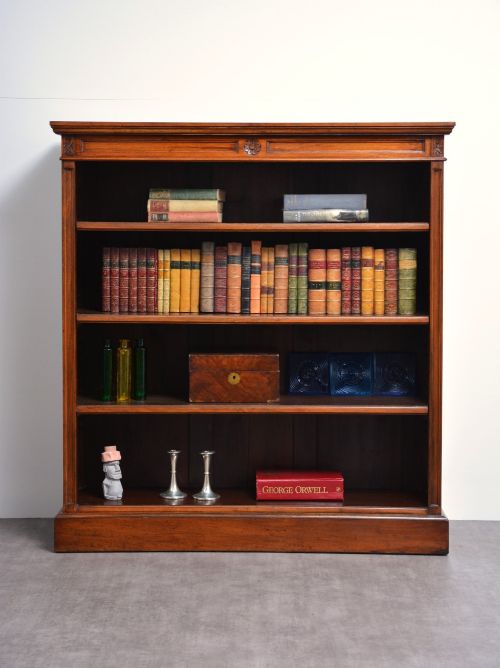
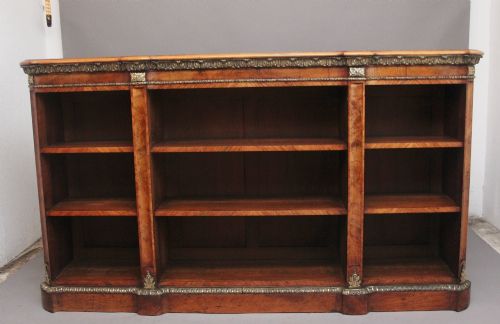
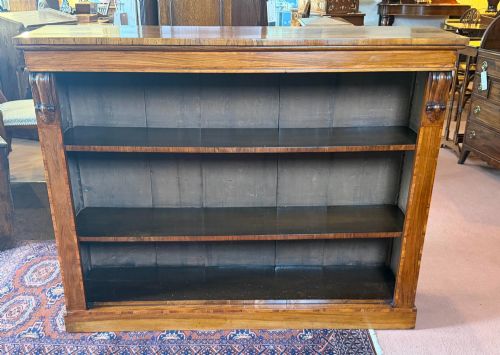
Victorian open shelves encompass a range of floor-standing bookcases, low dwarf cabinets, wall-mounted tiers and corner whatnot stands designed for domestic display and storage. The search phrase covers utilitarian pine pieces alongside formal architectural library bookcases.
The pieces on this page span the nineteenth century into the early twentieth century, taking the form of upright dwarf cases with adjustable shelves or multi-tiered display stands. Timber choices anchor these formats in specific regional cabinet-making traditions.
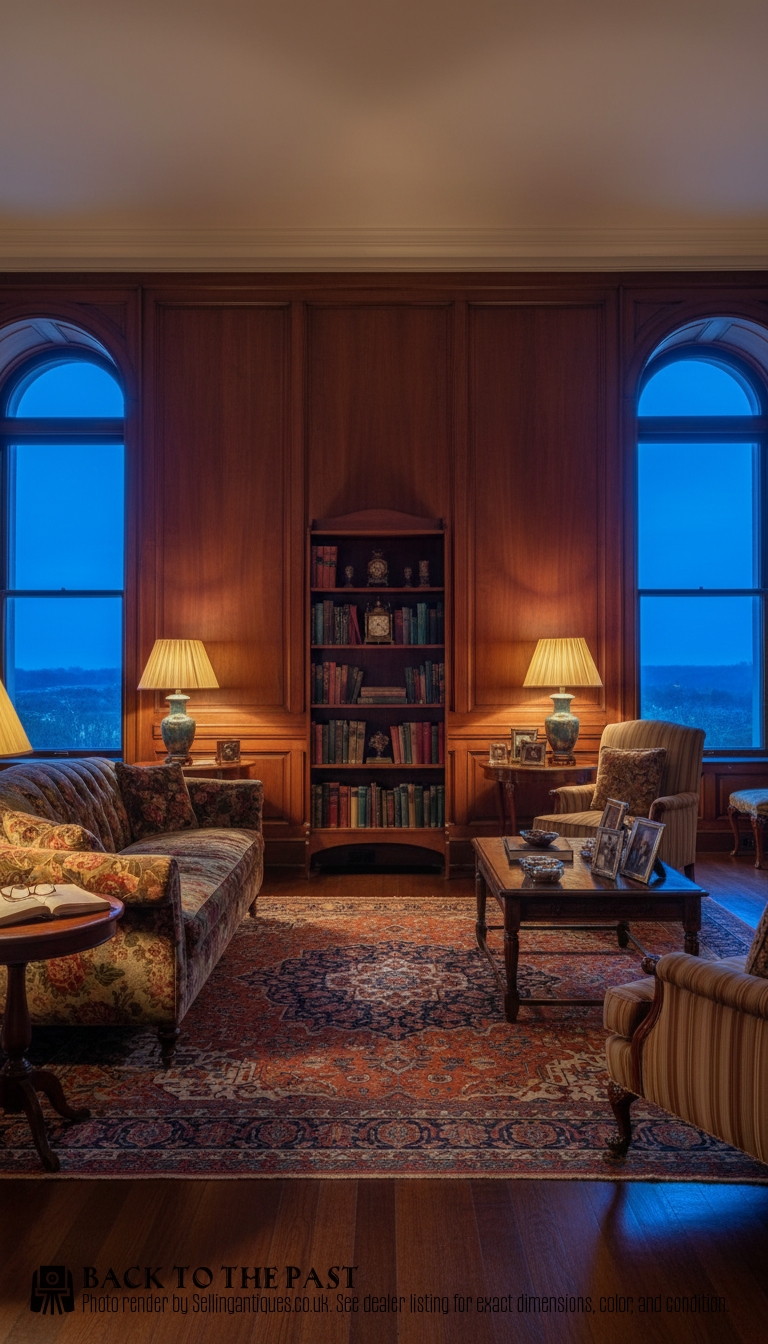
Materials and Construction
Cabinetmakers utilised dense hardwoods such as mahogany, walnut, rosewood and oak for structural durability and rich figuring, often applying burr veneers or brass mountings for decorative contrast. Pine served for simpler painted or utilitarian wall and floor shelving.
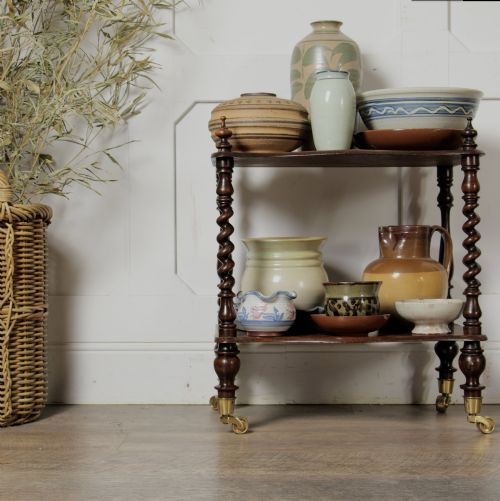
Joinery relied on sturdy carcass construction, frequently incorporating adjustable shelf ratchets, brass castors, carved barley twist columns, and occasionally ormolu mounts or inlaid details matching aesthetic movement tastes.
Victorian Open Shelves Retail Price Guide 2026
Typical asking prices for victorian open shelves among the pieces listed under this phrase on Sellingantiques today, from the lower quarter to the upper quarter. They describe what is for sale here now, not the wider market.
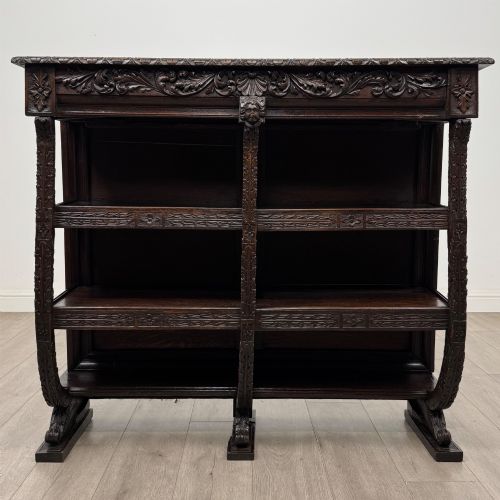
Look closely for carved green man wooden masks glaring out from the dark oak foliage of late nineteenth-century shelves.
Assessing Craftsmanship
Quality rests in the selection of timber grain, such as figured flame mahogany or burr walnut, and the precision of structural elements like adjustable shelf mechanisms. Finer pieces demonstrate careful proportion, balanced grain matching, and integrated decorative carvings rather than applied ornamentation.
The handling of secondary timbers, drawer linings on hybrid cupboard-bookcases, and the crispness of carved details such as floral columns or green man motifs distinguish standard regional joinery from top-tier London workshop production.
Johnstone and Jeanes·Gabriel Viardot
The Victorian Open Shelves Glossary
- Dwarf bookcase
- A low floor-standing bookcase designed to sit beneath picture rail height. These low units frequently feature adjustable timber shelving.
- Whatnot
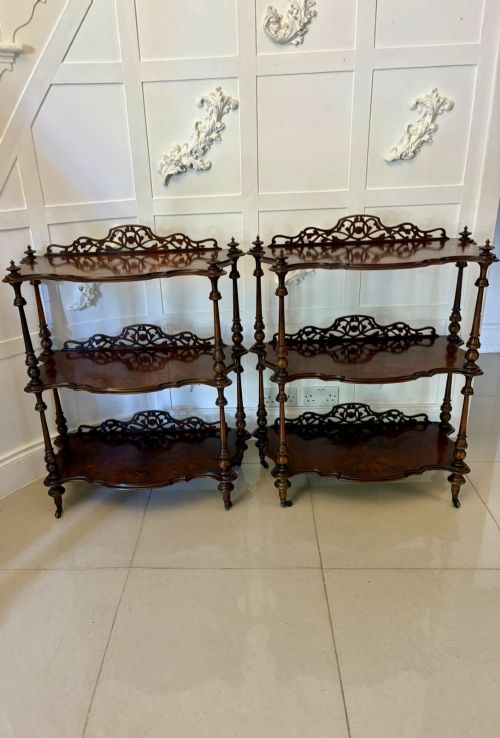
- A multi-tiered piece of freestanding furniture used for displaying ornaments or books. Examples in walnut and rosewood often incorporate corner or serpentine shapes.
- Waterfall bookcase
- A set of open shelves where each tier steps back progressively from bottom to top. This form appears in mahogany and inlaid variants from the nineteenth century.
- Barley twist
- A type of turned column resembling a spiralling rope. This decorative support is commonly seen on Victorian oak and walnut stands.
- Adjustable shelves
- Shelving supported by movable wooden pegs, brass pins or ratchet systems. This feature allows the internal height intervals to be altered for different book sizes.
Victorian Open Shelves: Frequently Asked Questions
What is a dwarf bookcase?
A dwarf bookcase is a low floor-standing piece built to sit beneath window or picture rail height in a Victorian room.
These compact units typically offer several rows of book storage without blocking natural light from upper walls.
How do I adjust the shelves?
Most quality nineteenth-century bookcases utilise wooden support pegs, metal pins, or vertical rack strips set into the interior sides.
Shelves lift out entirely so the support pegs can be repositioned into alternative slots at desired heights.
Where were these pieces used?
These open storage units were placed in libraries, studies, drawing rooms, and parlours to hold circulating novels and reference books.
Tiered stands and corner whatnot variations were often utilised in formal reception rooms for displaying decorative ceramics and ornaments.
How do I identify a whatnot?
A whatnot is a multi-tiered stand featuring open shelves supported by slender turned columns or upright posts.
Unlike standard bookcases enclosed by side panels, these freestanding display units are open on all sides and frequently include small base cupboards.