

Brown Wooden Shelving
Brown wooden shelving brings practical warmth to a room, offering sturdy upright storage in timber ranging from walnut and oak to mahogany.
Brown Wooden Shelving
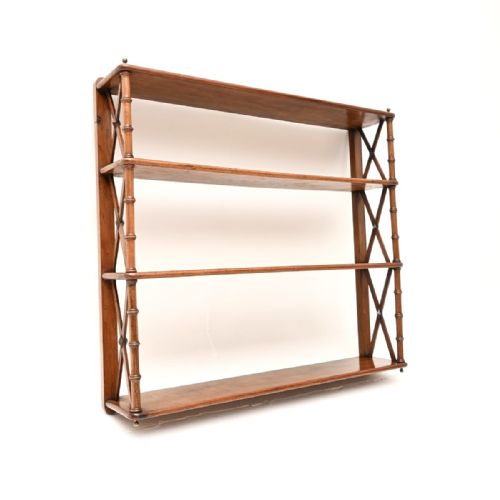
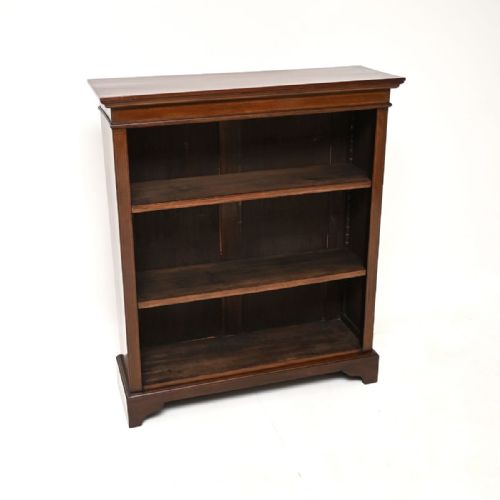
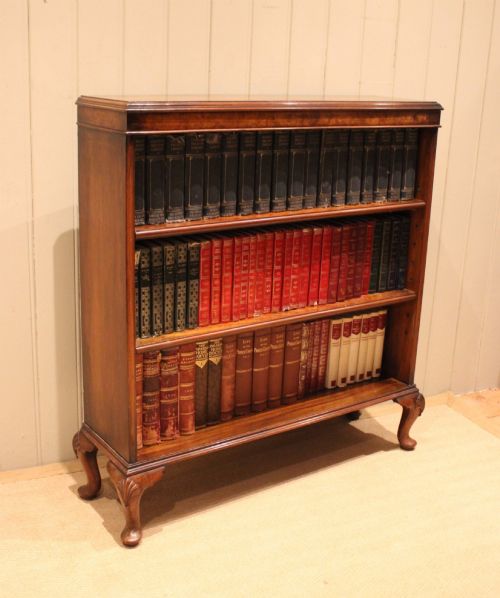
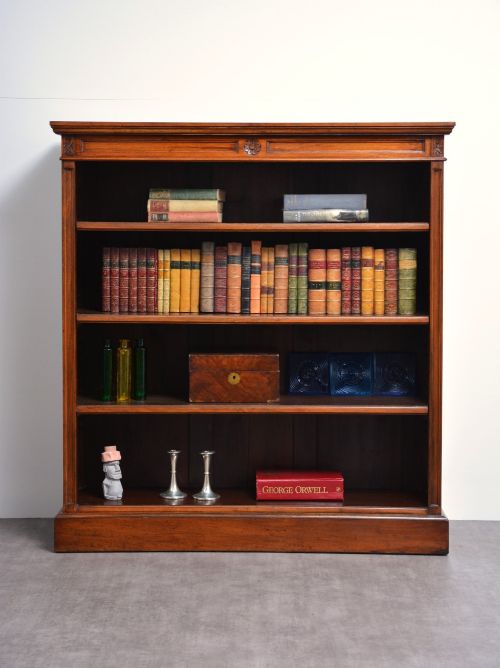
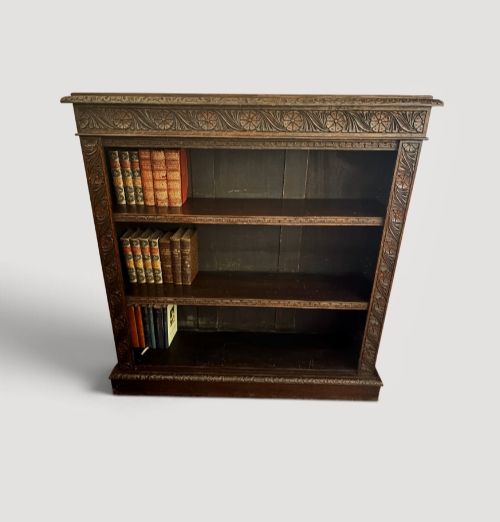
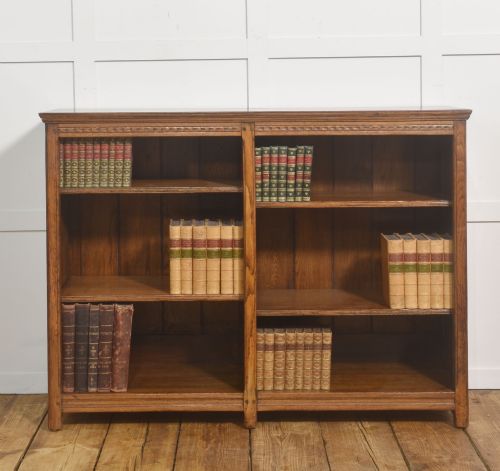
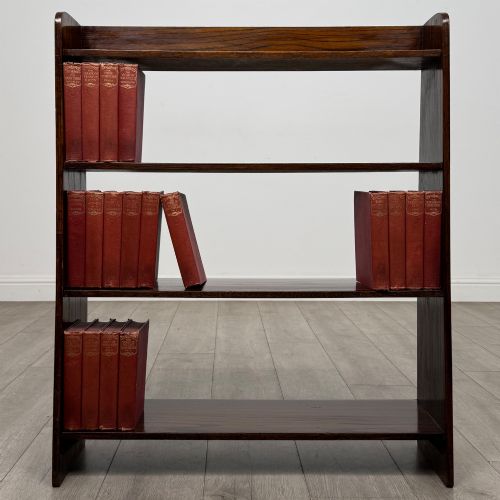
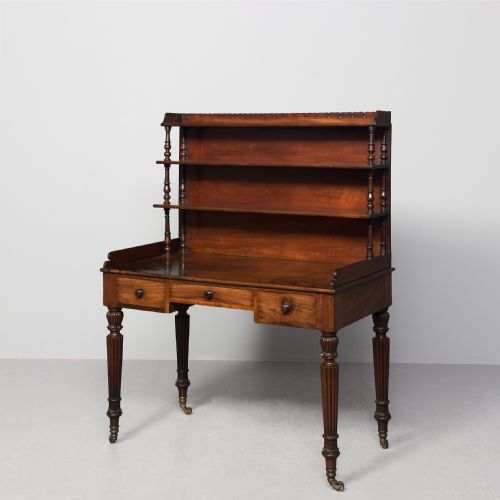
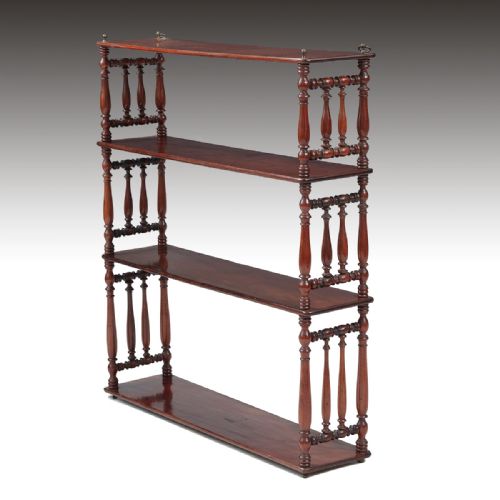
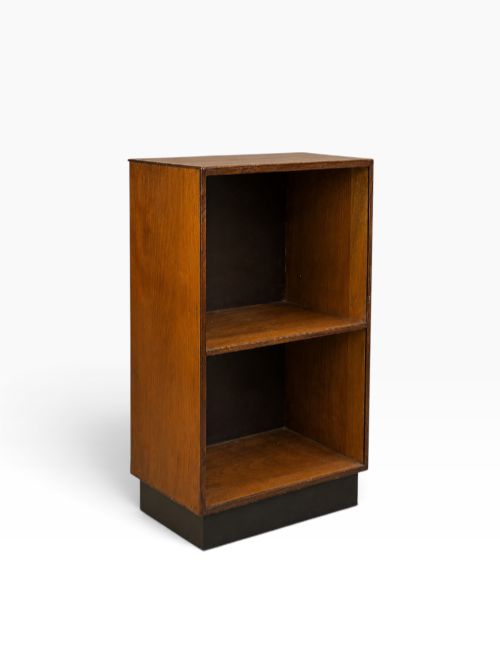
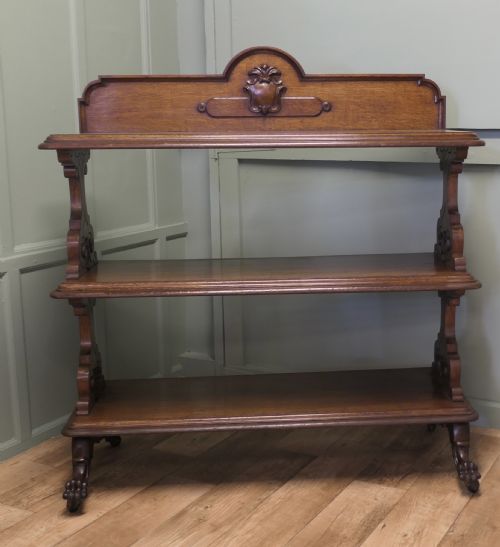
When you search for brown wooden shelving, you encounter a practical category of brown wooden shelving that spans open bookcases, wall hanging shelves, and sturdy dressers. These functional pieces provide versatile display and storage surfaces for books and collections.
You are most likely to meet open bookcases and wall shelves originating from the Victorian, Edwardian, and twentieth-century periods. These items utilise robust timbers such as oak, walnut, and mahogany, shaped into straightforward upright forms or wall-mounted brackets.
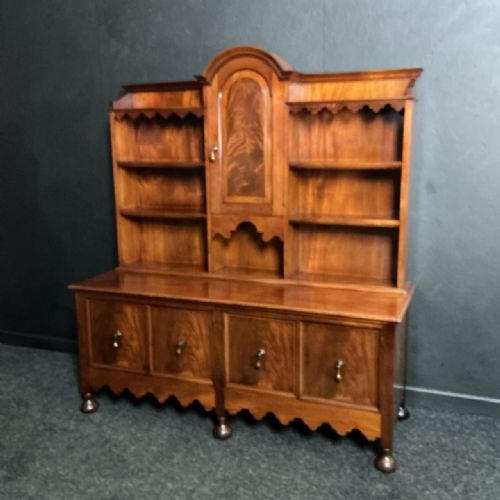
The selection ranges from compact wall brackets to large oak dressers and industrial shoe trolleys. Such diversity reflects the varied domestic and utilitarian requirements of nineteenth and twentieth-century workshops and homes.
Materials and construction
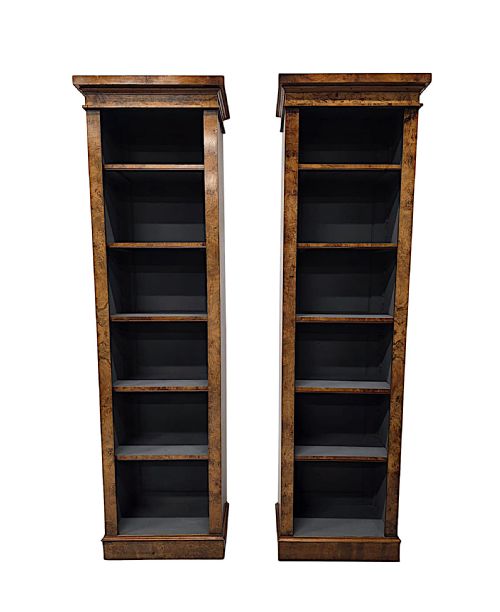
Cabinet makers constructed brown wooden shelving using dense hardwoods like oak, mahogany, and walnut, often selecting burr walnut veneer for decorative grain patterns. These timbers provided the structural strength required to support heavy rows of books without sagging.
Joinery techniques varied from traditional pegged joints and carved ornamentation on Victorian pieces to simpler industrial framing found in early twentieth-century shelving units. Brass castors and hanging brackets were frequently added to assist with mobility and wall placement.
Listings feature items in oak, walnut, mahogany, pine, and teak, spanning the Georgian, Regency, Victorian, Edwardian, and Art Deco periods.
Qualities of craftsmanship
The distinction between standard utility items and superior examples lies in the selection of timber figures, such as burr walnut or inlaid mahogany, and the precision of the joinery. Fine pieces display careful attention to grain matching and subtle carved details.
Proportion and functional adaptability define the upper tier of brown wooden shelving, seen in bookcases featuring adjustable shelving rows and solid mahogany frames. Simpler utilitarian pieces rely purely on robust timber thickness rather than decorative refinement.
James Mein of Kelso·Heals
The Brown Wooden Shelving Glossary
- Open bookcase
- A piece of furniture designed for book storage featuring unobstructed front access to shelves. These units often include adjustable internal wooden boards.
- Waterfall bookcase
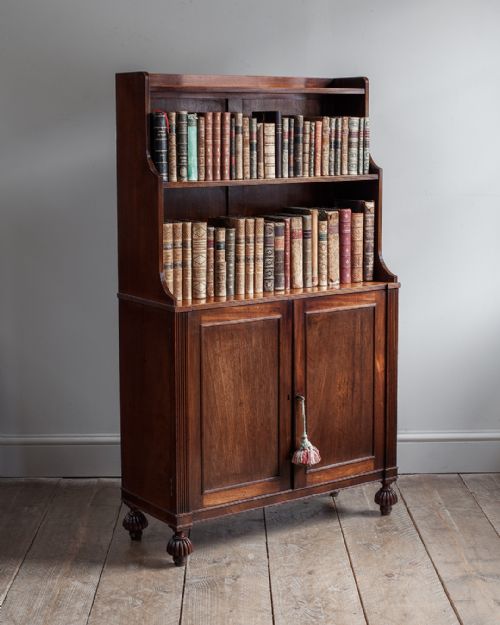
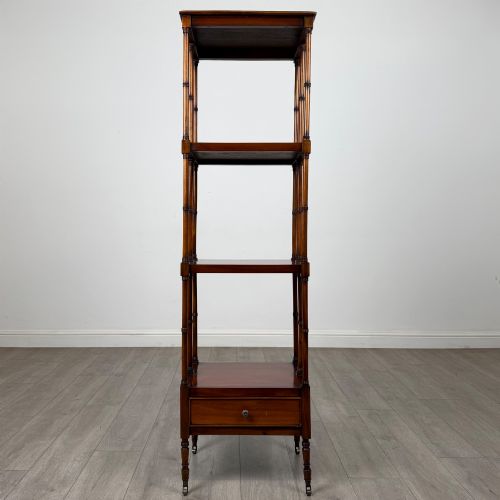
- A tiered shelving unit where each successive shelf steps back from the one below it. This style creates a cascading profile popular in the Regency and Edwardian periods.
- Wall brackets
- Small architectural supports or shelves fixed directly to a wall surface. They frequently feature carved wood ornamentation or cherub motifs.
- Burr walnut
- A prized timber veneer harvested from the irregular growth knots of the walnut tree. It yields highly figured, swirling grain patterns used on cabinet fronts.
- Barristers stacking bookcase
- A modular shelving unit comprising multiple glazed sections that lift and slide inward. This design protects books from dust while allowing vertical expansion.
Brown Wooden Shelving: Frequently Asked Questions
What periods do these bookcases date from?
The pieces span from the Georgian and Regency eras through to the Victorian, Edwardian, and Art Deco periods. Many examples date from the late nineteenth and early twentieth centuries.
Craftsmanship shifted over these decades from hand-carved mahogany and oak towards more utilitarian industrial forms and ash-veneered Art Deco designs.
Are the shelves adjustable?
Many of the open bookcases and shelving units feature adjustable shelves to accommodate varying book heights. This practical function became particularly common in nineteenth and twentieth-century designs.
Fixed shelves remain typical on older or more rigid structural furniture such as specific wall brackets and dressers.
How were wall shelves mounted?
Wall shelves and brackets were secured using integrated wooden backing plates or brass hanging hardware fixed directly to wall studs. This kept floor space clear in smaller rooms.
Heavier bookcases relied on a wide, stable base resting on the floor, occasionally fitted with brass castors for movement.
What timbers were commonly used?
Oak, mahogany, and walnut form the primary materials across the inventory, supplemented by pine, teak, and ash. Burr walnut and mahogany veneers added decorative surface pattern.
These dense hardwoods provided the necessary durability for daily book storage and heavy domestic use.