

Victorian Carved Open Bookcase
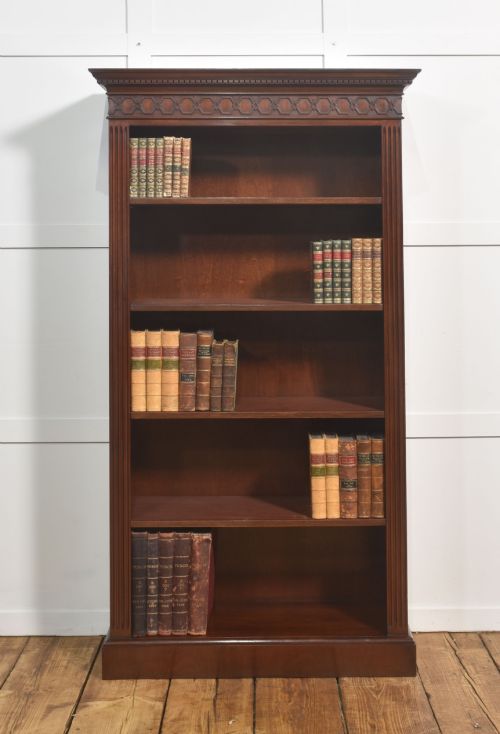
When choosing a victorian carved open bookcase, buyers acquire a functional piece of 19th-century library furniture defined by accessible shelving and ornate timber ornamentation.
Victorian Carved Open Bookcase
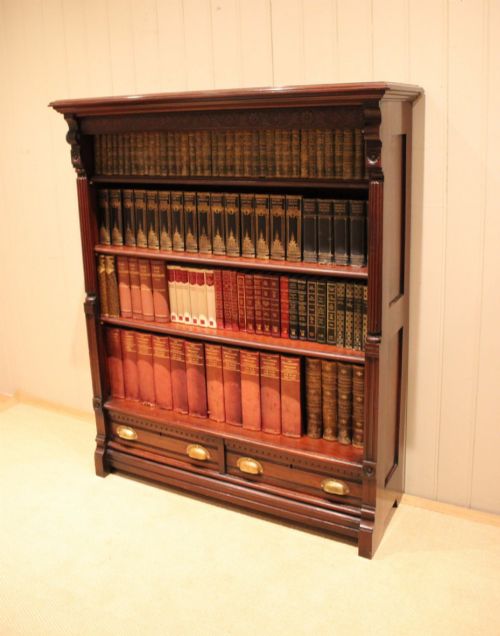
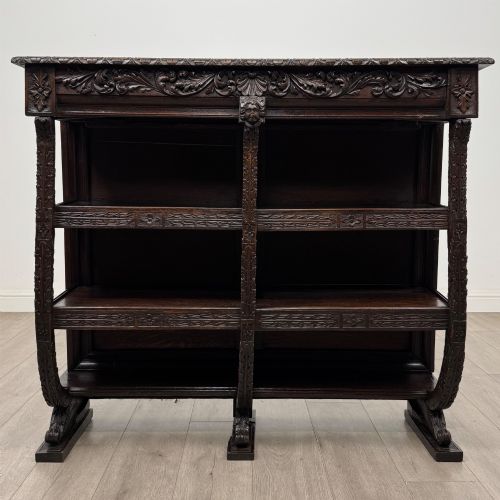
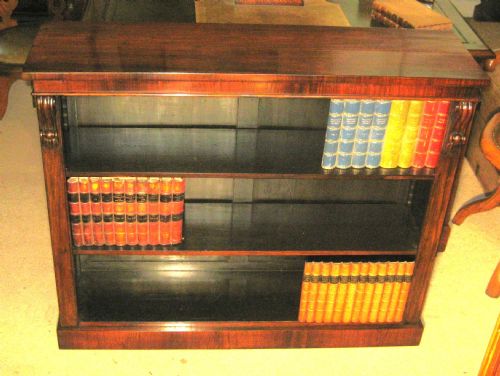
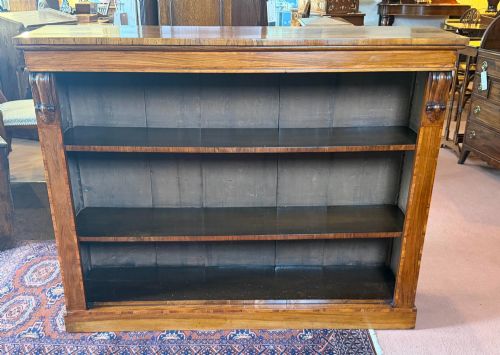
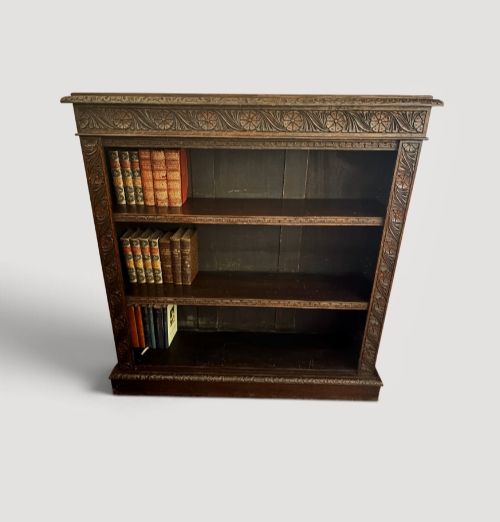
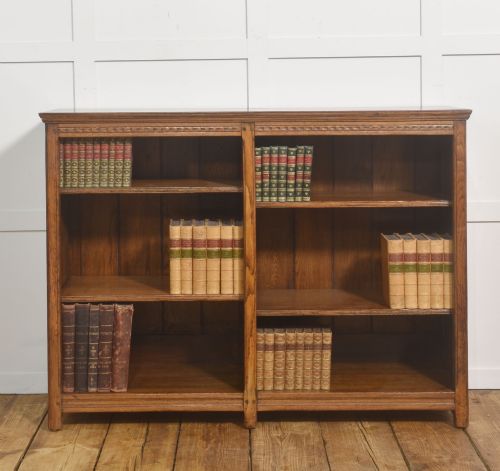
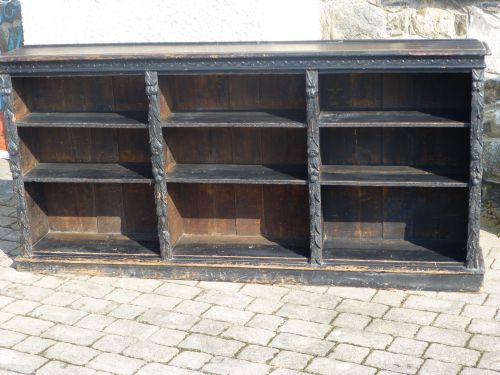
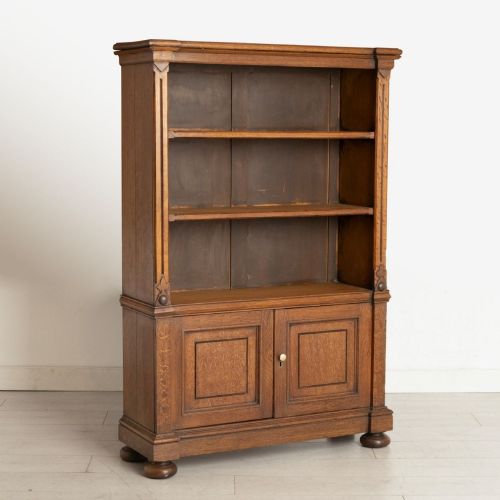
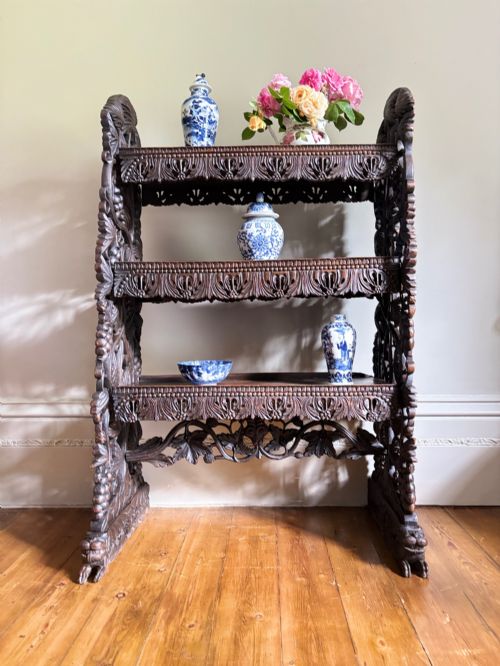
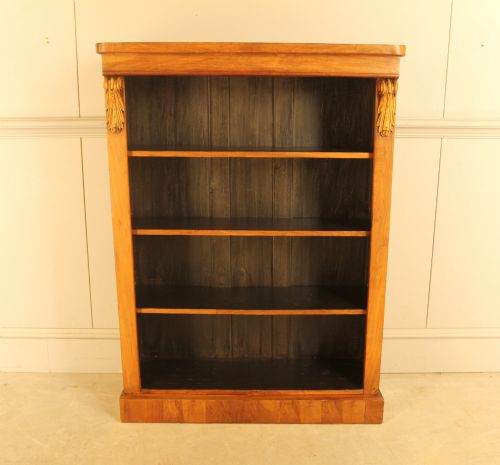
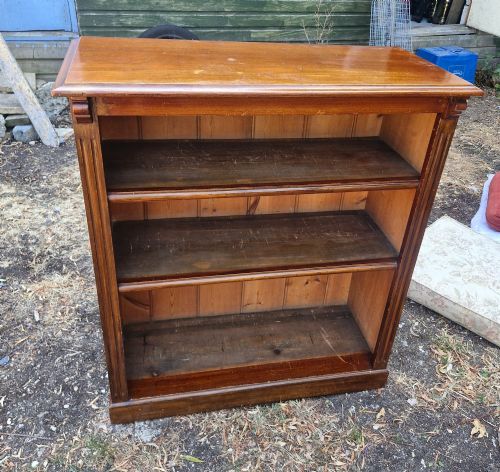
A victorian carved open bookcase is typically encountered as a freestanding piece or a low dwarf cabinet designed for domestic libraries and studies. The inventory reveals a strong presence of heavy oak examples featuring deliberate carvings, alongside finer variations in walnut and mahogany.
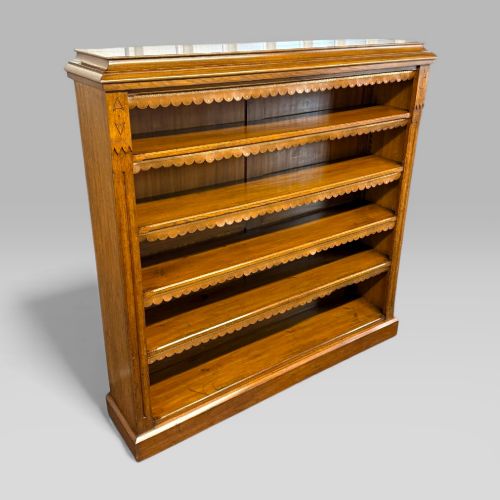
These items serve primarily to display and store volumes without the barrier of glass doors, often incorporating adjustable shelving to accommodate varying book heights. Many pieces from this era lean towards robust architectural forms, occasionally reflecting Gothic Revival or aesthetic movement influences.
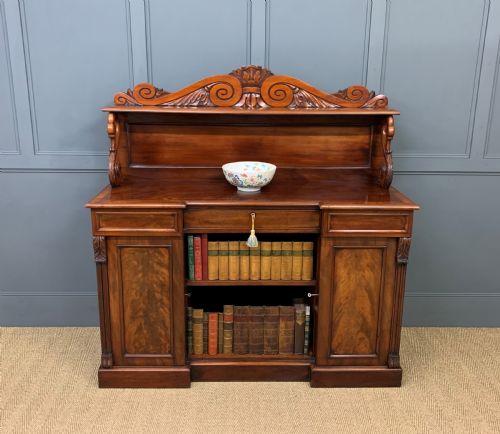
Beyond standard bookcases, the wider category embraces related open shelving units, wall shelves, and low library cabinets with carved pilasters or foliate details. Buyers frequently find substantial late 19th-century specimens built to anchor larger rooms with utilitarian elegance.
Materials and Construction
Makers utilised dense hardwoods such as oak, walnut, and mahogany as the structural foundation for these bookcases, frequently applying decorative veneers like burr walnut or flame mahogany to visible surfaces. Solid wood construction dominates the heavier carved variants, ensuring the durability required to support substantial rows of heavy volumes.
Carving was executed by hand, producing intricate details such as green man masks, floral motifs, and geometric strapwork along the friezes and upright columns. Brass fittings occasionally appear on specialised hardware, while internal housing typically accommodates movable shelf pins for practical adjustment.
Listings demonstrate that nineteenth-century oak bookcases frequently incorporate Gothic Revival detailing alongside adjustable shelving.
Evaluating Craftsmanship
Superior quality in these bookcases is distinguished by the depth and crispness of the hand carving, where motifs remain sharp rather than softened by excessive sanding or later wear. The selection of timber grain, particularly in figured walnut or rich oak panels, separates standard utility items from masterworks.
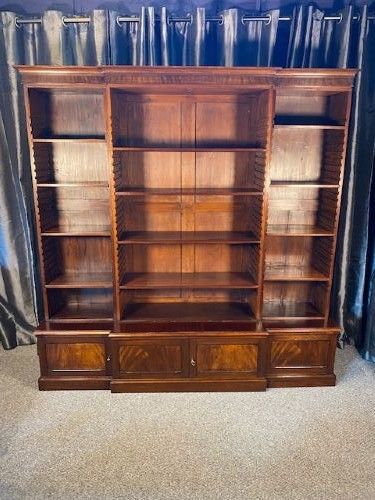
Structural integrity manifests in the precision of the joinery and the smooth operation of adjustable shelf mechanisms. Pieces featuring integrated architectural elements, such as breakfront profiles or substantial plinths, generally represent more ambitious cabinetmaking.
Gabriel Viardot
The Victorian Carved Open Bookcase Glossary
- Breakfront
- A piece of furniture where the central section projects forward from the flanking outer sections. This architectural arrangement adds visual depth and presence to larger library bookcases.
- Adjustable shelves
- Shelves that can be moved to different heights using a system of ratchets, movable pins, or numbered slots. This practical feature allows the storage of books of various sizes.
- Gothic Revival
- A design style drawing inspiration from medieval ecclesiastical architecture, featuring pointed arches, tracery, and heavy carved ornamentation. It is frequently seen on nineteenth-century oak furniture.
- Green Man
- A sculptural architectural ornament depicting a human face surrounded by or sprouting from foliage. It appears commonly on the carved friezes of late Victorian bookcases.
- Dwarf bookcase
- A low open bookcase designed to sit beneath window height or against a modest wall space. These pieces maintain an open top surface for displaying decorative objects.
Victorian Carved Open Bookcase: Frequently Asked Questions
What rooms suit an open bookcase?
These low or tall bookcases sit comfortably in studies, living rooms, and libraries where immediate access to books is desired.
Their open front design integrates well into domestic spaces without heavy glass reflections.
How are adjustable shelves configured?
Most nineteenth-century examples utilise wooden rack strips or brass shelf studs inset into the interior sides.
This allows the owner to reposition boards easily as book collections change over time.
Are these bookcases suitable for heavy books?
Solid hardwood construction in oak or mahogany provides sturdy support for large volumes and reference books.
Thick shelves resist sagging under the weight of extensive libraries.
How do I identify a Victorian piece?
Look for characteristic timber selections like burr walnut, dark oak, and flame mahogany combined with period-specific hand carvings.
Construction methods often include hand-cut dovetails and traditional pine secondary woods at the back.