

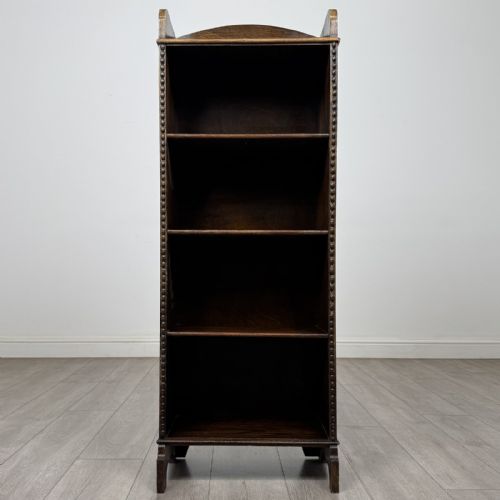
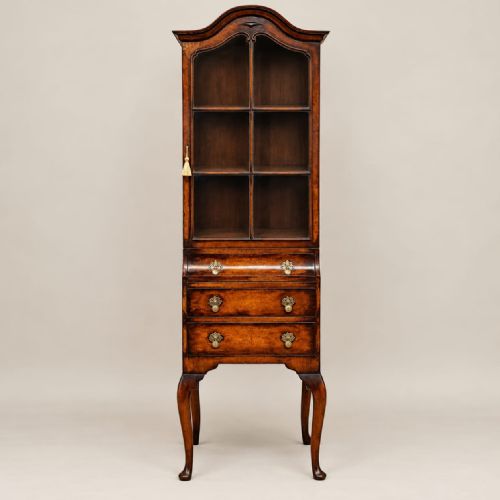
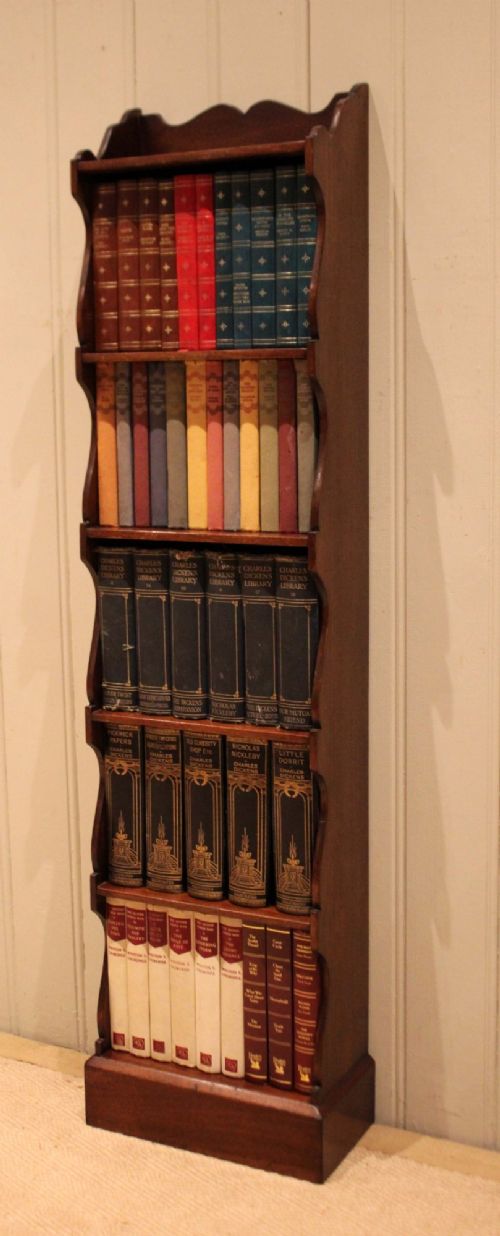
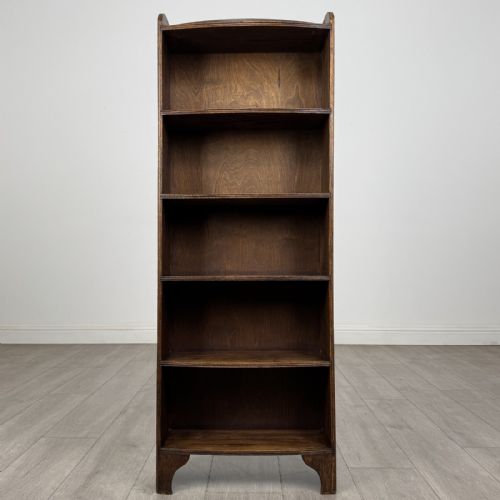
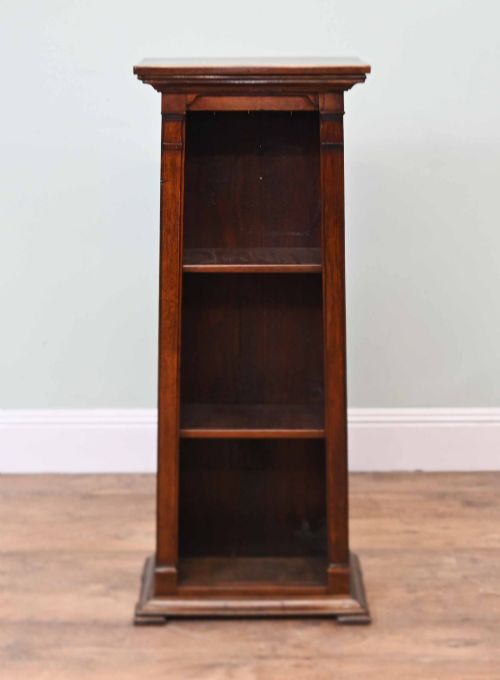
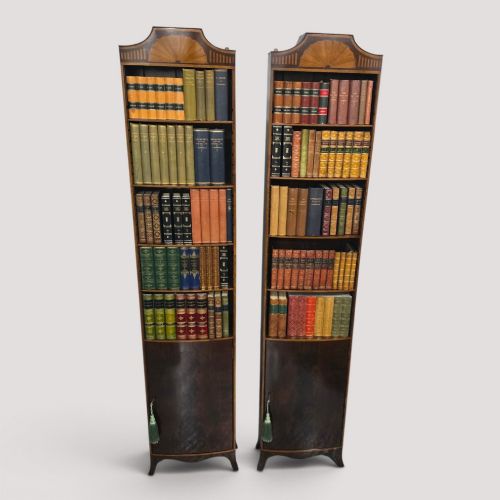
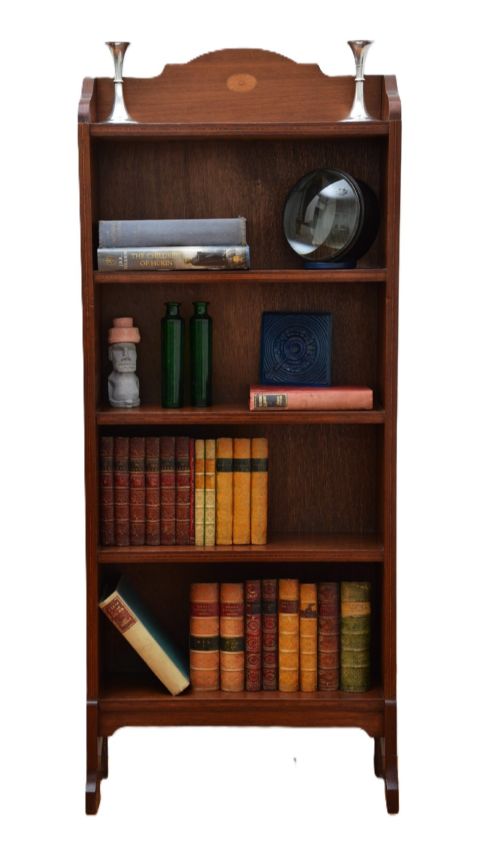
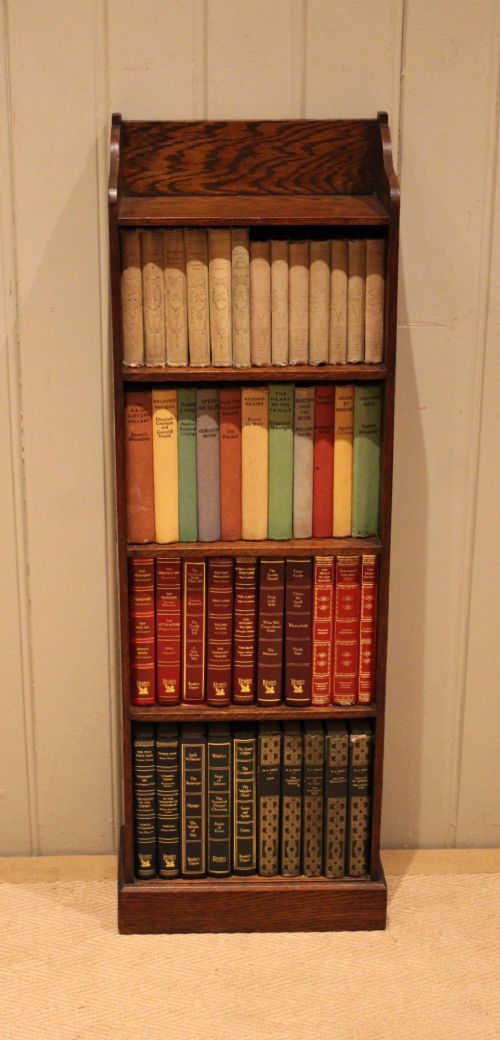
Tall Slim Bookcase
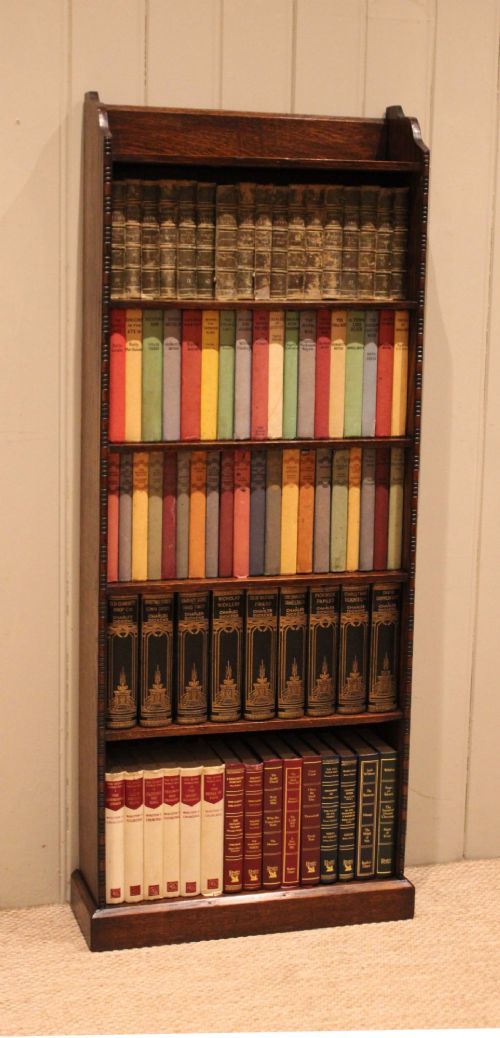
A tall slim bookcase solves the stubborn problem of storing a library in a narrow hallway or compact corner.
Tall Slim Bookcase
A tall slim bookcase draws the eye upward, maximising vertical wall space while keeping a remarkably small footprint on the floor. Buyers hunting for this specific form seek furniture that holds substantial volumes without dominating a modest room.
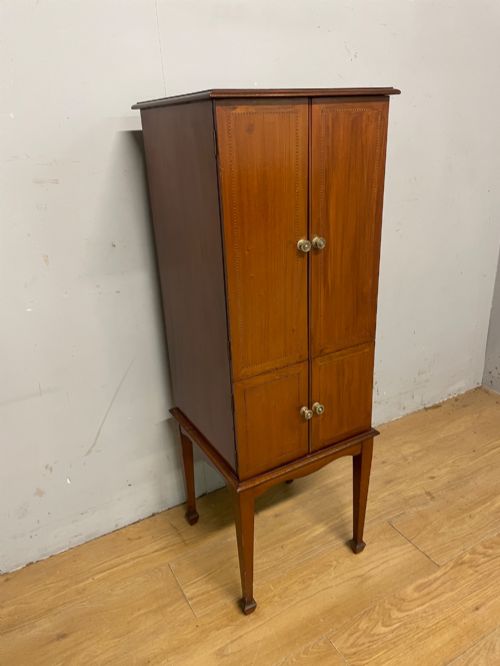
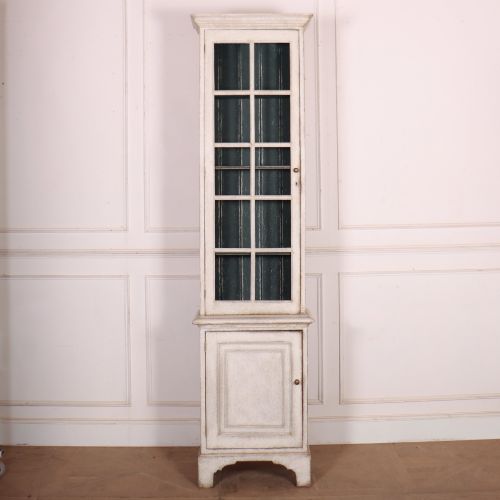
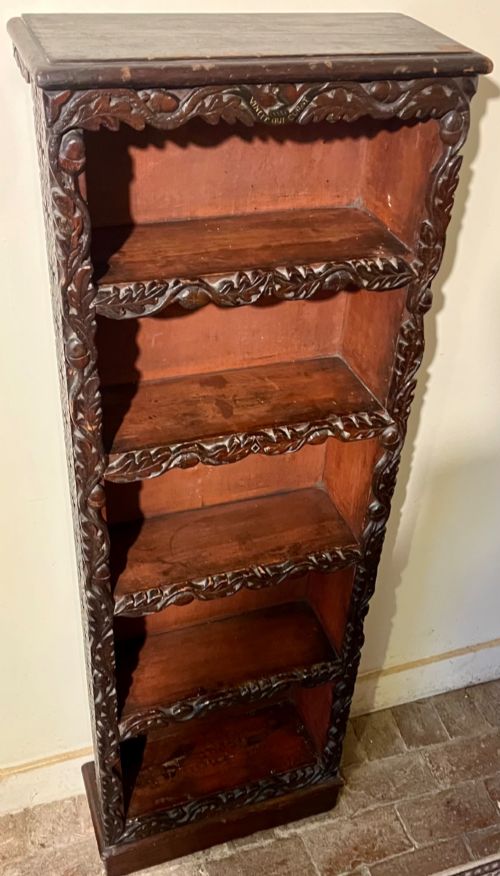
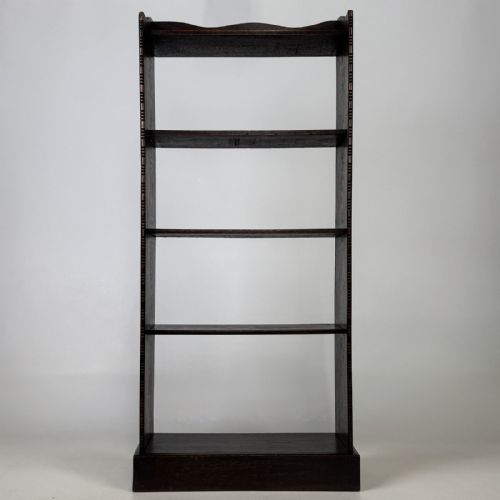
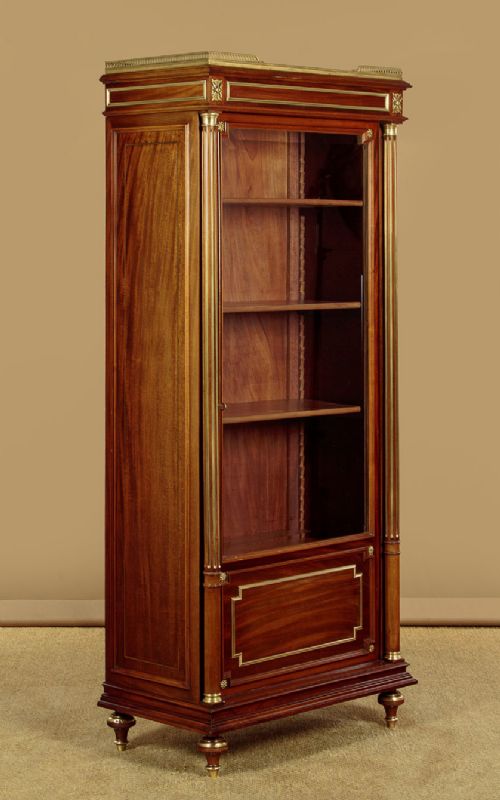
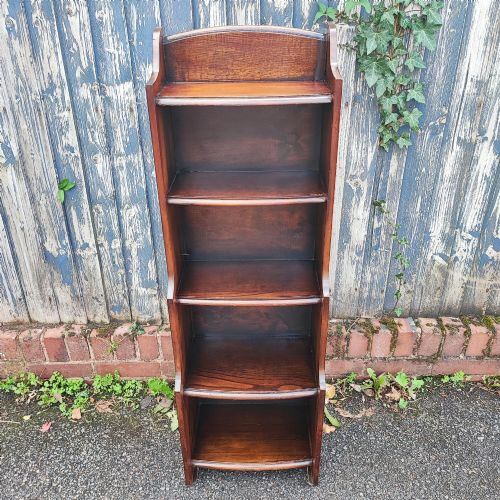
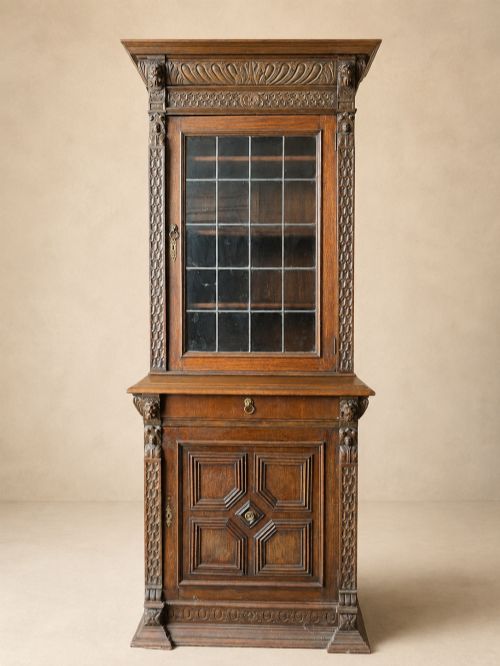
The pieces on this page emerge primarily from the nineteenth and early twentieth centuries, spanning the Victorian, Edwardian, and Georgian periods. Formats range from open shelving and waterfall designs to glazed display cabinets and bureau bookcases.
Oak and mahogany dominate the selection, appearing alongside walnut, burr walnut, and pine. Makers of these periods often incorporated lead, brass, and delicate wood inlay to add character to narrow silhouettes.
Materials and Construction
Cabinet makers built these narrow carcasses using dense hardwoods like mahogany and oak, ensuring the frame remained rigid under the weight of heavy books. Burr walnut and pine also appear, selected respectively for decorative grain patterns or simpler utilitarian builds.
Glazed doors often feature astragal bars dividing the glass panes, while finer examples incorporate brass hardware and precise wood inlay. Open variants rely on sturdy fixed or adjustable shelving supported by solid timber sides.
Tall Slim Bookcase Retail Price Guide 2026
Typical asking prices for tall slim bookcase among the pieces listed under this phrase on Sellingantiques today, from the lower quarter to the upper quarter. They describe what is for sale here now, not the wider market.
Listings feature woods including mahogany, oak, walnut, burr walnut, pine, and wood inlay, spanning periods from the eighteenth century through the Edwardian era.
Assessing Quality
Quality rests in the proportional balance of the carcass, where height and narrow width meet without looking ungainly. Superior examples display carefully chosen timber grains, particularly in burr walnut or figured mahogany veneers.
The crispness of carved details and the integration of glazed doors or inlaid banding separate standard workshop production from finer cabinet work. Interior fittings, such as finely finished adjustable shelving tracks, signal higher original manufacture.
The Tall Slim Bookcase Glossary
- Astragal glazed
- A glass door divided into smaller panes by wooden glazing bars. These slim frames maintain structural integrity while offering a clear view of the contents.
- Waterfall bookcase
- A set of open shelves stepped back progressively from bottom to top. This design creates a distinctive cascading profile often seen in Edwardian oak pieces.
- Bureau bookcase
- A combination form featuring a sloping writing flap above shelving or enclosed cupboards. It provides a compact workspace alongside vertical storage.
- Revolving bookcase
- A low or medium structure mounted on a rotating base designed to sit beside a chair. It allows easy access to multiple volumes within arm's reach.
- Wood inlay
- The technique of inserting contrasting strips of timber into the primary surface. It creates geometric or floral decorative patterns common in Edwardian pieces.
Tall Slim Bookcase: Frequently Asked Questions
Where should I place a tall slim bookcase?
These narrow carcasses suit awkward recesses, narrow hallways, or beside a fireplace where standard furniture overwhelms the wall. Their vertical emphasis draws the eye upward in smaller rooms.
Ensure the piece is anchored safely to the wall if it supports heavy volumes, as narrow footprints carry a higher centre of gravity.
How do I spot an Edwardian bookcase?
Edwardian pieces often utilise lighter oak or mahogany timbers combined with subtle wood inlay and simpler decorative lines. They frequently appear in open shelf or waterfall formats.
Compare the lighter timber tones and restrained ornament against the darker, heavier proportions typical of earlier Victorian manufacturing.
Are the shelves usually adjustable?
Many period examples feature adjustable wooden shelving supported by traditional brass rack strips or wooden toothed pilasters. This allows you to alter shelf heights for varying book sizes.
Fixed shelves also appear frequently, particularly in simpler utilitarian pine or oak cabinets built for specific library collections.
How do I care for antique walnut?
Burr walnut and walnut veneers require protection from direct sunlight and sudden temperature shifts to prevent the timber from drying or warping. Regular dusting with a dry cloth maintains the finish.
Apply a quality beeswax polish sparingly to nourish the grain and preserve the deep lustre characteristic of these timbers.