
Mahogany Book Shelf
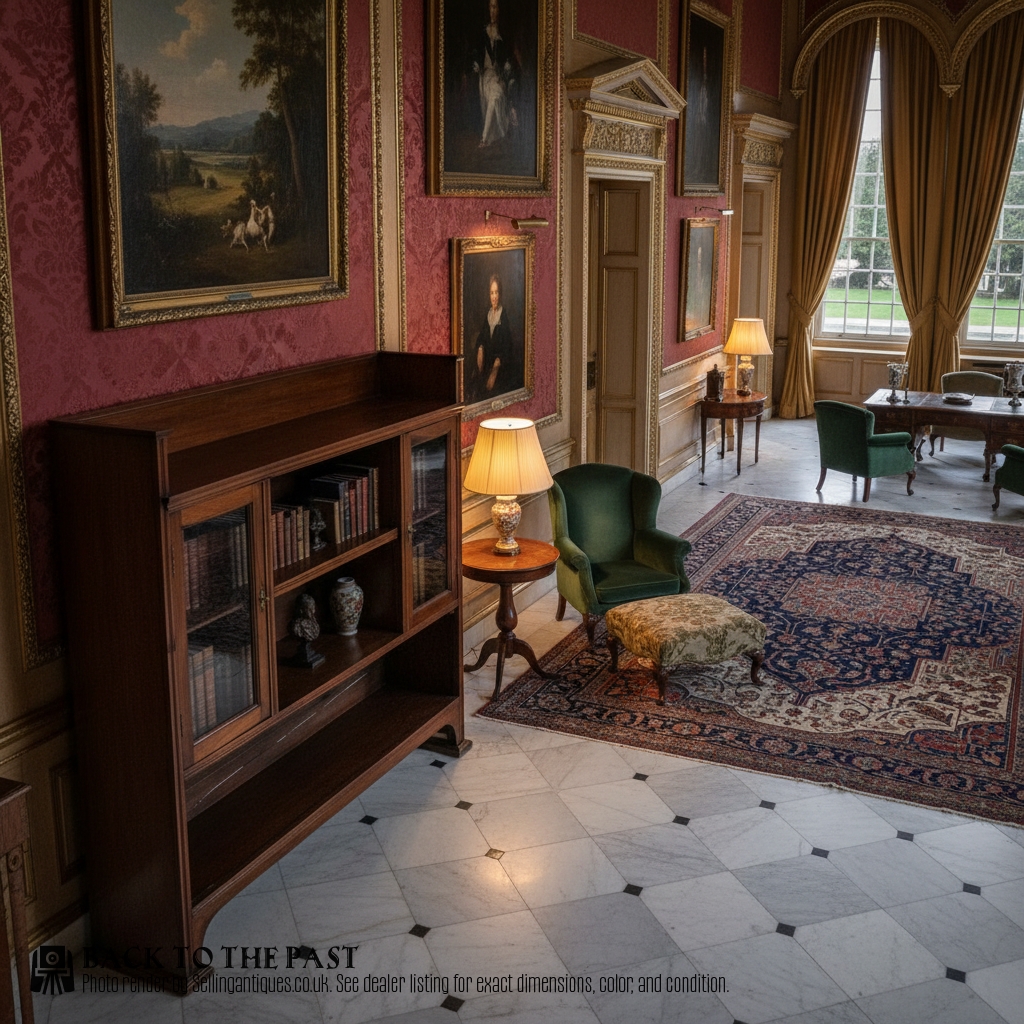
A mahogany book shelf brings warm timber tones and orderly charm to any room, offering versatile display space for a growing collection of volumes.
Mahogany Book Shelf
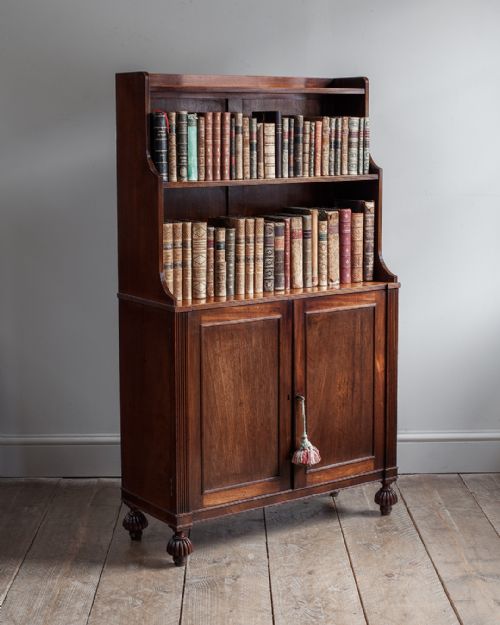
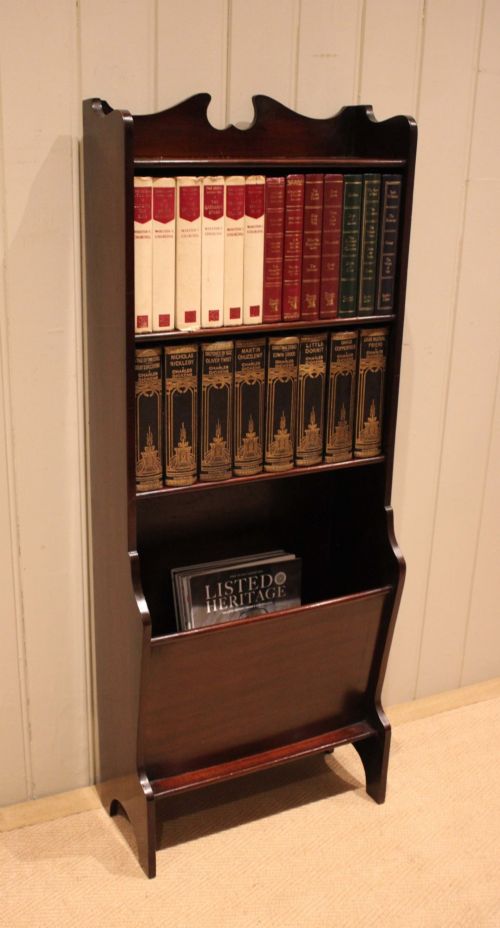
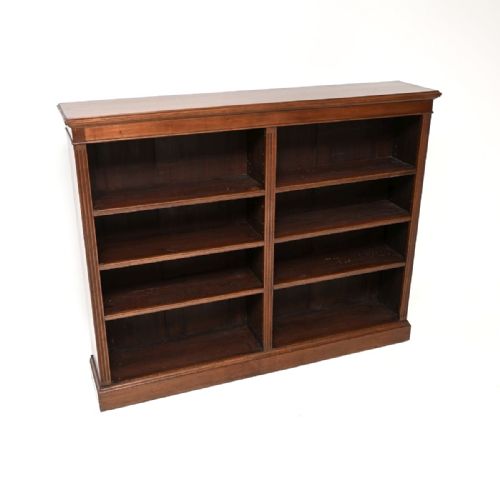
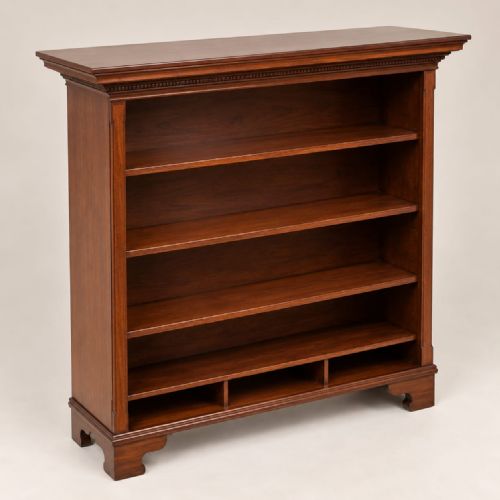
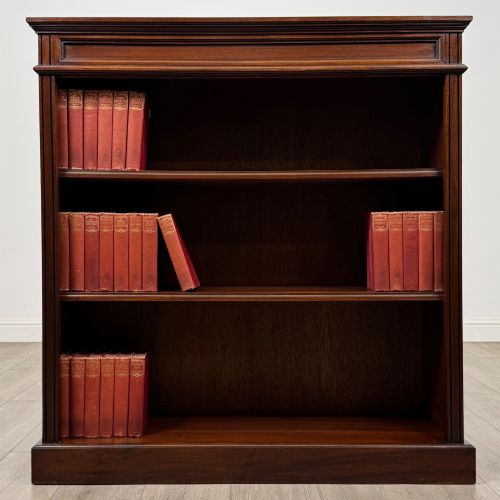
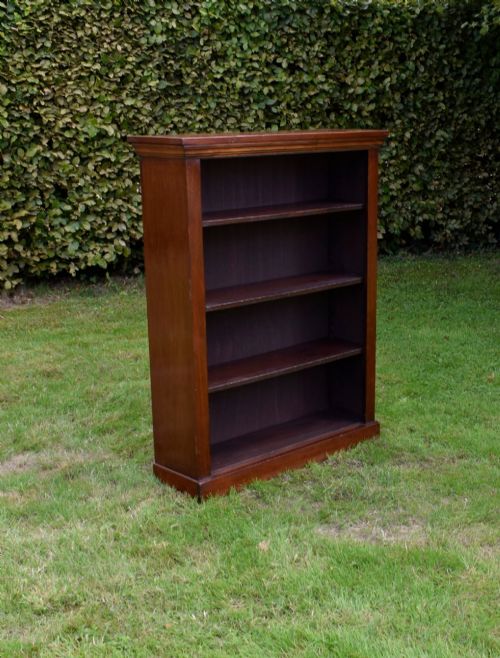
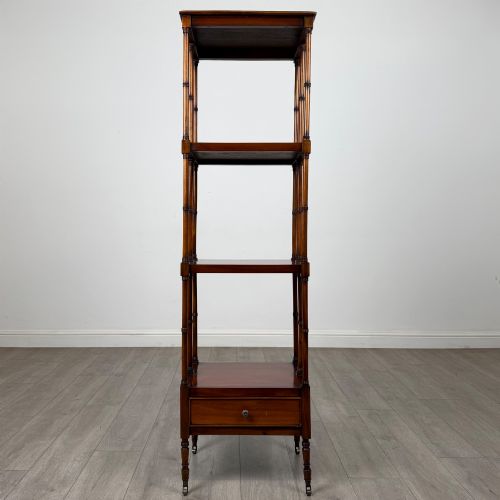
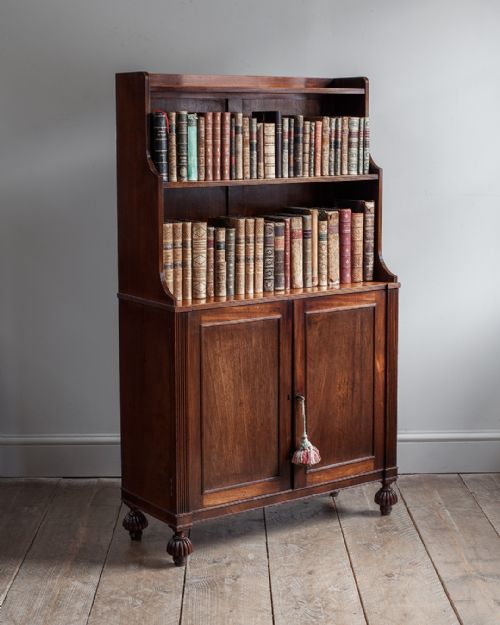
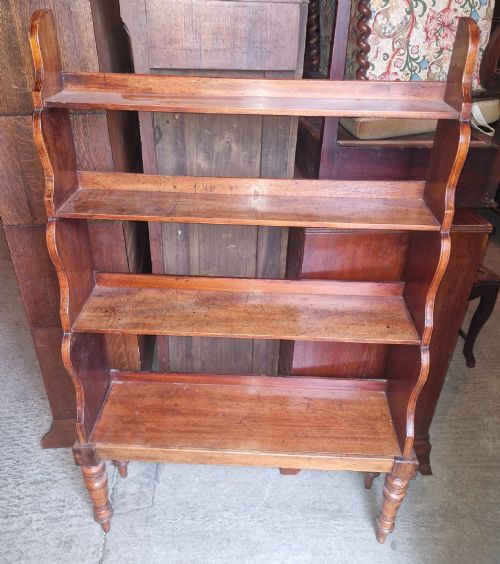
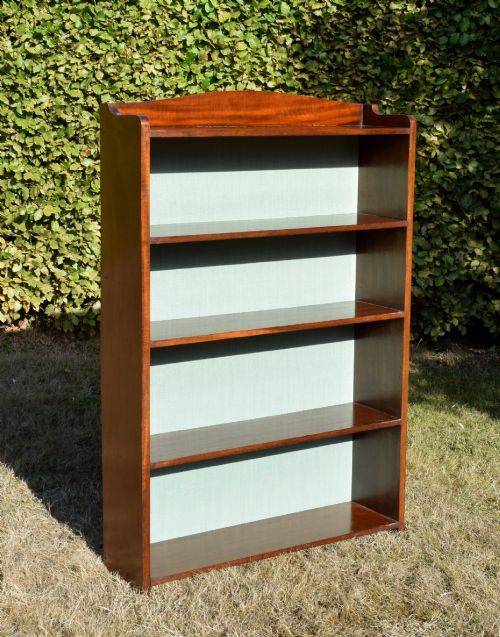
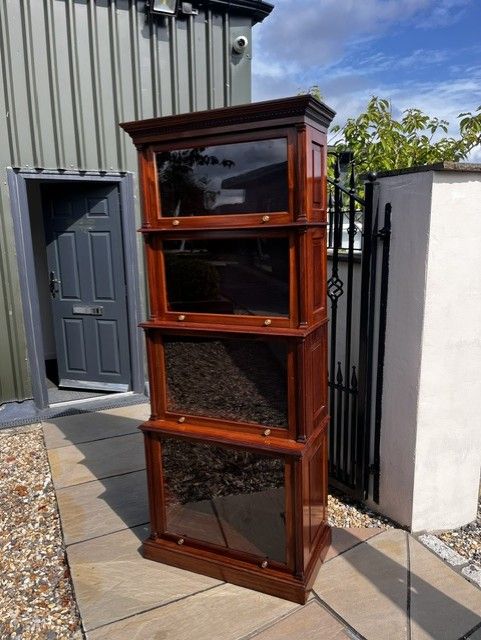
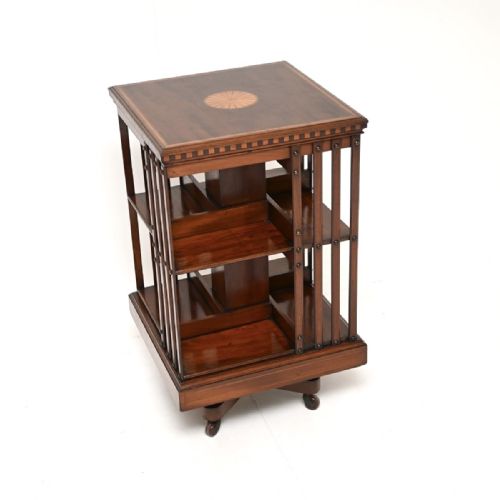
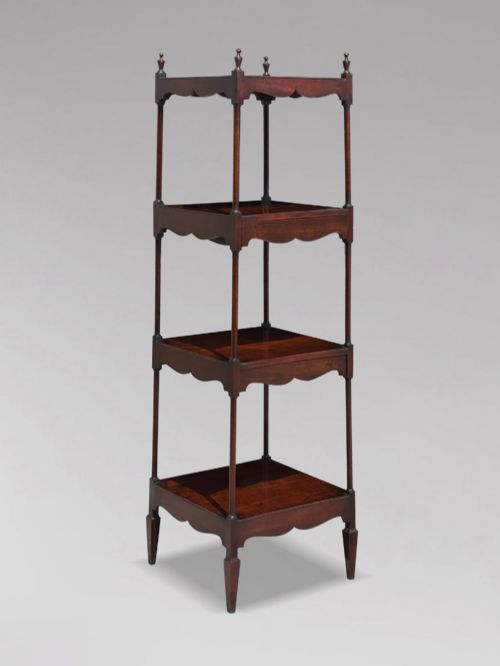
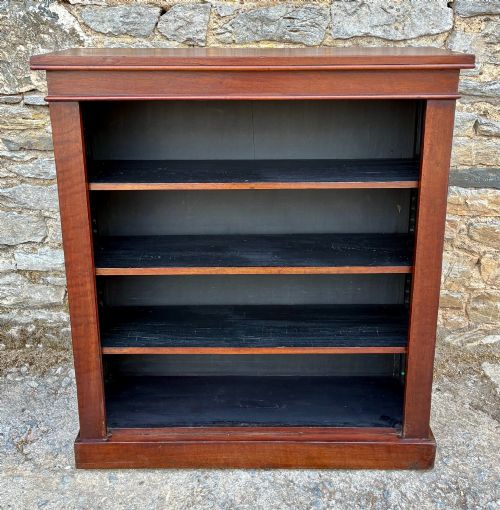
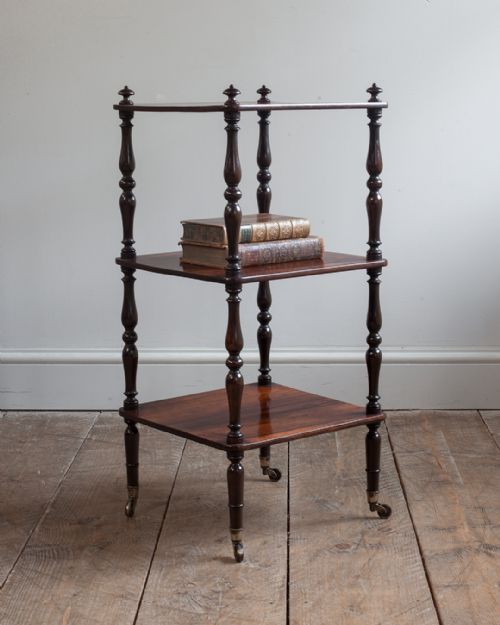
When you search for a mahogany book shelf, you encounter a variety of open bookcases, multi-tiered whatnots, and revolving stands designed to hold personal libraries. These pieces emerge from periods spanning the Georgian era through the Edwardian years and into the early twentieth century.
How they were made
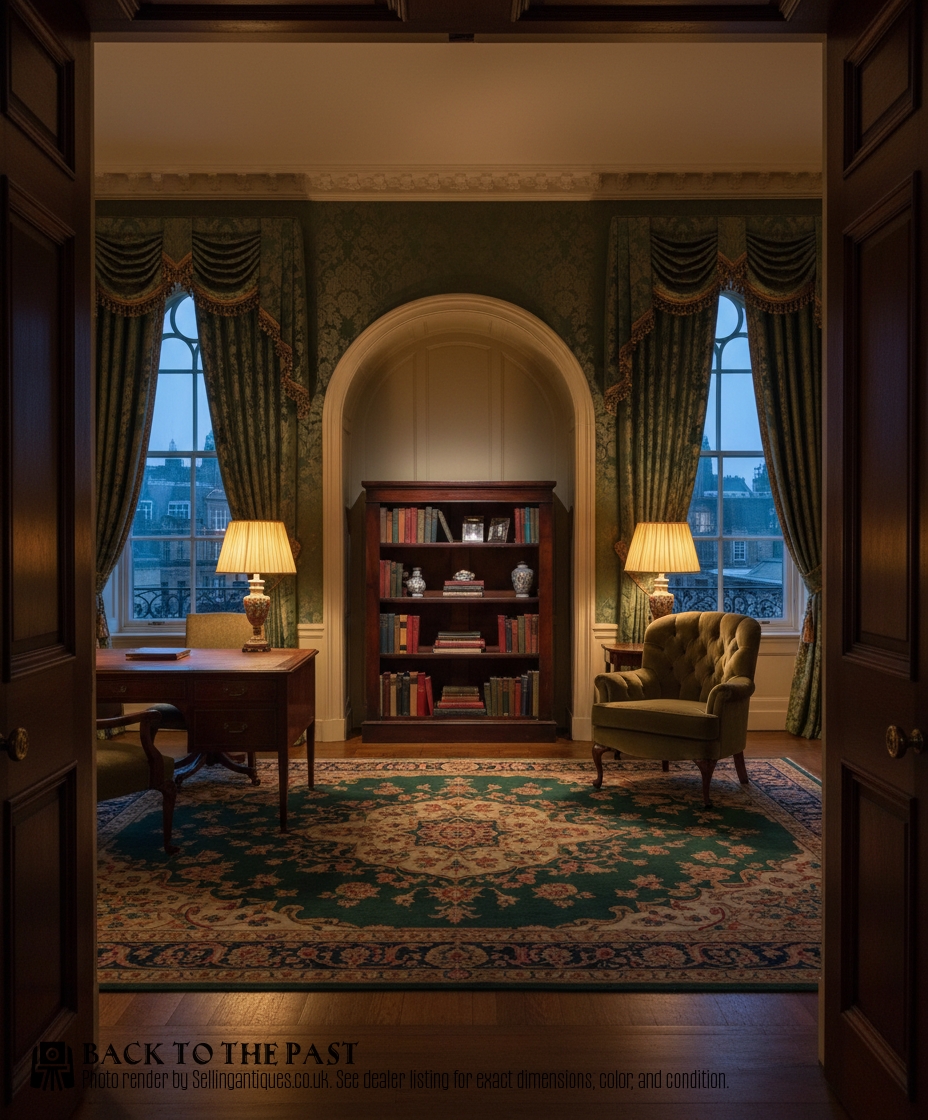
Carpenters utilised solid and veneered mahogany, often pairing the rich reddish-brown timber with secondary woods such as pine and softwood for interior structure. Brass fittings, including casters on mobile models and hinges on specialised cabinets, provide functional detail alongside inlaid satinwood stringing.
Construction techniques evolved from handcrafted joinery in eighteenth and early nineteenth-century pieces to sectional barrister formats and mechanical revolving mechanisms by the Edwardian period.
Mahogany Book Shelf Retail Price Guide 2026
Typical asking prices for mahogany book shelf among the pieces listed under this phrase on Sellingantiques today, from the lower quarter to the upper quarter. They describe what is for sale here now, not the wider market.
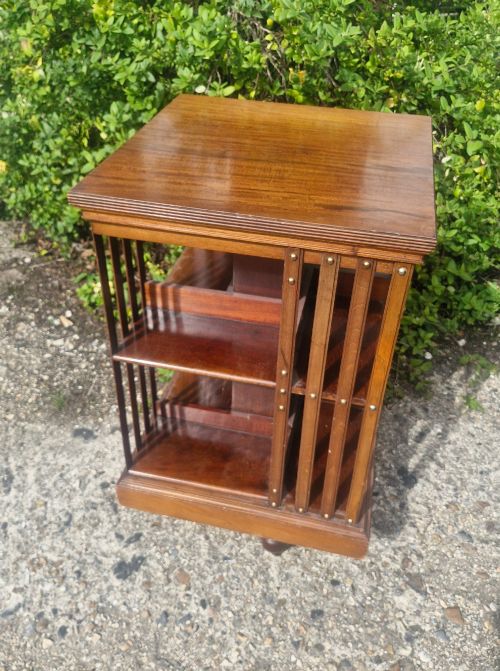
Revolving bookcases let eager readers spin their entire library around with a single gentle push.
What varies in quality
The standard of timber selection and cabinetmaking integrity dictates where a piece sits within the range, separating utilitarian furniture from finer parlour furnishings. Grain figure, depth of colour, and the crispness of inlaid details show the maker's original investment of time and skill.
Proportion and structural balance also separate examples, where neatly scaled tiers and stable revolving actions demonstrate superior design execution.
Gillows·Waring and Gillows·Globe Wernicke
The Mahogany Book Shelf Glossary
- Waterfall bookcase
- A standing set of open shelves that steps back progressively from bottom to top, creating a cascading profile popular during the Regency period.
- Whatnot
- A multi-tiered open stand designed for displaying books, ornaments, or small household items across several levels.
- Revolving bookcase
- A compact table-height or floor-standing unit fitted with a internal mechanism that allows the book compartments to turn freely.
- Barrister bookcase
- A sectional piece of furniture featuring glazed or wooden stacking tiers with lifting doors, designed to protect volumes from dust.
- Breakfront
- A cabinet or bookcase design where the central section projects forward from the flanking wings.
Mahogany Book Shelf: Frequently Asked Questions
How do I care for a antique mahogany shelf?
Protect the timber by keeping the piece away from direct heat sources, radiators, and prolonged direct sunlight that can fade the rich reddish-brown finish. Maintain the surface using traditional beeswax and a soft cloth rather than modern silicone sprays.
Dust the shelves regularly with a dry cloth, lifting books rather than sliding them across the timber surface to prevent surface scratching.
Were revolving bookcases common in homes?
Revolving book stands gained widespread popularity during the late Victorian and Edwardian periods as domestic spaces required adaptable furniture for reading near armchairs. Their compact footprint allowed readers to keep a selection of reference volumes within arm's reach without taking up wall space.
These pieces were particularly useful in studies, libraries, and drawing rooms where floor space was at a premium.
How do I identify a Regency period piece?
Regency pieces, dating from the early nineteenth century, frequently exhibit clean classical lines, dark figured mahogany, and restrained brass mounts or inlay. They often feature architectural elements such as reeded columns or stepped waterfall tiers.
Examining the construction methods, secondary woods used in the backboards, and overall proportions helps confirm the period of manufacture.