

Tall Open Shelving Unit
A tall open shelving unit organises volumes and display pieces without doors to interrupt the grain.
Tall Open Shelving Unit
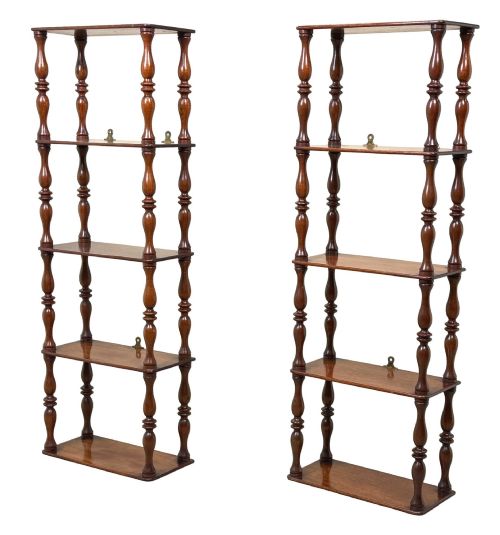
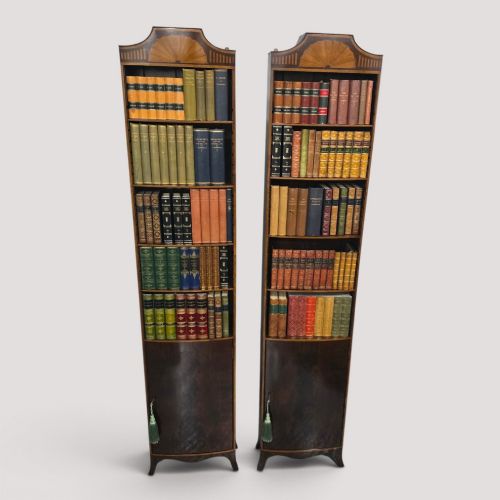
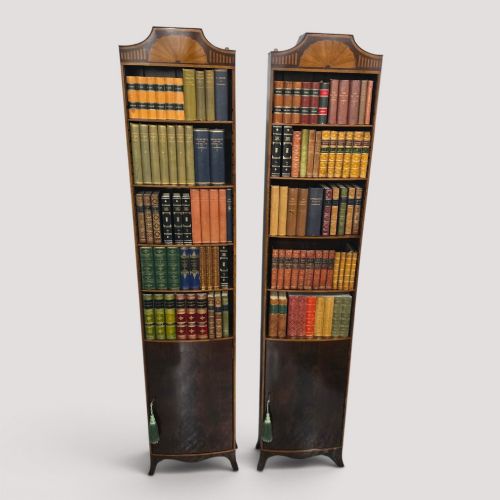
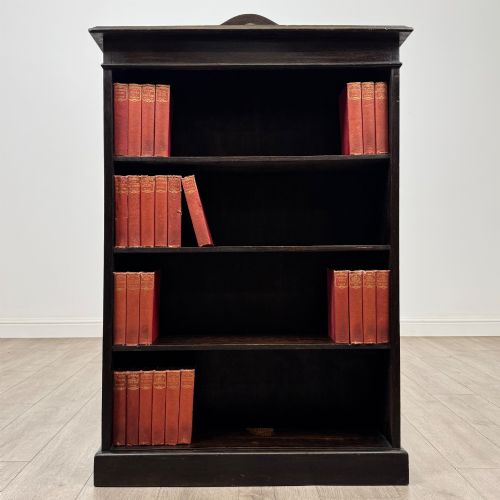
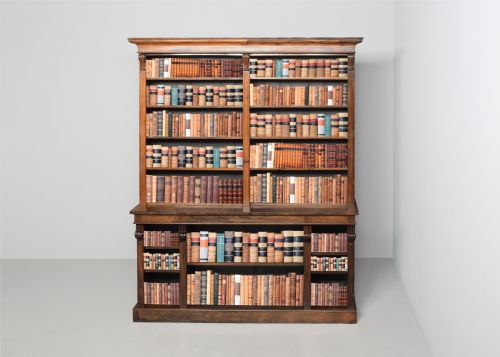
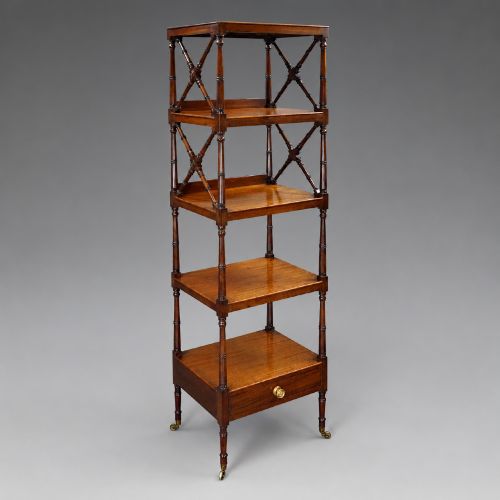
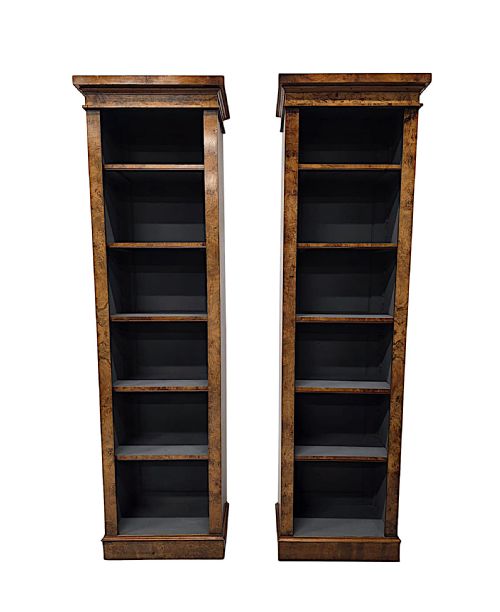
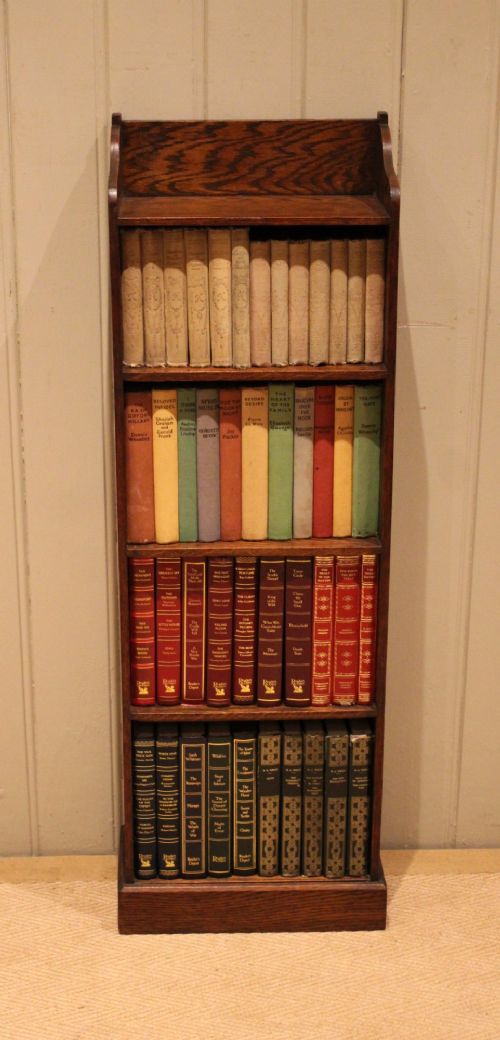
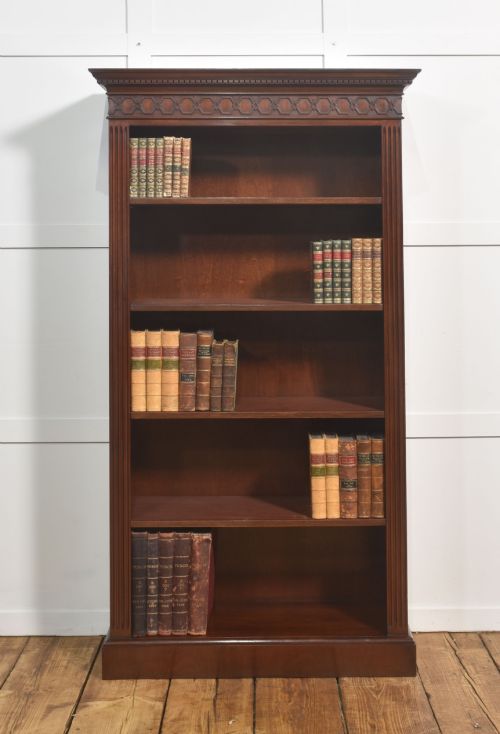
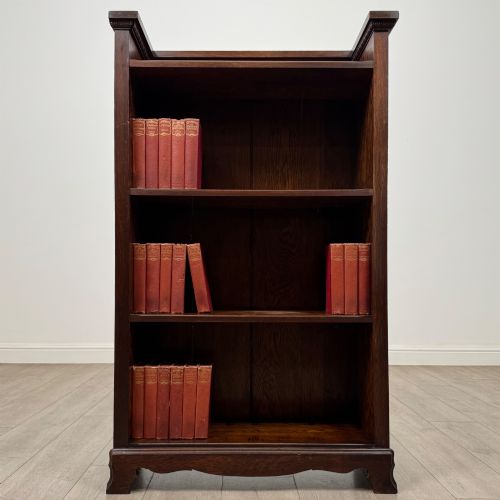
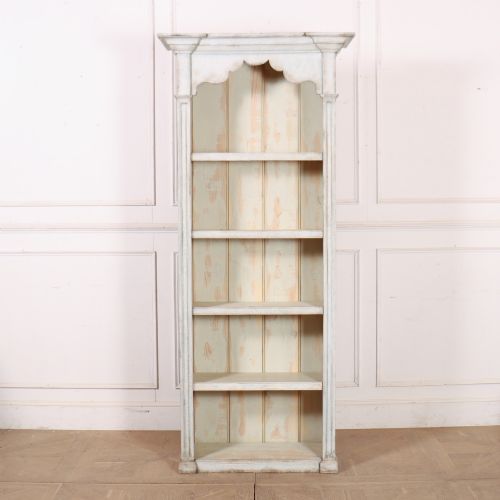
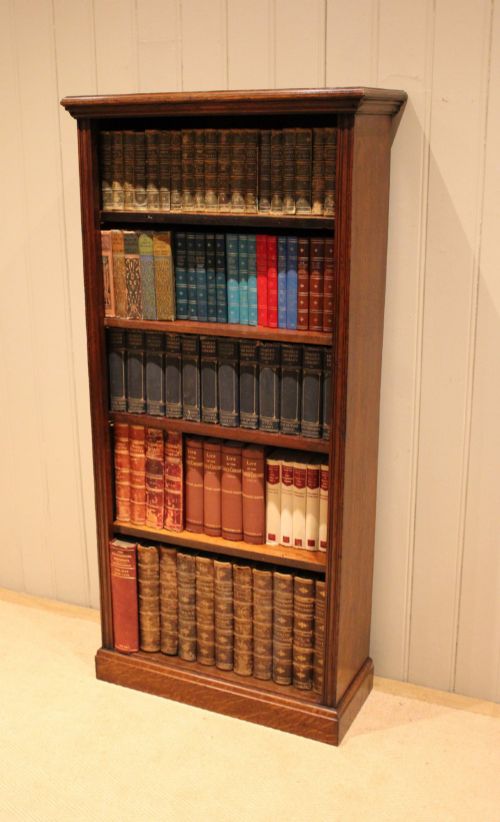
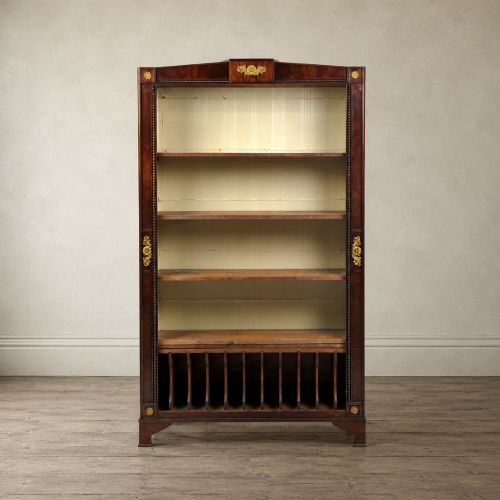
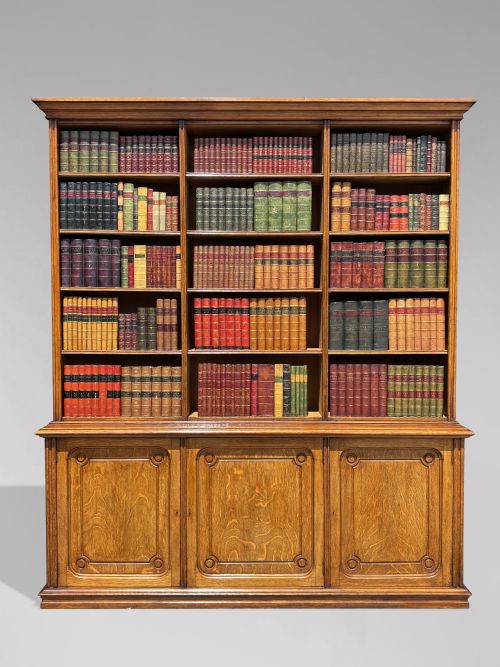
A tall open shelving unit brings vertical storage to a room through forms such as bookcases, whatnots, and etageres. You will frequently encounter examples from the nineteenth and early twentieth centuries, spanning Victorian, Edwardian, and Art Deco periods.
Most pieces standing on this page are constructed in timber, with oak and mahogany dominating the selection alongside pine, walnut, and rosewood. These upright frames provide accessible storage for libraries and reception rooms, designed to display collections rather than conceal them.
Assessing quality in open shelving
The choice of timber underpins the distinction between standard utility furniture and high-status cabinetmaking. Dense, well-figured mahogany or quarter-sawn oak indicates careful material selection by the maker.
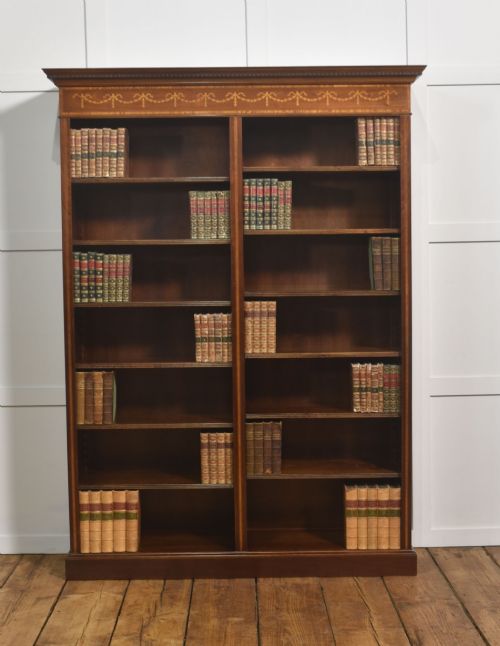
Proportion and decorative restraint separate ordinary pieces from exceptional ones. Subtle mouldings, inlaid details, and integrated adjustable shelving mechanisms show a higher standard of workshop execution.
A seafaring touch appears in the selection with a ship's teak four-tier whatnot, built to brave the waves.
Wylie Lochhead of Glasgow·E.A. Taylor
The Tall Open Shelving Unit Glossary
- Whatnot
- A set of open shelves standing on legs, designed for displaying small ornaments or books. These pieces gained popularity in the nineteenth century.
- Etagere
- A piece of furniture consisting of a series of open shelves for holding bric-a-brac. French in origin, this form prioritises display.
- Breakfront
- A cabinet or bookcase whose central section projects forward from the side sections. This layout creates visual depth in large rooms.
- Stringing
- A narrow strip of contrasting wood inlaid into the surface of a piece to form a decorative border. Sheraton Revival furniture often utilises this technique.
- Quarter-sawn
- Timber cut radially from the growth rings, producing a stable board with distinct figuring. Oak processed this way resists warping.
Tall Open Shelving Unit: Frequently Asked Questions
How do I adjust the shelves?
Many nineteenth and twentieth-century bookcases employ wooden or metal ratchets to support removable boards. You simply lift the shelf slightly to disengage the supports and move them to alternate slots.
Older units might use fixed wooden bearers instead of adjustable pins. Check the interior vertical uprights for peg holes before attempting to reposition tiers.
Where should I place a tall shelving unit?
These upright storage pieces suit studies, libraries, and living rooms where vertical wall space is available. Because the front remains open, keep them away from direct heat sources that might dry out the timber.
Ensure the unit stands level on the floor to prevent twisting over time. Heavier oak and mahogany frames benefit from wall anchoring for stability.
Are these units suitable for heavy books?
Solid hardwood examples in oak or mahogany easily support heavy volumes across their tiers. Thicker shelves resist sagging under the weight of large reference books.
Pine or deal variants function well for lighter reading materials. Inspect the thickness of the horizontal boards before loading them with dense collections.
How do I identify an Edwardian bookcase?
Edwardian pieces often feature lighter timbers, simpler lines, and occasional Sheraton Revival inlay work. Makers working around this era favoured bright mahogany and satinwood finishes.
Construction methods from this period show machine-sawn components alongside traditional hand-finished joints. Look for clean, functional proportions rather than heavy Victorian ornamentation.