





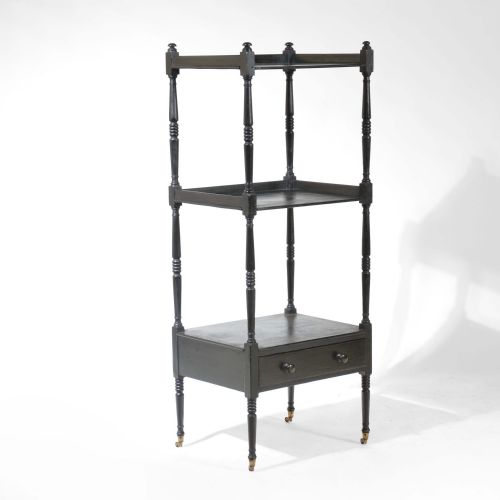
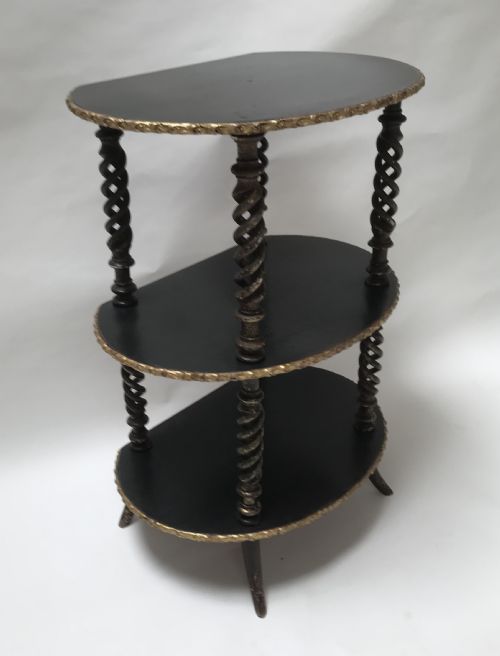
Black Wood Etagere
A black wood etagere is a multi-tiered display piece offering deep ebonised surfaces for displaying ornaments.
Black Wood Etagere
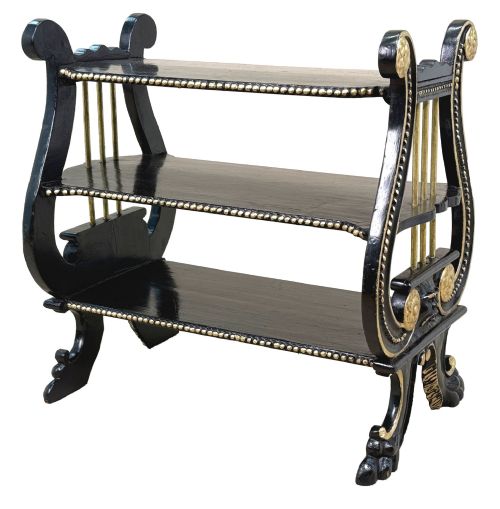
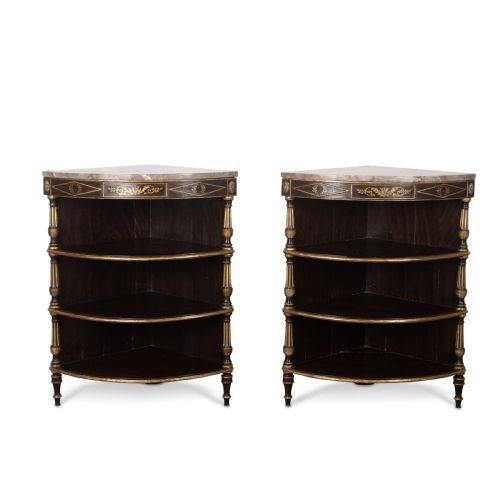
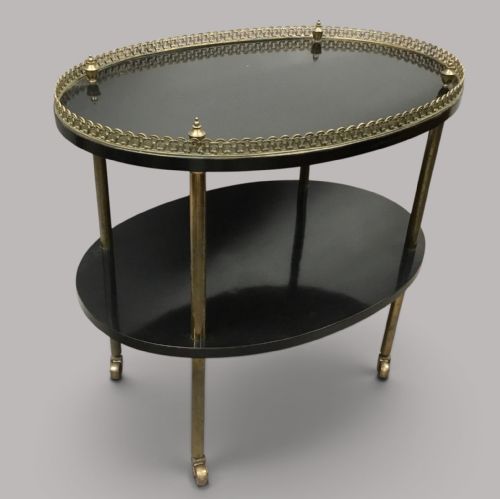
A black wood etagere provides multiple open tiers for displaying small objects, ceramics, and books around a room. These stands take various multi-level forms, including corner units, wall shelves, and tiered stands.
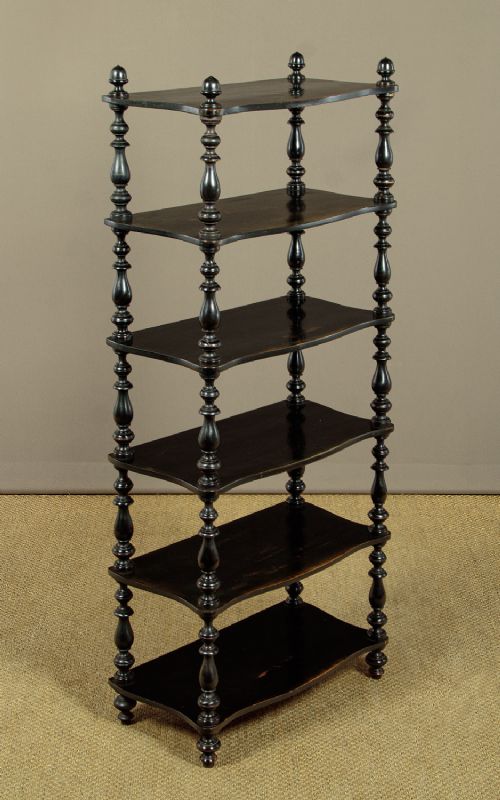
The selections available here span the Victorian era, the nineteenth century, and the early twentieth century. Examples range from simple bobbin-turned shelves to elaborate pieces with parcel gilding or painted decoration.
How they were made
Cabinet makers utilised hardwoods and softwoods, finishing the surfaces with dark ebonising or paint to mimic costly ebony. Workshops applied parcel gilding and brass details to accent the tiered structures and edges.
Construction techniques include carved ornamentation, marquetry inlay, and turned components like bobbin supports. These methods created sturdy multi-tier frameworks designed to hold decorative collections.
Black Wood Etagere Retail Price Guide 2026
Typical asking prices for black wood etagere among the pieces listed under this phrase on Sellingantiques today, from the lower quarter to the upper quarter. They describe what is for sale here now, not the wider market.
Materials recorded across the inventory include ebonised hardwood, softwood, brass, gilt wood, and marble.
What varies in quality
Quality rests in the crispness of the carving, the depth of the ebonised finish, and the integration of decorative elements like parcel gilding. Finer pieces display careful joinery across multiple tiers and well-executed turning.
Simpler vernacular examples rely on straightforward construction and basic painted or ebonised surfaces. The presence of specialised details such as marble tops or fine marquetry inlay elevates the standing of a piece.
The Black Wood Etagere Glossary
- Étagère
- A piece of furniture consisting of a set of open shelves for displaying small ornaments. The form became particularly popular during the nineteenth century.
- Ebonised
- Wood treated with a stain or finish to imitate true ebony. This dark finish gained favour in various nineteenth-century revival styles.
- Whatnot
- A multi-tiered shelving unit used for storing or displaying objects. It serves a similar function to an étagère.
- Parcel Gilded
- Partially gilded with gold leaf or paint, usually to highlight carved details or mouldings. This technique contrasts brightly against ebonised surfaces.
- Shodana
- A Japanese display cabinet with staggered shelves, seen here from the Taisho period. These pieces incorporate traditional Asian joinery and carving.
Black Wood Etagere: Frequently Asked Questions
What is an etagere used for?
An etagere is primarily designed for displaying decorative objects, small collections, and books across its open tiers. These multi-level stands allow items to be viewed clearly from various angles within a room.
Historically, they held ceramics, glassware, and ornaments in Victorian and Edwardian parlours. Today, they serve a similar decorative purpose in modern interiors while providing vertical storage.
How do I date a black wood etagere?
Dating involves examining the construction methods, wood types, and decorative styles present on the piece. Victorian examples often feature heavy ebonising, turning, or Gothic influences, while early twentieth-century pieces might show Japanese Taisho or simpler Edwardian traits.
Secondary materials like brass fixtures or marble tops also help narrow down the period of manufacture. Comparing the turning style and joinery to known historical pieces provides further clarity.
Where should I place an etagere?
These pieces suit living rooms, hallways, and studies where vertical display space is needed without blocking light. Corner models fit neatly into unused angles of a room, maximising display potential in compact spaces.
Free-standing tiered stands work well against plain walls where their dark ebonised silhouettes can stand out. Care should be taken to keep them away from direct heat sources that might affect the wood.
What is the difference between a whatnot and an etagere?
The terms are often used interchangeably to describe multi-tiered shelving units designed for display. Historically, a whatnot typically refers to a simpler tiered stand, while an etagere can encompass more elaborate French-influenced designs with mirrors or cabinets.
Both forms prioritize open shelving over enclosed storage. The distinction usually depends on the regional terminology used by the maker rather than a strict structural difference.