




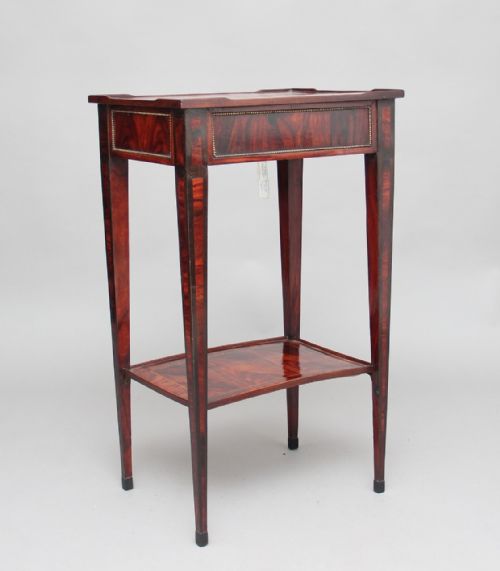

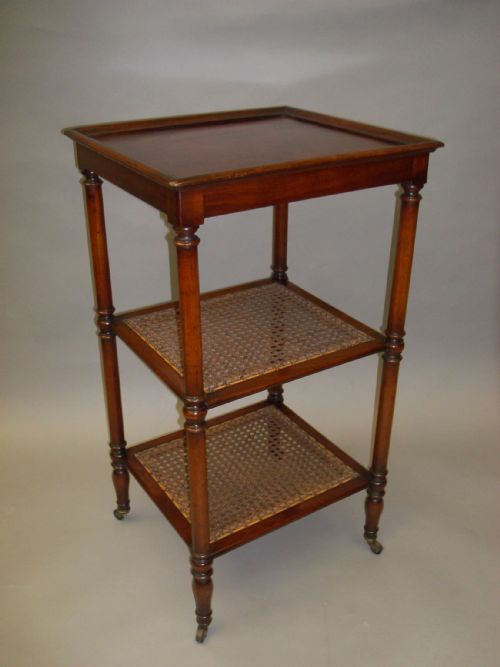
Regency Style Etagere
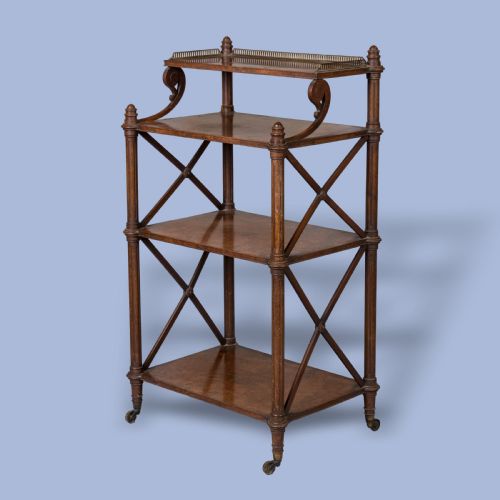
A regency style etagere brings tiered display and architectural balance to a room, offering open shelving crafted in mahogany, brass, and lacquered wood.
Regency Style Etagere
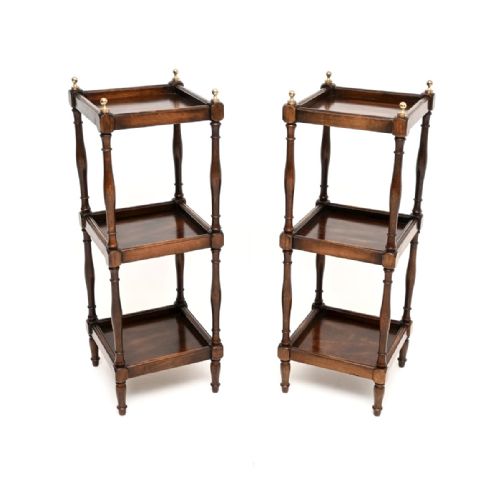
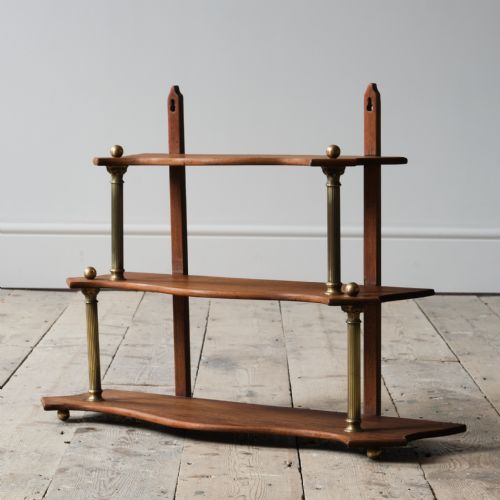
When buyers search for a regency style etagere, they seek multi-tiered open shelving designed for display and practical placement in sitting rooms or libraries. The pieces catalogued here include freestanding three-tier and five-tier examples, alongside wall-hanging shelves, side tables, and occasional tables that share the same characteristic tiered format.
The versions most commonly met span from original pieces dating around eighteen hundred and the Georgian era through to later revivals from the nineteenth and twentieth centuries. These encompass styles such as Regency Revival, Mid-Century Neoclassical, and French Neoclassical, reflecting a long-standing appreciation for classical proportions.
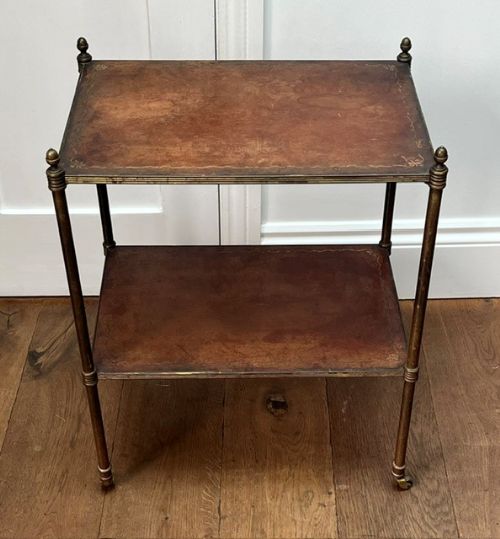
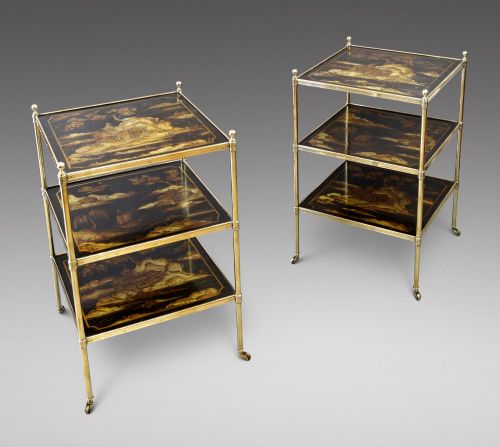
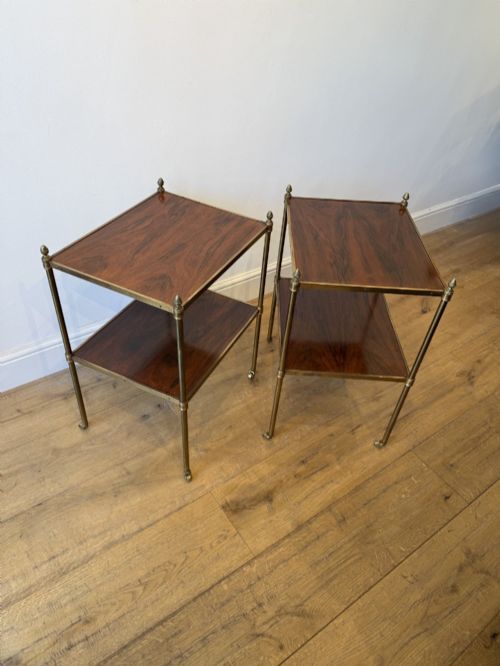
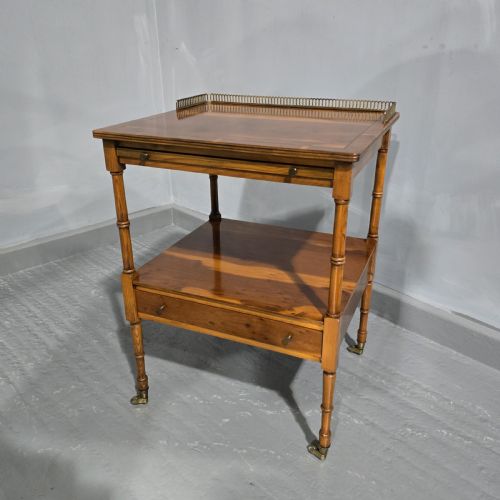
Forms range from compact two-tier tables with tooled leather surfaces to substantial freestanding bookcases and whatnots. Materials shift between rich timbers like mahogany, yew, and walnut, complemented by brass supports and lacquer finishes that define the classic aesthetic.
Materials and construction
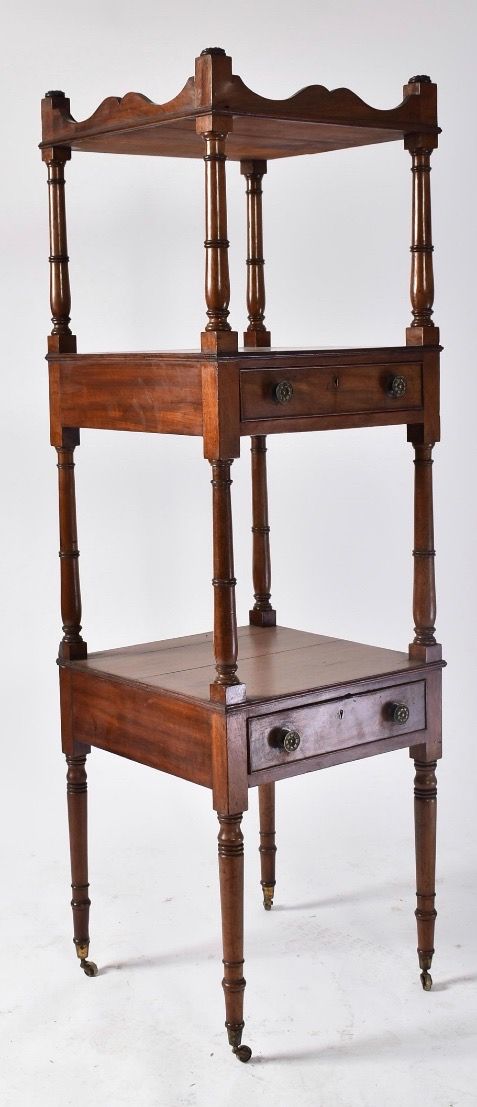
Makers utilised dense hardwoods including mahogany, rosewood, walnut, yew, and ebony, frequently applying wood veneer over secondary timbers. These surfaces were often polished to a high lustre, accentuating the natural grain of the wood.
Metal components played a structural and decorative role, with brass utilised for columns, galleries, and supports that divide the tiers. Details like tooled leather inserts added functional texture to the upper surfaces of occasional tables and etageres.
Distinctions in quality
The calibre of a regency style etagere rests on the selection of timber and the precision of its joinery. Superior examples display carefully matched wood veneers and solid secondary timbers that maintain stability across multiple tiers.
Hardware and metalwork distinction separates standard production from finer pieces. Heavy cast brass supports, finely detailed leather tooling, and well-executed lacquer work indicate a higher grade of craftsmanship.
Mallett of London·Gillows
The Regency Style Etagere Glossary
- Etagere
- A piece of furniture consisting of a set of open shelves for displaying small objects or ornaments. It originated in France and became popular in various revival styles.
- Whatnot
- A freestanding piece of furniture with multiple shelves, used for storing or displaying books and ornaments. It emerged in the Georgian period and remained popular through the Victorian era.
- Veneer
- A thin layer of superior wood glued to a base of commoner timber. High-quality pieces use this technique to display striking grain patterns.
- Gallery
- A raised decorative border along the edge of a shelf or table top. It often consists of pierced brass or turned wood designed to keep items from sliding off.
Regency Style Etagere: Frequently Asked Questions
How do I date a mahogany etagere?
Dating relies on examining construction methods, timber selection, and stylistic cues present in the piece. Georgian and early nineteenth-century examples often feature solid mahogany and hand-cut joinery, whereas later revivals incorporate twentieth-century manufacturing traces.
Hardware styles and secondary woods also provide clear indicators of whether a piece originates from the original period or a later revival.
Where should I place an etagere in a room?
Freestanding etageres suit corners or flat walls where their multiple tiers can hold books, ceramics, or decorative objects without obstructing walkways. Wall-hanging versions work effectively above sideboards or desks to utilise vertical space.
Smaller two-tier occasional tables function well beside seating or as lamp tables in a drawing room.
Are brass and mahogany characteristic of the Regency period?
Mahogany served as a primary timber for high-quality furniture during the Regency era, valued for its rich colour and stable grain. Brass was frequently used for inlay, columns, and decorative mounts to create strong visual contrast against the dark wood.
These materials continued to be utilised in later neoclassical revivals throughout the nineteenth and twentieth centuries.