
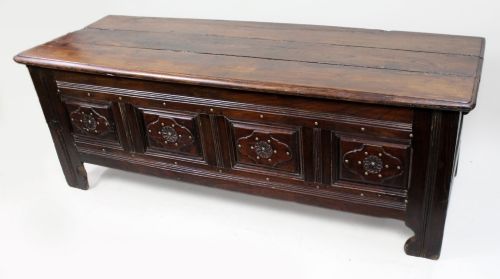
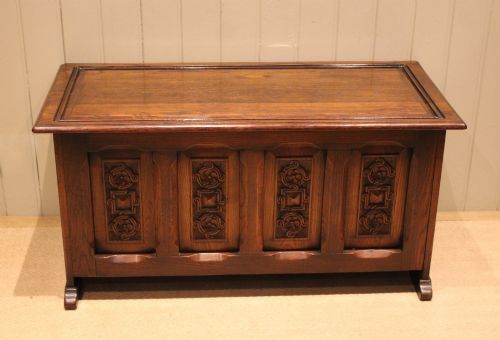
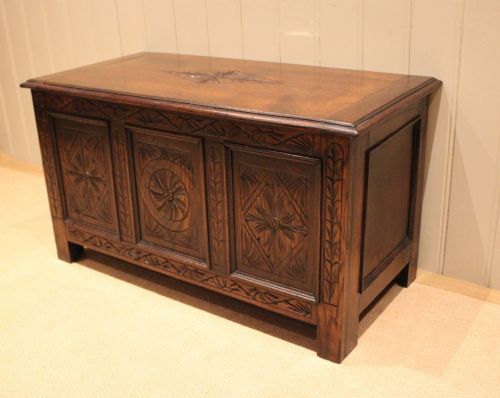
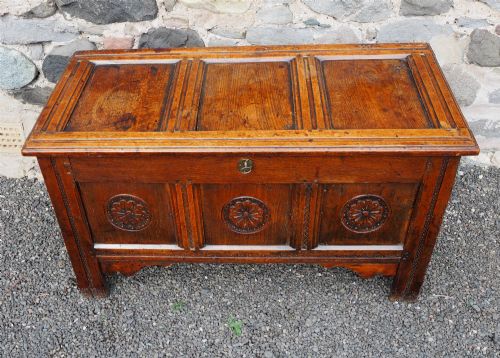
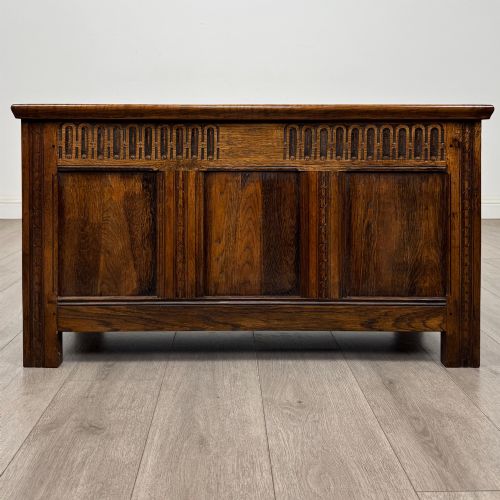

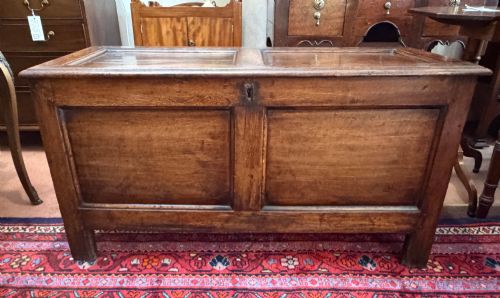
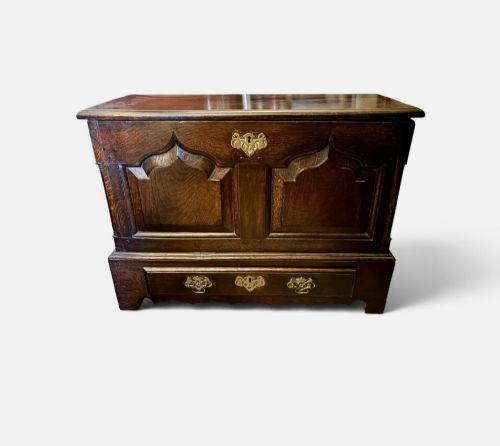
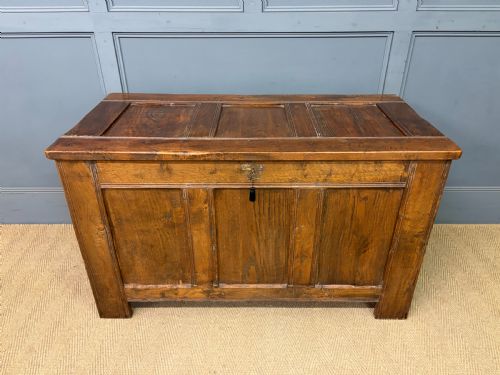
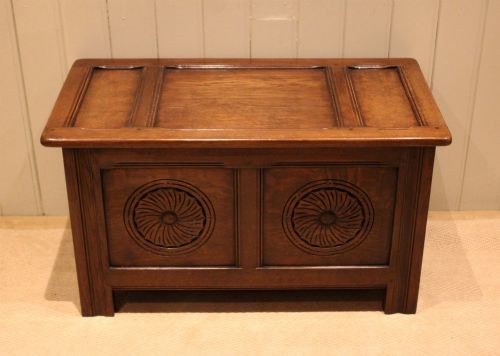
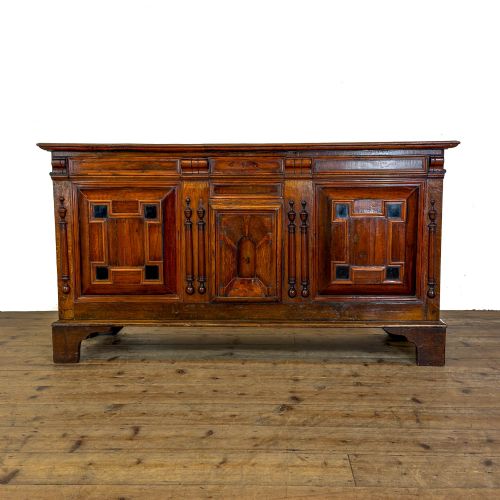
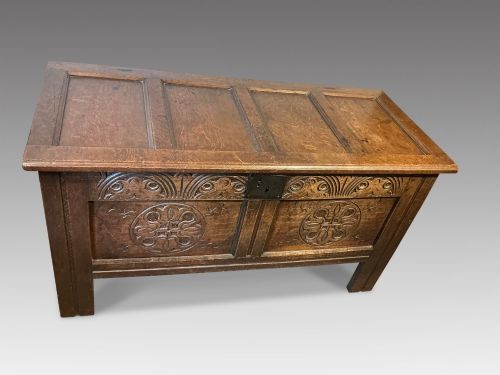
Traditional Oak Blanket Box
A traditional oak blanket box brings centuries of heavy timber and honest storage directly into a room.
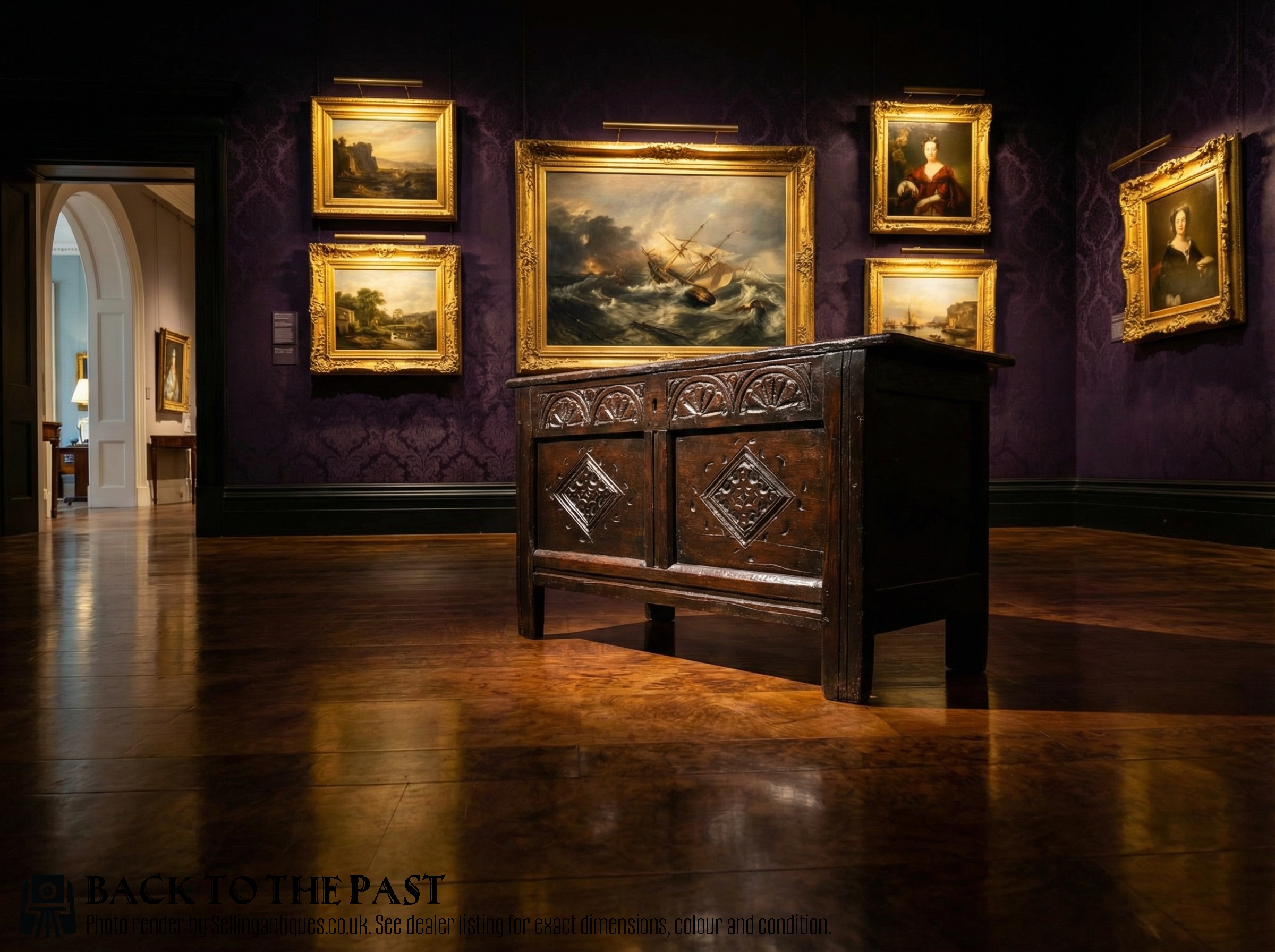
Traditional Oak Blanket Box
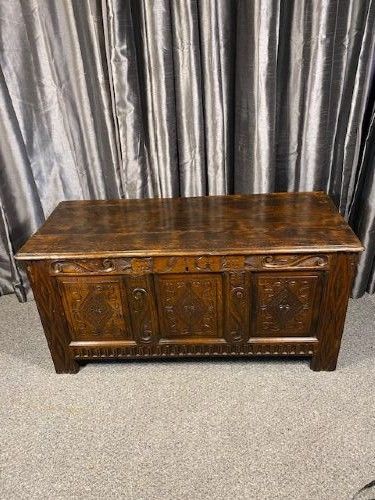
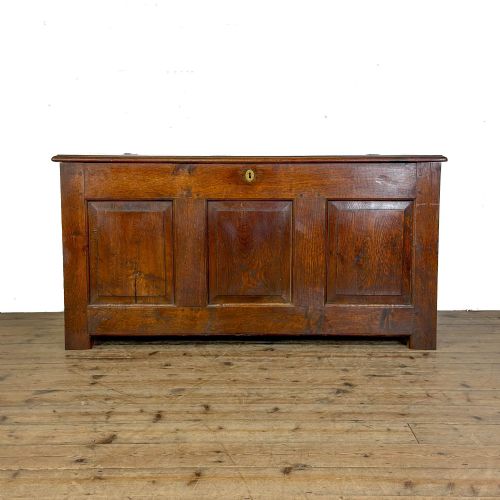
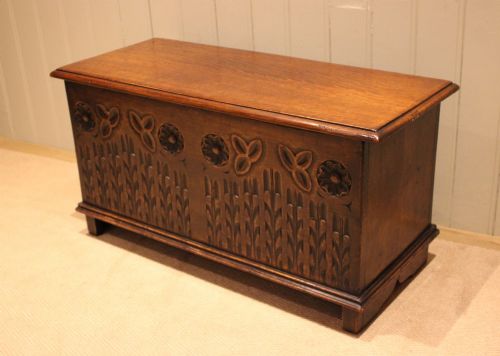
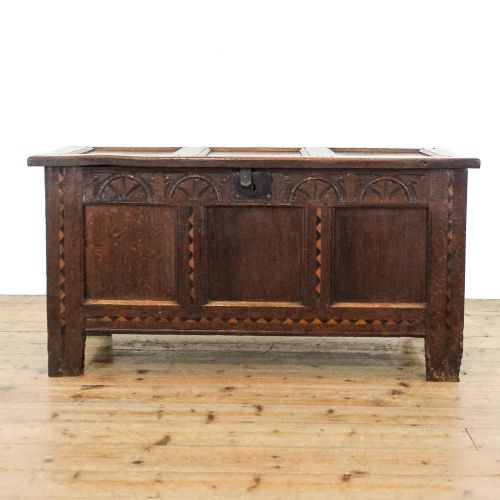
A traditional oak blanket box serves as a sturdy receptacle for textiles, featuring heavily in domestic interiors from the seventeenth century through to the twentieth century. When exploring this selection, buyers encounter forms ranging from simple boarded chests to joined panelled coffers and sophisticated mule chests fitted with lower drawers.
The material palette centres on solid oak, frequently paired with iron hardware, brass hinges, and occasional mahogany crossbanding or burr elm panels. Pieces span the 17th century, Georgian era, and later revival periods including Edwardian interpretations and 1930s craftsmanship.
Regional variations appear across the selection, encompassing English country examples, Welsh Carmarthenshire pieces, and French provincial coffers. These items function primarily as storage chests, coffers, and hall furniture whilst retaining their robust structural character.
Construction and Materials
Cabinet makers utilised solid oak planks, frequently employing frame and panel construction to accommodate the natural movement of timber over centuries. Joinery relied on pegged mortise and tenon joints rather than metal fixings, ensuring structural rigidity in heavy pieces.
Decoration involved hand carving, incised panelling, and occasional inlay work, complemented by blacksmith-made iron strap hinges and latches. Secondary timbers such as pine occasionally appear in internal partitions or drawer linings.
Traditional Oak Blanket Box Retail Price Guide 2026
Typical asking prices for traditional oak blanket box among the pieces listed under this phrase on Sellingantiques today, from the lower quarter to the upper quarter. They describe what is for sale here now, not the wider market.
Several centuries ago, families stored their winter woollens safely inside these chests, relying on sturdy oak walls to deter hungry moths.
Factors That Determine Quality
The standard of a traditional oak blanket box depends upon the integrity of its timber and the retention of original structural elements. Depth of colour, patination earned through decades of handling, and the crispness of hand-carved panels distinguish superior examples from later revivals.
Survival of original ironwork, untouched bases, and unreplaced lids heavily influence the standing of a piece. Alterations to feet, replacement hinges, or extensive timber repairs alter the balance between domestic utility and antique authenticity.
The Traditional Oak Blanket Box Glossary
- Coffer
- A heavy wooden chest traditionally used for storing valuables, documents, or garments. These vessels form the direct historical precedent for modern blanket boxes.
- Mule chest
- A storage chest featuring one or more drawers built into the base beneath the main compartment. This form emerged in the eighteenth century to provide more accessible storage.
- Joined oak
- Furniture constructed using interlocking mortise and tenon joints secured with wooden pegs. This method superseded primitive boarded construction and offers superior durability.
- Crossbanding
- A decorative border technique where thin strips of veneer are laid across the grain of the primary timber. This treatment appears on finer Georgian examples.
- Boarded chest
- A primitive storage box constructed from simple planks nailed or pegged at the corners. These represent the earliest and most direct form of household trunk.
Traditional Oak Blanket Box: Frequently Asked Questions
How do I care for an oak chest?
Maintain oak furniture by keeping it away from direct heat sources and sudden temperature shifts that cause timber to split. Apply a microcrystalline wax polish occasionally to nourish the grain without building up heavy residue.
Allow natural light to develop the patination gradually whilst avoiding synthetic cleaning agents that strip historical surfaces.
Where were blanket boxes placed?
Historical inventory records show these chests stationed primarily in bedrooms for linen storage, or in hallways for coats and dry goods. Their flat lids also allowed them to function as makeshift seating benches within the home.
In modern interiors, they adapt easily to living rooms as coffee tables with internal storage or remain at the foot of a bed.
How do I date an oak coffer?
Dating relies upon examining tool marks, construction joints, hinge types, and stylistic carving motifs relative to known periods. 17th-century examples typically feature joined framework and hand-riven panels, whereas 19th-century interpretations display mechanical sawing.
Hardware changes also provide clues, as forged iron straps give way to more refined brass mechanisms in later eras.