
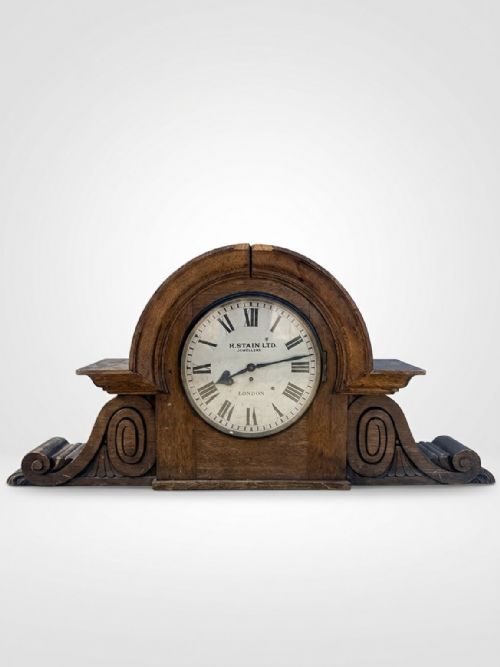


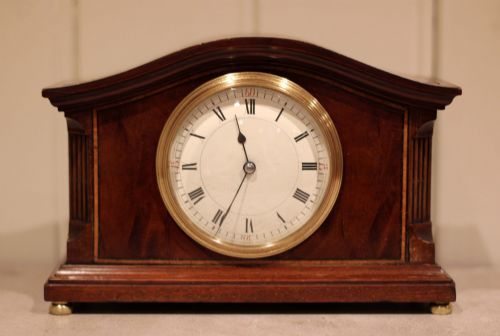
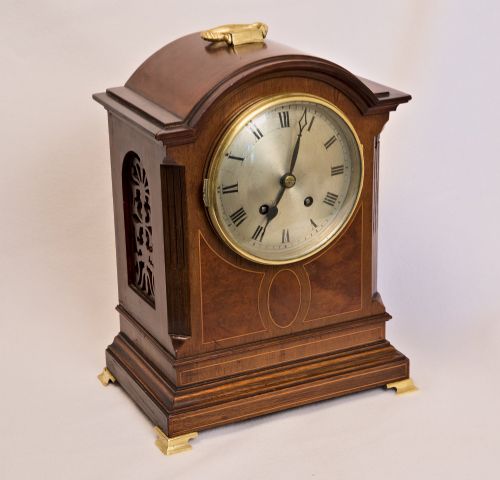


Traditional Mantelpiece Clock
A traditional mantelpiece clock brings quiet mechanical rhythm and rich timber grain to a room, anchoring the hearth with period weight.
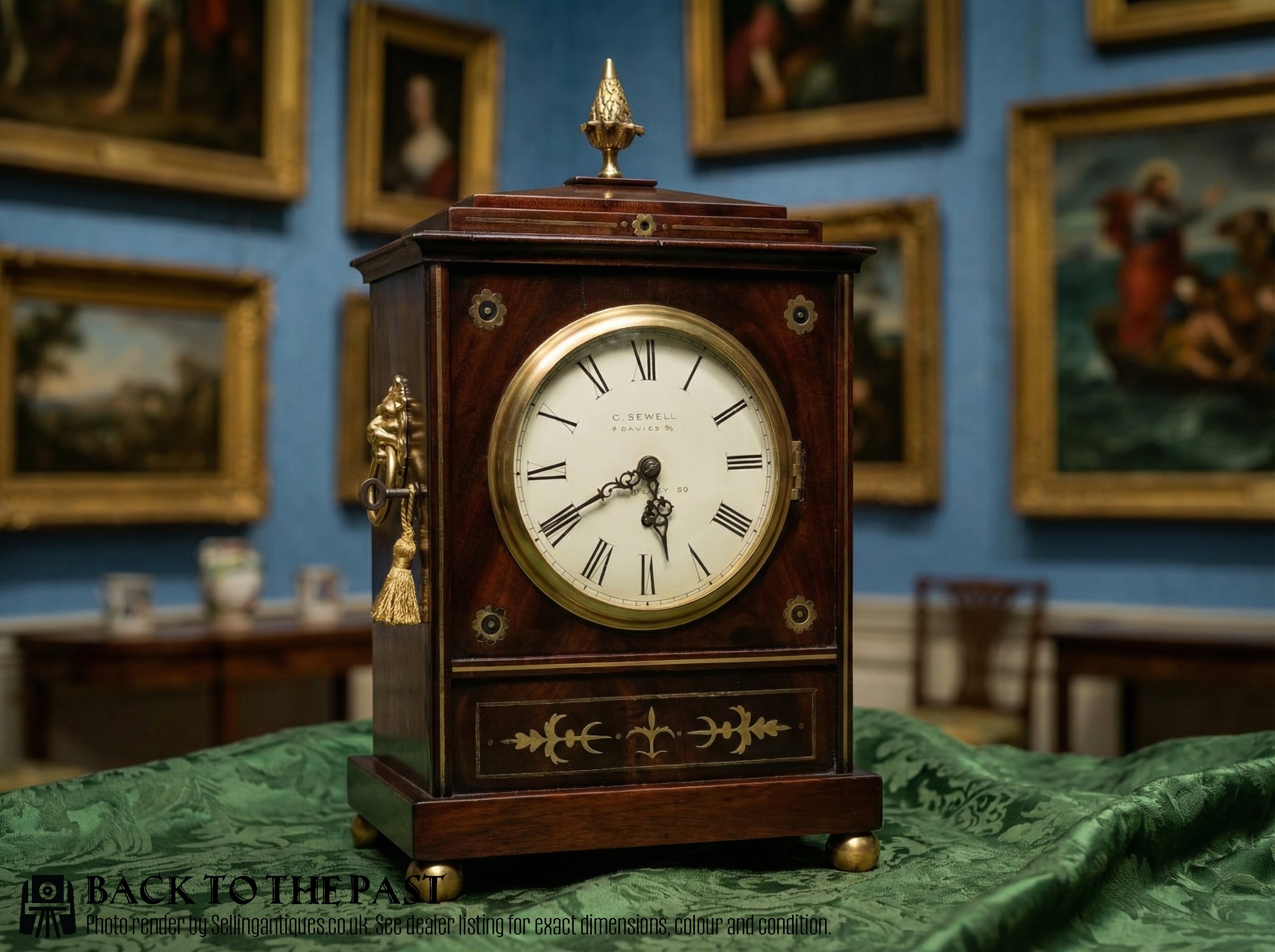
Traditional Mantelpiece Clock
A traditional mantelpiece clock serves as both a precise timekeeper and a centrepiece for domestic rooms, sitting squarely upon a shelf or mantel. The pieces gathered here span from the George IV and Regency eras through the Victorian decades and into Edwardian times, offering a solid domestic presence.
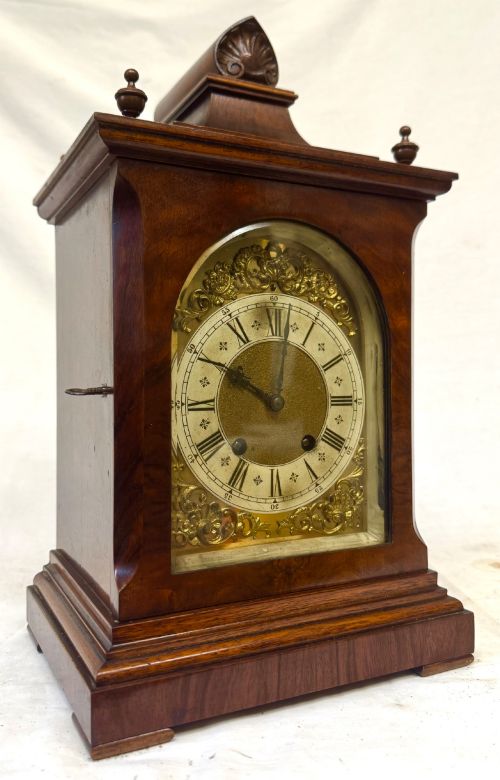
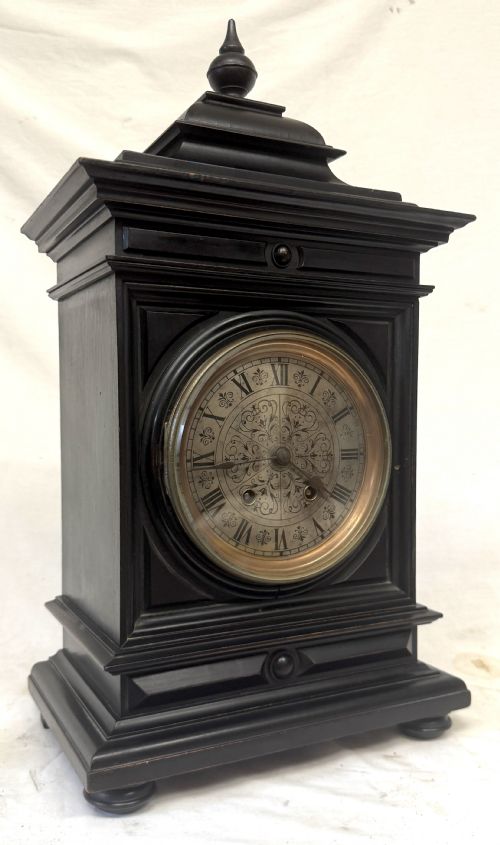
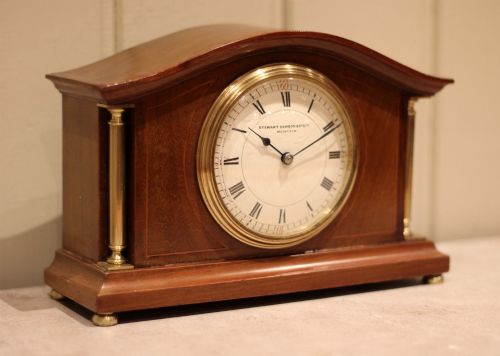
Most examples you will encounter are constructed in rich timbers like mahogany, walnut, and oak, occasionally finished in ebonised wood or substantial marble. They take the form of bracket clocks, lancet tops, and library clocks, each housing mechanical movements designed to mark the hours.
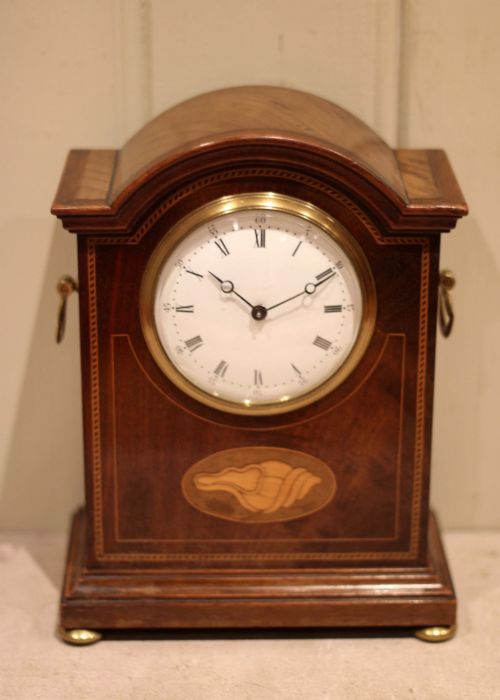
The origins of these timepieces stretch across regional British workshops and continental makers, reflecting diverse cabinet-making traditions. Whether plain timber or intricately inlaid with satinwood, each piece carries the functional utility of the past into modern interiors.
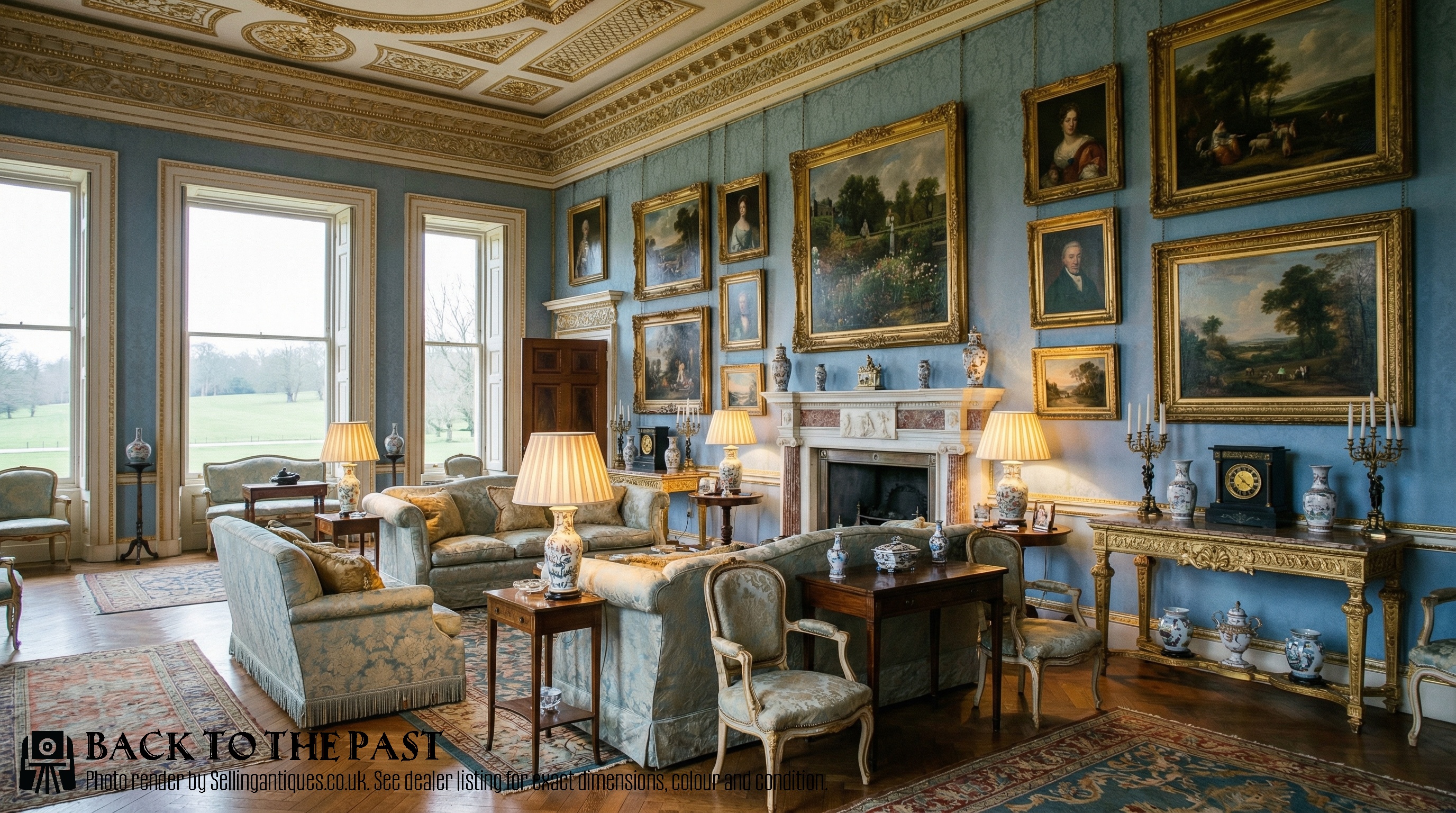
How traditional mantelpiece clocks were made
Cabinet makers constructed the timber cases using solid and figured woods such as mahogany, walnut, and oak, frequently adding intricate satinwood or ebony inlay for decorative contrast. Ebonised finishes and heavy carved marble provided alternative housing for movements that required substantial structural support.
Enamel, silvered, and brass dials were fitted to the front faces, often protected by glazed doors and paired with delicate hands. The movements themselves, driven by fusee or anchor mechanisms, required precise metalworking to ensure reliable eight-day timekeeping or chiming functions.
Traditional Mantelpiece Clock Retail Price Guide 2026
Typical asking prices for traditional mantelpiece clock among the pieces listed under this phrase on Sellingantiques today, from the lower quarter to the upper quarter. They describe what is for sale here now, not the wider market.
Listings feature cases constructed from mahogany, walnut, oak, ebonised wood, and marble across Victorian, Edwardian, and Regency styles.
What varies in quality
The standard of a traditional mantelpiece clock rests primarily on the crispness of the timber cabinetry and the architectural proportion of the case. Finely figured walnut or mahogany veneers, precise inlay work, and robust carved oak distinguish superior examples from plain utilitarian boxes.
Horological reputation also elevates a piece, as does the complexity of the internal movement, such as double fusee or Westminster chiming systems. The integration of high-grade brass dials and clear enamel numerals completes the distinction between ordinary timepieces and workshop-marked specimens.
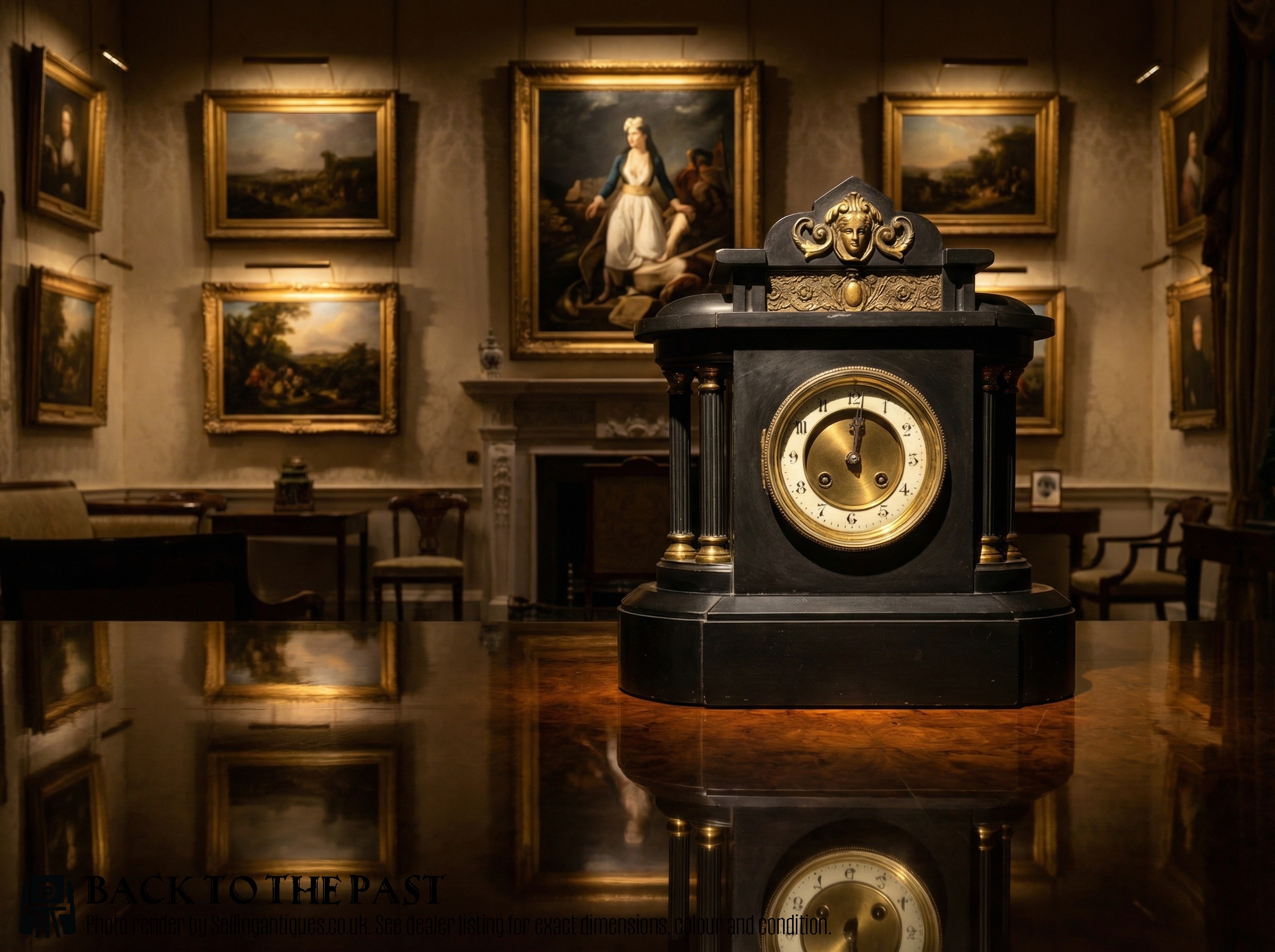
L. Vick of Stroud·W. Burton·Walker and Hall·Winterhalder and Hofmeier·Desbois and Wheeler·Purvis of London·Plumbly and Tupman·Adams of Lombard Street·Christie of Perth·H. Bilton
The Traditional Mantelpiece Clock Glossary
- Bracket clock
- A portable mechanical clock originally designed to sit upon a wall bracket, though later placed on mantelpieces and tables. These domestic pieces often feature arched or lancet wooden cases.
- Fusee
- A conical pulley used in spring-driven clocks to maintain equal driving force as the mainspring unwinds. This mechanism improves the timekeeping accuracy of the movement.
- Lantern clock
- An early brass chamber clock driven by weights or springs, featuring open bell arrangements on top. They represent some of the earliest domestic mechanical timekeepers.
- Timepiece
- A clock that indicates the time of day but does not strike the hours or chime. They offer a quieter mechanical presence in living spaces.
- Silvered dial
- A metal clock face treated with a silver compound to produce a matte, reflective surface for numerals. This finish provides high legibility against dark timber cases.
Traditional Mantelpiece Clock: Frequently Asked Questions
How do I wind a mechanical mantel clock?
Most mechanical mantel clocks require a specialised key inserted into winding holes on the dial to tension the internal springs. Care must be taken not to overwind the movement, as this can strain the mainspring.
Depending on whether the piece is an eight-day movement or a simpler timepiece, winding typically occurs once a week. Keeping a steady routine ensures the clock maintains consistent timekeeping without sudden tension drops.
Where should I place a heavy marble clock?
Marble mantel clocks require a structurally sound and level surface, such as a sturdy fireplace mantel or a heavy sideboard, due to their significant weight. Placing them away from direct sunlight and damp walls protects the stone and internal metalwork.
Level placement is essential for the escapement mechanism to tick evenly. If the surface tilts, the pendulum or balance wheel will struggle to maintain an even beat.
How do I tell Edwardian clocks from Victorian ones?
Victorian clocks often favour heavy proportions, dark ebonised woods, ornate carving, and substantial marble cases. Edwardian examples tend to introduce lighter mahogany timbers, satinwood inlay, and refined lancet top silhouettes.
While both eras utilised reliable mechanical movements, the shift in cabinet design reflects changing domestic tastes toward brighter, less cluttered interior aesthetics around the turn of the twentieth century.
Can I leave a chiming clock running overnight?
Chiming bracket clocks and Westminster chiming models are designed to operate continuously throughout the day and night. If the sound disturbs sleep, some movements feature silent levers or switch options to disable the strike.
Regular running keeps the oil distributed across the wheel pivots and prevents dust from settling in the gear train. Stopping the clock for long periods can sometimes cause the lubricants to gum up.