

Traditional Lounge Chair
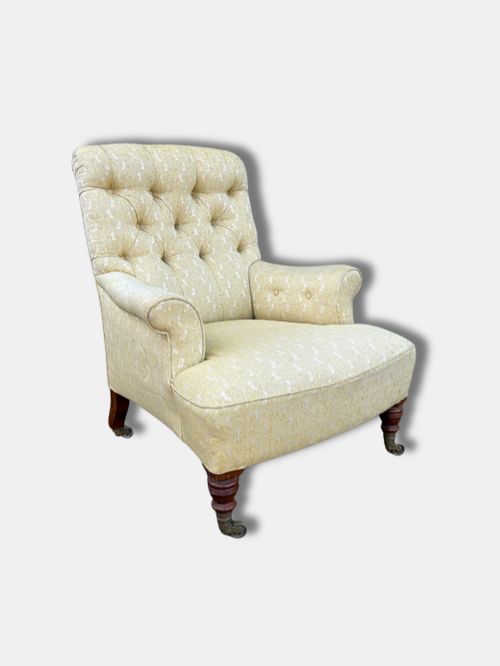
A traditional lounge chair offers deep upholstery and steady support, shaped by centuries of British and continental design.
Traditional Lounge Chair
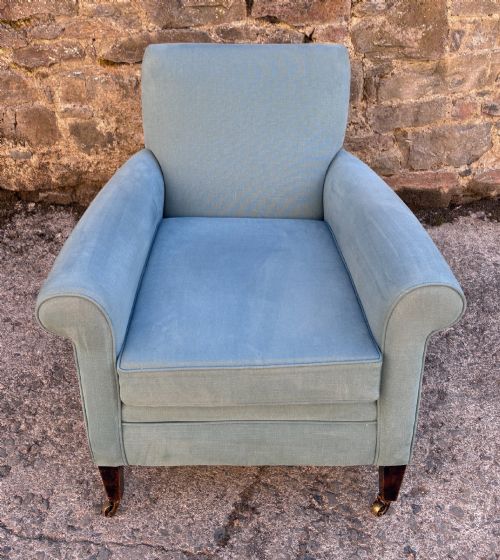
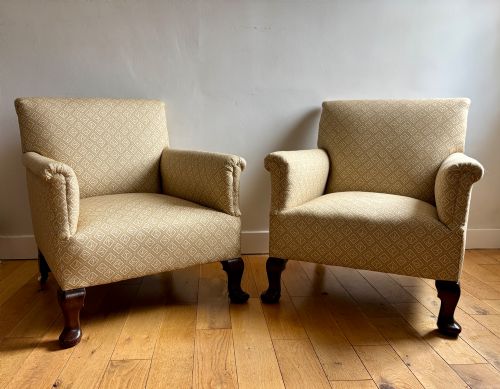
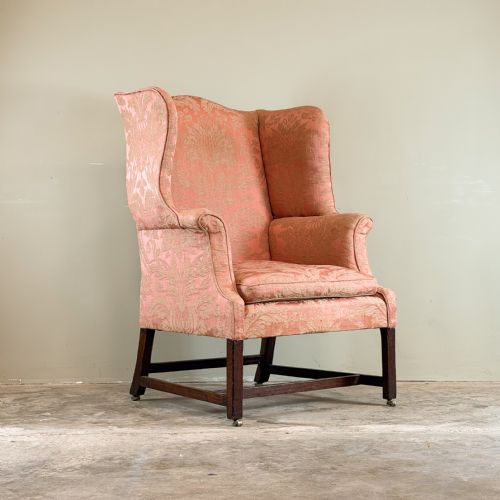
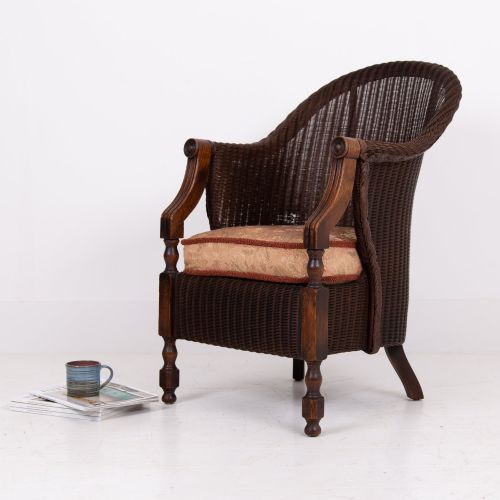
When you search for a traditional lounge chair, you encounter a wide variety of seating forms spanning the eighteenth century to the 1930s. The selection ranges from compact bedroom chairs and low slipper seats to grand wingbacks and deep-seated club chairs.
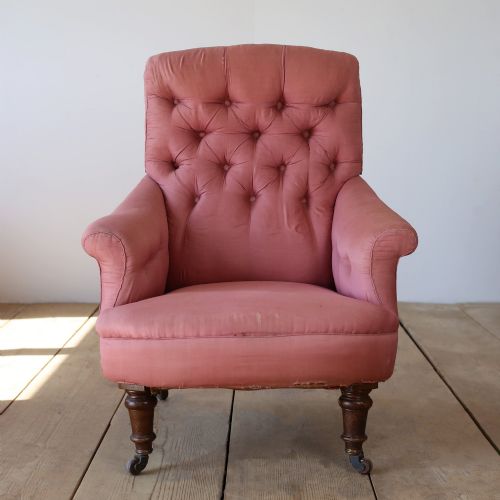
Victorian and Edwardian pieces dominate the selection, often featuring generous proportions and heavy padding designed for domestic comfort. You will also find regional variations like Scottish country house armchairs alongside French provincial styles.
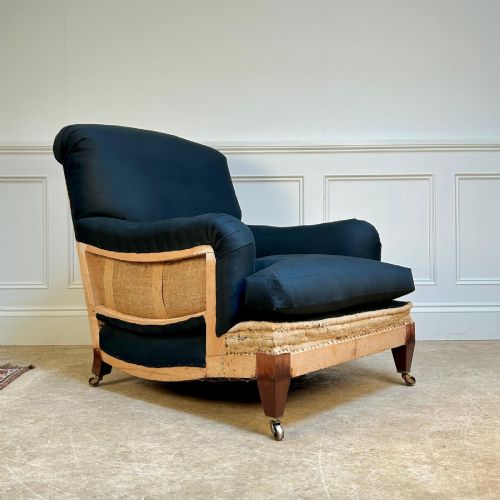
Frames vary from exposed mahogany and walnut to hidden hardwood structures covered in hessian and calico before final upholstery. Many examples reflect specific stylistic revivals, including Queen Anne and Carolean influences applied to nineteenth and twentieth-century seating.
Materials and construction
Makers built the foundational frames of these chairs using sturdy hardwoods such as mahogany, walnut, and oak, often incorporating bentwood for specific rocking forms. Joinery relied on traditional methods to ensure durability under daily weight.
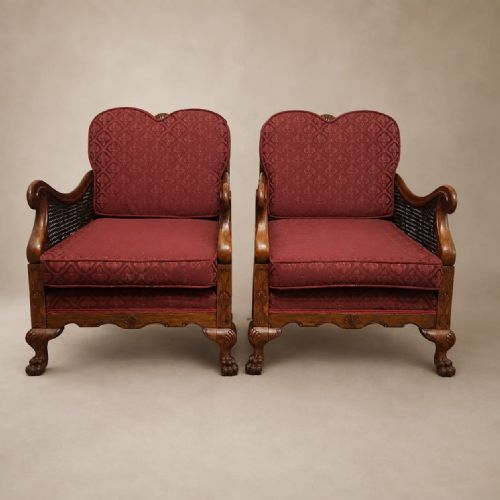
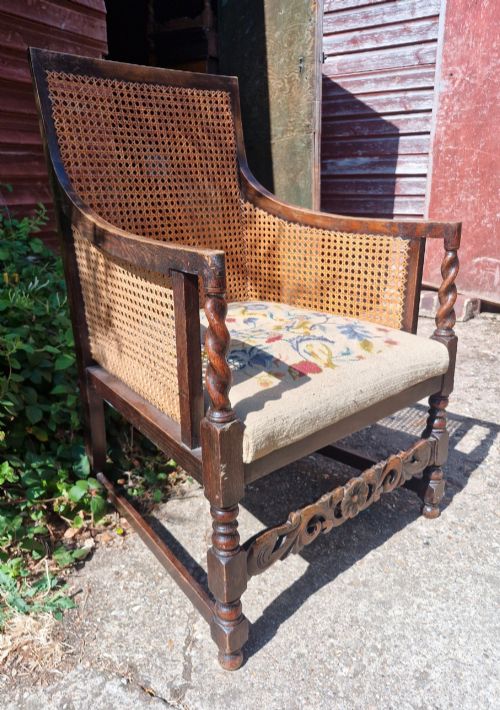
Upholstery techniques involved internal webbing, hessian, and sprung seat bases, layered with fillings like feathers and deep pile fabrics. Exterior finishes included leather, velvet, brocade, and woven cane panels known as bergere.
Brass details frequently appeared on castors or decorative tacks, while secondary woods provided internal structural support hidden beneath the textile covers.
Traditional Lounge Chair Retail Price Guide 2026
Typical asking prices for traditional lounge chair among the pieces listed under this phrase on Sellingantiques today, from the lower quarter to the upper quarter. They describe what is for sale here now, not the wider market.
The listings feature traditional lounge chairs spanning the 18th century to the 1930s, utilising brass, mahogany, velvet, and cane.
Evaluating craftsmanship and condition
The distinction between ordinary seating and superior examples rests on the integrity of the frame and the quality of the internal springing. Chairs with robust hardwood frames and carefully tied coil springs maintain their shape and support far better over decades of use.
Fabric choice and re-upholstery standards also dictate the standing of a piece, particularly where original brocades, leathers, or hand-woven split cane remain intact or receive sympathetic restoration. Maker attribution elevates certain pieces significantly above anonymous workshop output.
Proportion and comfort separate utilitarian seating from masterworks, with the finest designs offering an ergonomic balance of depth, back angle, and arm height.
Howard and Sons·Whytock and Reid·Morris and Co
The Traditional Lounge Chair Glossary
- Bergere
- A type of enclosed upholstered armchair with wooden framing and cane panels along the back and sides. This style gained popularity during the eighteenth century and saw revivals through the Victorian and Edwardian eras.
- Wingback
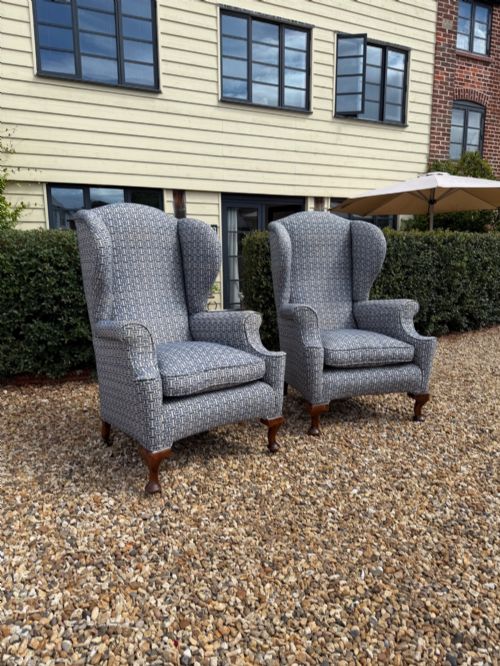
- An armchair featuring high side panels attached to the arms and framing the back to protect against drafts. Early versions appeared in the eighteenth century with generous proportions.
- Hessian
- A coarse woven fabric made from jute fibres, utilised as a foundational layer beneath top upholstery to hold internal padding. It provides hidden structural support in traditional seating.
- Calico
- A plain-woven cotton textile used as an interlining material to cover stuffing before the final decorative fabric is applied. It ensures a smooth and durable outer finish.
- Library armchair
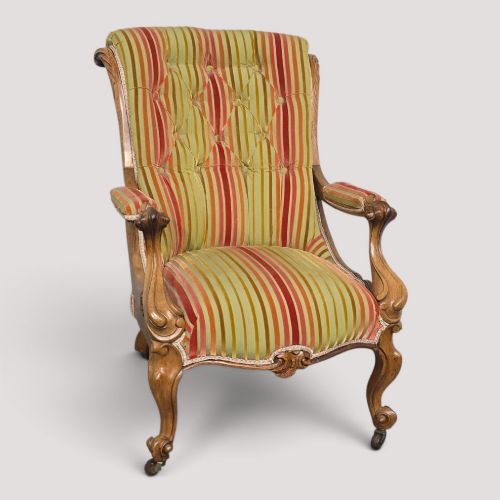
- A sturdy reading chair designed for domestic studies, frequently constructed from rosewood or mahogany. These pieces often feature deep padding and generous armrests for prolonged sitting.
Traditional Lounge Chair: Frequently Asked Questions
How do I identify a Howard style chair?
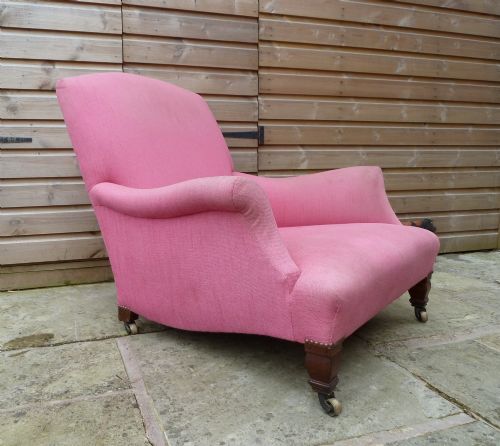
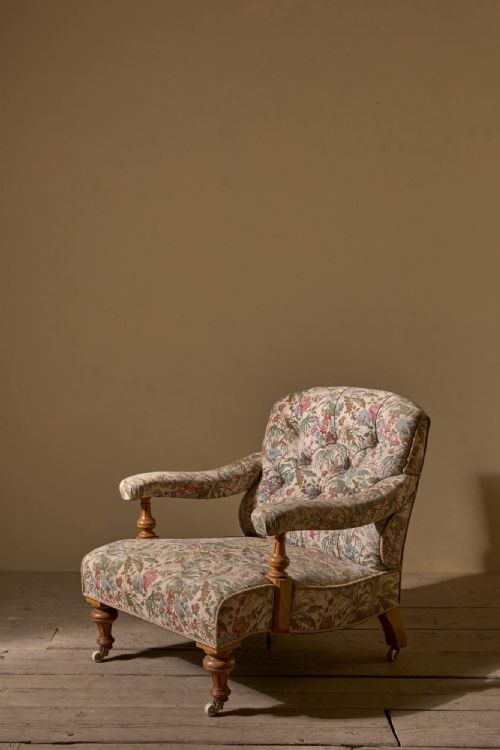
Howard style chairs are recognised by their low proportions, deep seats, and distinctive turned legs finished with brass castors. They prioritise supreme comfort through layered stuffing and sprung construction.
Later makers frequently copied these proportions, leading to pieces marked simply as Howard style rather than bearing the original workshop stamp.
Are leather club chairs comfortable?
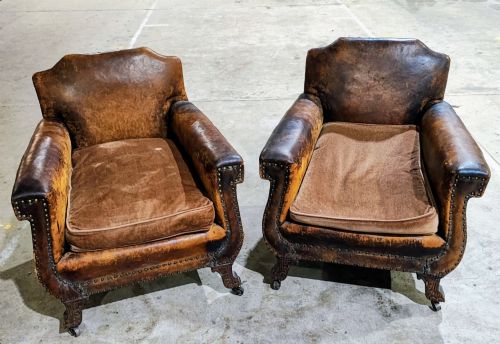
Leather club chairs offer exceptionally deep seating and supportive backs designed for relaxed lounging in studies and drawing rooms. The heavy leather softens with age while retaining structural integrity.
Most examples date from the Edwardian period onwards, utilising coil springs and feather fillings to enhance the seating experience.
How should I care for antique upholstery?
Protect antique textiles and leather by keeping chairs away from direct sunlight and strong heat sources. Regular gentle vacuuming with a soft brush attachment prevents dust accumulation in the weaves.
For leather surfaces, occasional application of appropriate conditioning wax maintains suppleness without blocking the natural grain.