



Howard and Sons Style Chair
A howard and sons style chair offers deep-seated comfort and understated English country house elegance.
Howard and Sons Style Chair
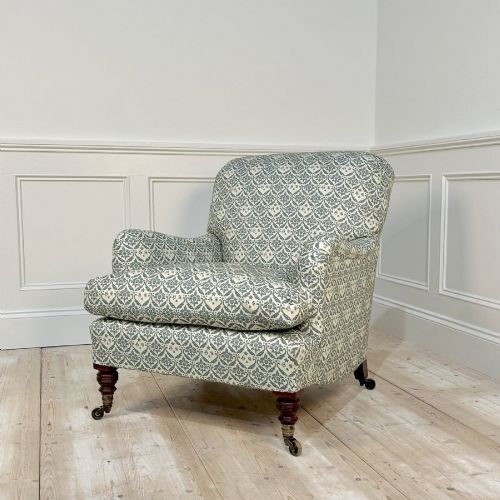
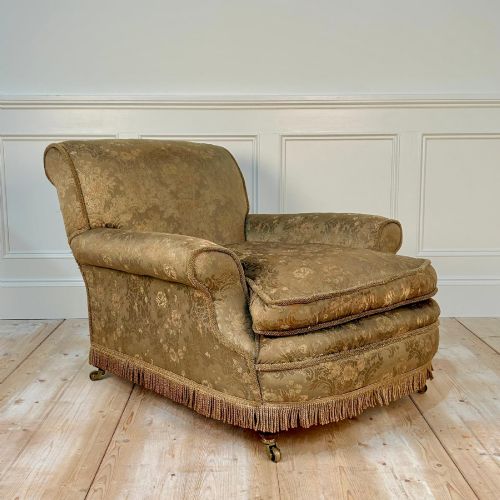
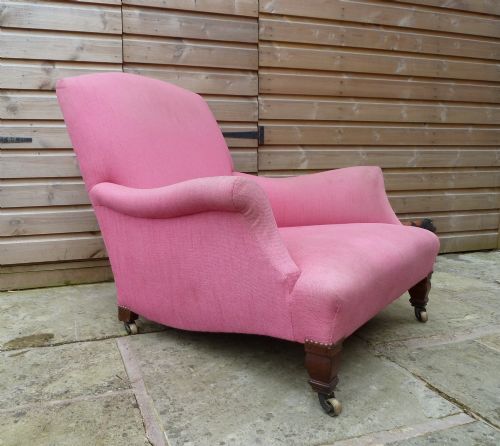
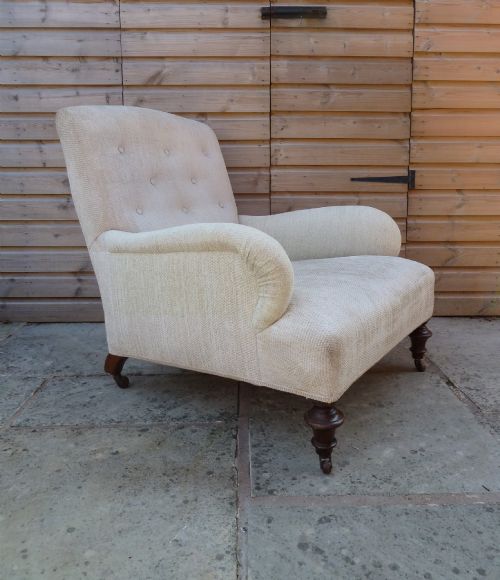
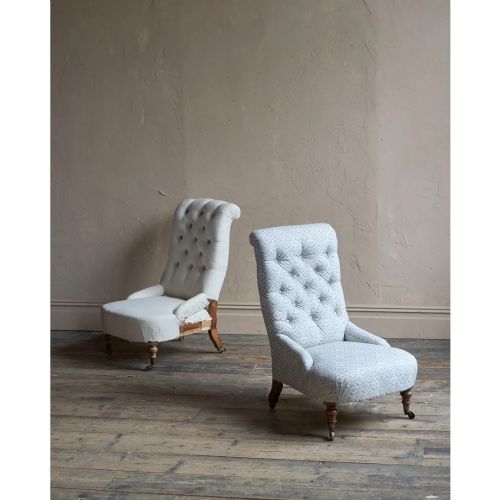
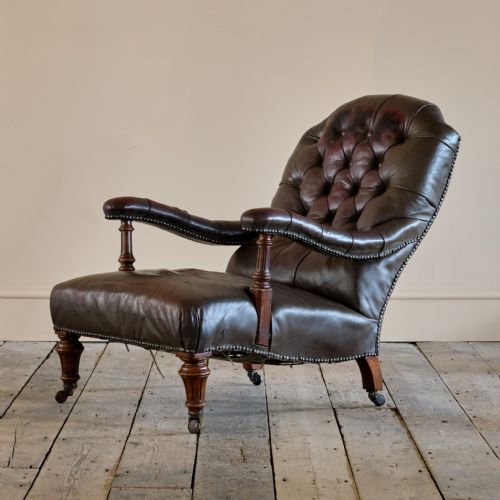
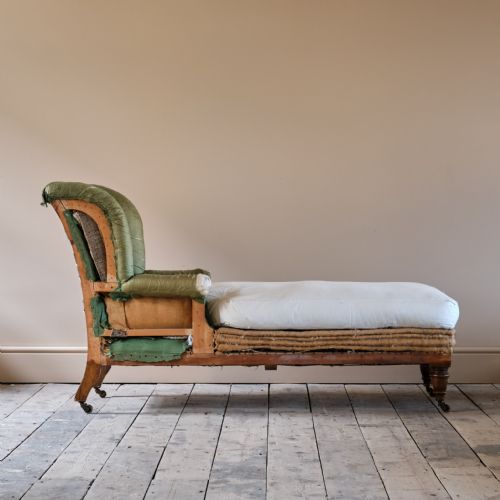
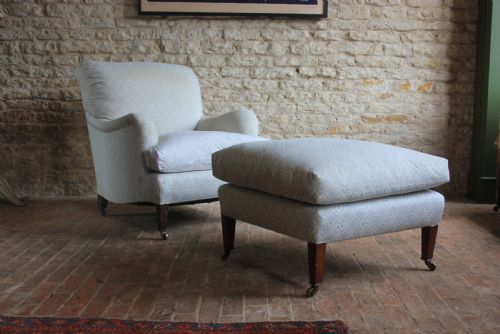
A howard and sons style chair encompasses deep-seated armchairs, club chairs, slipper chairs, and daybeds originating from the nineteenth and early twentieth centuries. These seating forms developed a reputation for low proportions, rolling arms, and generous squab cushions designed for relaxation.
The versions most commonly met on this page date from the Victorian and Edwardian periods, often upholstered in ticking, calico, or printed cotton. Makers such as James Shoolbred and Trollope and Sons also produced similar seating forms that parallel the distinct aesthetic.
Examples range from compact bedroom chairs and tub chairs to large Bridgewater armchairs and reclining daybeds. They reflect the evolution of domestic comfort in English country houses during the late 1800s.
Materials and Construction
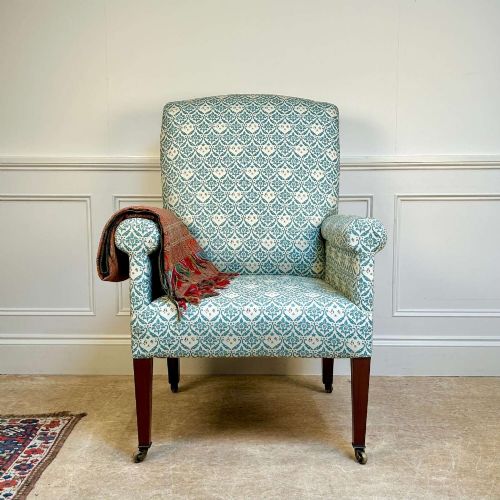
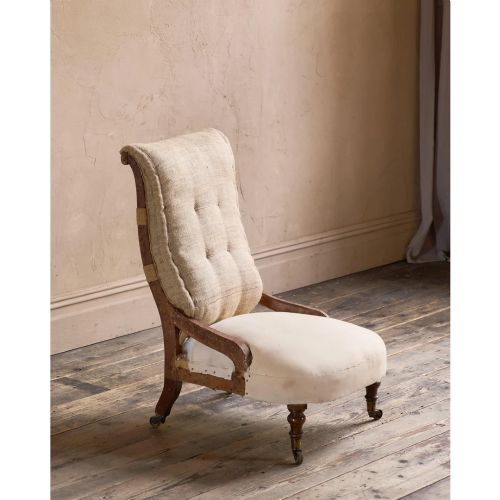
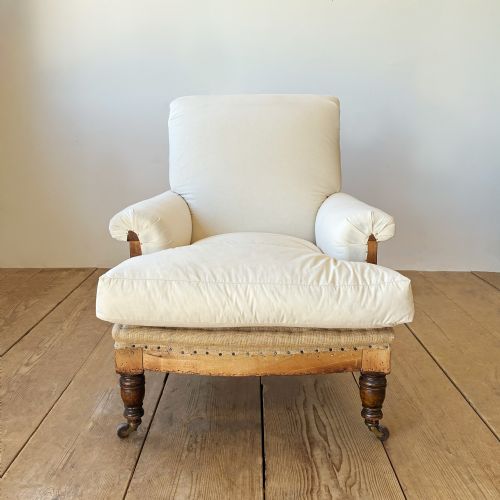
Frames are constructed from sturdy hardwoods such as walnut and mahogany, providing a solid internal skeleton capable of supporting extensive upholstery. Brass castors frequently support the legs, allowing these heavy seats to move smoothly across carpets and floorboards.
Traditional upholstery techniques utilise calico and cotton tickings as under-covers, often layered beneath patterned fabric or decorative carpets. Internal sprung units and deep stuffing create the characteristic resilient bounce associated with the seating style.
Howard and Sons Style Chair Retail Price Guide 2026
Typical asking prices for howard and sons style chair among the pieces listed under this phrase on Sellingantiques today, from the lower quarter to the upper quarter. They describe what is for sale here now, not the wider market.
Some armchairs arrived from country houses upholstered in repurposed Ushak carpets, proving that recycling antique floor coverings is nothing new.
Evaluating the Pieces
The integrity of the internal wooden frame and the retention of original brass castors distinguish sturdier examples from heavily altered pieces. Proportions also vary, with certain models offering deeper seats and more pronounced lumbar support than simpler bedroom variants.
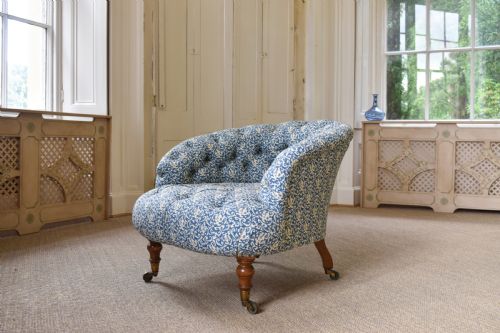
The choice of covering material alters the character, ranging from utilitarian ticking to decorative William Morris cotton or antique carpet fragments. Pieces retaining stamped maker marks or original labelled castors carry distinct historical documentation.
Howard and Sons·James Shoolbred·Trollope and Sons·William Morris
The Howard and Sons Style Chair Glossary
- Bridgewater armchair
- A traditional upholstered armchair design characterised by low, rolled arms and a deep seat. This form became a staple of nineteenth-century English domestic comfort.
- Calico
- A plain-woven cotton fabric utilised as an internal lining or under-cover for traditional upholstery before the final outer textile is applied.
- Squab cushion
- A loose, removable seat cushion placed on top of the chair frame. It contributes significantly to the deep, soft seating experience.
- Ticking
- A tightly woven, durable cotton or linen fabric, typically featuring striped patterns. It was historically used to contain stuffing materials inside upholstered furniture.
- Tub chair
- A compact armchair featuring a continuous curved back and arms that enclose the sitter. This style fits neatly into smaller spaces while maintaining padded support.
Howard and Sons Style Chair: Frequently Asked Questions
How do I identify a Howard and Sons style chair?
These chairs are recognised by their low profiles, deep seats, and scrolled arms designed for relaxation. Many feature turned wooden legs terminating in brass castors.
Stamped markings on the castors or frame occasionally provide direct evidence of the maker. Upholstery styles often include traditional ticking or country house fabrics.
What is a Bridgewater armchair?
A Bridgewater armchair is a specific upholstered form featuring recessed arms that roll gently outward. This design prioritises relaxed seating and generous proportions.
They pair well with matching footstools and remain versatile additions to sitting rooms and libraries.
Where were these chairs originally placed?
Originating in nineteenth-century England, these seats populated country house drawing rooms, libraries, and bedrooms. Their comfortable proportions suited long hours of reading or resting.
Today, they adapt easily to both traditional interiors and modern living spaces as statement reading chairs.
What fabrics are typically found on these chairs?
Original and traditional upholstery often utilises plain cotton ticking, heavy calico, or printed cottons. Some examples feature distinctive textiles such as William Morris prints or imported carpet fragments.
Many pieces were re-covered over time while retaining their underlying nineteenth-century frames and springs.