
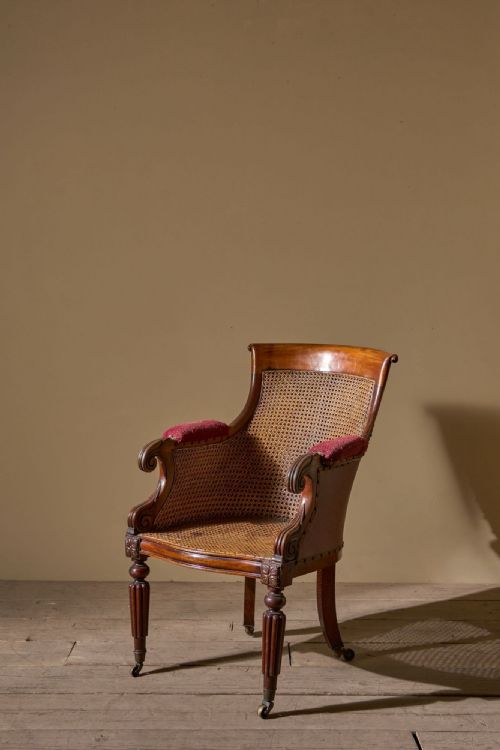
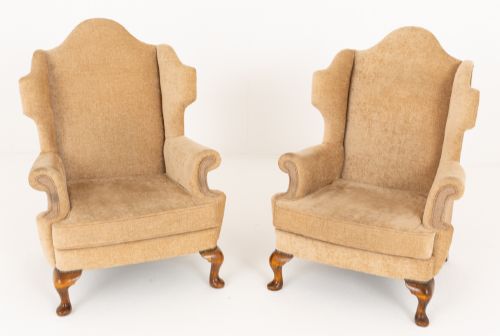
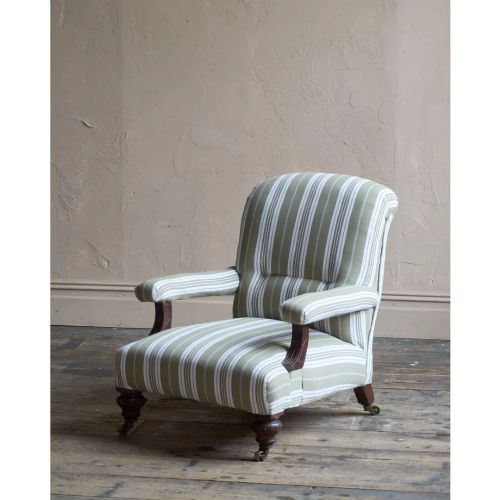

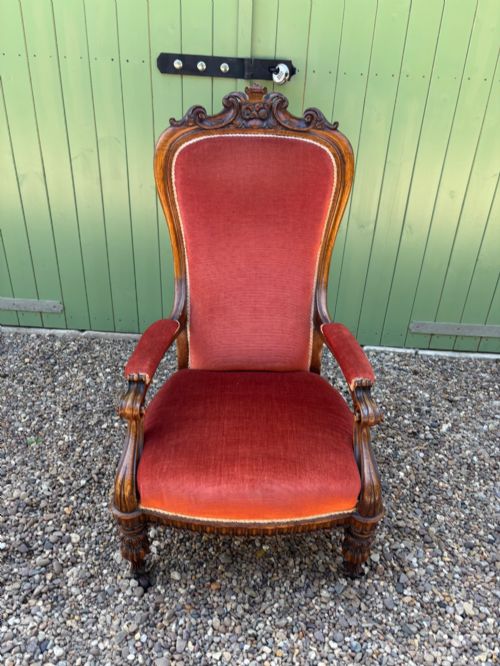
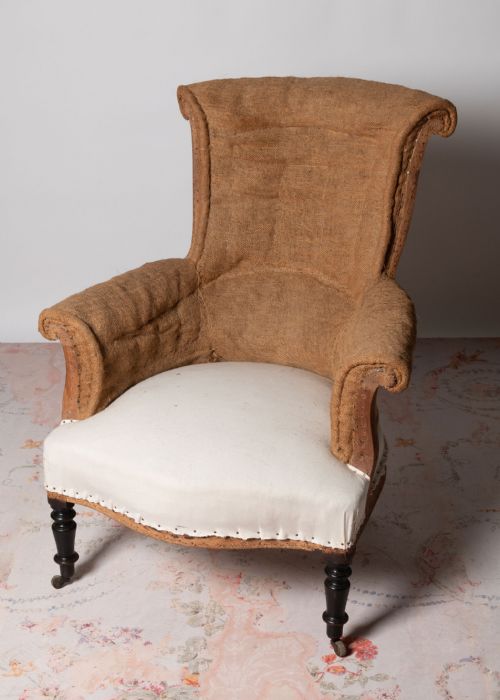


Padded Reading Chair
A padded reading chair offers substantial comfort for long hours with a book, spanning classic library forms and generous upholstered designs.
Materials and Construction
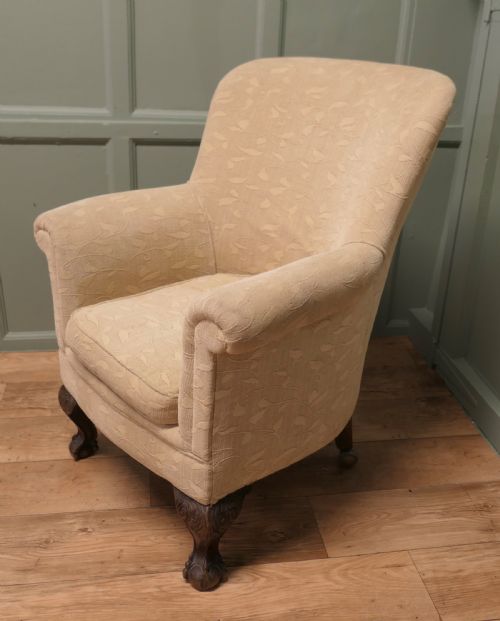
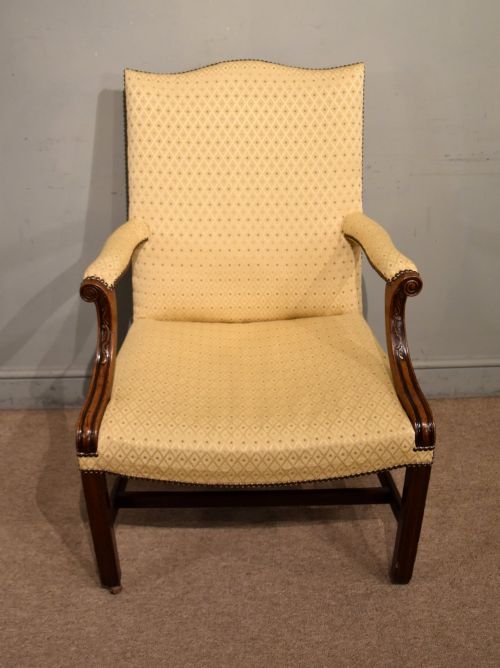
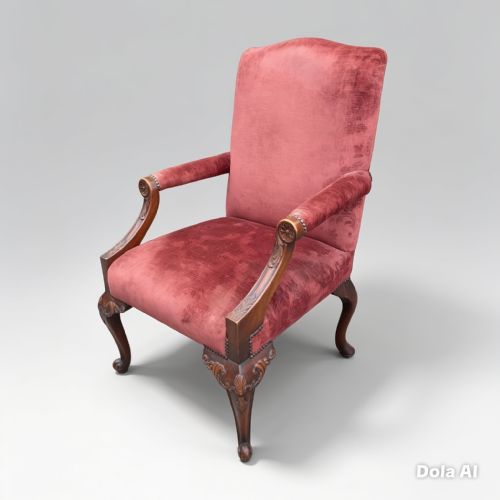
Frames are constructed from timbers such as mahogany, walnut, oak, and general hardwoods, often providing a sturdy structural base for heavy upholstery. Show frames display carved wooden elements while supporting internal padding.
Upholstery relies on traditional textiles, leather, velvet, brass details, and cane work. Interior springing and stuffing methods dictate the physical support of each seat.
Evaluating Construction and Age
Quality rests in the integrity of the timber frame, the precision of carved details on show frames, and the retention of original structural components. Finer examples maintain robust joinery without excessive timber replacement.
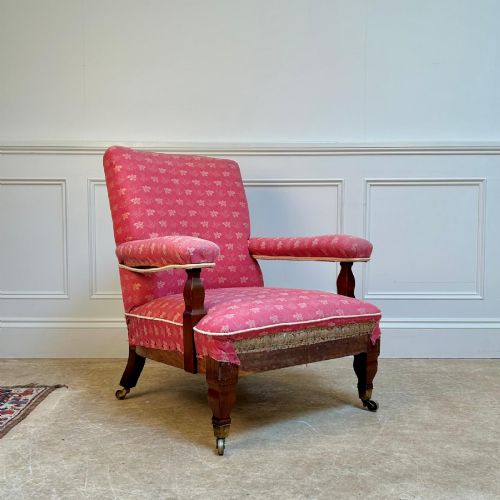
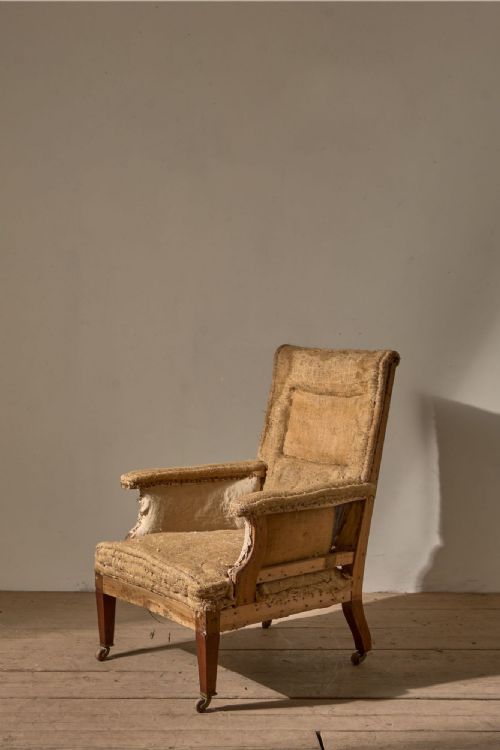
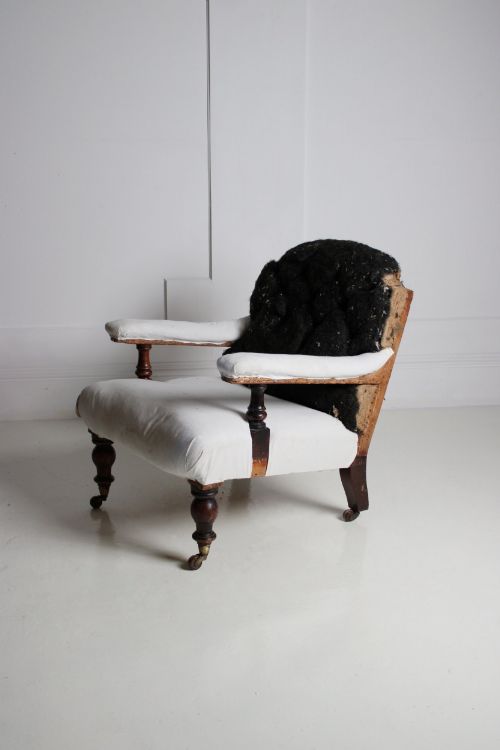
The execution of upholstery work, whether retained in period textile or recovered later, influences the character of the piece. Superior examples balance proportional scale with enduring materials.
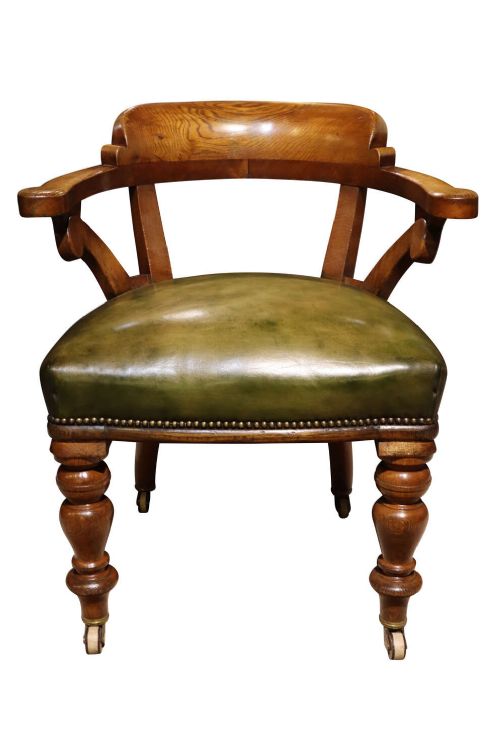
Unusual variants include low cockfighting chairs originally built for spectators to straddle while seated.
George Jack For Morris and Co·Howard and Sons
The Padded Reading Chair Glossary
- Gainsborough armchair
- A type of upholstered open-arm chair produced in the Georgian period, featuring a padded back and seat with wooden arm supports. These chairs were traditionally used in libraries and studies.
- Bergère
- An enclosed armchair with stuffed upholstery on a wooden frame, frequently incorporating cane work on the sides or back. Originating in France, the form was widely adopted in British furniture design.
- Wing chair
- A high-backed armchair with side panels designed to shield the sitter from drafts. Early versions appeared in the Georgian period and evolved through subsequent centuries.
- Show frame
- A wooden structural skeleton left exposed around the upholstered sections of a chair. Walnut and mahogany were frequently utilised for these visible elements.
- Cockfighting chair
- A specialised low chair with a padded backrest designed originally to straddle while watching seated sports. They appear infrequently in Victorian variants.
Padded Reading Chair: Frequently Asked Questions
How do I identify a Georgian reading chair?
Georgian examples typically feature mahogany frames, rectilinear proportions, and restrained carving associated with library seating. They pre-date the heavier padded styles of the late nineteenth century.
Look for authentic timber ageing beneath the upholstery and traditional joinery methods standard to eighteenth-century cabinet making.
Are these chairs suitable for daily use?
Most period reading chairs are built on robust hardwood frames of mahogany, walnut, or oak, making them structurally sound for modern seating. Internal webbing and padding condition will determine everyday comfort.
Buyers often assess whether the internal stuffing requires professional restoration to support regular sitting.
How do Victorian reading chairs differ from earlier styles?
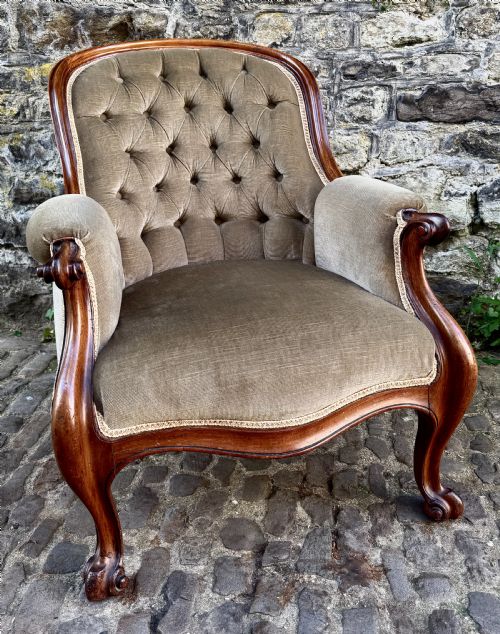
Victorian reading chairs generally offer deeper padding, enclosed buttoned backs, and softer sprung seating compared to firmer Georgian models. Walnut and oak frequently replace earlier mahogany preferences.
Forms such as gentleman's chairs and club chairs reflect a shift towards heavier domestic comfort during the nineteenth century.